Allawi to Asharq Al-Awsat: Saddam Was a Brave Young Man, Power Transformed Him into a Tyrant

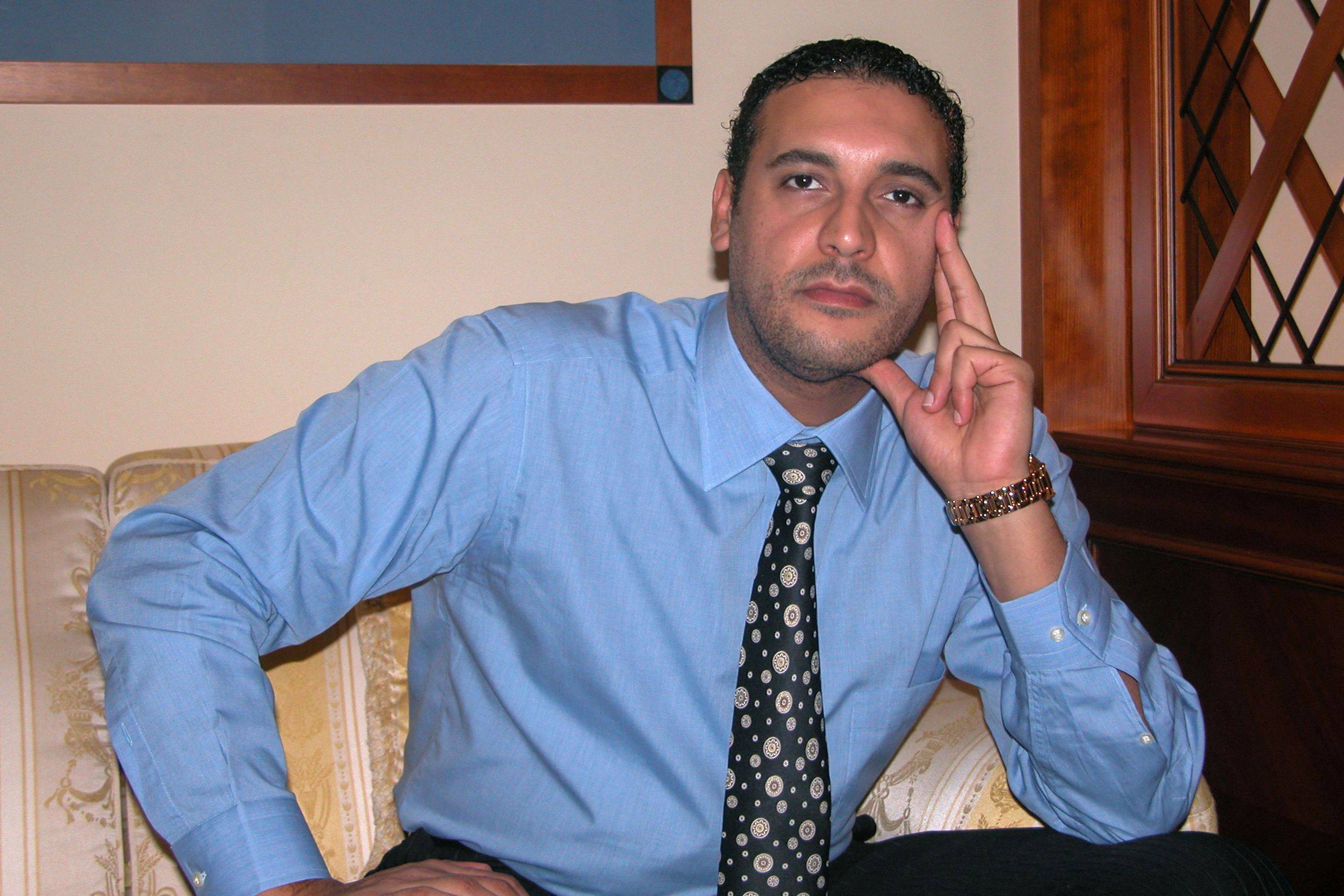
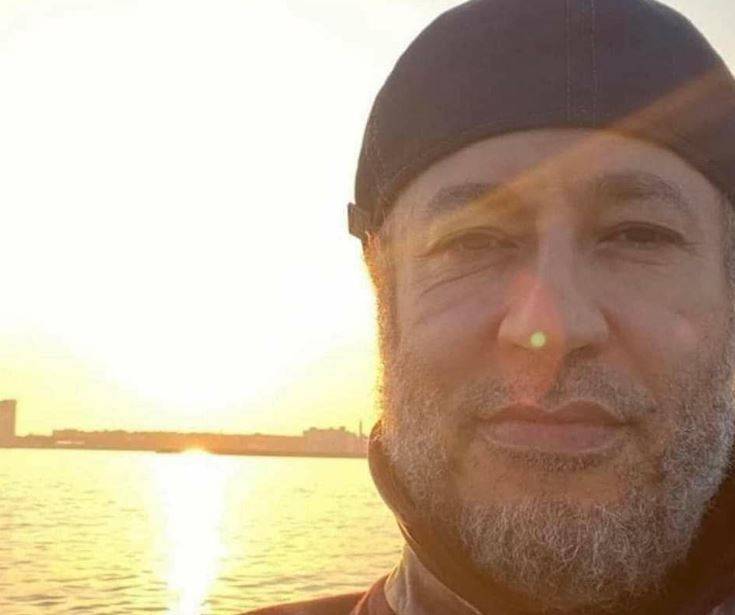
Former Iraqi Prime Minister Iyad Allawi during his interview with Asharq Al-Awsat Editor-in-Chief Ghassan Charbel. (Asharq Al-Awsat)
TT

Allawi to Asharq Al-Awsat: Saddam Was a Brave Young Man, Power Transformed Him into a Tyrant

Former Iraqi Prime Minister Iyad Allawi during his interview with Asharq Al-Awsat Editor-in-Chief Ghassan Charbel. (Asharq Al-Awsat)

The story began in 1964. Former Iraqi Prime Minister Iyad Allawi enjoyed a friendship with a colleague named Abdul Karim Al-Shaikhli, who had returned to the College of Medicine in Baghdad after a long break, due to his involvement in the assassination attempt against Iraqi leader Abdul Karim Qasim in 1959.

One day, a skinny young man came to the college, and Al-Shaikhli introduced him to Allawi. His name was Saddam Hussein. Saddam will repeat these visits and will always ask Allawi: “Where is my twin brother?” Allawi would answer that he was attending a lecture and would come after it ended, and the two would exchange conversations over a cup of coffee, then Al-Shaikhli would join them.

A friendship developed between the three, who would later be held in the same prison in 1964. But their paths would then converge, when Saddam became the undisputed master of the Baath party and the country.

In 1978, Saddam attacked Allawi with an axe, but he luckily escaped with his life. However, hostility did not prevent him from acknowledging his opponent’s qualities and characteristics. I asked him to describe Saddam during the first half of the 1960s, he replied: “When we met for the first time, he did not have an important role in the party. But he was a man of nobility and strong will, and was considered one of the party’s fighters and committed to its ideology.”

Allawi admitted that after the fall of Saddam, his government conducted investigations “and did not find a single property in his name, including the presidential plane.” While he blamed the young man he met in medical school for the disasters and tragedies that befell Iraq, he did not deny the qualities he possessed that helped him advance in the party. But he stressed that power turned the young fighter into a tyrannical ruler without a partner or anyone to keep him in check.

Saddam’s cruelty

I asked Allawi about Saddam’s cruelty, and he told me a story:

“I have never seen cruelty like Saddam’s. Here I can mention an important incident. Among the Baathists was a person from Karrada named Hussein Hazbar, who defected and worked with the Syrian wing of the Baath Party in Iraq. One day, a group of Baathists and I were sitting having dinner in the garden of a restaurant. Saddam and Saadoun Shaker came to us. They were cheerful and laughing... They said that they had set a trap for Hazbar, on the suspension bridge, adding that the man was beaten with the butt of pistols, and that he was taken to a hospital...”

“We were appalled by the incident and formed a delegation to go to the hospital to check on the man, and acquit the party of this act, which we saw as cruel and a kind of treachery. I was not part of the delegation, but I knew that five people had attacked Hazbar. He was alone crossing the bridge, so they surrounded him and beat him.”

A feast of surprises

Allawi also recounted how Saddam’s regime dismissed Al-Shaikhli from his post as foreign minister and member of the Baath part on the same evening as his engagement. He recalled:

“The story of Al-Shaikhli’s dismissal from his position in the Ministry of Foreign Affairs deserves to be mentioned. The man proposed to a girl to marry her. Saddam invited him to dinner with his fiancée, and also invited the Minister of Interior, Vice President of the Republic, Saleh Mahdi Ammash, and his wife. During the dinner, Baghdad Radio broadcast that Al-Shaikhli and Ammash were both relieved of their positions. Al-Shaikhli called me and asked me: Have you heard the news? [...] As I was taking my fiancée to her home, my driver asked me, ‘Did you hear the news?’ I replied: What news? He said: You will be relieved of all your posts and positions in the party and the state.”

Allawi continued: “Al-Shaikhli had participated, along with Saddam, in the attempt to assassinate Qasim. They both fled the country to Egypt, where they lived like brothers. Al-Shaikhli was an Arab nationalist and held senior roles within the party. Years later, the man was put under house arrest. The regime deliberately cut off the electricity to his home under the pretext of unsettled bills. When he went to the Electricity Corporation headquarters, they shot him dead in front of his wife. That was in 1980. Unfortunately, he did not take my advice not to return to Iraq when he was outside the country.”

In prison with Saddam and his companions

Allawi recounted the circumstances of his imprisonment, along with Saddam, in 1964.

“In the fall of 1964, the party decided to launch a coup attempt to restore power. For this purpose, a special body was formed under the name of ‘Jihaz Hanin’, and was led by Saddam, Al-Shaikhli, and Mohammad Fadel. In early September, the coup attempt was uncovered and the authorities launched a massive arrest and persecution campaign. I was among those arrested at that time, along with Saddam, Al-Shaikhli, Salah Omar Al-Ali, Imad Shabib, and Hamid Jawad.”

“Saddam and Al-Shaikhli escaped from prison through a pharmacy in the Al-Saadoun area. They usually returned from court to the prison, but on that day, they claimed that they needed to buy some medicine. They entered the pharmacy with some guards and fled through another entrance, where a car was waiting for them. They laid low until Abdul Rahman Al-Bazzaz, then-prime minister, pardoned them and others, through an official decision. This helped speed up the process of rebuilding and restoring the party, and revived talks about the means to change the regime in Iraq through a military coup.”

“I graduated from medical school in the summer of 1970 and left Iraq to live in Lebanon in October 1971, determined to reach an agreement with others to modify some of the party’s paths by changing the leaders and returning the party to its true spirit. The reasons for me leaving party work were many, most importantly restrictions on freedoms...”

Among those who advised Allawi to leave Iraq was a friend named Nazim Kazar, a famous member of what was known as the “Cruelty Club.”

The man was the director of Public Security and attempted in 1973, along with others, to assassinate Ahmed Hassan al-Bakr and Saddam together at Baghdad airport, in protest against their control over the party and the state. But when Al-Bakr’s plane was late in arriving, the conspirators thought that the plan had been uncovered. Kazar fled towards the border with Iran, but the army arrested him and quickly liquidated him.

Allawi said: “Kazar was executed quickly. They shot him in the back of the head. No one could confront him even though he was detained. He is the most daring man I have ever met. He knows no such thing as fear. We worked together in the party’s student office. He had unlimited boldness and absolute commitment to the party’s goals. He was as violent as Saddam. Violent, strong and fair. There is no doubt about his integrity.”

At the conclusion of the interview, I asked Allawi about the factors that made Saddam take control of the Baath Party. He replied: “There are two main reasons: the first was his extreme audacity, and the second was the support provided to him by Ahmed Hassan al-Bakr. Later, Saddam felt that he had control over the party and turned against Al-Bakr... Saddam’s slide into dependence on the family and the Tikrit elements started two months after the Baath Party regained power.”

Allawi’s story is valuable, long and thorny. It cannot fit into a handful of pages. His narration sheds light on some of the features of that stage, especially since he had a direct relationship with the most prominent players in the “Cruelty Club.”


Report: Colombian Mercenaries in Sudan ‘Recruited by UK-registered Firms’

(COMBO) This combination of satellite images released by Planet Labs PBC on December 19, 2025, shows from top left to bottom right:- the graves near the United Nations Children's Fund (UNICEF) headquarters in El-Fasher, taken on the following dates: on October 8, 2025, on October 27, 2025, on January 15, 2025, and on December 14, 2025. (Photo by Handout / Planet Labs / AFP)
TT

Report: Colombian Mercenaries in Sudan ‘Recruited by UK-registered Firms’

(COMBO) This combination of satellite images released by Planet Labs PBC on December 19, 2025, shows from top left to bottom right:- the graves near the United Nations Children's Fund (UNICEF) headquarters in El-Fasher, taken on the following dates: on October 8, 2025, on October 27, 2025, on January 15, 2025, and on December 14, 2025. (Photo by Handout / Planet Labs / AFP)

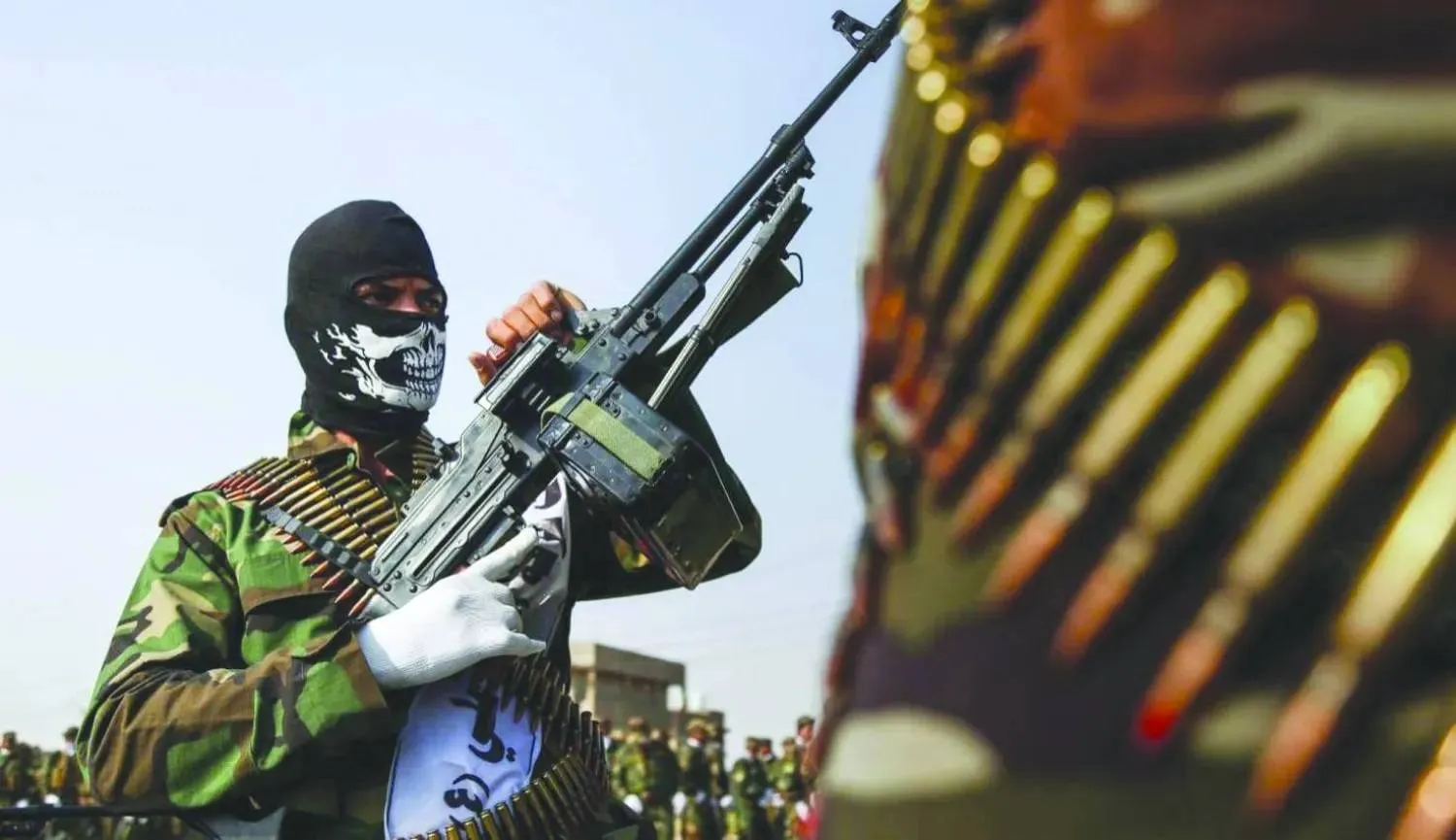
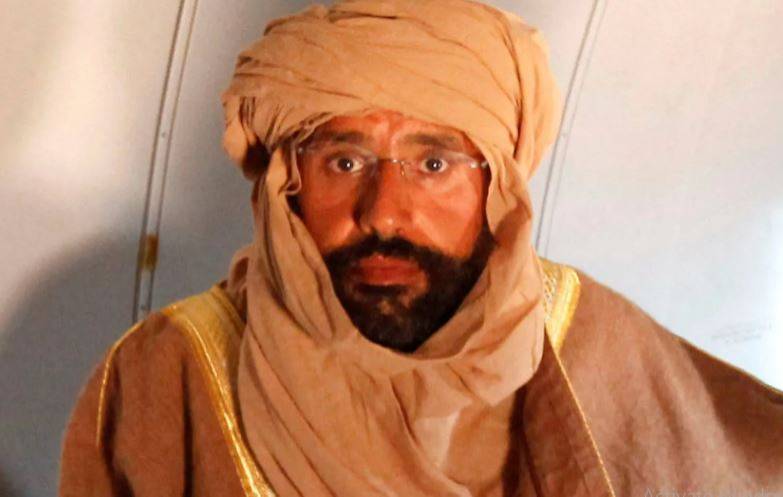
An exclusive investigation by UK’s The Guardian has found companies hiring hundreds of Colombian fighters for Sudan’s Rapid Support Forces.

A one-bedroom flat off north London’s Creighton Road in Tottenham is, according to UK government records, tied to a transnational network of companies involved in the mass recruitment of mercenaries to fight in Sudan alongside the RSF, said the report.

Colombian mercenaries were directly involved in the RSF’s seizure of the southwestern Sudanese city of El Fasher in late October, which prompted a killing frenzy that analysts say has cost at least 60,000 lives.

“The flat in Tottenham is registered to a company called Zeuz Global, set up by two individuals named and sanctioned last week by the US treasury for hiring Colombian mercenaries to fight for the RSF,” said The Guardian.

“Both figures – Colombian nationals in their 50s – are described in documents at Companies House, the government register of firms operating in the UK, as living in Britain,” it said.

“The day after the US treasury announced sanctions on those behind the Colombian mercenary operation –December 9 – Zeuz Global abruptly moved its operation to the very heart of London. On 10 December the firm shared “new address details” Its new postcode matches One Aldwych, a five-star hotel in Covent Garden,” the report added.

Yet the first line of Zeuz Global’s new address is, confusingly, “4dd Aldwych,” which corresponds to the Waldorf Hilton hotel 100 meters away, according to The Guardian.

Both hotels said they had no link to Zeuz Global and had no idea why the firm had used their postcodes.

“It is of major concern that the key individuals the US government claims are directing this mercenary supply have been able to set up a UK company operating from a flat in north London, and even to claim that they’re resident in the UK,” said Mike Lewis, a researcher and former member of the UN panel of experts on Sudan.

When Companies House was asked if it had any knowledge of what Zeuz Global actually did, or is doing, it did not respond. The government agency would also not confirm whether the sanctioned individuals were, in fact, resident in the UK.

Contacting Zeuz proved fruitless; its website, set up in May, was labelled as “under construction” with no contact details provided.


Egyptian President Urges UN Security Council Reforms for Africa's Larger Role

In this photo, provided by Egypt's presidency media office, Egyptian President Abdel-Fattah el-Sisi, front right, greets Russian Foreign Minister Sergei Lavrov, left, before their meeting at the Presidential Palace in Cairo, Egypt, Saturday, Dec. 20, 2025. (Egyptian Presidency Media Office via AP)
TT

Egyptian President Urges UN Security Council Reforms for Africa's Larger Role

In this photo, provided by Egypt's presidency media office, Egyptian President Abdel-Fattah el-Sisi, front right, greets Russian Foreign Minister Sergei Lavrov, left, before their meeting at the Presidential Palace in Cairo, Egypt, Saturday, Dec. 20, 2025. (Egyptian Presidency Media Office via AP)

Egypt’s President Abdel-Fattah el-Sisi on Saturday reiterated calls for structural changes in the UN Security Council to grant Africa a larger role in shaping global decisions.

El-Sisi made the plea for a “more pluralistic” world order at a conference of the Russia-Africa partnership held in Cairo, which was attended by Russian Foreign Minister Sergei Lavrov and ministers from more than 50 African countries along with representatives from several African and regional organizations.

“The voice of Africa should be present and influential in making global decisions given the continent’s human, economic, political and demographic weight,” el-Sisi said in a statement read out by his foreign minister at the plenary session of the conference.

According to The Associated Press, he added that international financial institutions need to undergo similar reforms to ensure Africa an equitable representation.

Since 2005, the African Union has been demanding that Africa be granted two permanent seats with veto powers in the Security Council, arguing that such reforms would contribute to achieving peace and stability on the continent, which has been struggling with wars for decades.

The Security Council, which is charged with maintaining international peace and security, has not changed from its 1945 configuration: 10 non-permanent members from all regions of the world elected for two-year terms without veto power, and five countries that were dominant powers at the end of World War II are permanent members with veto power: The United States, Russia, China, Britain and France.

In his statement, el-Sisi said that the Russia-Africa ministerial conference will develop a plan to consolidate the partnership ahead of next year’s summit of heads of state.

“We remain a reliable partner for African states in strengthening their national sovereignty, both politically and in matters of security, as well as in other dimensions,” Lavrov said at the plenary session. “We’re committed to further unlocking the existing enormous potential of our practical cooperation.”


Türkiye, Hamas Discuss Reaching 2nd Phase of Gaza Peace Plan

Destroyed buildings, amid a ceasefire between Israel and Hamas, in Khan Younis in the southern Gaza Strip November 18, 2025. (Reuters)
TT

Türkiye, Hamas Discuss Reaching 2nd Phase of Gaza Peace Plan

Destroyed buildings, amid a ceasefire between Israel and Hamas, in Khan Younis in the southern Gaza Strip November 18, 2025. (Reuters)

Türkiye's MIT intelligence agency chief met Hamas' ​negotiating team head Khalil Al-Hayya on Saturday and discussed necessary measures to be taken for proceeding to the ‌second phase ‌of the ‌Gaza ⁠peace ​plan, ‌Turkish security sources said.

The sources, speaking on condition of anonymity, said MIT chief Ibrahim Kalin met the ⁠Hamas delegation in Istanbul ‌within the scope ‍of the ‍Gaza ceasefire agreement, ‍and they discussed steps to be taken to prevent what they ​said were Israel's ceasefire violations.

They also discussed ⁠measures to be taken to resolve existing issues for proceeding to the second phase of the plan, the sources also told Reuters, without giving details.

Israel retained control of 53% of Gaza under the first phase of US President Donald Trump's plan, which involved the release of hostages held by militants in Gaza and of Palestinians detained by Israel.

The final hostage remains to be handed over are those of an Israeli police officer killed on October 7, 2023 fighting Gazan militants who had invaded Israel.

According to the plan, Israel is to pull back further in the second phase as a transitional authority is established in Gaza and a multinational security force is deployed, Hamas is disarmed, and reconstruction begins.