


Jordan Offers Investment Opportunities for Oil Shale Exploration

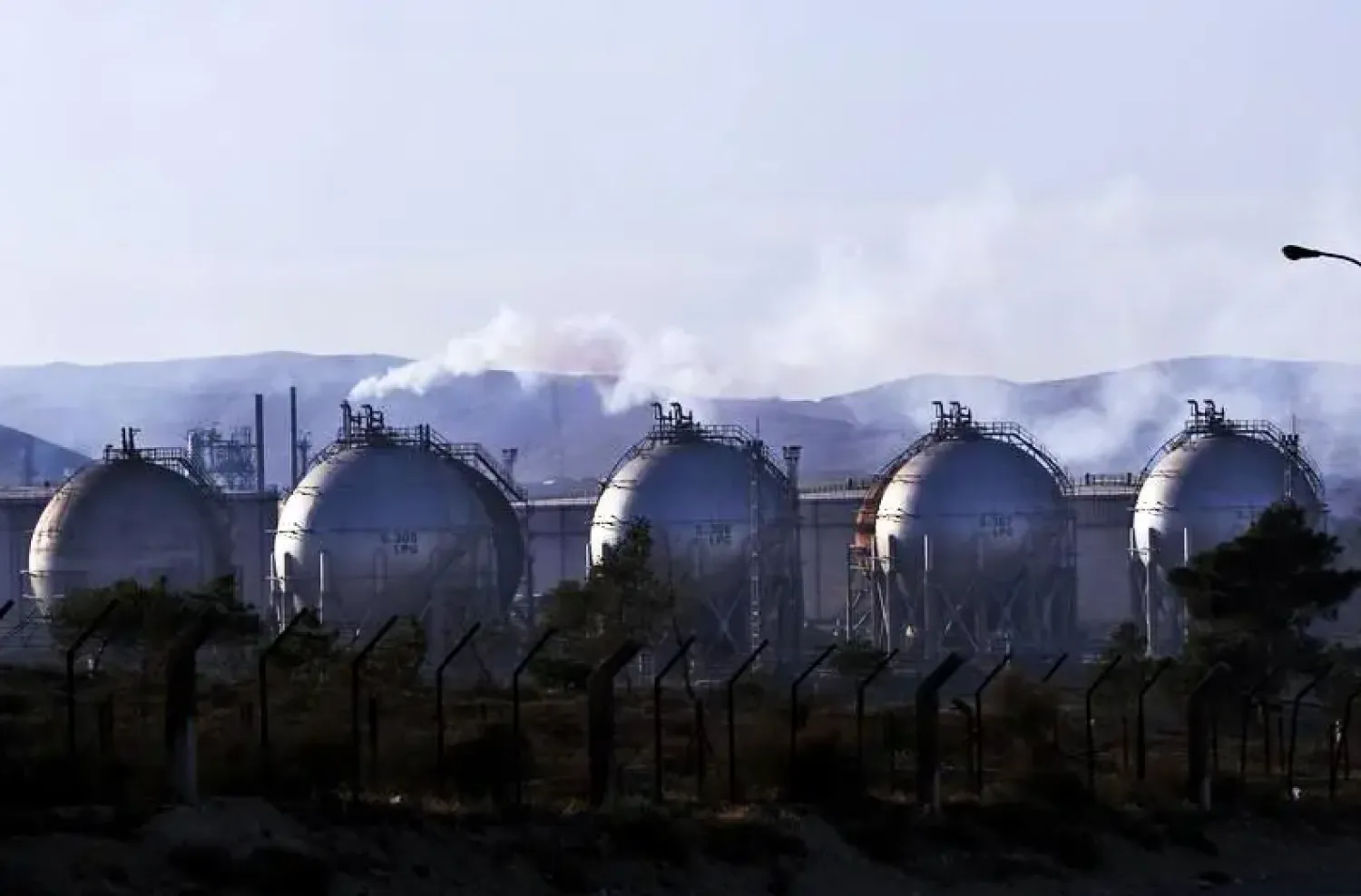
Spherical tanks are seen at the Jordan Petroleum Refinery in the city of Zarqa. (Reuters)
TT

Jordan Offers Investment Opportunities for Oil Shale Exploration

Spherical tanks are seen at the Jordan Petroleum Refinery in the city of Zarqa. (Reuters)

Jordan’s Ministry of Investment announced new investment prospects through the online platform to explore and extract oil shale.

According to the platform, there are more than 18 known oil shale sites in Jordan, including al-Lajjun, al-Sultani, Jurf al-Darawish, al-Attar, Umm al-Ghadran, Wadi Maghar, Suwaqa, Khan al-Zubaib, and al-Thamd.

The investor must develop and invest in infrastructure assets and create new construction opportunities, long-term returns for shareholders, and concession rights.

The data showed that most of the leading oil shale places of proven commercial importance are in central and southern Jordan and can be easily reached via the desert road between Amman and Aqaba.

Oil shale is also found in the areas of Wadi al-Adhiyah, Wadi al-Nadhiyah, Asfir al-Mahatta, the Ghazimah Mountains, Wadi Abu al-Hamam, and most of these areas are close to the infrastructure services necessary for investment.

The data indicated that oil shale is defined as a sedimentary rock in which the organic content (kerogen) is insoluble in organic solvents but instead forms oil-like liquid hydrocarbons when subjected to thermal decomposition at temperatures of up to 500 – 600°C.

Jordan has a sizeable domestic resource of oil shale spread across 60 percent of the Kingdom’s total area, making it the fourth-largest oil shale reserve worldwide.

According to the data provided by the platform, oil shale is a safe and long-term solution to Jordan’s significant energy needs.

Many studies and surveys conducted on the use of oil shale in several locations in Jordan confirmed that the material can be exploited through three paths: heating the deep oil shale to produce oil, distilling the oil shale through surface mining, and direct combustion of oil shale to generate electricity.



IATA Chief: Jet Fuel Supply Could Take Months to Recover after Hormuz Reopening

A British Airways plane takes off from Milan Linate airport northern Italy, on April 7, 2026. (Photo by Stefano RELLANDINI / AFP)
TT

IATA Chief: Jet Fuel Supply Could Take Months to Recover after Hormuz Reopening

A British Airways plane takes off from Milan Linate airport northern Italy, on April 7, 2026. (Photo by Stefano RELLANDINI / AFP)

The head of a body representing global airlines said on Wednesday that even if Iran reopened the Strait of Hormuz it would take months for jet fuel supply to recover given disruptions to Middle East refining capacity.

Oil fell below $100 per barrel after US President Donald Trump said he had agreed to a two-week ceasefire with Iran that was subject to the immediate and safe reopening of the Strait of Hormuz, which normally carries about a fifth of the world's oil trade.

Willie Walsh, director general of the International Air Transport Association (IATA), told reporters in Singapore that while he ⁠expected crude oil ⁠prices to fall, jet fuel costs were likely to remain slightly elevated due to the impact on refineries.

"If it were to reopen and remain open, I think it will still take a period of months to get back to where supply needs to be given the disruption to the refining capacity in ⁠the Middle East, which is a critical part of the global supply of refined products, and not just jet fuel for other products as well," Walsh said.

Airlines across Asia have been cutting flights, carrying extra fuel from home airports and adding refueling stops as the Middle East conflict squeezes jet fuel supply, adding to pressure on an industry already hit by a doubling of jet fuel prices.

The pain has so far been sharpest in lower-income, import-dependent markets such as Vietnam, Myanmar and Pakistan after China and ⁠Thailand halted ⁠jet fuel exports and South Korea capped them at last year’s levels.

If crude started flowing again then "I would like to think" that China as well as South Korea would restart their exporting of refined products, Reuters quoted Walsh as saying.

"So there is (refining) capacity available once we get the crude oil flowing, but it'll take a little bit of time, and with the crack spread elevated the way it is, I think that provides an incentive for refineries to increase the production of jet fuel," Walsh said.

The crack spread refers to refinery margins.


Dollar Drops as Iran Ceasefire Prompts risk-on Turn for Markets

A portrait of George Washington is displayed on a stack of US one-dollar bills in Dallas, Tuesday, April 7, 2026. (AP Photo/LM Otero)
TT

Dollar Drops as Iran Ceasefire Prompts risk-on Turn for Markets

A portrait of George Washington is displayed on a stack of US one-dollar bills in Dallas, Tuesday, April 7, 2026. (AP Photo/LM Otero)

The dollar sank to its lowest level in a month while the euro, yen, Aussie and sterling rallied hard in Asian trading on Wednesday after US President Donald Trump said he had agreed to a two-week ceasefire with Iran.

The yen strengthened 0.8% against the greenback to 158.36 per dollar. The euro was up 0.7% at $1.1674, while the British pound appreciated 0.8% to $1.34. The Australian dollar climbed 1.1% to $0.7054.

Trump had earlier threatened widespread attacks on Iran's civilian infrastructure, drawing international condemnation after issuing an extraordinary warning that "a whole civilization will die tonight" ⁠if his demands ⁠were not met.

Investors' risk appetite rapidly returned after the ceasefire announcement, less than two hours before Trump's deadline for Tehran to reopen the Strait of Hormuz would have expired, Reuters reported.

If the strategic waterway is reopened, "we could be able to consolidate the risk-on rally that we're seeing," said Ray Attrill, head of FX strategy at National Australia Bank in Sydney.

"But a lot has to happen in the next 14 days," he said, adding ⁠that currencies would be vulnerable to a retracement of their recent moves in the interim. "Markets still need to proceed with a degree of skepticism."

Traders' attention turned to central banks' next moves as oil prices fell sharply. Brent crude slid 13.4% to $94.68 a barrel but was still well above pre-war levels.

The kiwi dollar climbed 1.5% to $0.5819, extending gains after the Reserve Bank of New Zealand kept its policy rate at 2.25% on Wednesday for a second straight meeting, choosing to sit tight as it gauges the economic fallout from the war. But the central bank signaled it is ready to act if inflation pressures intensify.

Fed funds futures are pricing coin-toss ⁠odds that the Federal ⁠Reserve could cut rates by at least 25 basis points at its December 9 meeting, compared to an implied 74.5% probability a day earlier that the US central bank would remain on hold, according to the CME Group's FedWatch tool.

The US dollar index, which measures the greenback's strength against a basket of six currencies, weakened for a third consecutive day to lows of 98.838, its weakest since March 11.

Elsewhere, the won strengthened 1.6% to 1,477.10, its biggest one-day appreciation since the Iran war began and shrugging off fresh geopolitical tensions on the Korean peninsula. South Korea's military said North Korea fired several ballistic missiles toward the sea off its east coast on Wednesday, following a separate launch detected a day earlier.

Cryptocurrencies also rallied, with bitcoin advancing 2.9% to $71,327.07, and ether climbing5.6% to $2,233.90.


Türkiye, Syria Step Up Banking Ties as Lenders Eye Expansion

Türkiye’s Ziraat Bank tower is seen in Sarajevo, Bosnia and Herzegovina, May 16, 2018. (Reuters)
TT

Türkiye, Syria Step Up Banking Ties as Lenders Eye Expansion

Türkiye’s Ziraat Bank tower is seen in Sarajevo, Bosnia and Herzegovina, May 16, 2018. (Reuters)

Türkiye and Syria are accelerating cooperation between their central banks, Trade Minister Omer Bolat said on Tuesday, adding that Syria’s central bank governor will meet Turkish banking ‌regulators.

Speaking at ‌a business ‌forum, ⁠Bolat said closer ⁠banking ties and the entry of Turkish lenders into Syria could help boost trade and industrial ⁠investment.

State lender Ziraat ‌Bank ‌and private lender Aktifbank ‌are both working to ‌establish a presence in Syria, company officials said separately, with applications submitted ‌and operations expected to begin in the near ⁠term.

Business ⁠leaders at the forum said restoring banking services and resolving customs and logistics issues would be key to increasing bilateral trade.