


World Court to Hear 'Watershed' Syria Torture Case

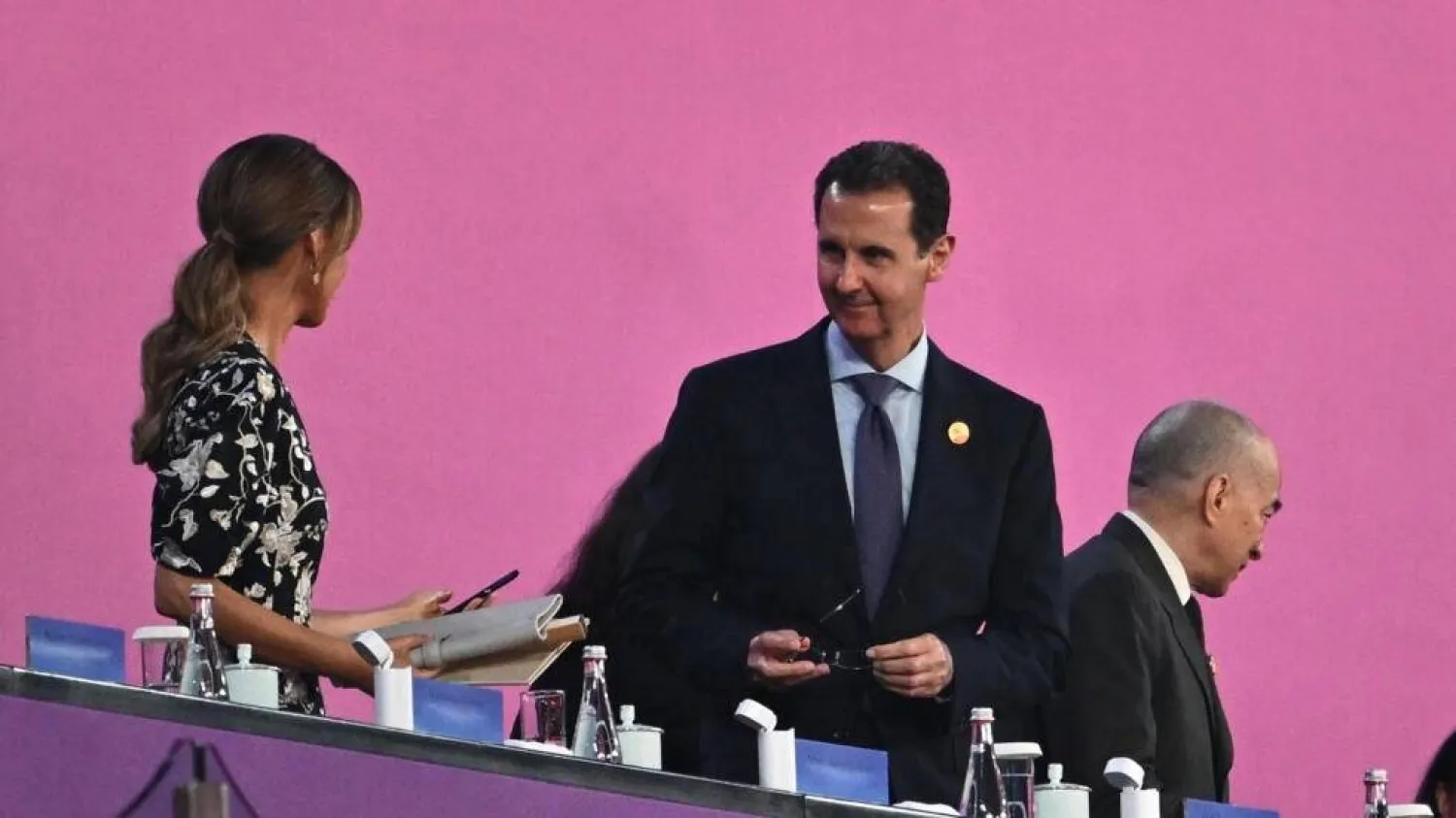
The situation gained renewed attention after Syrian President Bashar al-Assad's return to the international fold in May. Philip FONG / AFP
TT

World Court to Hear 'Watershed' Syria Torture Case

The situation gained renewed attention after Syrian President Bashar al-Assad's return to the international fold in May. Philip FONG / AFP

Syria faces allegations at the UN top court Tuesday that it maintains a "pervasive" system of torture that has killed tens of thousands of people.

The case at the International Court of Justice (ICJ) marks the first time Damascus has faced international judges over the brutal civil war that started in 2011, said AFP.

Victims have endured "unimaginable physical and mental pain and suffering" from "abhorrent treatment in detention, inhumane conditions of detention, and sexual and gender-based violence," the case brought by the Netherlands and Canada alleges.

Prisoners currently languishing in Syrian prisons are at "imminent risk of death or severe physical or mental harm," Canada and the Netherlands wrote in their submission to the court.

They also allege the widespread rape of women and children, mutilation, beheadings, plus the "particularly abhorrent" use of chemical weapons to intimidate and punish civilians.

Damascus has dismissed the case as "disinformation and lies," with a government source telling the SANA newswire in July the allegations "lack the slightest degree of credibility."

Canada and the Netherlands asked the ICJ to "urgently" demand Syria stop all torture and arbitrary detention, open prisons to outside inspectors and provide information to families about the fate of their loved ones.

The ICJ can take years to rule on a case, but urgent so-called "provisional measures" can be ordered in a matter of weeks and are legally binding.

An initial hearing was planned for July but postponed by Damascus.

'Nightmarish conditions'

"I was in prison in Syria for three years, and I know for sure that torture is happening around the clock, it's happening around the hour," former prisoner now activist Ahmad Helmi told AFP in an interview.

"It doesn't happen only for interrogation, sometimes it happens for fun, just because they feel they enjoy impunity, they can do whatever they want... hundreds of people are dying under torture every month," he said.

Balkees Jarrah, from Human Rights Watch, said the ICJ needed to act "to prevent further abuses against Syrians, who continue to suffer under nightmarish conditions and whose lives are in serious jeopardy."

While there have been individual war crimes cases linked to the Syrian war in some countries, there has long been frustration in Western capitals at the lack of any wider plan for international justice.

The Dutch first launched a bid in September 2020 to hold Syria responsible for alleged breaches of the UN Convention against Torture, to which Damascus is a signatory. Canada joined the case the following March.

The International Criminal Court (ICC), a war crimes court which like the ICJ is based in The Hague, has been unable to deal with Syria as it never ratified the Rome Statute, the tribunal's founding treaty.

Russia and China blocked a draft UN Security Council resolution to refer the situation in Syria to the ICC in 2014.

The situation has gained renewed attention after the return of Syrian President Bashar al-Assad to the international fold in May when he attended an Arab League summit.

Describing the hearings as a "watershed" case, Human Rights Watch hoped the ICJ proceedings would shine a spotlight on Assad's return from isolation.

Activist Helmi said there was no chance of "rogue state" Syria accepting any decisions by the ICJ, but insisted that any ruling was still important for victims and families.

"We are not talking about a local court somewhere. It's not me saying torture is happening. This will be the ICJ saying that torture is happening," he told AFP.

"And whoever wants to re-normalize the Syrian regime, they will have this tag on their forehead that you are normalizing with a state that is torturing people around the clock."


UN: Israeli Measure in West Bank is ‘Unlawful,’ Erodes Two-State Solution

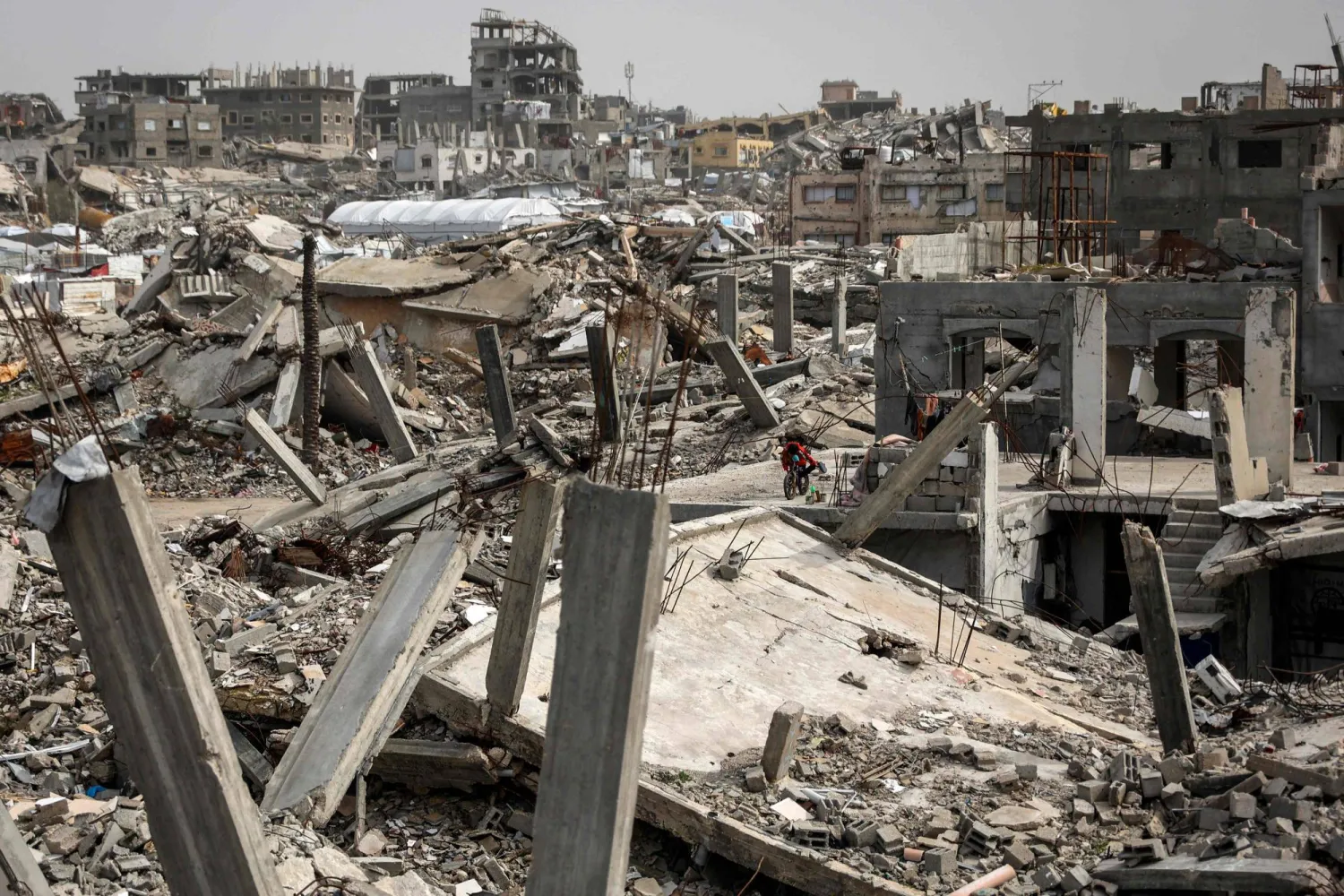
Palestinian men sit on the rubble as others console each other after a Palestinian home was demolished by the Israeli army in the village of Shuqba, west of the city of Ramallah, in the Israeli-occupied West Bank on February 9, 2026. (Photo by Zain JAAFAR / AFP)
TT

UN: Israeli Measure in West Bank is ‘Unlawful,’ Erodes Two-State Solution

Palestinian men sit on the rubble as others console each other after a Palestinian home was demolished by the Israeli army in the village of Shuqba, west of the city of Ramallah, in the Israeli-occupied West Bank on February 9, 2026. (Photo by Zain JAAFAR / AFP)

UN Secretary-General Antonio Guterres on Monday voiced grave concern over the reported decision by the Israeli security cabinet to authorize a series of administrative and enforcement measures in Areas A and B in the occupied West Bank, warning that such measure erodes the prospect for the two-State solution.

“Such actions, including Israel’s continued presence in the Occupied Palestinian Territory are not only destabilizing but – as recalled by the International Court of Justice – unlawful,” according to a statement issued by his spokesperson.

Guterres reiterated that all Israeli settlements in the occupied West Bank, including East Jerusalem, and their associated regime and infrastructure, have no legal validity and constitute a flagrant violation of international law, including relevant UN resolutions.

The Secretary-General called on Israel to reverse the measures. He also urged all parties “to preserve the only path to lasting peace, a negotiated two-State solution, in line with relevant Security Council resolutions and international law.”

On Sunday, the Ynet news website revealed that the Israeli cabinet is advancing a series of dramatic decisions aimed at deepening Israel’s de facto annexation of parts of the West Bank.

It said the measures, advanced by ministers Israel Katz and Bezalel Smotrich, are expected to bring far-reaching changes to land registration and property acquisition procedures in the West Bank, enabling the state to demolish Palestinian-owned buildings in Area A.

The decisions are also expected to significantly expand Jewish settlement across the West Bank.

In Ramallah, the Palestinian Presidency strongly denounced the dangerous decisions approved by the Israeli cabinet aimed at deepening attempts to annex the occupied West Bank, according to the Palestinian news agency, WAFA.

The Presidency considered the decisions “a continuation of the comprehensive war waged by the Israeli government against Palestinians, and an unprecedented escalation targeting the Palestinian presence and its national and historical rights throughout the Palestinian territory, especially in the occupied West Bank.”

It warned of the grave implications of these decisions, which represent the practical implementation of annexation and displacement plans.

“These decisions also violate all agreements signed between the Palestine Liberation Organization and Israel, as well as international law and resolutions of international legitimacy, and constitute a blatant violation of the Oslo Accords and the Hebron Agreement,” the Presidency said.


Palestinians in the West Bank Struggle to Get by as Israel Severely Limits Work Permits

Palestinians protest after Israeli soldiers blocked the entrance of the Nur Shams Palestinian refugee camp in the occupied West Bank on February 9, 2026, demanding to be allowed to return to their homes from where they were expelled last year during an ongoing Israeli army operation. (Photo by Jaafar ASHTIYEH / AFP)
TT

Palestinians in the West Bank Struggle to Get by as Israel Severely Limits Work Permits

Palestinians protest after Israeli soldiers blocked the entrance of the Nur Shams Palestinian refugee camp in the occupied West Bank on February 9, 2026, demanding to be allowed to return to their homes from where they were expelled last year during an ongoing Israeli army operation. (Photo by Jaafar ASHTIYEH / AFP)

Hanadi Abu Zant hasn’t been able to pay rent on her apartment in the occupied West Bank for nearly a year after losing her permit to work inside Israel. When her landlord calls the police on her, she hides in a mosque.

“My biggest fear is being kicked out of my home. Where will we sleep, on the street?” she said, wiping tears from her cheeks.

She is among some 100,000 Palestinians whose work permits were revoked after Hamas’ Oct. 7, 2023, attack ignited the war in the Gaza Strip. Confined to the occupied territory, where jobs are scarce and wages far lower, they face dwindling and dangerous options as the economic crisis deepens, The Associated Press said.

Some have sold their belongings or gone into debt as they try to pay for food, electricity and school expenses for their children. Others have paid steep fees for black-market permits or tried to sneak into Israel, risking arrest or worse if they are mistaken for militants.

Israel, which has controlled the West Bank for nearly six decades, says it is under no obligation to allow Palestinians to enter for work and makes such decisions based on security considerations. Thousands of Palestinians are still allowed to work in scores of Jewish settlements across the West Bank, built on land they want for a future state.

Risk of collapse

The World Bank has warned that the West Bank economy is at risk of collapse because of Israel’s restrictions. By the end of last year, unemployment had surged to nearly 30% compared with around 12% before the war, according to the Palestinian Central Bureau of Statistics.

Before the war, tens of thousands of Palestinians worked inside Israel, mainly in construction and service jobs. Wages can be more than double those in the landlocked West Bank, where decades of Israeli checkpoints, land seizures and other restrictions have weighed heavily on the economy. Palestinians also blame the Palestinian Authority, which exercises limited self-rule in parts of the territory, for not doing enough to create jobs.

About 100,000 Palestinians had work permits that were revoked after the outbreak of the war. Israel has since reinstated fewer than 10,000, according to Gisha, an Israeli group advocating for Palestinian freedom of movement.

Wages earned in Israel injected some $4 billion into the Palestinian economy in 2022, according to the Institute for National Security Studies, an Israeli think tank. That’s equivalent to about two-thirds of the Palestinian Authority's budget that year.

An Israeli official said Palestinians do not have an inherent right to enter Israel, and that permits are subject to security considerations. The official spoke on condition of anonymity in line with regulations.

Israel seized the West Bank, Gaza and east Jerusalem in the 1967 Mideast war, territories the Palestinians want for a future state. Some 3 million Palestinians live in the West Bank, along with over 500,000 Israeli settlers who can come and go freely.

The war in Gaza has brought a spike in Palestinian attacks on Israelis as well as settler violence. Military operations that Israel says are aimed at dismantling militant groups have caused heavy damage in the West Bank and displaced tens of thousands of Palestinians.

‘My refrigerator, it’s empty’

After her husband left her five years ago, Abu Zant secured a job at a food-packing plant in Israel that paid around $1,400 a month, enough to support her four children. When the war erupted, she thought the ban would only last a few months. She baked pastries for friends to scrape by.

Hasan Joma, who ran a business in Tulkarem before the war helping people find work in Israel, said Palestinian brokers are charging more than triple the price for a permit.

While there are no definite figures, tens of thousands of Palestinians are believed to be working illegally in Israel, according to Esteban Klor, professor of economics at Israel's Hebrew University and a senior researcher at the INSS. Some risk their lives trying to cross Israel’s separation barrier, which consists of 9-meter high (30-foot) concrete walls, fences and closed military roads.

Shuhrat Barghouthi’s husband has spent five months in prison for trying to climb the barrier to enter Israel for work, she said. Before the war, the couple worked in Israel earning a combined $5,700 a month. Now they are both unemployed and around $14,000 in debt.

“Come and see my refrigerator, it’s empty, there’s nothing to feed my children,” she said. She can’t afford to heat her apartment, where she hasn’t paid rent in two years. She says her children are often sick and frequently go to bed hungry.

Sometimes she returns home to see her belongings strewn in the street by the landlord, who has been trying to evict them.

Forced to work in settlements

Of the roughly 48,000 Palestinians who worked in Israeli settlements before the war, more than 65% have kept their permits, according to Gisha. The Palestinians and most of the international community view the settlements, which have rapidly expanded in recent years, as illegal.

Israeli officials did not respond to questions about why more Palestinians are permitted to work in the settlements.

Palestinians employed in the settlements, speaking on condition of anonymity for fear of retribution, say their employers have beefed up security since the start of the war and are far more willing to fire anyone stepping out of line, knowing there are plenty more desperate for work.

Two Palestinians working in the Mishor Adumim settlement said security guards look through workers’ phones and revoke their permits arbitrarily.

Israelis have turned to foreign workers to fill jobs held by Palestinians, but some say it’s a poor substitute because they cost more and do not know the language. Palestinians speak Arabic, but those who work in Israel are often fluent in Hebrew.

Raphael Dadush, an Israeli developer, said the permit crackdown has resulted in costly delays.

Before the war, Palestinians made up more than half his workforce. He’s tried to replace them with Chinese workers but says it’s not exactly the same. He understands the government’s decision, but says it’s time to find a way for Palestinians to return that ensures Israel’s security.

Assaf Adiv, the executive director of an Israeli group advocating for Palestinian labor rights, says there has to be some economic integration or there will be “chaos.”

“The alternative to work in Israel is starvation and desperation,” he said.


Damascus Govt Takes Over Control of Rmeilan Field, Says Syria's Oil Belongs to All

A man walks next to pumpjacks on the day a Syrian government delegation visits the oil-rich city of Rmeilan to inspect oil fields and finalize agreements signed between the Syrian government and the Syrian Democratic Forces (SDF), in Rmeilan, Syria, February 9, 2026. (Reuters)
TT

Damascus Govt Takes Over Control of Rmeilan Field, Says Syria's Oil Belongs to All

A man walks next to pumpjacks on the day a Syrian government delegation visits the oil-rich city of Rmeilan to inspect oil fields and finalize agreements signed between the Syrian government and the Syrian Democratic Forces (SDF), in Rmeilan, Syria, February 9, 2026. (Reuters)

The Damascus government kicked off on Monday measures to assume control of the Rmeilan oil field, Syria's second largest, in the northeastern Hasakah province.

The move took place after it took over Qamishli airport in line with an agreement with the Kurdish Syrian Democratic Forces (SDF) that was reached on January 29.

A Syrian Petroleum Company delegation visited Hasakah oil fields on Monday as part of the process to bring the Rmeilan and Sweidiyeh fields back under state administration, reported the official news agency SANA.

The delegation, accompanied by Hasakah’s Internal Security chief Marwan al‑Ali, met field managers and held a brief press conference addressing questions on future operations, fuel prices once production resumes, and whether part of the revenues could support the local area.

The Company vowed that Syria's oil "belongs to everyone" and that workers at the Rmeilan field will keep their jobs. Security at the field will be handled by guards from the region.

The team toured al‑Awda field in rural Qamishli to assess conditions and hear from workers. Deputy CEO Walid al‑Youssef said several agreements are already in place to support the oil and gas sector and improve infrastructure in Rmeilan. He noted that the current staff will remain in their positions with salary increases, reported SANA.

The Company officials said the visit aims to establish direct communication with technical teams as preparations begin for the handover.

Hasakah Fields Director Dhiab Khalif described the visit as successful, noting that while most fields are in good condition, some require maintenance. Upcoming steps include agreeing on production levels and boosting output to improve energy supply.

The Syrian Petroleum Company recently began pumping raw gas from the Jibseh fields in Hasakah to the Furqlus gas plant in Homs, part of efforts to increase national production and support electricity generation.