

With the world’s attention fixed on the Middle East, officials in Ukraine say they are facing a new threat: crude Russian drones that appear to be launched with the sole intention of exhausting Ukrainian rockets fired to shoot them down.
According to Ukrainian national television, the small drones carry reflectors to ensure they are detected, sometimes taking pictures to identify the sites of anti-aircraft radars and missile systems. Built from cheap components readily available online, each drone is estimated to cost around $1,500, less than each of the sometimes multiple rockets fired to bring them down, Reuters said.
Russian television pundits have reacted to the unexpected Oct. 7 Hamas assault against Israel with barely concealed glee, predicting conflict in the Middle East will dramatically reduce Western support for Kyiv.
Many Ukrainian commentators offer the same analysis, worrying in particular that outrage at mounting Palestinian casualties in Gaza and at the Hamas attacks will devastate already fragile support for Ukraine among poorer "Global South" nations and divert military aid the Kyiv government badly needs.
Earlier this month, Russia announced its defense spending for 2024 would be almost $110 billion, three times the level before its February 2022 invasion of Ukraine and almost 30% of government spending.
Ukraine intends to spend around $40 billion on defense next year, roughly half the government budget and 20% of the country’s entire economic output – but it is also counting on tens of billions more in foreign military aid, as long as Western donors are still willing to provide it.
When it comes to air defense rockets and artillery shells, Kyiv is now competing directly with Israel for Western supplies, especially from the United States. In recent weeks, Russian and Ukrainian forces have been on the offensive ahead of deteriorating weather likely to limit movement.
Each has made occasional advances, with elements of two Ukrainian marine brigades reported to have broken through on the eastern bank of the Dnipro river, potentially threatening Russian artillery positions that have repeatedly shelled the recaptured Ukrainian city of Kherson.
An advance there might allow Kyiv to better threaten Russian-held Crimea, already under Ukrainian strikes from newly supplied Western missiles that have forced Russia’s Black Sea Fleet to seek another base.
While Ukrainian officials would not confirm the landings, military bloggers and media citing military sources said the marines had seized at least three small settlements. Ukrainian troops on the far bank were being resupplied by small boats under heavy fire, they said.
Russian forces foiled several attempts by Ukrainian units to cross the Dnipro River, Russia's defense ministry said on Sunday.
On Monday, the Kyiv Post reported an appeal by Robert Brovdi, commander of a Ukrainian drone unit supported through crowdfunding, for Zodiac-type dinghies to support the offensive. By Tuesday, he said he had raised almost $1 million, roughly a third of the amount he said was needed to deliver up to 100 craft.
Further east in the Donbas, Russian forces have been making their own assault against heavily fortified Ukrainian strongholds around Avdiivka, among the last significant settlements in the region not under the control of Russian-speaking separatists.
WINTER INFRASTRUCTURE BATTLE
A shortage of personnel is a growing problem for both sides. US officials estimated in August that 70,000 to 80,000 Russian troops had been killed or wounded so far in Ukraine, with recruitment challenges forcing the Kremlin to turn to prisoners and unfit and older conscripts. Ukraine will not discuss its losses, but in August President Volodymyr Zelenskiy fired the heads of each regional recruiting command after a string of scandals over bribery and other efforts to avoid the draft.
Ukrainian officials say they expect Russia to again strike Ukraine’s energy infrastructure this winter in the hope of freezing the population, also attacking Kyiv’s ability to earn money from exports.
Russian drones and missiles have also repeatedly hit the port of Odessa and along the Danube, damaging harbor infrastructure. Ukraine’s September grain exports were 50% down on a year earlier, something traders and industry experts said was largely down to those attacks.
Russia has often used Iranian drones to target infrastructure – although it remains unclear if conflict in the Middle East will prompt Tehran, a strong supporter of Hamas, to limit such supplies.
Russian Foreign Minister Sergei Lavrov was in Iran this week as part of a meeting of nations in the Caucasus, following a visit to North Korea. Both he and Russian leader Vladimir Putin also visited China, signing a 12-year deal to export grain.
Ukraine will need every air defense missile it can get throughout the winter – hence Russia’s willingness to sacrifice its most basic drones. A growing shortage of artillery shells is if anything more serious, with frontline reports suggesting Ukrainian troops are struggling to get enough ammunition to use roughly 350 donated Western-caliber artillery pieces.
The United States and European Union have each pledged to send Ukraine roughly a million 155-mm shells, with the US donation in part coming from strategic stocks the Pentagon keeps in Israel. On Monday, a senior Pentagon official confirmed some of those were being reallocated back to Israeli forces.
NORTH KOREAN SHIPMENTS
Whether the Pentagon will find replacement stocks for Ukraine is unclear. Ukrainian officials say both their war and the Middle East conflict show the West must dramatically increase its arms manufacturing capability, pointing to a new deal with Germany to manufacture weapons in Ukraine as something to be replicated.
This month has also seen Ukraine announce the arrival of long-range US ATACMS missiles with a range of around 100 miles (160 km), giving it much greater ability to strike Russian rear areas including airfields. Ukrainian officials said the first strikes – which use cluster munitions to hit a larger area – destroyed nine Russian helicopters and other equipment.
Russia is believed to be lobbying for its own foreign arms supplies, including from China and North Korea. While the former appears to have limited its support to weapons components such as chips, a meeting between Putin and North Korean counterpart Kim Jong Un in September appears to have seen the Pyongyang government opening its arsenals.
Since August, two cargo ships have been sailing repeatedly between North Korean ports and Dunay in Russia, unloading at least 1,000 sea containers then shipped by rail to armaments bunkers at Tikhoretsk in the Caucasus.
The shipments were revealed last week in private satellite footage published by the London-based Royal United Services Institute. Estonian officials told reporters they believed the North Korean shipment might total around 350,000 shells, roughly the amount Russia fires each month.
Coupled with Russia’s remaining stockpile estimated by Estonia at around four million shells, that would allow Russia to maintain its current rate of fire throughout 2024, potentially outgunning Ukraine.
While some East European countries have pledged to further increase weapons shipments to Kyiv, others – including Italy and a new government in Slovakia – have said they will cut back.
By early 2025, the Kremlin may hope Donald Trump will be back in the White House, making good on his pre-election promises to halt support for Ukraine and make Kyiv sue for peace.
Whether or not that happens, the coming months will bring more death and destruction, as each side works to shape the battlefield ahead of a perhaps inevitably political decision on how the conflict ends.
* Peter Apps is a Reuters columnist writing on defense and security issues. He joined Reuters in 2003, reporting from southern Africa and Sri Lanka and on global defense issues. He has been a columnist since 2016. He is also the founder of a think-tank, the Project for Study of the 21st Century, and, since 2016, has been a Labor Party activist and British Army reservist.


Ukraine Awaits Brutal Winter with World Attention Focused on Middle East
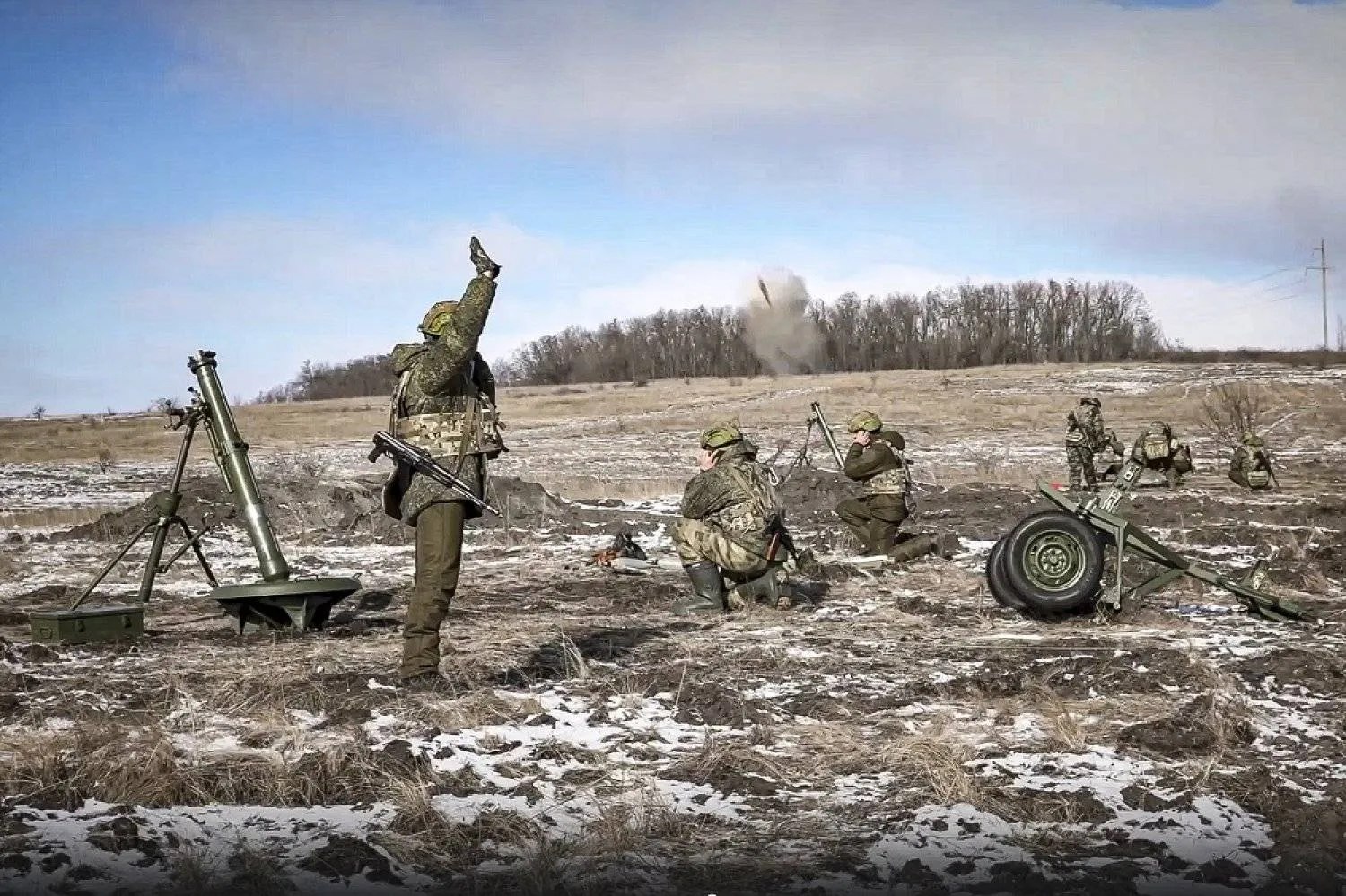
In this handout photo taken from video and released by Russian Defense Ministry Press Service on Friday, Feb. 17, 2023, the Russian army's 120 mm mortars fire at Ukrainian troops at an undisclosed location. (Russian Defense Ministry Press Service via AP)

Ukraine Awaits Brutal Winter with World Attention Focused on Middle East
In this handout photo taken from video and released by Russian Defense Ministry Press Service on Friday, Feb. 17, 2023, the Russian army's 120 mm mortars fire at Ukrainian troops at an undisclosed location. (Russian Defense Ministry Press Service via AP)


لم تشترك بعد
انشئ حساباً خاصاً بك لتحصل على أخبار مخصصة لك ولتتمتع بخاصية حفظ المقالات وتتلقى نشراتنا البريدية المتنوعة
