

President Joe Biden is looking to use this week's summit of Asia-Pacific leaders to show world leaders the United States has the gumption, attention span and money to focus on the region even as it grapples with a multitude of foreign and domestic policy crises.
Biden's highly anticipated meeting with Chinese President Xi Jinping on Wednesday is the main event of his four-day visit to San Francisco, where leaders from the 21 economies that make up the Asia-Pacific Economic Cooperation forum are gathering for their annual summit. The talks with Xi are of enormous importance as the leaders of the world's two biggest economies try to find a measure of stability after what's been a difficult year for US-China relations.
But the White House also wants to demonstrate to APEC's leaders that Biden can remain focused on the Pacific while also trying to keep the Israel-Hamas war from exploding into a broader regional conflict and to persuade Republican lawmakers to continue to spend billions more on the costly Ukrainian effort to repel Russia's nearly 21-month old invasion, The Associated Press said.
“President Biden this coming week will be doing a lot more than just meeting with President Xi,” White House national security adviser Jake Sullivan told reporters in Washington on Monday. He added that Biden would put forward his economic vision for the region, make the case that the US is “the very eminent driver” for sustainable economic growth in the Asia-Pacific, and hold the region out as critical to US economic growth.
White House officials say they are cognizant that fellow APEC nations want to see better dialogue between the US and China because it reduces the risk of regional conflict. At the same time, they also know that others in the region are concerned that the Pacific is too often seen through a prism in which the dominant power centers in Washington and Beijing make decisions for the region without engagement from less powerful nations.
To that end, the White House is expected to unveil new initiatives to advance clean economy investments and develop anti-corruption and taxation policies through its Indo-Pacific Economic Forum, an economic strategy announced last year aimed at countering Beijing's commercial strength in the region.
The strategy, known by the acronym IPEF, was designed to foster trade and demonstrate American commitment to the region, after then-President Donald Trump announced in 2017 that the US was withdrawing from the Trans-Pacific Partnership, or TPP, an Obama-era trade deal with 12 countries.
“The US is really aiming to use APEC as a way to demonstrate its lasting economic commitment to the region overall,” said Neils Graham, associate director for the Atlantic Council GeoEconomics Center.
Much of the APEC's membership is “tepid, at best” on IPEF, said Joshua Kurlantzick, a senior fellow for Southeast Asia at the Council on Foreign Relations. While TPP fell apart under Trump, the region has seen major trade deals sealed in recent years involving China, Japan, South Korea and other major regional economies. APEC members have some interest in aspects of IPEF, such as efforts aimed at bolstering supply chain resilience and the clean energy economy, but want to see Biden create further access to US markets.
Biden during his presidency has declined to pursue new comprehensive free-trade agreements with other countries. Administration officials quietly argue that while such pacts promote global commerce they are viewed suspiciously by Americans and some in Congress as a vehicle for sending factory jobs overseas.
Biden on Monday welcomed Indonesian President Joko Widodo, a fellow APEC leader, to the White House for talks before both travel to San Francisco. The Oval Office visit came at a somewhat awkward moment as Widodo, the leader of the world's most populous Muslim country, has been fiercely critical of Israel's operations in the Gaza Strip.
Biden, meanwhile, has been unapologetic in standing staunchly by Israel and backing its right to defend itself following the Oct. 7 attacks by Hamas militants that left 1,200 dead. Israel's retaliatory operations in Gaza have killed more than 11,000, sparking outrage from a slew of world leaders. The Indonesian president, in a speech at Georgetown University on Monday, lamented that “human life seems meaningless" as Israel prosecutes its operations.
Their differences on the Israel-Hamas war notwithstanding, Biden made clear during his sit-down with Widodo that he's looking to improve ties with the Southeast Asian power on combating the climate crisis and other issues.
The White House effort to herd APEC members to sign on to a summit-concluding joint declaration, a fixture at most international summits, could be complicated by diverging views among members on the Israel-Hamas and Ukraine wars.
“We’re certainly working for having a strong consensus statement in APEC, for the leaders to be able to release at the end of the week,” said Ambassador Matt Murray, the senior US official for APEC.
Among close allies expected to be in San Francisco are Japanese Prime Minister Fumio Kishida, South Korean President Yoon Suk Yeol and Philippine President Ferdinand Marcos, Jr.
Historically frosty relations between South Korea and Japan have rapidly thawed over the last year as they share concerns about China’s assertiveness in the Pacific and North Korea’s persistent nuclear threats.
Biden is expected to remind Xi about the US commitment to the Philippines, following a recent episode in which Chinese ships blocked and collided with two Philippine vessels off a contested shoal in the South China Sea, according to a senior administration official who spoke on the condition of anonymity to preview some of Biden's agenda.
The Philippines and other neighbors of China are resisting Beijing’s sweeping territorial claims over virtually the entire sea.
The potential for a government shutdown is also looming over the summit, with the current stopgap spending measure set to expire Friday. House Speaker Mike Johnson unveiled a proposal Saturday that would extend funding for some agencies and programs until Jan. 19. The stopgap measure excludes the roughly $106 billion funding requested by Biden for Israel, Ukraine and the US border with Mexico.
Sullivan warned that a government shutdown would be a “devastating blow” to the US standing around the globe.
“It would send a signal to the world that the United States cannot pull together on a bipartisan basis to sustain government funding, and to show a united face to the world at a moment when you see this turbulence around the world,” Sullivan said.


At Summit, Biden Aims to Show He Can Focus on Pacific amid Crises in Ukraine, Mideast and Washington
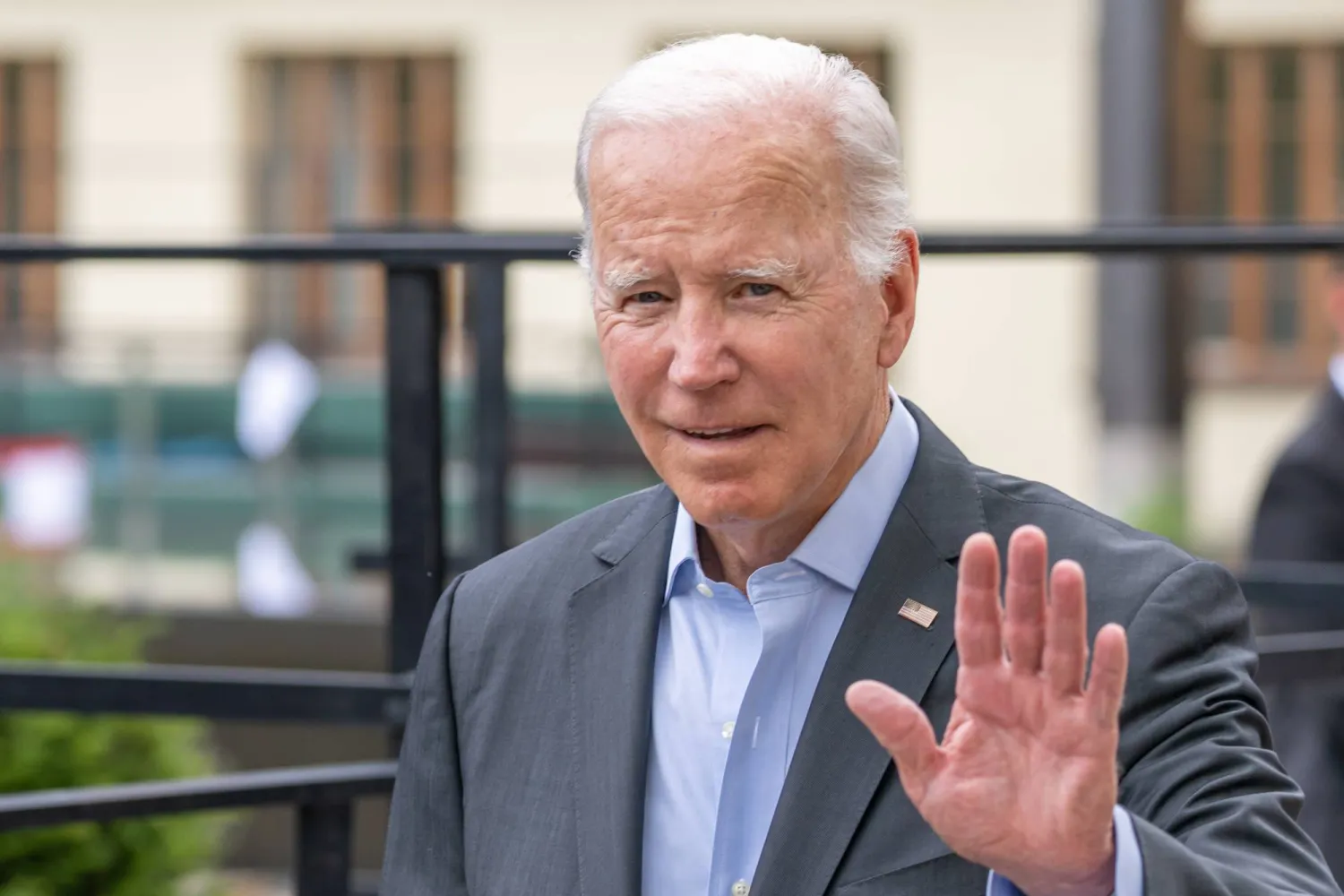
FILED - 27 June 2022, Bavaria, Elmau: US President Joe Biden walks back after a break from the meeting with outreach states on the sidelines of the 48th G7 Summit. Photo: Peter Kneffel/dpa

At Summit, Biden Aims to Show He Can Focus on Pacific amid Crises in Ukraine, Mideast and Washington
FILED - 27 June 2022, Bavaria, Elmau: US President Joe Biden walks back after a break from the meeting with outreach states on the sidelines of the 48th G7 Summit. Photo: Peter Kneffel/dpa


لم تشترك بعد
انشئ حساباً خاصاً بك لتحصل على أخبار مخصصة لك ولتتمتع بخاصية حفظ المقالات وتتلقى نشراتنا البريدية المتنوعة
