France Issues ‘Historic’ Arrest Warrant for Syria’s Assad

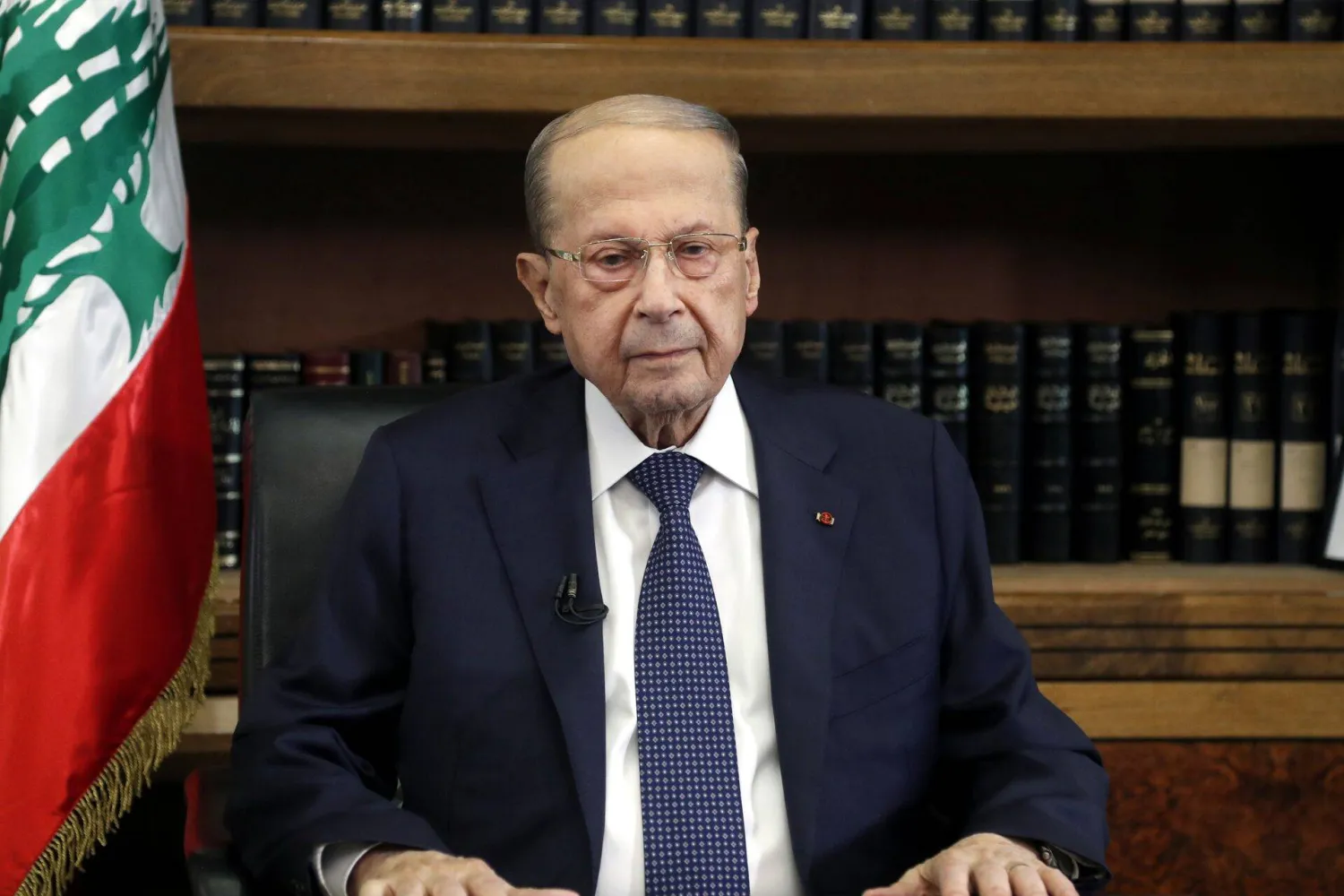
Syrian President Bashar al-Assad. AP
TT

France Issues ‘Historic’ Arrest Warrant for Syria’s Assad

Syrian President Bashar al-Assad. AP

France has issued an international arrest warrant for Syrian President Bashar al-Assad accused of complicity in crimes against humanity and war crimes over chemical attacks in 2013, plaintiffs in the case said Wednesday.

In one of the more than decade-long conflict's many horrors, sarin gas attacks saw more than 1,400 people suffocate to death near Damascus in August 2013.

The organizations that filed a legal complaint hailed the move, saying it was the first time a sitting head of state had become the subject of an arrest warrant in another country for war crimes and crimes against humanity.

Three other international warrants were also issued for the arrests of Assad's brother Maher, the de-facto chief of the Fourth Division, Syrian army's elite military unit, and two generals. The Paris court's unit concerned with crimes against humanity has been investigating the chemical attacks since 2021.

France can prosecute alleged war crimes and crimes against humanity committed anywhere in the world under the principle of universal jurisdiction.  

A judicial source, who asked not to be named, confirmed the issuing of the four warrants by investigating magistrates of the Paris court's crimes against humanity section.  

'Historic moment'  

The probe followed a complaint filed by the Syrian Center for Media and Freedom of Expression (SCM) NGO, lawyers' association Open Society Justice Initiative (OSJI) and the Syrian Archive, an organization documenting human rights violations in Syria.  

"It's a huge development," SCM president Mazen Darwish said of the warrant for Assad's arrest.  

"An independent jurisdiction is recognizing that the chemical attack couldn't have happened without the knowledge of the Syrian president, that he has responsibility and should be held accountable," he told AFP.  

The case against Assad and the others was backed by first-hand witness accounts and deep analysis of the Syrian military chain of command, Darwish said.  

"This is a historic moment - with this case, France has an opportunity to establish the principle that there is no immunity for the most serious international crimes, even at the highest level," Steve Kostas of the Open Society Justice Initiative was quoted as saying in a statement.  

'Chain of command'   

According to a source close to the investigation, the arrest warrants were the culmination of "painstaking work" by investigators from France's specialized OCLCH unit tracking international crimes.  

The goal was to "go as far up the chain of command as possible," the source said.  

"If you stop at the helicopter pilot who dropped the bomb, he will be able to say 'I only carried out orders'. The further back you go, the greater the responsibility."  

Activists in 2013 posted amateur videos on YouTube said to show the effects of the attack, including footage of dozens of corpses, many of them children, stretched out on the ground.  

Other images showed unconscious children, people foaming at the mouth and doctors apparently giving them oxygen to help them breathe.  

The scenes provoked revulsion and condemnation around the globe.  

A United Nations report later said there was clear evidence of sarin gas use.  

Syria agreed in 2013 to join the Organization for the Prohibition of Chemical Weapons (OPCW) global watchdog and give up all chemical weapons.  

The OPCW has since blamed Damascus for a series of chemical attacks during the war.  

The Syrian government has denied the allegations, which have also sparked legal complaints in Germany and other European countries.  

Syria's war broke out in 2011 after Assad's repression of peaceful demonstrations escalated into a deadly conflict that pulled in foreign powers and global extremists.  

The war has killed more than half a million people and displaced half of the country's pre-war population.  

On Thursday, the International Court of Justice will hand down a ruling on a case brought against Syria over torturing tens of thousands of its own people.  

The first international case over the war is being brought by Canada and the Netherlands, and aims to get the ICJ to order the Syrian government to stop what the plaintiffs called the "widespread and pervasive" system of torture still in place. 


EU Condemns Israel's West Bank Control Measures

The Israeli settlement of Har Homa, seen from the West Bank city of Bethlehem, Tuesday, Dec. 17, 2024. (AP)
TT

EU Condemns Israel's West Bank Control Measures

The Israeli settlement of Har Homa, seen from the West Bank city of Bethlehem, Tuesday, Dec. 17, 2024. (AP)

The European Union on Monday condemned new Israeli measures to tighten control of the West Bank and pave the way for more settlements in the occupied Palestinian territory, AFP reported.

"The European Union condemns recent decisions by Israel's security cabinet to expand Israeli control in the West Bank. This move is another step in the wrong direction," EU spokesman Anouar El Anouni told journalists.


Atrocities in Sudan's El-Fasher Were 'Preventable Human Rights Catastrophe'

Sudanese displaced people who left El Fasher after its fall, sit in the shade in Tawila at the Rwanda camp reception point on December 17, 2025. (Photo by AFP)
TT

Atrocities in Sudan's El-Fasher Were 'Preventable Human Rights Catastrophe'

Sudanese displaced people who left El Fasher after its fall, sit in the shade in Tawila at the Rwanda camp reception point on December 17, 2025. (Photo by AFP)

The atrocities unleashed on El-Fasher in Sudan's Darfur region last October were a "preventable human rights catastrophe", the United Nations said Monday, warning they now risked being repeated in the neighbouring Kordofan region.


"My office sounded the alarm about the risk of mass atrocities in the besieged city of El-Fasher for more than a year ... but our warnings were ignored," UN rights chief Volker Turk told the Human Rights Council in Geneva.


He added that he was now "extremely concerned that these violations and abuses may be repeated in the Kordofan region".


Arab League Condemns Israel's Decisions to Alter Legal, Administrative Status of West Bank

A general view shows the opening session of the meeting of Arab foreign ministers at the Arab League Headquarters (Reuters)
TT

Arab League Condemns Israel's Decisions to Alter Legal, Administrative Status of West Bank

A general view shows the opening session of the meeting of Arab foreign ministers at the Arab League Headquarters (Reuters)

The General Secretariat of the Arab League strongly condemned decisions by Israeli occupation authorities to impose fundamental changes on the legal and administrative status of the occupied Palestinian territories, particularly in the West Bank, describing them as a dangerous escalation and a flagrant violation of international law, international legitimacy resolutions, and signed agreements, SPA reported.

In a statement, the Arab League said the measures include facilitating the confiscation of private Palestinian property and transferring planning and licensing authorities in the city of Hebron and the area surrounding the Ibrahimi Mosque to occupation authorities.

It warned of the serious repercussions of these actions on the rights of the Palestinian people and on Islamic and Christian holy sites.

The statement reaffirmed the Arab League’s firm support for the legitimate rights of the Palestinian people, foremost among them the establishment of their independent state on the June 4, 1967 borders, with East Jerusalem as its capital.