The Yemeni government has rejected Iran's attempts to position itself as a mediator in the country's war, holding Tehran responsible for supporting the Houthi takeover and prolonging the conflict by supplying the group with weapons, funding, training, missiles, drones and military experts.
Foreign Minister Afrah Al-Zouba said Iran had made itself a party to the war against the Yemeni people and should end its military support for the Houthis and respect national sovereignty and the principles of good neighborliness rather than offer to mediate. Her remarks reflect the government's efforts to move beyond political accusations against Tehran and press for international action against the sources of the group's weapons.
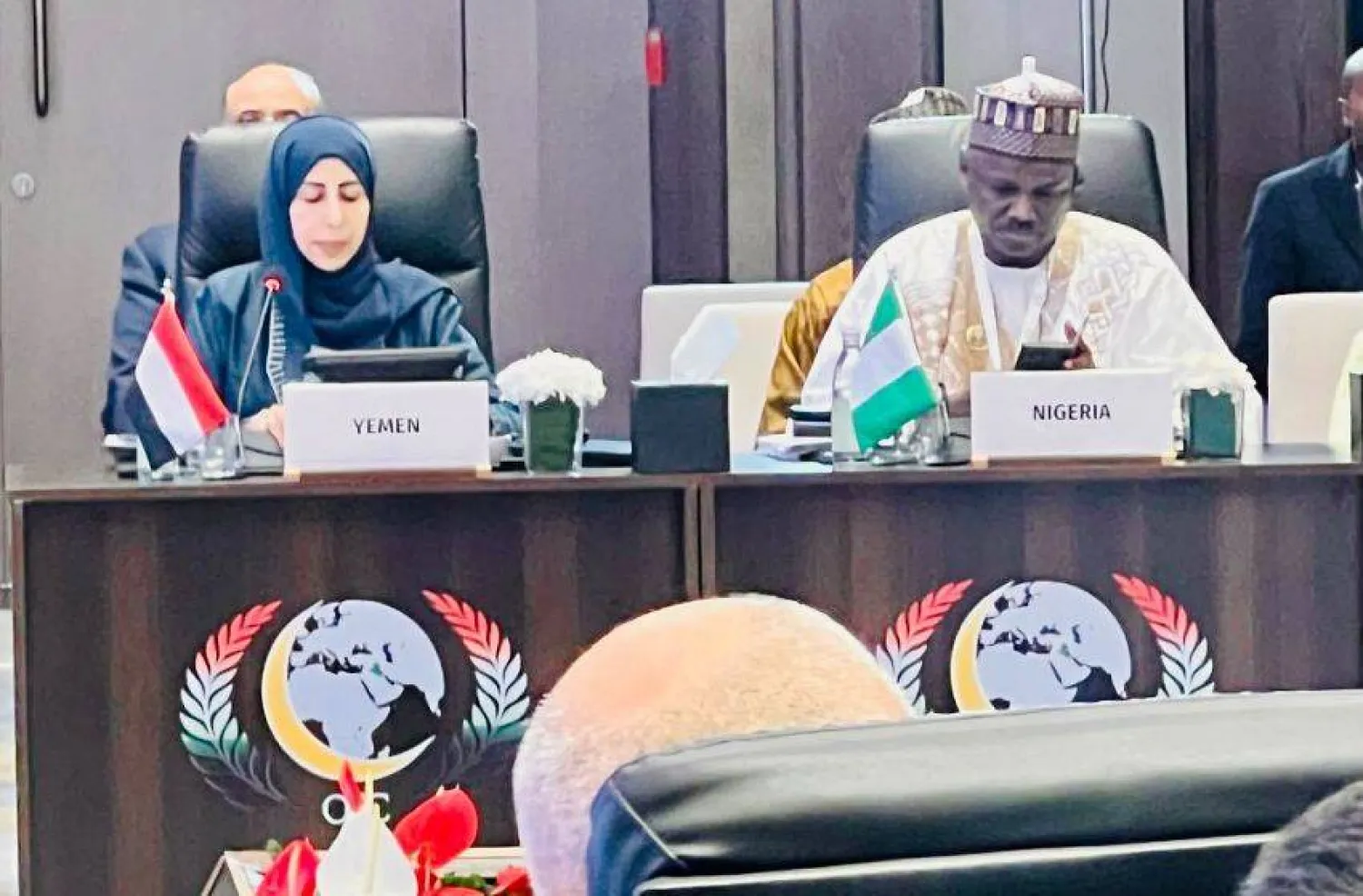
Speaking on the sidelines of the 52nd session of the Council of Foreign Ministers of the Organization of Islamic Cooperation (OIC) in the Iraqi capital, Baghdad, Al-Zouba said Tehran could not arm one party to a conflict and then present itself as a mediator seeking to end it.
She argued that Iran's attempts to portray the war as a conflict between Yemen and Saudi Arabia ignored the reality of an armed group's takeover of the Yemeni state.
The minister accused the Iranian regime of using Yemen as a bargaining chip and channeling pressure directed at Tehran into attacks whose costs are borne by the people of the region, international trade and global markets.
She noted that the Houthis had rejected regional and international peace initiatives, including a Saudi-proposed roadmap, and exploited periods of de-escalation to regroup and strengthen their military capabilities.
Tehran's Responsibility
Al-Zouba also rejected Iran's attempts to portray the Houthis as Yemen's legitimate representatives or describe them as the "Yemeni Armed Forces."
She stressed that Tehran's dealings with the group did not grant it the legitimacy to represent the Yemeni state or give the Iranian regime authority over Yemen's sovereign decisions.
The minister also rejected efforts to characterize the campaign to restore state institutions as a conflict between Yemen and Saudi Arabia.
She said Houthi claims that the group acts according to its own interests and calculations did not absolve Iran of responsibility for arming it and enabling it to continue its attacks.
Al-Zouba cited several Iranian actions that she described as violations of Yemeni sovereignty, including the handover of Yemen's diplomatic premises in Tehran to a Houthi representative in November 2019.
She also pointed to the smuggling of an Islamic Revolutionary Guard Corps (IRGC) officer into Sanaa in October 2020 and his appointment as ambassador to the Houthis, as well as flights operated to Sanaa airport in July 2026 without the internationally recognized government's approval.
The minister accused Tehran of continuing to interfere in Yemen's affairs despite the severing of diplomatic relations in October 2015, describing those actions as violations of the rules governing relations between states, Yemeni sovereignty and the Vienna Convention on Diplomatic Relations.
Al-Zouba linked these accusations to the ongoing military escalation in Yemen, citing Houthi ballistic missile attacks on Maashiq Palace, the seat of the presidency and government in the temporary capital, Aden.
She also pointed to the continued siege of Taiz and shelling of residential neighborhoods, alongside attacks targeting Saudi Arabia and threatening international shipping.
Call for Islamic Action
Amid what she described as growing threats, the Yemeni foreign minister urged OIC member states to take a firm stance against the Houthis, designate the group a terrorist organization, cut off its funding sources and halt the flow of weapons and military expertise to its forces.
She stressed that the continuation of the war could not be separated from Iranian military and technical support, warning against allowing Yemeni territory to become a launching pad for threats to regional security.
Al-Zouba called for Islamic solidarity to move beyond declarations and translate into practical measures that protect member states and their resources while countering foreign interference that fuels conflicts.
She also urged the international community to enforce the arms embargo on the Houthis under UN Security Council Resolutions 2216 and 2624, hold the group's financiers accountable and support the Yemeni government in restoring state institutions and extending its authority throughout the country.
Al-Zouba emphasized that Yemen's security was closely tied to that of its neighbors and that confronting Iranian interference required ending support for armed proxies and safeguarding national sovereignty.
She also highlighted Saudi Arabia's continued support for Yemen through economic, humanitarian and development assistance.
On the political front, the minister said the Yemeni government, which had remained committed to pursuing peace for 12 years, would not accept a political process that served as cover to legitimize the Houthi takeover or allow weapons to remain outside state institutions.
She stressed that a just and lasting peace required respect for Yemen's sovereignty, unity and territorial integrity, the restoration of its institutions and adherence to the agreed framework for a political settlement, foremost among them UN Security Council Resolution 2216.
The remarks came as Operation Dawn of Yemen, launched by Presidential Leadership Council Chairman Rashad al-Alimi, continued its campaign to restore state institutions and extend government authority across the country's entire territory, according to the government.