Displaced Gazans Search for Warm Clothes as Cold Draws In
15 November 2023, Palestinian Territories, Khan Yunis: Internally displaced Palestinians, living in temporary shelters, clean up excess water and dirt following night-time rainstorms. (dpa)
TT
TT
Displaced Gazans Search for Warm Clothes as Cold Draws In
15 November 2023, Palestinian Territories, Khan Yunis: Internally displaced Palestinians, living in temporary shelters, clean up excess water and dirt following night-time rainstorms. (dpa)
When Khulud Jarboueh and her children fled their home in the northern Gaza Strip under Israeli bombardment in early October, the young ones were wearing just shorts and T-shirts.
The heat of late summer still lingered then. But now she rummages through piles of clothing looking for something to keep them warm in the rain and bitter cold.
"We left Gaza City with 20 members of the family more than a month ago," the 29-year-old told AFP at a second-hand clothes stall outside a school in Rafah run by the UN agency for Palestinian refugees (UNRWA).
They had left the north of the Palestinian territory after Israel warned people to flee south, saying it was safer there.
The exodus came after Israel's military began a relentless bombardment of Gaza after Islamist Hamas militants stormed across the border on October 7 and killed around 1,200 people, mostly civilians.
They also seized around 240 hostages in attacks that sparked massive retaliation from Israel. The Hamas government in Gaza says Israeli attacks have killed around 11,500 people, including thousands of children.
Now Jarboueh and her family sleep on the floor of the UNRWA school.
"We didn't take any clothes with us. But now it's cold and I have to buy winter stuff," she said at the stall where items of clothing go for a shekel each (around $0.25).
'No other choice'
Even before the war, life in the Gaza Strip was difficult.
The United Nations estimates that in 2022, the blockade Israel had enforced against the territory since 2007 had "hollowed out Gaza's economy".
"The restrictions on movement also impede access to health and other essential services, as 80 percent of Gazans depend on international aid," said UNCTAD, the UN Conference on Trade and Development.
Unemployment in the densely populated strip of land squeezed between Israel, Egypt and the Mediterranean Sea was 45 percent.
Today, the UN says, all 2.4 million people in Gaza are going hungry, and 1.65 million have been displaced by the war. With almost half the houses in Gaza destroyed or damaged, poverty will only get worse.
"It's the first time in my life I've had to buy second-hand clothes," said Jarboueh. "We're not rich, but I can usually afford to pay 10 shekels for an item of clothing for the children.
"Now they're coughing because it's so cold. I have no other choice."
She said she was sure the old clothes were "full of germs".
"But they're going to have to put them straight on. I don't have the water to shower my children, let alone do the laundry."
On a road lined with stalls, hundreds of Palestinians held up items to check sizes or compare fabrics. The temperature has now dropped and downpours are common.
'This is no life'
Farmer Walid Sbeh said he has been uprooted from his land, and does not have a shekel to his name. He camps at the UNRWA school each night with his wife and 13 children.
"I can't stand it, seeing my children still in their summer clothes go hungry, and I know I can't buy them anything," he told AFP.
"This is no life. They force us from our homes and kill us in cold blood. If we don't die in the bombing we die of hunger or thirst, sickness and cold," he said.
Sbeh said that when they left after their house was bombed, they brought blankets with them.
"But on the road, the Israeli soldiers told us to drop everything and keep our hands up."
He said some people gave them warmer clothing their own children had outgrown.
Adel Harzallah, who runs a clothes shop, said his stock of winter pyjamas sold out in two days.
"The war began when we were waiting for winter wear to arrive. It was due to come across the border" but that shut after the October 7 attacks in Israel.
Now his goods were stuck in containers, like food, drinking water and fuel, all only to be released for a high price.
One potential customer left Harzallah's store disappointed.
"Seventy shekels for a jacket? I can't pay that -- I've got five kids," she said.
Abdelnasser Abu Dia, 27, told AFP he "doesn't have enough to buy bread, let alone clothes".
For a month he had only the clothes in which he fled.
But as the temperature dropped, "someone gave me and my kids sportswear jackets. We've been wearing them non-stop for a week."
‘Trump Has Cost Us’: After Midterm Losses, MAGA Asks if It’s Overhttps://english.aawsat.com/features/5338892-%E2%80%98trump-has-cost-us%E2%80%99-after-midterm-losses-maga-asks-if-it%E2%80%99s-over
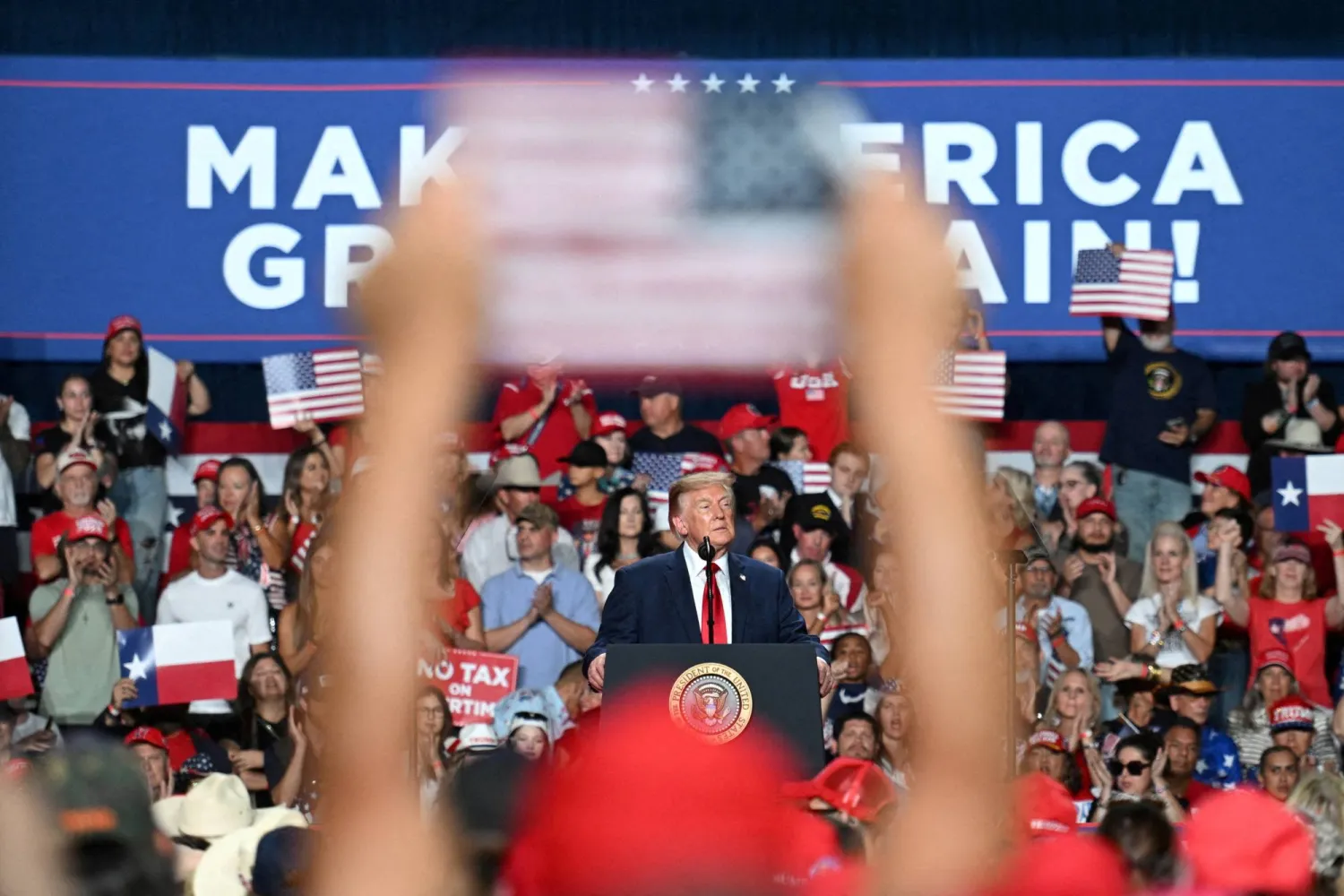
US President Donald Trump campaigns ahead of midterm elections, in San Antonio, Texas, US, October 7, 2026. (Reuters)
TT
TT
‘Trump Has Cost Us’: After Midterm Losses, MAGA Asks if It’s Over
US President Donald Trump campaigns ahead of midterm elections, in San Antonio, Texas, US, October 7, 2026. (Reuters)
As Republicans faced a nationwide drubbing in Tuesday’s midterm elections, supporters streamed out of a Dallas ballroom where they’d hoped to toast a win for US Senate candidate Ken Paxton, a favorite of President Donald Trump.
In the hotel, Michael Little, a 59-year-old businessman and three-time Trump voter, stared at the president’s image on a television screen. “People are pissed off at Trump. Trump has cost us,” he said, capturing a sentiment rippling through the president’s Make America Great Again movement after the Republican Party’s worst electoral defeat in decades.
Across the coalition, some supporters who once viewed Trump as MAGA’s greatest asset are beginning to question whether he’s become its biggest liability.
Still, the midterm losses amounted to more than a repudiation of Trump. They were a referendum on the political and cultural movement he built. A defining force in American politics that began as a campaign slogan during Trump’s 2016 presidential run now faces a potentially existential reckoning after voters disillusioned with soaring fuel prices, the Iran war and Washington corruption delivered Democrats decisive congressional majorities.
Trump’s first major response to the midterms came on Friday. Instead of changing course, he doubled down on the movement’s core. He promoted Stephen Miller, the main architect of the administration’s hardline immigration crackdown, to chief of staff, replacing Susie Wiles. Wiles was seen as a stabilizing force inside an often chaotic White House.
The move was celebrated by some of MAGA’s most ardent influencers, who saw it as a return to the anti-immigration agenda at the movement’s roots. “Exactly the energy we need,” right-wing influencer Benny Johnson posted on X to his 4.1 million followers. “Solid move. It’s Miller Time.”
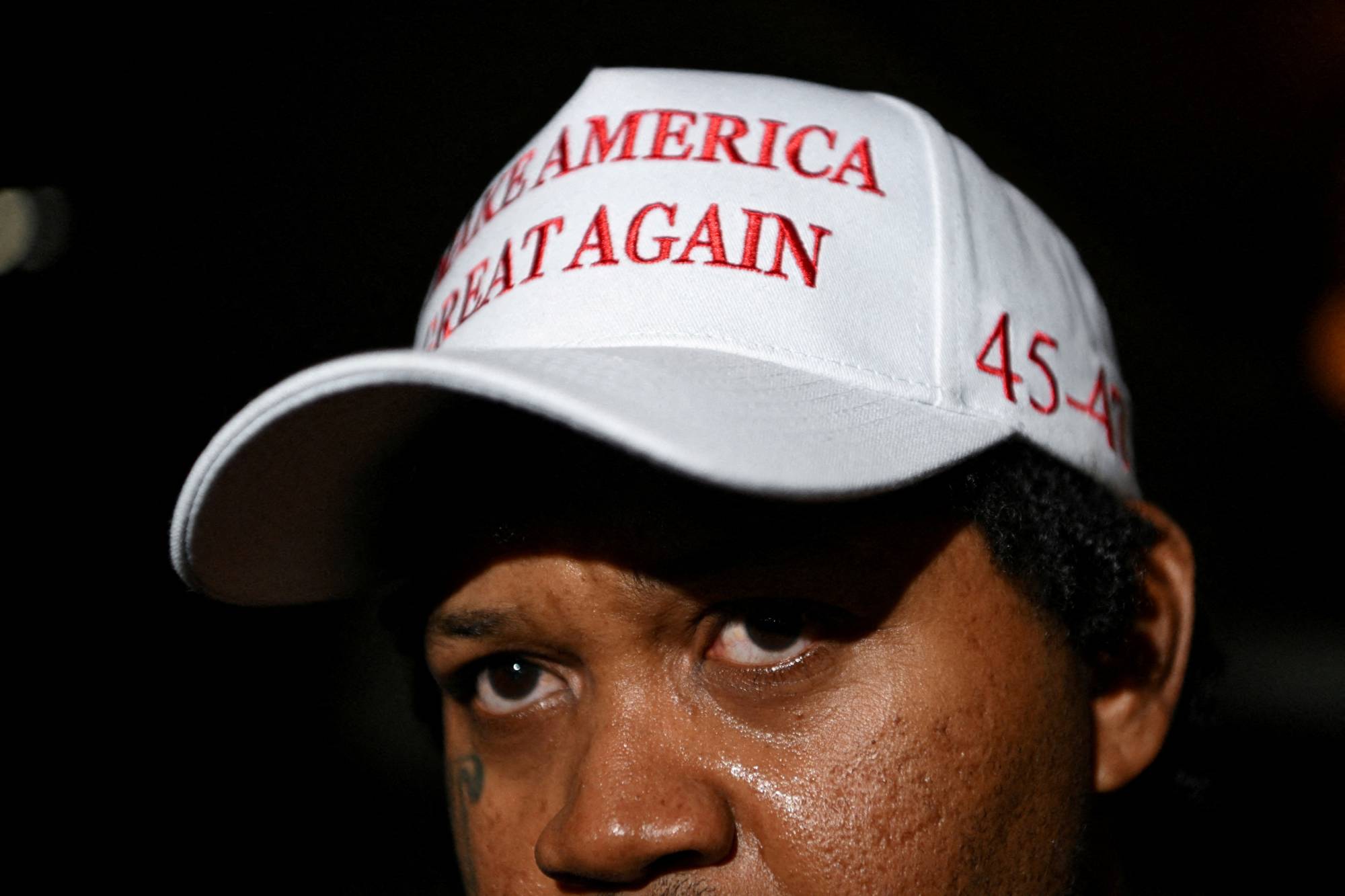
A man wears a cap in support of US President Donald Trump at a watch party for Republican US Senate candidate and Texas Attorney General Ken Paxton during US midterm elections in Dallas, Texas, US, November 3, 2026. (Reuters)
The White House did not directly answer Reuters' questions about why Republicans lost, the defeat of candidates who embraced Trump's false 2020 election claims, or where MAGA goes from here. Instead, it pointed to Trump's remarks on Wednesday, when he said, "If I were on the ballot, we would have won." He also said it was "largely true" that the Iran war had cost Republicans because "it drove the gasoline up," but that he’d do it again.
For nearly a decade, MAGA has reshaped the Republican Party and transformed national debates on issues such as trade, immigration, race and gender. The movement installed loyalists throughout federal agencies, cracked down on immigration and pressured corporations and public institutions to retreat from diversity, equity and inclusion initiatives.
MAGA survived the fallout from the January 6, 2021, attack on the US Capitol and propelled Trump back to the White House. Now, the Democrats’ sweeping victory has forced the movement to grapple with an unexpected question: Is MAGA over?
Reuters interviews with more than a dozen MAGA activists, influencers, party strategists, Christian nationalist leaders and researchers who track right-wing politics, along with a review of MAGA supporters' posts and podcasts since Tuesday, show a movement turning its anger on itself.
The stolen-election claims that have driven MAGA since Democrat Joe Biden beat Trump in the 2020 presidential election have mostly gone quiet. Instead, supporters are blaming Republican leaders and Trump's advisers, and in some cases the president himself, for broken promises on living costs, the Iran war and the government’s decision to redact or withhold major portions of its investigative files on late sex offender Jeffrey Epstein.
MAGA’s factions also disagree about what comes next. Some want a return to populist and nationalist basics. Some want a movement less tied to one man. And a vocal minority say MAGA is already dead.
“We have to rebuild,” Steve Bannon, a prominent MAGA proponent, podcaster and former Trump White House adviser, told Reuters. He urged the party to double down on an aggressive populist and nationalist agenda and praised Trump for elevating Miller.
“Miller's appointment as chief of staff underpins my point,” he said. “There is no more hardcore MAGA proponent than Stephen.”
As pro-Trump internet forums digested the election results, a notable slice of self-described MAGA loyalists – more than 20% – raised doubts about the movement’s leadership and direction, according to an analysis of social media traffic done for Reuters by PeakMetrics, a data intelligence firm.
About half of that cohort remained supportive of the MAGA movement but no longer backed Trump as its leader. The other half remained loyal to, though critical of, the president himself.
The analysis was based on 12,850 posts sampled from a universe of 4.6 million Trump-related comments on X and Reddit from 9 p.m. on Election Day to 8 p.m. the next evening. It found broad concern among MAGA supporters as the results became clear.
Of the posts that assigned blame for the rout, nearly a third said concerns about the Iran war and Israel’s influence over US policy had overshadowed Trump’s message. A quarter said Republicans not fully committed to the MAGA agenda had undermined the movement.
The results left Trump facing large Democratic majorities in both chambers of Congress. In the Senate, Democrats could control as many as 56 of the chamber’s 100 seats, more than enough to block Trump’s future judicial picks. Republicans might not be able to recapture the Senate until 2032, Republican Florida Governor Ron DeSantis said the morning after the election.
“It’s the political equivalent of a meteor strike that went all around the United States,” DeSantis said at a post-election briefing.
Democrats will now control governorships in seven battleground states Trump won in 2024 and, strikingly, they won every statewide race in Texas, which hasn’t backed a Democratic presidential candidate since 1976.
‘MAGA IS STALE’
Since Tuesday, talk of election fraud has virtually vanished among right-wing influencers.
“I have been banging the drum of rigged and stolen elections since 2020, but that is not why we lost the midterms,” Rogan O’Handley, a MAGA influencer who posts under the name DC_Draino, wrote on X to his 2.3 million followers. “We lost because we failed to fix the things voters sent us to do.”
He didn’t respond to a request for comment.
After the 2020 election, Trump supporter Isabella DeLuca was among thousands who stormed the US Capitol on January 6, 2021. She was charged with five crimes, including theft of a table from inside the Capitol, and pleaded not guilty. Her case was dismissed after Trump returned to office and pardoned her.
This time, the 26-year-old conservative influencer directed her anger toward what she described as out-of-touch Republican leaders who failed to appeal to Gen Z voters on affordability, avoiding foreign wars and other key issues.
“Republicans were just lazy. They felt like that they were entitled to people's votes and that people would vote for them no matter what,” DeLuca told Reuters. “It goes to show you that you do have to earn people's votes, and that even in a super red state like Texas, you're not untouchable.”
The MAGA movement this year appeared "tired," she said.
That sentiment was echoed in online right-wing forums, said Jennifer Golbeck, a University of Maryland professor who has analyzed MAGA-related posts since 2016. She said engagement by Trump’s most loyal backers has steadily declined since January, including a 27% drop in posts and comments on Patriots.Win, a popular MAGA forum.
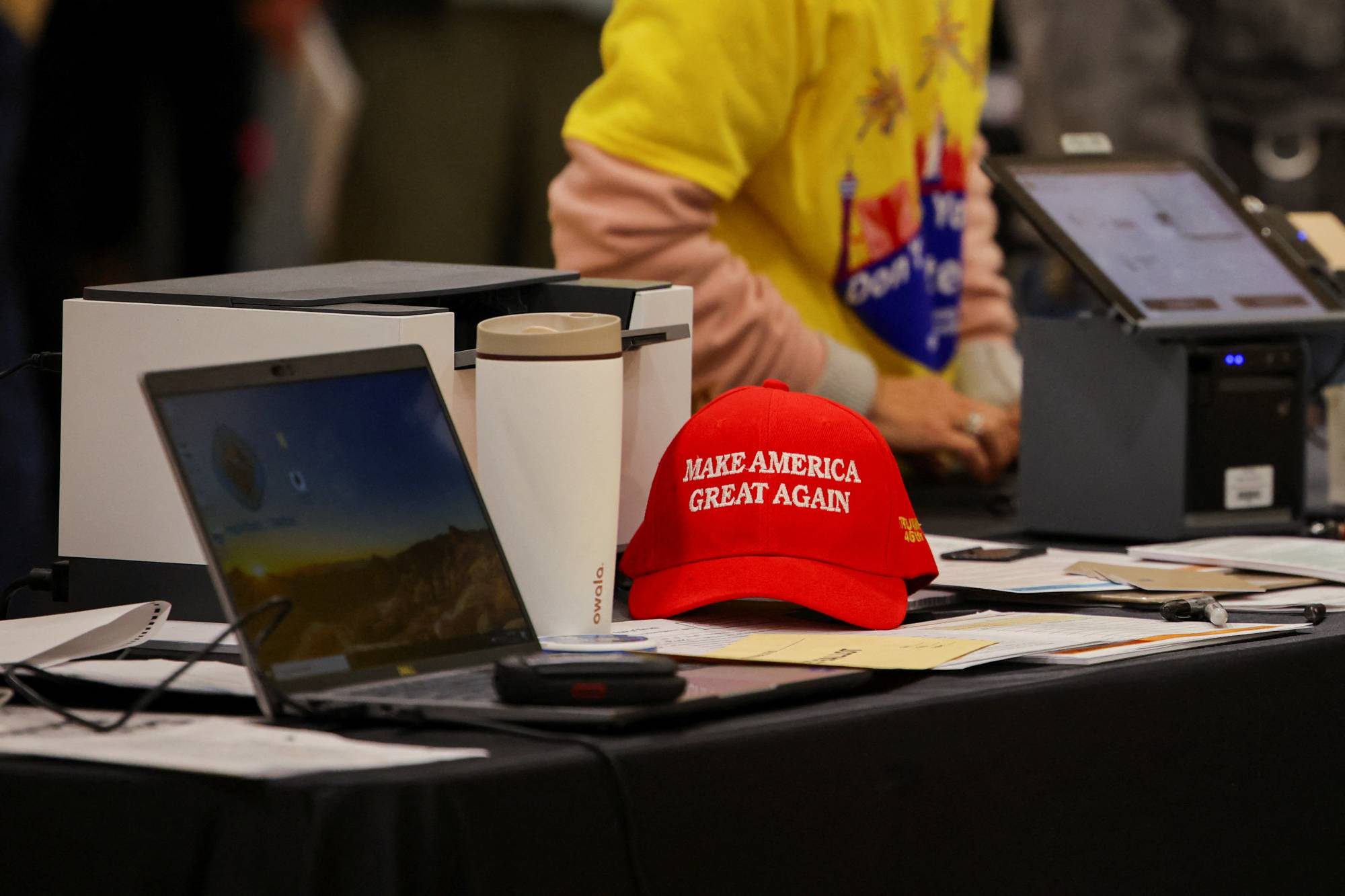
A confiscated "Make America Great Again" (MAGA) hat sits on a table of election workers, after it was taken from a voter by an election official, as people vote during the US midterm elections on Election Day, at Boulder City Recreation Center in Boulder City, Nevada, US, November 3, 2026. (Reuters)
“The enthusiasm and the passion even among this hardest core group of supporters hasn't really been there," Golbeck said. "They are saying that ‘MAGA is stale.’ It’s not new and exciting like it once was.”
Fox News, a cable network that has long been a key platform for MAGA voices, saw a sharp decline in viewership ahead of the midterms, with its total daytime audience down 27% in October from a year earlier, according to Nielsen, the audience measurement firm.
In a statement to Reuters, Fox said it drew more viewers than its cable-news rivals on election night. “FOX News has been the number one network in cable news for a quarter century,” spokesperson Caley Cronin said.
Some prominent right-wing influencers blamed the president’s advisers or Republican lawmakers – but rarely Trump himself – for ignoring key voter concerns. In posts, online broadcasts and interviews with Reuters, many blamed dissatisfaction with the economy, though they differed on other reasons for Tuesday's results.
It wasn't just failure to address affordability that “crushed” Republicans, said Ben Shapiro, co-founder of the conservative site Daily Wire, on his online show on Wednesday. “If you’re talking about an electoral catastrophe – a wipeout like we saw last night – you need more ingredients. Here are the other ingredients: chaos and corruption.”
Laura Loomer, an influencer close to Trump, wrote on X: “America is over and the American Dream is dead.” Yet she told Reuters the losses did not signal the end of MAGA, arguing that anyone seeking the 2028 Republican presidential nomination would need Trump’s base.
“The Republican Party belongs to President Trump,” Loomer said. “The MAGA movement is still the majority of the GOP base, and whoever wants to run for president in 2028 on the GOP ticket, they would be unwise to be dismissive of President Trump.”
On Thursday, Loomer put her podcast on hiatus, saying she had been “running on empty for too long” and needed to focus on her personal life and upcoming wedding. She’ll return in January, she added.
BROKEN PROMISES
The midterms also tested the beliefs that have held MAGA together, and some of them are giving way.
The Democratic sweep dealt a significant setback to the election denial movement, a central pillar of MAGA politics since Trump's 2020 defeat. Candidates who embraced his false claims of widespread voter fraud lost heavily, including several who had worked to overturn the 2020 result.
Election deniers will hold at least 41 fewer congressional and statewide offices next year, and they have lost 70% of the called races for statewide posts that oversee elections, according to States United Action, a nonprofit that tracks such candidates.
Trump made no effort to contest the results and instead blamed Republicans for the defeat.
With few close races and no credible basis for a challenge, many prominent pro-Trump election skeptics dropped fraud allegations and urged supporters to keep organizing. A handful of allies still alleged, without evidence, that the vote was rigged.
Mike Lindell, the MyPillow founder and promoter of false claims that machines flipped votes in 2020, said he was not concerned by Trump's pledge to accept the results. “That's his opinion. I've got a different opinion,” Lindell told Reuters. “I think it's all been stolen.”
But such claims stayed largely on the fringe, even among Republicans. Without contested races, the MAGA election denial movement risks losing the money, attention and momentum that sustained it.
"Nobody's going to be putting money behind it," said Wendy Via, co-founder of the Global Project Against Hate and Extremism, a nonprofit that tracks hate speech and extremism.
Retired Lieutenant General Mike Flynn, who falsely claimed the 2020 election was stolen and is a popular figure in the Christian nationalist wing of the MAGA movement, accepted the defeat.
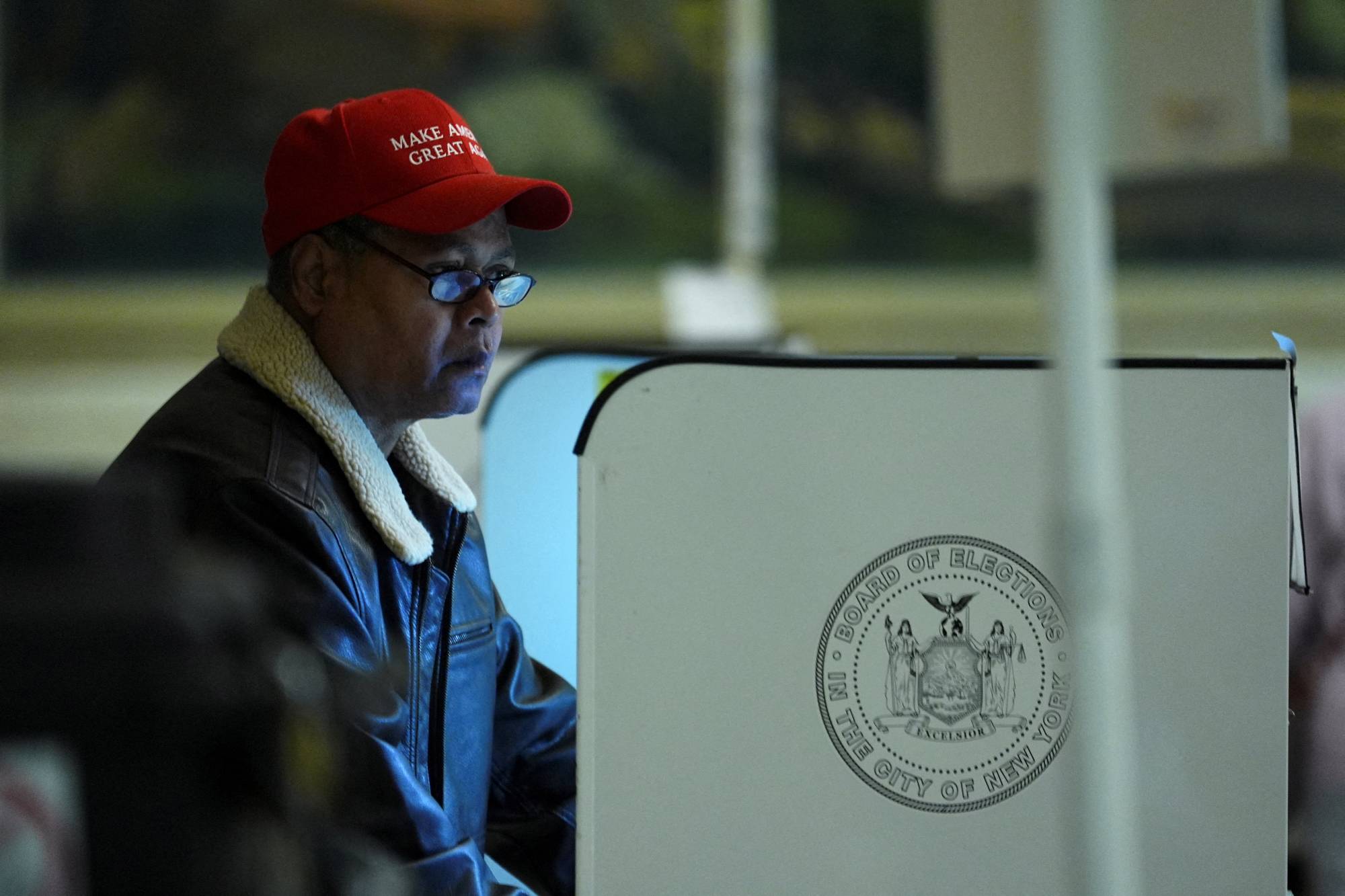
A voter wears a "Make America Great Again" (MAGA) hat while voting at a polling station at the Bronx Supreme Court during the US midterm elections in New York, US, on November 3, 2026. (Reuters)
He called the results “a massacre” and criticized Trump and his administration for failing to deliver on pledges ranging from lowering costs to releasing the government’s investigative files on Epstein.
Responding to Vice President JD Vance’s assessment on X that the Iran war was “the reason we lost,” Flynn wrote: “The sheer number of broken promises is why the blue tsunami happened.”
Flynn also criticized Christian voters for failing to show up. “As a Catholic and a Christian, I’m sorely embarrassed and disappointed,” he wrote.
Other prominent Christian nationalists were divided over whether MAGA can outlast Trump.
Douglas Wilson, a Christian nationalist pastor who was invited by US Defense Secretary Pete Hegseth to deliver a sermon at the Pentagon in February, told Reuters that MAGA “is not going anywhere” but must become less personality-driven and more focused on border control, tax cuts and avoiding foreign wars.
Joel Webbon, a far-right Christian nationalist pastor from Texas, was far less sanguine. “Trump lost this all by himself,” he said in a video on X, arguing that the president abandoned his base by embracing Israel, launching the war in Iran and failing to follow through on releasing the Epstein files and mass deportations.
“MAGA is dead,” Webbon wrote in an accompanying post. “Forever.”
Israel Faces New Era of Sinking US Support After Electionhttps://english.aawsat.com/features/5338213-israel-faces-new-era-sinking-us-support-after-election
Republican presidential nominee and former US President Donald Trump appears on a congratulatory billboard for the 2024 US Presidential Election, in Tel Aviv, Israel, November 6, 2024. (Reuters)
TT
TT
Israel Faces New Era of Sinking US Support After Election
Republican presidential nominee and former US President Donald Trump appears on a congratulatory billboard for the 2024 US Presidential Election, in Tel Aviv, Israel, November 6, 2024. (Reuters)
Prime Minister Benjamin Netanyahu's brash campaign posters are still up on Israeli public buses -- images of him, US President Donald Trump and soaring warjets that laud the two leaders attacking Iran together.
Neither is now advertising the state of the two countries' alliance.
A week after an inconclusive election for Netanyahu, Americans overwhelmingly rejected Trump and chose a Congress led by Democrats who want a tougher approach to Israel, whether on Iran, Gaza or settler violence in the occupied West Bank.
The back-to-back elections look to many observers like a turning point, with Israel no longer able to take for granted the cover of the world's most powerful country.
"This is a new era. The confluence of the Gaza war and the war with Iran have really changed how mainstream Americans -- not people particularly concerned with the Israeli-Palestinian conflict -- see Israel," said Yael Sternhell, an expert on the United States at Tel Aviv University.
Vice President JD Vance, assessing why his Republicans fared poorly, listed four ways to bring voters back, including ending the Iran war and changing "our relationship with Israel".
Trump did not disagree. Just as voting was underway Tuesday, Trump said he had agreed with Netanyahu to end the $3.8 billion in annual US military aid to Israel by the end of this year, explicitly tying the decision to the US political mood.
Netanyahu, Israel's longest-serving prime minister who has served on and off for nearly two decades, had eagerly sought Trump's endorsement but also acknowledged his country's growing isolation.
In the final days of the campaign, he suggested Israel turn to cryptocurrencies to circumvent international sanctions he expected would intensify.
Netanyahu has not commented on the US election or Trump's aid remarks.
Amit Segal, a journalist known for his proximity to Netanyahu, posted that the political situation in the United States marked a "catastrophe" for Israel.
- Can Eisenkot restore the alliance? -
Opposition contender Gadi Eisenkot, who is trying to cobble together a coalition to oust Netanyahu, has cast himself as capable of repairing relations.
In an English-language statement, the former military chief said he believed in "liberal values" and also wanted to work "closely and constructively" with Trump.
Yair Golan, the main left-wing leader inside Eisenkot's bloc, called for Israel to restore a bipartisan approach destroyed by Netanyahu who he said promoted a "destructive Israeli narrative of eternal war and authoritarian rule".
Netanyahu boasted in his campaign about standing up to Democratic presidents including Barack Obama, who remains a hero for many Democrats. Netanyahu openly aligned with Republicans a decade ago to attack Obama's diplomacy on Iran.
"Netanyahu certainly rubs Democrats the wrong way and has made every effort to alienate them," Sternhell said.
"But Eisenkot can't just be a nicer man to receive a softer approach from this new Congress," she added. "He's going to need new policies."
She said Eisenkot would likely enjoy Israeli public support for cracking down on extremist settlers, who have attacked Palestinians in the West Bank with virtual impunity.
But Israel has shifted to the right, with wide initial support for the Gaza war.
- Broadening criticism of Israel -
The new Congress will include progressive Democrats such as Abdul El-Sayed, the first Muslim elected to the Senate, who describe the devastation in Gaza as genocide, an assertion rejected by Israel.
Netanyahu "made a bet not only on the Republicans but almost personally on Trump", said Eli Kowaz, senior policy director of the Economic Cooperation Foundation, an Israeli think tank that backs a two-state solution with the Palestinians.
"These results show that bet had an expiry date," Kowaz said. "Also, for the first time, really, I think there's a realization that it isn't only about the Democrats. It's a problem with the relationship with America."
Without US assistance, Israel still has its own major arms industry and retains a clear edge fighting non-state actors such as Hamas and Hezbollah, said Ehud Eilam, a former researcher for the Israeli defense ministry.
But he said Israel would need to rely more on cheaper artillery or non-sophisticated bombs, further increasing risks of civilian casualties that have enraged international opinion.
"Israel can adjust to a new strategic reality of losing much and even all US military aid, but it will be tough for Israel. It will require Israel to consider hard choices such as taking huge loans or raising taxes," Eilam said.
Kowaz said that Eisenkot, aware of politics in Washington, was trying to show he is interested in regional stability and strategic agreements and not just "an indefinite state of war".
"He is definitely laying out a different vision for Israel's relationship with the United States."
Trump Could Woo North Korea After Midterm Setback, but Kim May Not Respondhttps://english.aawsat.com/features/5338202-trump-could-woo-north-korea-after-midterm-setback-kim-may-not-respond
US President Donald Trump meets with North Korean leader Kim Jong Un at the demilitarized zone separating the two Koreas, in Panmunjom, South Korea, June 30, 2019. (Reuters)
TT
TT
Trump Could Woo North Korea After Midterm Setback, but Kim May Not Respond
US President Donald Trump meets with North Korean leader Kim Jong Un at the demilitarized zone separating the two Koreas, in Panmunjom, South Korea, June 30, 2019. (Reuters)
The rebuke President Donald Trump suffered in the US midterm elections could prompt him to step up efforts to re-engage North Korea, but any willingness to make major concessions risks creating friction with regional allies.
Analysts and officials in Asia expect Trump to focus on foreign policy as he seeks to build his legacy in the final two years of his term. With efforts to resolve the wars in Ukraine and Iran yet to produce breakthroughs, he is likely to turn to Asia, where he believes he has room to maneuver.
North Korean leader Kim Jong Un, with whom Trump has been eager to restart talks, is likely to be a key part of that effort, they say.
"Trump is likely to devote significant effort to achieving foreign policy successes, especially if he faces greater constraints on the domestic front," said Ban Kil-joo, international relations professor at the Korea National Diplomatic Academy in Seoul.
"Given Trump would want a successor to win in 2028, there is a strong possibility that engagement with North Korea would be part of that agenda," he said.
But there is little incentive at the moment for Kim to respond, analysts say.
Asked about Trump's plans for diplomacy with North Korea, the White House said Trump has restored American strength on the global stage and strengthened ties with world leaders.
"His foreign policy decisions have never been motivated by politics," White House spokeswoman Anna Kelly said in emailed comments to Reuters.
"The Commander-in-Chief will always act in the best interest of the American people and our national security."
Trump met Kim three times during his first term after a war of words that raised fears of military conflict.
But their 2019 summit ended without agreement after they failed to reach a deal on North Korea's nuclear weapons program and sanctions relief.
Seven years later, the stakes are higher. North Korea has expanded its nuclear and missile arsenal, while Pyongyang's ties with Russia and China are the best in years, giving Kim less incentive to negotiate and potentially increasing pressure on Trump to offer concessions.
TRUMP CALLS KIM 'GREAT GUY'
Trump has touted his relationship with Kim, calling him a "great guy" and saying that they "get along very well."
Nonetheless, US and South Korean officials see fading chances of a meeting this year, with Washington receiving no response from Pyongyang ahead of a regional summit in China this month where they might have met.
Kim's influential sister, Kim Yo Jong, has said dialogue remains a path to peace, but Pyongyang sees no need for talks now. She denounced what she called Washington's "hostile policy" while denying US accusations that North Korea stole more than $6 billion in virtual assets from Binance last week.
Her brother has previously said he was open to talks if Washington stopped insisting his country give up nuclear weapons. Regional allies South Korea and Japan are opposed to any such concession.
"A summit that shelves denuclearization would undermine deterrence and create policy friction among Washington, Seoul and Tokyo," said Leif-Eric Easley, professor of international studies at Ewha Womans University in Seoul.
Officials in Japan and South Korea are concerned they could be "cut out of the loop" if Trump deals directly with Kim, with the quiet blessing of Beijing and Moscow, a senior Japanese official said, speaking on the condition of anonymity.
"(Japanese officials) are concerned about the lengths he will go to get a summit with North Korea’s Kim Jong Un, such as dropping the issue of denuclearization."
'BIGGEST CHANGE SINCE WORLD WAR TWO'
Trump has referred to North Korea as a nuclear power, a status that allies in the region and the West have refused to recognize despite the dozens of nuclear warheads Pyongyang is believed to have built and its stockpile of fissile material.
"If US-North Korea talks lead Washington to accept North Korea's nuclear status, the security environment in Asia would change dramatically," said Professor Kazuhiro Maeshima at Sophia University in Japan.
"The biggest change since World War Two could occur in the remaining two years of the Trump administration. It is a serious situation."
Kim now has a vastly more advanced arsenal than at the time of the 2018-2019 summits, including more weapons and missiles, hypersonic glide vehicles, a growing fleet of modern warships and submarines, and improved drone capabilities.
If Trump were to bring Kim back to the table, he might need to offer more than partial sanctions relief.
Such concessions could face hurdles at home from a Democratic-controlled Congress and Trump's limited time in office, said Moon Chung-in, a Yonsei University Professor in Seoul who served as a presidential adviser on national security.
"And what is important is North Korea's perception and calculation; if North Korea thinks that Trump has entered a lame-duck period and he cannot get the support from Congress... there's no reason for Kim Jong Un to come to dialogue," he said.
Former US Deputy Secretary of State Stephen Biegun, who led US negotiations with North Korea during Trump's first term, also said there were few incentives for Pyongyang currently.
"The North Koreans, I think, have very little upside to a meeting like this right now, and potentially some downside."
لم تشترك بعد
انشئ حساباً خاصاً بك لتحصل على أخبار مخصصة لك ولتتمتع بخاصية حفظ المقالات وتتلقى نشراتنا البريدية المتنوعة