Saudi FM Reiterates Demand for Immediate End to Gaza War 

Russian Foreign Minister Sergei Lavrov hosts a meeting about Gaza with foreign ministers from members of the Arab League and the Organization of Islamic Cooperation, amid the ongoing conflict between Israel and the Palestinian group Hamas, in Moscow, Russia November 21, 2023. (Reuters)
TT

Saudi FM Reiterates Demand for Immediate End to Gaza War 

Russian Foreign Minister Sergei Lavrov hosts a meeting about Gaza with foreign ministers from members of the Arab League and the Organization of Islamic Cooperation, amid the ongoing conflict between Israel and the Palestinian group Hamas, in Moscow, Russia November 21, 2023. (Reuters)

Saudi Foreign Minister Prince Faisal bin Farhan bin Abdullah stressed on Tuesday that “there can be no discussions about the future of Gaza before a ceasefire and cessation of all forms of violence against civilians.”

“This humanitarian tragedy cannot be justified with excuses of self-defense,” he said.

Prince Faisal made his remarks in Moscow where he, along with his Muslim and Arab counterparts, were visiting as part of a committee that was formed in wake of the extraordinary Arab League and Organization of Islamic Cooperation (OIC) summit that was held in Riyadh earlier this month to tackle the conflict in Gaza.

The committee, led by Prince Faisal, has been tasked with visiting influential countries to push for a ceasefire. China was the first stop of its tour; Russia is the second.

Prince Faisal reiterated the demand for an immediate end to the war on Gaza, calling for “the resumption of a serious and fair peace process” backed by international resolutions.

Russian Foreign Minister Sergei Lavrov said preparations must be made to launch a peace process based on the two-state solution.


Egypt, Kuwait Discuss Regional De-Escalation Efforts

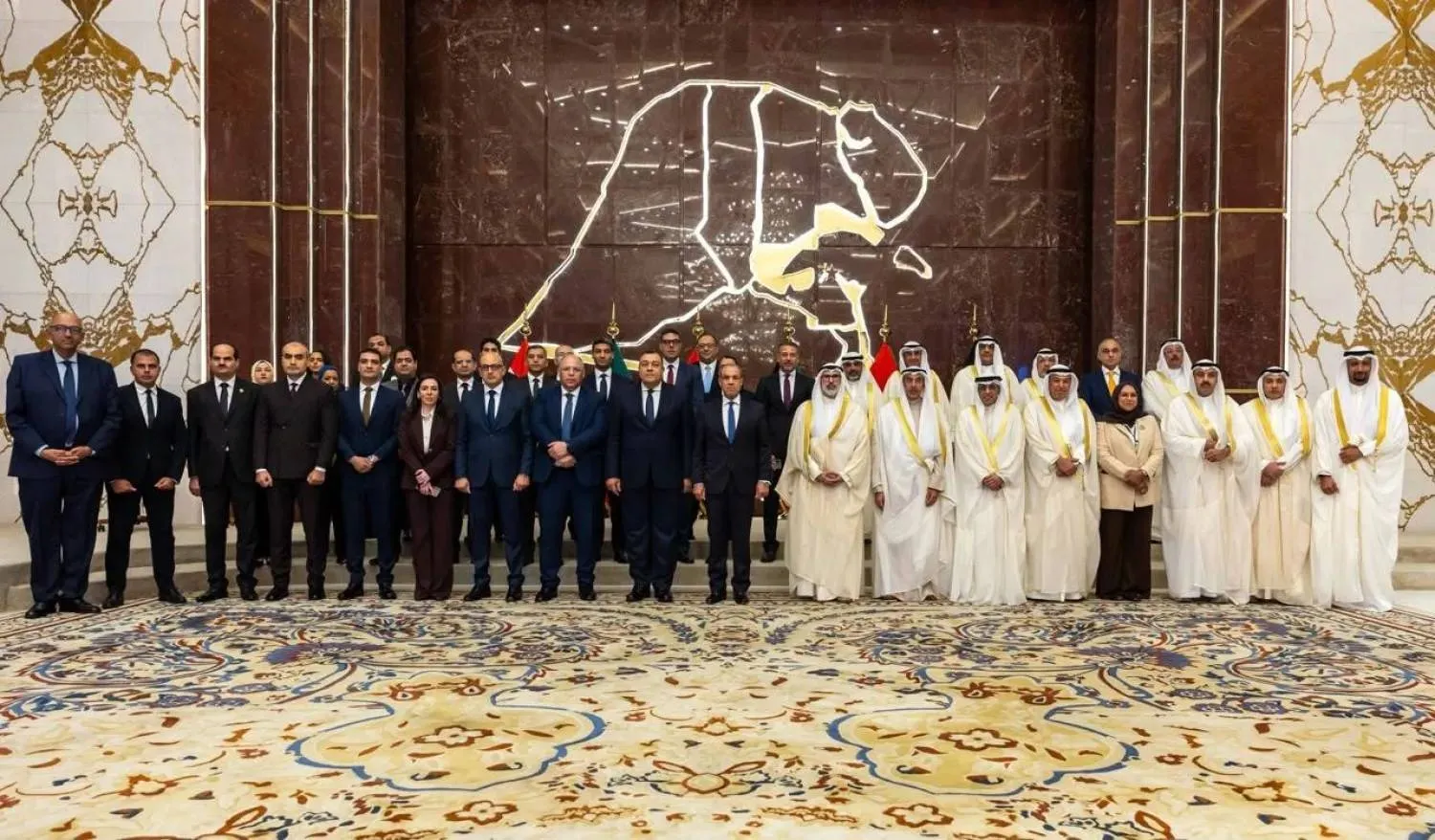
Kuwaiti Foreign Minister Sheikh Jarrah Jaber Al-Ahmad Al-Sabah, his Egyptian counterpart Badr Abdelatty and delegations from both countries at the 14th session of the Kuwaiti-Egyptian Joint Committee in Kuwait on Sunday. (Egyptian Foreign Ministry on Facebook)
TT

Egypt, Kuwait Discuss Regional De-Escalation Efforts

Kuwaiti Foreign Minister Sheikh Jarrah Jaber Al-Ahmad Al-Sabah, his Egyptian counterpart Badr Abdelatty and delegations from both countries at the 14th session of the Kuwaiti-Egyptian Joint Committee in Kuwait on Sunday. (Egyptian Foreign Ministry on Facebook)

Cairo and Kuwait on Sunday discussed ways to de-escalate regional tensions, strengthen bilateral ties, and explore new financing avenues.

In a statement, Kuwait’s Ministry of Foreign Affairs said it hosted the 14th session of the Kuwaiti-Egyptian Joint Committee, co-chaired by Foreign Minister Sheikh Jarrah Jaber Al-Ahmad Al-Sabah and his Egyptian counterpart Badr Abdelatty.

The meetings focused on ways to advance cooperation to new levels. They tackled the latest regional and international developments, ongoing diplomatic efforts, and means to bolster joint action to confront current regional challenges.

The two sides signed three memoranda of understanding covering exhibitions, economic and free zones, and civil aviation authorities, as well as executive programs in training, culture, the arts, education, and customs affairs.

According to a statement from the Egyptian Ministry of Foreign Affairs, Abdelatty underscored the importance of continued efforts to boost economic and investment cooperation, increase bilateral trade and mutual investments, and expand partnerships between both countries.

He underscored the Egyptian government’s commitment to overcoming any obstacles facing their investments.

Former Egyptian Assistant Foreign Minister Mohamed Hegazy said Sunday’s meetings underscore the importance of bilateral relations as “a strategic partnership dictated by the nature of ongoing transformations in the region, along with the crises, conflicts, and reshaping of regional and international balances of power and alliances it is witnessing.”

Speaking to Asharq Al-Awsat, Hegazy added that “Cairo and Kuwait possess the historical capital, political trust, and economic interests that qualify them to move to a more advanced stage of strategic partnership.”

Kuwait Crown Prince Sabah Al-Khaled Al-Hamad Al-Sabah also received Abdelatty for talks on regional developments and de-escalation efforts.

Abdelatty’s visit took place as Iran carried out a new attack against Bahrain on Sunday following one on Friday.

Hegazy said that Egyptian-Kuwaiti coordination carries a clear message that Gulf security is not a separate from Arab national security.

“Egypt’s security and Gulf stability form a single system of integrated strategic interests,” he added.

“We are looking at two countries that recognize regional stability is a shared responsibility, and that security, political, and economic challenges can no longer be addressed through unilateral moves, but rather require institutionalized and continuous Arab coordination,” he explained.

Abdelatty’s visit to Kuwait also included intensive discussions aimed at attracting investment and financing.

He met with Finance Minister Yaqoub Al-Rifai to discuss “increasing mutual investments between the two sides and building on the promising opportunities in economic relations that match the stature and capabilities of both countries,” said the Egyptian Foreign Ministry.


Salam in Doha for More Talks on Electricity, Gas Projects in Lebanon

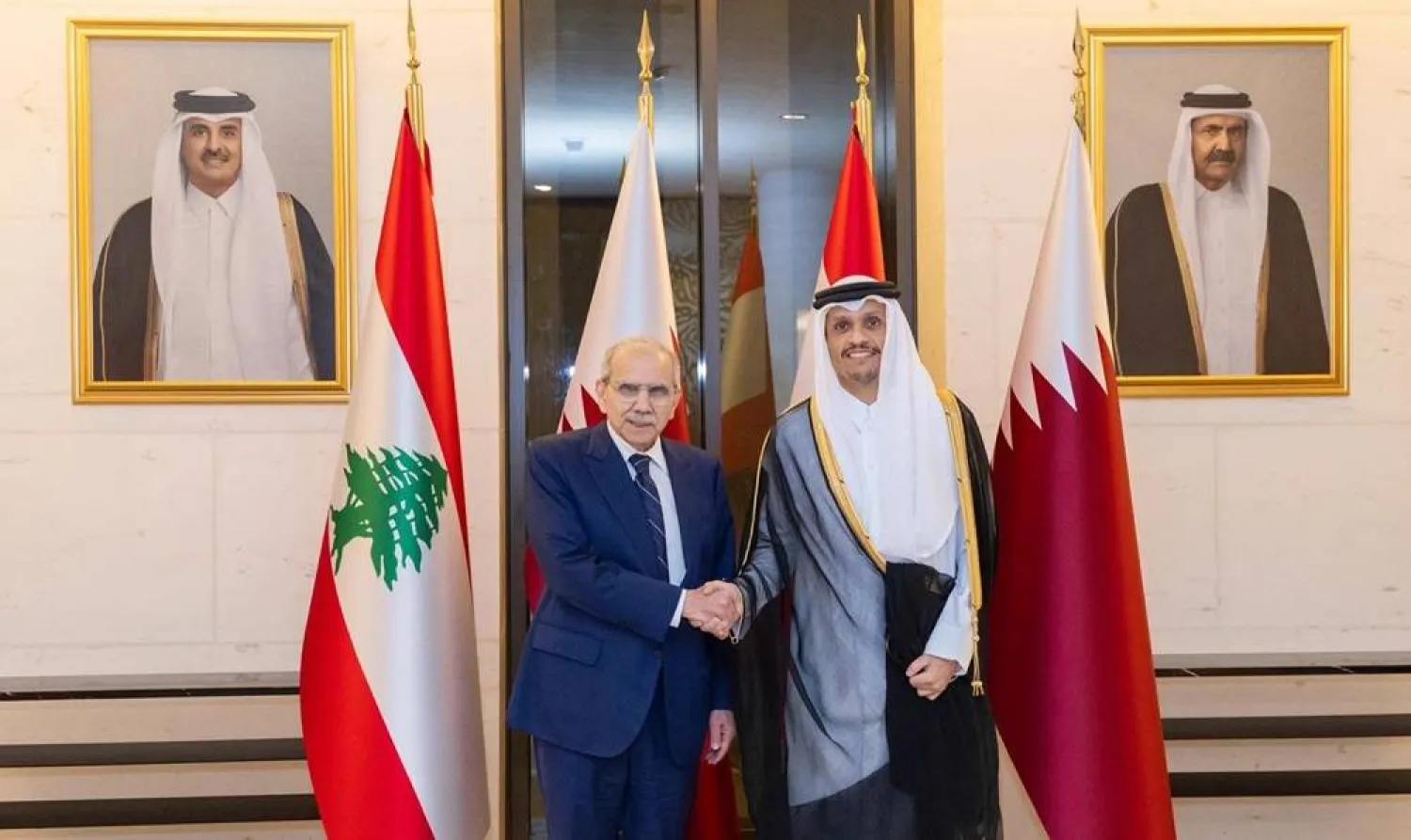
Lebanese Prime Minister Nawaf Salam and Qatari Prime Minister and Minister of Foreign Affairs Sheikh Mohammed bin Abdulrahman bin Jassim Al Thani meet in Doha on Sunday. (QNA)
TT

Salam in Doha for More Talks on Electricity, Gas Projects in Lebanon

Lebanese Prime Minister Nawaf Salam and Qatari Prime Minister and Minister of Foreign Affairs Sheikh Mohammed bin Abdulrahman bin Jassim Al Thani meet in Doha on Sunday. (QNA)

Lebanese Prime Minister Nawaf Salam began on Sunday a visit to the Qatari capital, Doha, accompanied by Minister of Energy and Water Joe Saddi, to continue talks on cooperation in the electricity sector.

Salam held a meeting with Qatari Prime Minister and Minister of Foreign Affairs Sheikh Mohammed bin Abdulrahman bin Jassim Al Thani, attended by Saddi and Qatari Minister of State for Energy Affairs Saad bin Sherida Al Kaabi.

The meeting aimed to continue discussions on a range of projects, most notably developing electricity production in Lebanon, importing gas and electricity through Syria, constructing new power plants, and establishing a floating liquefied natural gas (LNG) storage and regasification unit.

It also tackled negotiating a 20-year agreement for the supply of LNG from Qatar, in addition to renewable energy projects, said a statement from Salam’s office.

The visit forms part of ongoing talks between Lebanon and Qatar to establish a comprehensive framework for energy sector cooperation. Discussions on the issue gained momentum following the Qatari prime minister’s visit to Beirut on October 16.

At the time, Salam announced that Qatar would finance, build, and operate the electricity project under a Build-Operate-Transfer (BOT) model without requiring upfront investment from the Lebanese state, as part of a plan to boost production, improve power supply, and cut costs.

Qatar plans to construct two power plants in Lebanon over the next three years and sign a 20-year LNG supply deal under ‌a proposal to revive the ailing Lebanese power sector, a document dated October 2026 seen by Reuters showed.

Lebanon's energy sector is at the center of the country's financial and economic malaise, contributing tens of billions of dollars to the national debt since the country's 1975-1990 civil war even as it failed to deliver 24/7 power.

The state power company currently supplies just a few hours of power per day, with the rest coming from expensive private diesel generators that spew toxic exhaust often seen forming a yellow-grey layer ⁠of smog above Beirut.

Qatar has been a longtime financial ‌and political ⁠backer of Lebanon, stepping in multiple times over the last decades during times of political and economic crisis.


Iran Attacks on Bahrain Draw Widespread Arab Condemnation

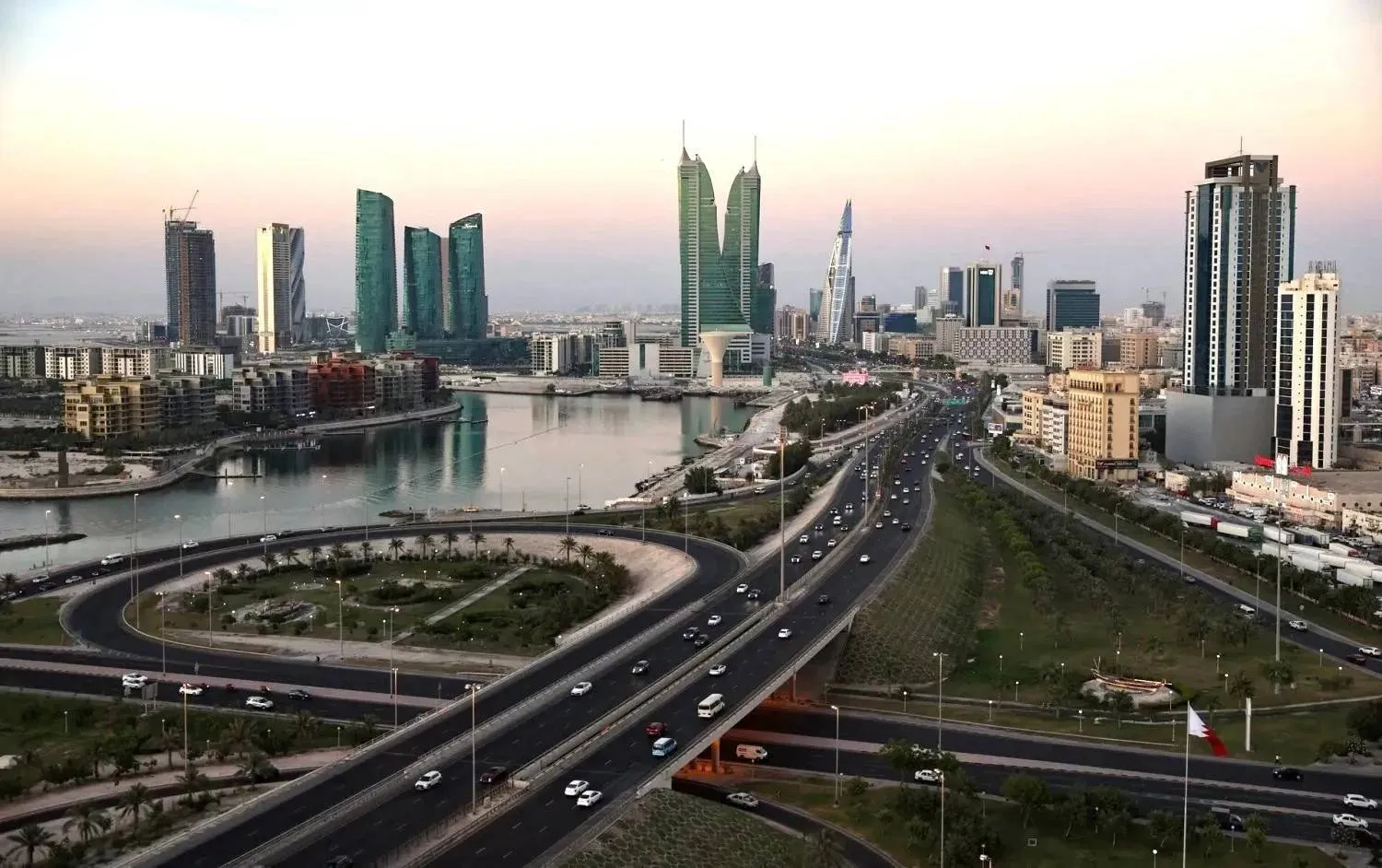
A view of Bahrain's capital Manama. (Reuters)
TT

Iran Attacks on Bahrain Draw Widespread Arab Condemnation

A view of Bahrain's capital Manama. (Reuters)

The Saudi Ministry of Foreign Affairs expressed on Sunday the Kingdom’s strong condemnation of the Iranian attacks on Bahrain.

The ministry stressed Saudi Arabia’s full solidarity with Bahrain in any measures it takes to protect its security and stability.

In a statement, the ministry said Saudi Arabia considers these attacks a violation of international law and the principles of good neighborliness.

It urged the need for an immediate halt to the blatant Iranian attacks against the countries of the region, and called for serious steps to achieve security and stability for the region's nations and peoples.

The General Command condemned Iran’s continued, systematic hostility through its heinous attacks targeting Bahrain, saying that all its forces and units are at the highest level of readiness and on full defensive alert to protect the kingdom.

Bahrain strongly condemned the ongoing brutal Iranian attacks on its territory - the latest being a drone strike on Sunday, two days after a similar assault at dawn last Friday, both claimed by Iran’s Revolutionary Guard Corps (IRGC) - holding Iran fully responsible for the consequences.

On Sunday, the IRGC announced that it had targeted a US air defense radar system at the Riffa helicopter base in Bahrain with six drones, following its claim of a similar attack on Friday.

It was the first strike against a Gulf country since early September.

US forces confirmed they had intercepted and shot down two drones launched by Iranian forces.

False claims

In a statement, Bahrain’s Ministry of Foreign Affairs said the kingdom categorically rejects the false claims put forward by the IRGC to justify the attacks.

No pretext justifies infringing on the sovereignty and territorial integrity of states, it declared.

Freedom of navigation and transit, by sea and air, through straits used for international navigation is a right guaranteed by international law and not subject to the will or conditions of any country, it added.

The ministry also stressed its refusal to allow Bahrain’s territory to be turned into an arena for settling scores.

The Foreign Ministry praised the efficiency and vigilance of the Bahrain Defense Force in countering the attacks, as well as its full readiness to deter any aggression.

It deemed the assaults a resumption of heinous Iranian attacks against the kingdom and regional countries, a blatant act of aggression against its sovereignty and territorial integrity, and a flagrant violation of international law, the UN Charter, and UN Security Council Resolution 2817.

The ministry reiterated that Bahrain reserves its inherent right to individual and collective self-defense under Article 51 of the UN Charter, and to take all necessary measures to safeguard its security in close coordination with fellow Gulf Cooperation Council (GCC) states, under the Joint Defense Agreement, and with its allies and partners.

Bahrain called on the Security Council to condemn these repeated attacks and take firm action to ensure Iran’s full compliance with Resolution 2817, ending both its attacks and its support for proxy groups in the region.

The Foreign Ministry stressed that Bahrain’s security is a red line and its sovereignty is non-negotiable, while underscoring its steadfast approach calling for good-neighborliness and its commitment to the security and stability of the Arabian Gulf.

Widespread condemnation

Kuwait, Qatar, Egypt, Jordan, Yemen, and Palestine, as well as Gulf, Arab, and Islamic states, organizations, strongly condemned Iran’s attacks, saying they were a dangerous escalation threatening regional security and stability.

They stressed their solidarity with Bahrain, adding that they support it in all measures it takes to safeguard its sovereignty and maintain its security and stability.

Meanwhile, Egypt conducted intensive contacts over the past few hours to “de-escalate tensions and restore regional stability,” consulting with Türkiye and Pakistan to “prevent the widening of the confrontation in the region.”

Cairo also condemned the attacks targeting Bahrain, stressing that “the security of Bahrain and the Gulf states is closely linked to Egyptian national security and constitutes a pillar of Arab national security.”

Egyptian Foreign Minister Badr Abdelatty held phone talks with his Turkish counterpart Hakan Fidan and his Pakistani counterpart Muhammad Ishaq Dar discussing joint efforts to de-escalate, contain tensions, and prevent the confrontation from expanding amid intensive international and regional endeavors aimed at achieving calm.

Abdelatty and Fidan underscored “the importance of continuing coordination and consultation between Egypt and Türkiye, within the framework of the ‘Regional Quartet’ and in cooperation with Qatar, to intensify efforts and joint engagement with the US and Iran in a way to help contain current tension and prevent the widening of the confrontation.”

The Gulf Cooperation Council (GCC) described Iran’s persistence in repeating its attacks on Bahrain as “a direct threat to the security and stability of the region.”

It said that these practices contradict the principles of good-neighborliness and represent a clear violation of relevant UN Security Council resolutions. It called for a firm international stance to halt the attacks and hold those responsible accountable.

GCC Secretary-General Jasem Albudaiwi reiterated the Gulf countries' full solidarity and support for Bahrain in all measures it takes to protect its sovereignty, security, and the safety of its citizens and residents.

He stressed that Bahrain’s security is an indivisible part of collective Gulf security, and that infringing on the sovereignty of any member state infringes on the security of all GCC countries.