


China Warns South Korea Not to Politicize Economic Issues

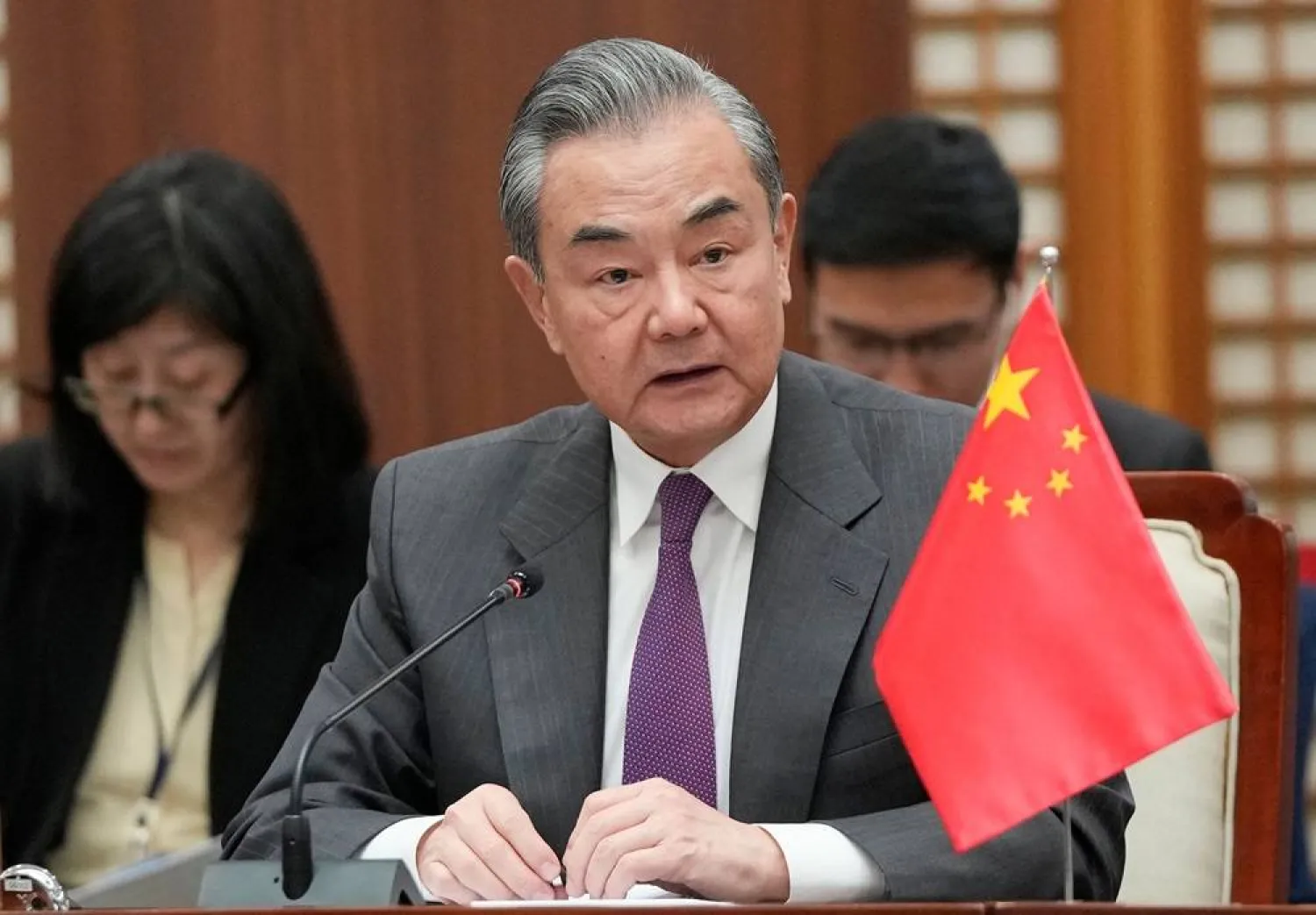
 Chinese Foreign Minister Wang Yi speaks during the 10th trilateral foreign ministers' meeting in Busan on November 26, 2023. (AFP)
Chinese Foreign Minister Wang Yi speaks during the 10th trilateral foreign ministers' meeting in Busan on November 26, 2023. (AFP)
TT

China Warns South Korea Not to Politicize Economic Issues

 Chinese Foreign Minister Wang Yi speaks during the 10th trilateral foreign ministers' meeting in Busan on November 26, 2023. (AFP)
Chinese Foreign Minister Wang Yi speaks during the 10th trilateral foreign ministers' meeting in Busan on November 26, 2023. (AFP)

Chinese Foreign Minister Wang Yi warned his South Korean counterpart on Sunday not to politicize economic and tech issues as the two prepared to meet Japan's top diplomat on the sidelines of a trilateral meeting aimed at boosting cooperation.

"China and South Korea have become cooperation partners with highly integrated interests and highly interconnected production and supply chains," Wang told South Korean Foreign Minister Park Jin, according to a Chinese foreign ministry readout.

"Both sides should jointly resist the tendency to politicize economic issues, instrumentalize science and tech issues, and the broad securitization of trade issues."

South Korea has sought to avoid becoming embroiled in a tit-for-tat row between China and the United States over semiconductors.

The US last month granted Samsung Electronics (005930.KS) and SK Hynix (000660.KS) permission to supply US chip equipment to their China factories indefinitely, ending a conundrum for the world's two largest memory chipmakers.

"China is willing to jointly promote the restart of revamped trilateral cooperation with South Korea and Japan," Wang said on Sunday.

While China and the United States have been mending frayed ties, including a summit this month between Presidents Xi Jinping and Joe Biden, Beijing is concerned that Washington and its key regional allies are strengthening their three-way partnership.

Beijing, Tokyo and Seoul had agreed to hold summits every year starting in 2008 to bolster diplomatic and economic exchanges, but the plan has been blocked by bilateral rows and the COVID-19 pandemic. Their last trilateral leaders' meeting was in 2019.

The three foreign ministers are gathering in the port city of Busan, also the first such meeting since 2019. In September, senior officials from the three countries agreed to arrange a trilateral summit at the "earliest convenient time".

South Korean President Yoon Suk Yeol and Japanese Prime Minister Fumio Kishida have taken steps to repair ties strained by history and trade feuds, and held a historic trilateral summit in August with Biden.



Saudi Arabia’s Mawani Adds 5 Shipping Services

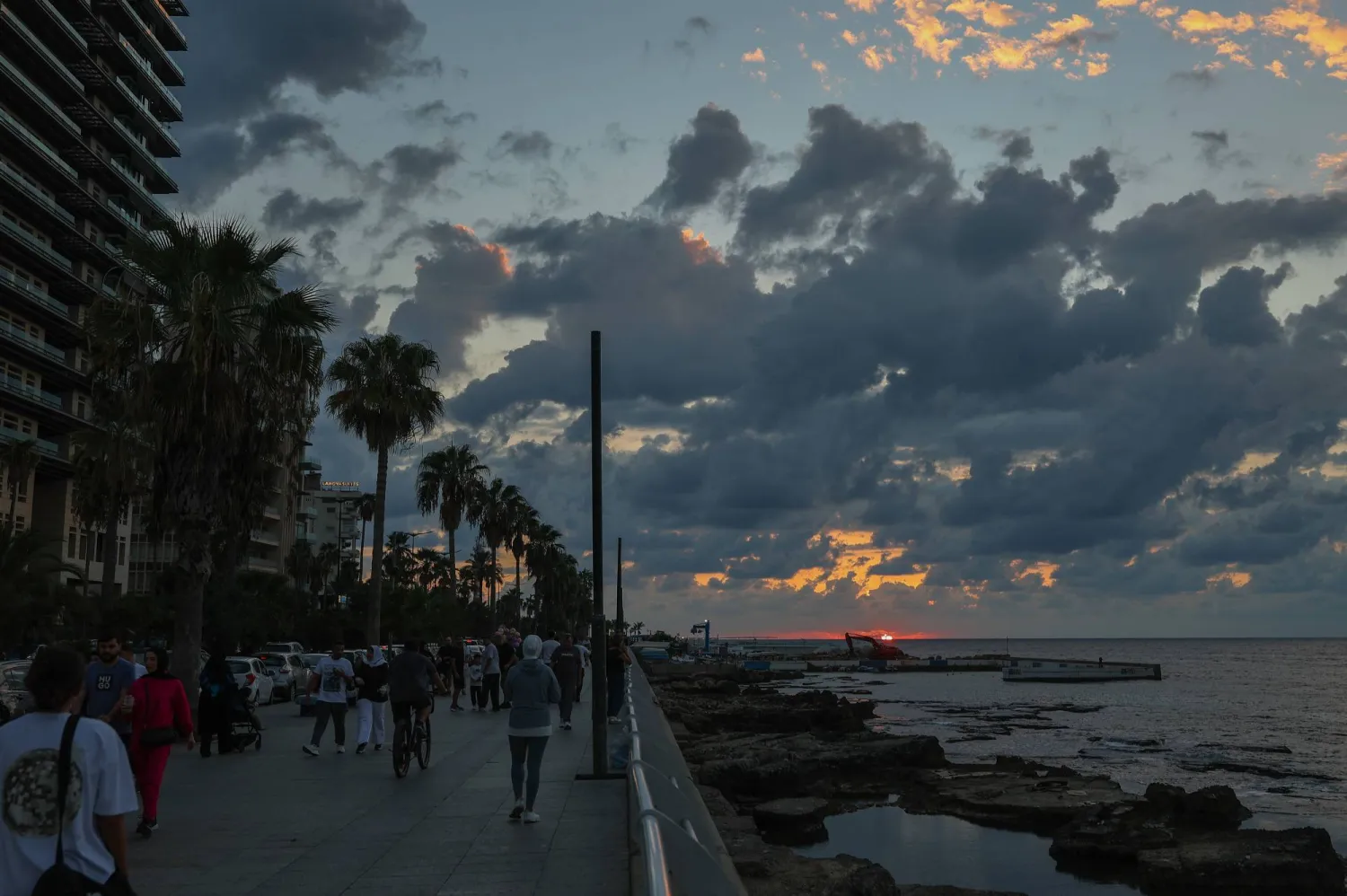
Yanbu Commercial Port. SPA
TT

Saudi Arabia’s Mawani Adds 5 Shipping Services

Yanbu Commercial Port. SPA

The Saudi Ports Authority (Mawani) said Monday that it has added five new maritime shipping services to enhance the connectivity of the Kingdom’s ports with global markets.

The move was done in partnership with major global shipping lines MSC, CMA CGM, Maersk, and Hapag-Lloyd, with a total capacity exceeding 63,000 TEUs, supporting the smooth flow of goods, enhancing supply chain efficiency, and reinforcing the Kingdom’s position as a global logistics hub, Mawani said.

It also announced a trade bridge connecting Sharjah in the United Arab Emirates with the Kingdom.

This step enhances logistics integration and supports the smooth flow of goods between the two countries with high operational efficiency, Mawani added.


China Limits Fuel Price Hike to Cushion Impact of Rising Oil Prices

A rider passes by motorists queue to pump gasoline at a petrol station in Beijing, Sunday, March 22, 2026. (AP Photo/Andy Wong)
TT

China Limits Fuel Price Hike to Cushion Impact of Rising Oil Prices

A rider passes by motorists queue to pump gasoline at a petrol station in Beijing, Sunday, March 22, 2026. (AP Photo/Andy Wong)

China intervened to cushion rising fuel prices on Monday, increasing regulated ceiling prices for retail gasoline and diesel but limiting the hike to about half what would normally be applied under the government's pricing mechanism.

However, the adjustments brought on by rising oil prices linked to the US-Israeli war on Iran were still the largest on record, lifting price limits close to levels seen in 2022 following Russia's invasion of Ukraine.

The state ⁠planner, the National ⁠Development and Reform Commission, said on Monday it would raise the maximum retail prices for gasoline and diesel by 1,160 yuan ($167.93) per metric ton and 1,115 yuan per metric ton, respectively, starting from Monday midnight, Reuters reported.

The NDRC reviews retail gasoline and diesel ⁠prices every 10 working days and applies adjustments reflecting changes in international crude oil prices, while taking into account average processing costs, taxes, distribution expenses, and appropriate profit margins.

Under the current pricing mechanism, gasoline and diesel prices would have been set to rise by 2,205 yuan per metric ton, and 2,120 yuan per metric ton, respectively, according to NDRC.

"To cushion the impact, ease the burden on downstream users, and support ⁠economic ⁠and social stability, authorities introduced temporary controls within the existing pricing framework," the state's planner said in an announcement.

Oil prices rose on Monday after Iran's Revolutionary Guards said they would target Israel's power plants and those supplying US bases in the Middle East in retaliation against any attack on its electricity sector.

Brent crude futures were up $1.57 to $113.76 a barrel by 0731 GMT. US West Texas Intermediate was at $101.32 a barrel, up $3.09, or 3.15%.


IEA Head Says Global Economy Faces ‘Major, Major Threat’ from Iran War

International Energy Agency Executive Director Fatih Birol speaks at the National Press Club in Canberra, Australia, Monday, March 23, 2026. (Lukas Coch/AAP Image via AP)
TT

IEA Head Says Global Economy Faces ‘Major, Major Threat’ from Iran War

International Energy Agency Executive Director Fatih Birol speaks at the National Press Club in Canberra, Australia, Monday, March 23, 2026. (Lukas Coch/AAP Image via AP)

The head of the International Energy Agency said Monday that the global economy faces a “major, major threat” because of the Iran war.

“No country will be immune to the effects of this crisis if it continues to go in this direction,” Fatih Birol said at Australia’s National Press Club in Canberra on Monday.

The crisis in the Middle ⁠East, he said, has had a worse impact on oil than the two oil shocks of the 1970s combined, and a worse effect on gas than the Russia-Ukraine war.

Israel launched a new wave of attacks early Monday against Tehran. US President Donald Trump also warned the United States will “obliterate” Iran’s power plants if Tehran doesn’t fully open the Strait of Hormuz within 48 hours. That prompted Iran to say it would respond to any such strike with attacks on US and Israeli energy and infrastructure assets.

Trump is facing increasing pressure at home to secure the strait as oil prices soar.

One major fear is that the war could knock out oil and gas production in the Middle East for a long time, which would mean high prices could last a while and cause inflation to rip higher around the world. The US stock market has a history of bouncing back relatively quickly from past conflicts in the Middle East and elsewhere, as long as oil prices don’t stay too high for too long.

Iran on Monday renewed strikes on its neighbors.

“The situation is very severe,” Birol said in Australia.

The oil crises of 1973 and 1979, he said, lost together 10 million barrels per day, causing "major economic problems around the world, the recessions.

And today, only as of today, we lost 11 million barrels per day — so more than two major oil shocks put together.”

After Russia’s invasion of Ukraine, he said, the gas markets, especially in Europe, “lost about 75 billion cubic meters, 75BCM. And as of now, as a result of this crisis, we lost about 140BCM, almost twice (as much).”

According to The Associated Press, Birol said 40 energy assets in nine countries across the region were “severely or very severely damaged.”

“Some of the vital arteries of the global economy, such as petrochemical, such as fertilizers, such as sulfur, such as helium — their trade is all interrupted, which would have serious consequences for the global economy,” he said.

He said the International Energy Agency, “in order to comfort the markets,” earlier released 400 million barrels of oil, “which is historic. We have never released so much oil to the markets. ... The single most important solution to this problem is opening up the Hormuz Strait as things stand now.”

The official added that he was consulting with governments in Europe, Asia, North America and the Middle East about the prospect of releasing further stockpiled oil.

“We will see, we will look at the markets,” he said. “If it is necessary, of course, we will do it, but we will look at the conditions, we will analyze, assess the market and discuss with our member countries.”