Arab Military Volleyball Championship Kicks off in Taif
Photo by SPA
The third Arab Military Volleyball Championship (AMVC) kicked off in Taif, hosted by the Armed Forces at King Fahd Air Base and attended by the commander of the Taif Military Region, Major General Khalid Al-Sheibah.
The director of the championship, Brigadier General Sultan Al-Shahri, welcomed the representatives of the participating countries in his speech at the opening of the AMVC, SPA reported.
He highlighted the generous support that sports received in the Armed Forces, notably from the Minister of Defense, Prince Khalid bin Salman bin Abdulaziz.
He said that the AMVC would last for a week, featuring athletes representing Saudi Arabia, Kuwait, Oman, Iraq, and Algeria.
Saudi FA Source Tells Asharq Al-Awsat: No Deal with Martinez to Coach Saudi Arabiahttps://english.aawsat.com/sports/5327500-saudi-fa-source-tells-asharq-al-awsat-no-deal-martinez-coach-saudi-arabia
Saudi FA Source Tells Asharq Al-Awsat: No Deal with Martinez to Coach Saudi Arabia
Donis celebrates with the Gulf Cup trophy. (Saudi Arabian Football Federation)
A Saudi Arabian Football Federation source denied reports of a deal with Roberto Martinez to replace Georgios Donis as national team coach, while multiple sources told Asharq Al-Awsat an agreement had been reached before Donis led Saudi Arabia to the Arabian Gulf Cup triumph.
The federation source told Asharq Al-Awsat that reports of an agreement with the Spaniard, who previously coached Belgium and Portugal, were untrue. Donis recently guided Saudi Arabia to the 27th Arabian Gulf Cup title in Jeddah.
Despite the federation’s assurances that Donis would stay, multiple sources said a deal with Martinez had been struck before the tournament. The Greek coach’s title triumph, however, could prompt the federation to reassess his future and scrap plans to finalize Martinez’s appointment.
Those sources said Matt Crocker, the federation’s technical director, had agreed terms with Martinez for a four-year stint at an annual salary of about 13 million euros. Their account directly contradicts the federation source’s denial.
A source in the national team’s management told Asharq Al-Awsat that Donis remained in charge, based on the information available to him. He said he knew of no plans for the Greek coach to leave or arrangements to terminate his contract.
The federation appointed Donis before the 2026 World Cup finals on a one-year contract that expires next June. His Gulf Cup success has reopened questions about whether he will stay for the next phase, with Saudi Arabia set to host the 2027 Asian Cup.
Asked about Donis’s future after the Gulf Cup triumph, federation President Bader Al-Ruzayza told Asharq Al-Awsat: “These are technical decisions, not ours. Ultimately, any decision concerning Donis comes from the technical side, whether the technical director or the relevant staff. We do not know what will happen, but Donis is with us, and you have seen what he has delivered.”
On the team’s tournament performance, he said: “Ultimately, there will be a technical assessment of the performance, and that is what we will look at, God willing.”
His comments leave the coaching question open. Despite the triumph in Jeddah, Al-Ruzayza offered no firm assurance that Donis would stay and gave no indication of plans to change the coaching staff, leaving the decision to a technical assessment.
Saudi Arabia claimed its fourth Gulf Cup title by beating the United Arab Emirates 2-0 in last Tuesday’s final at Alinma Stadium in King Abdullah Sports City in Jeddah. The victory ended a wait for the trophy stretching back to 2003.
Donis’s side won all three group games, edged Qatar on penalties in the semifinals and beat the UAE in the final, keeping clean sheets in all five matches.
It was a major morale boost for the Greek coach, who entered the tournament facing questions over the team’s performance and left with the trophy. That turnaround could weigh on the forthcoming assessment of his future.
Fans rallied behind Donis on social media on Thursday morning, calling for the federation to drop plans to appoint Martinez and keep the Greek coach. They pointed to his excellent relationships with the players and coaching strengths suited to their abilities.
Jordan’s Moroccan coach Badou Zaki said his team would face Saudi Arabia in a friendly on Dec. 27 as both sides prepare for the 2027 Asian Cup, which Saudi Arabia will host from Jan. 7 to Feb. 5.
Saudi Arabia has been drawn in Group A with Palestine, Oman and Kuwait. The hosts open against Palestine on Jan. 7, face Oman on Jan. 12 and finish the group stage against Kuwait on Jan. 17.
Saudi Arabia will also play South Korea and Uzbekistan in friendlies during the November international window as part of its Asian Cup preparations.
Saudi PIF Rewrites the 'Global Sports Economy'https://english.aawsat.com/sports/5327375-saudi-pif-rewrites-global-sports-economy
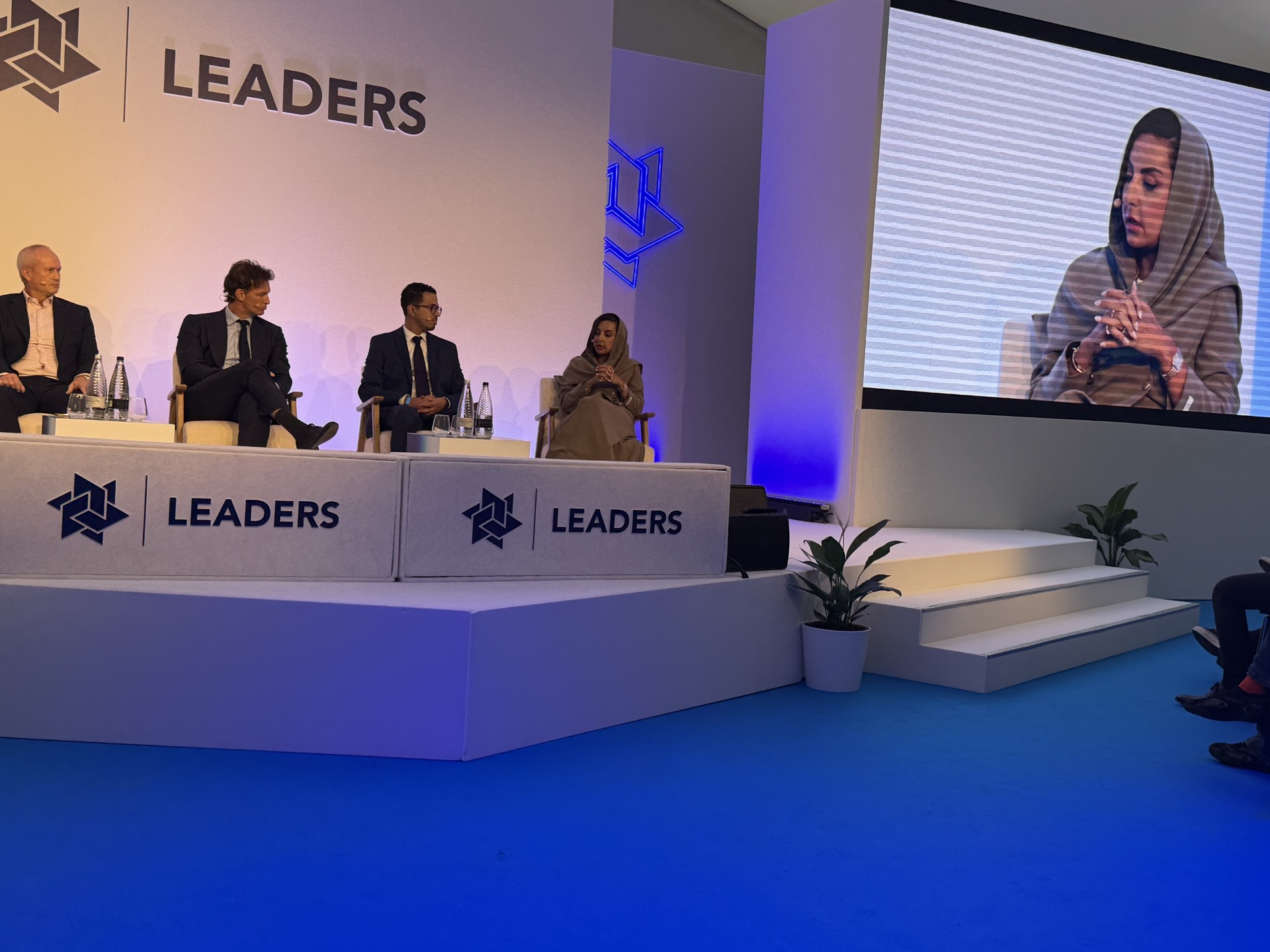
The summit’s business and leadership platform brought together a group of prominent decision-makers and specialists. (Asharq Al-Awsat)
Saudi Arabia’s investment presence in international sporting events is no longer limited to traditional forms of commercial sponsorships or one-off acquisitions. It has evolved into intellectual and strategic leadership that is reshaping the foundations of the global sports economy.
From the heart of the British capital, London, specifically at the historic Stamford Bridge stadium, which hosts the annual Leaders Week London summit, the high-level Saudi session reflected the depth of the structural transformation being led by the Kingdom and its effective shift from hosting seasonal events to creating a sustainable investment and development environment capable of shaping the future of the sector globally.
The special session, sponsored by the Public Investment Fund, highlighted how a “sporting superpower” can be built through a unique strategic integration of smart sovereign financing, major infrastructure development, and unprecedented operational excellence. This has made the Saudi experience a new economic benchmark aligned with the ambitions and targets of Saudi Vision 2030.
The summit’s business and leadership platform brought together a group of decision-makers and specialists leading this strategic transformation on the ground. Participants included Alanoud Althonayan, Head of Sponsorships and Events at the Public Investment Fund, and Feras Sheraiff, Head of Sports Investments for the Middle East and North Africa at the fund, who discussed the Kingdom’s financing dimensions and long-term economic vision.
On structural development and operational excellence at facilities, the session featured an extensive discussion with Xavier Campbell, CEO of radia, and Marc Archer, Executive Director of Sports Strategy and Partnerships at Qiddiya, highlighting how ambitious engineering and investment plans can be transformed into active assets that maximize returns and create sustainable opportunities.
Historically, most major investments in sports have focused on acquiring broadcasting rights or sponsoring the jerseys of major clubs to achieve rapid and temporary brand exposure. The current Saudi strategy, however, prioritizes investment in physical infrastructure to establish solid foundations for the sector. This transformation involves injecting unprecedented capital into the construction of modern stadiums, advanced training centers, and surrounding entertainment districts, based on an economic vision that considers ownership of advanced physical assets the only guarantee of attracting sporting elites, rights holders, and global sponsorship groups over the long term.
Qiddiya stands out as a key pillar and a living example of this structural vision. The construction of high-quality facilities such as the world-class racing circuit and the National Tennis Center, built to advanced engineering specifications, is not aimed merely at hosting a passing tour or tournament. Rather, it seeks to create a permanent infrastructure environment capable of hosting training camps and continental tournaments throughout the year, thereby increasing the investment efficiency of the real estate and sporting asset and transforming it into a productive and sustainable sector that generates tangible returns.
Countries that host major sporting events have historically faced a challenge known as “abandoned stadiums,” referring to large facilities that lose their function and vitality after competitions end and become a financial and administrative burden on governments. The Saudi model, however, has anticipated this challenge by focusing on operational excellence years before hosting major competitions.
This system was strengthened through the launch of radia, a company affiliated with SURJ Investment, which is owned by the fund, in partnership with global leaders in operations and entertainment such as Live Nation and Oak View Group, to ensure the continuity and vitality of events on a permanent basis.
The core philosophy of radia is to transform stadiums and sports arenas from facilities that operate only on seasonal match days into vibrant entertainment, cultural, and commercial destinations operating year-round without interruption.
This smart integration of sports and entertainment ensures sustainable financial flows that protect assets from declines in market value. At the same time, it contributes to creating thousands of permanent jobs for young Saudi talent in management, marketing, and hospitality, strengthening the local impact of sovereign investments.
Alanoud Althonayan, Head of Sponsorships & Events at the Public Investment Fund, speaks during the session (Asharq Al-Awsat)
Redefining Return Standards and Engineering Legacy Toward 4302
The Public Investment Fund’s investment vision has moved beyond traditional concepts of direct financial returns limited to ticket sales. The new Saudi benchmark is centered on making sports a major contributor to non-oil GDP, stimulating the sports tourism sector, and increasing the attractiveness of the domestic market to foreign investors.
This financial return is linked to a sustainable social impact, as investments contribute to increasing community participation in sports locally and developing an ideal environment for practicing them, which in turn improves the public health of citizens and creates a vibrant and active society.
The 2034 FIFA World Cup represents the most prominent milestone in these ambitions. However, the event is not viewed as a final objective whose implementation ends with the closing match. Instead, it is treated as a comprehensive development accelerator serving future generations.
All current investments discussed at the London summit, from stadiums to entertainment districts, are being designed to align with a clear and strict post-tournament plan, so that sports infrastructure will be immediately ready to support the growth of domestic leagues, make the Kingdom the Middle East’s leading regional hub for sports business, and create an integrated ecosystem capable of growing on its own.
Tsitsipas Advances to Shanghai Masters 2nd Round, Hurkacz Lines Up Djokovichttps://english.aawsat.com/sports/5327310-tsitsipas-advances-shanghai-masters-2nd-round-hurkacz-lines-djokovic
Greece's Stefanos Tsitsipas hits a return to Belgium's Kimmer Coppejans during their men's singles match at the Shanghai Masters tennis tournament in Shanghai on October 8, 2026. (Photo by Hector RETAMAL / AFP)
Tsitsipas Advances to Shanghai Masters 2nd Round, Hurkacz Lines Up Djokovic
Greece's Stefanos Tsitsipas hits a return to Belgium's Kimmer Coppejans during their men's singles match at the Shanghai Masters tennis tournament in Shanghai on October 8, 2026. (Photo by Hector RETAMAL / AFP)
Two-time major finalist Stefanos Tsitsipas beat qualifier Kimmer Coppejans 6-3, 7-5 in the Shanghai Masters first round on Thursday, continuing his slow climb back up the ATP rankings.
Tsitsipas reached a career-high No. 3 ranking in 2021. He lost in qualifying at last week’s Japan Open. At his previous tournament, the US Open, he lost in the fourth round to eventual finalist Ben Shelton.
After slipping to No. 87 mid-year, Tsitsipas has worked his way up to 43. He next faces 18th-seeded Luciano Darderi.
Big-serving Polish player Hubert Hurkacz had 19 aces in a 6-3, 7-6 (4) win against James Duckworth and next plays No. 10 seed Djokovic, who won the China Open on Tuesday for a 102nd career title, The Associatec Press reported.
Bernard Tomic, a former world No. 16 whose ranking dropped to as low as 825 four years ago, qualified for an ATP 1000 main draw for the first time in seven years. He lost his first-round match to Matteo Arnaldi 6-3, 6-1.
The top seeds including Djokovic, US Open champion Alexander Zverev and third-ranked Carlos Alcaraz received first-round byes and were not scheduled to play until the weekend or later.
No. 1 Jannik Sinner withdrew from Shanghai this week when he announced he was taking the rest of 2026 off due to a right knee injury.
لم تشترك بعد
انشئ حساباً خاصاً بك لتحصل على أخبار مخصصة لك ولتتمتع بخاصية حفظ المقالات وتتلقى نشراتنا البريدية المتنوعة