
The Golden Era of Saudi Culture

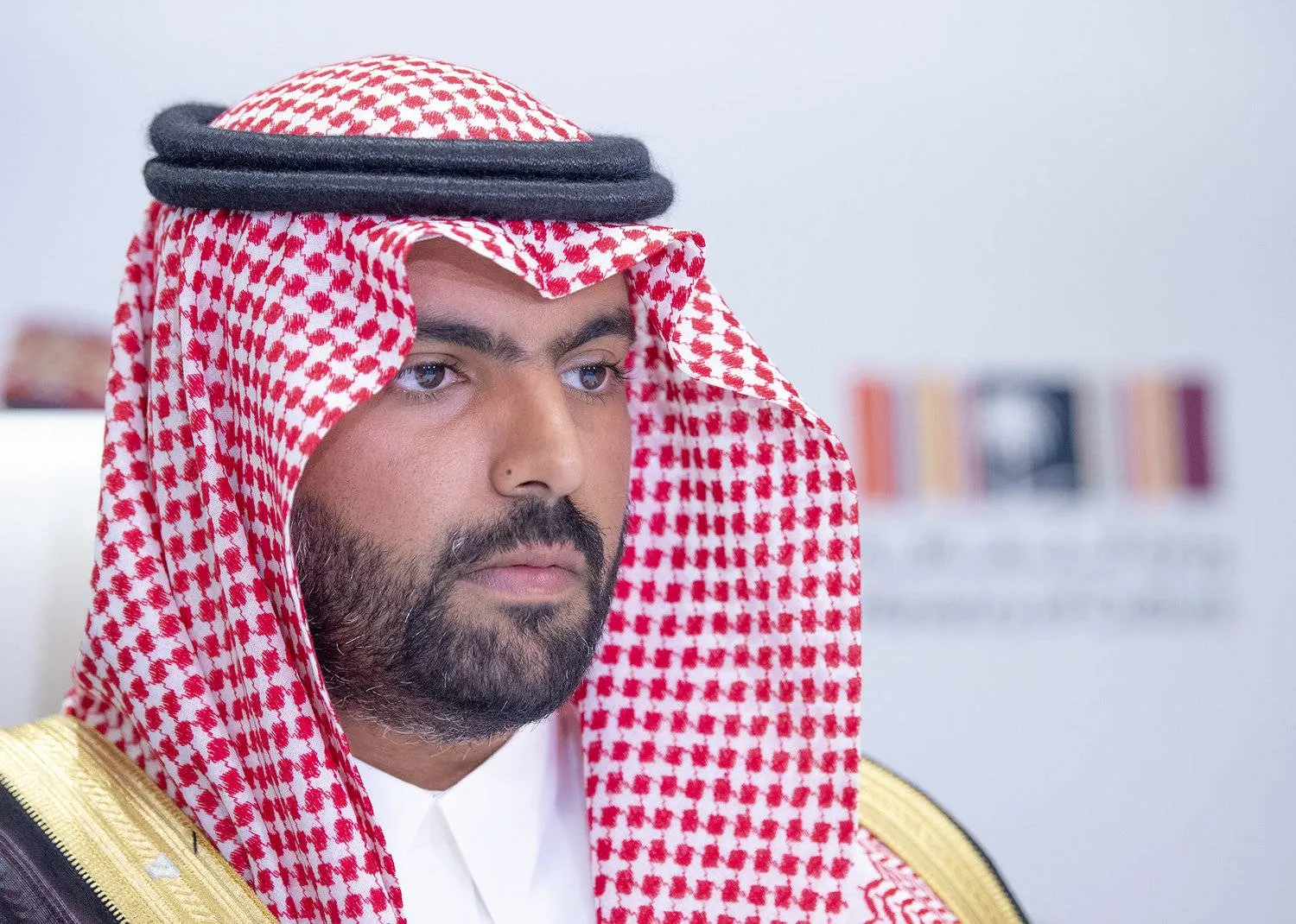
Saudi Minister of Culture Bader bin Abdullah bin Mohammed bin Farhan Al Saud
TT

The Golden Era of Saudi Culture

Saudi Minister of Culture Bader bin Abdullah bin Mohammed bin Farhan Al Saud

We bid farewell to 2023, with all accomplishments and lessons that we learned, welcoming the new year immensely determined to seize new opportunities and enhance our progress. We are intent on continuing our journey at the Ministry of Culture, a journey of big dreams inspired and empowered by the Custodian of the Two Holy Mosques, and His Royal Highness the Crown Prince and Prime Minister - may God protect them. It is a journey grounded in Saudi ingenuity, diverse heritage is the secret to its success, and a bright future is its destination.

Five and a half years in, the journey has made exceptional gains in a record time, making the Saudi experience of institutionalizing the cultural sector unique and inspiring. Dreams have become reality, thanks to the immense support of our wise leadership that believes culture is crucial for the development of humanity and nations, as well as our productive partnership with Saudi intellectuals and creatives, and the tireless efforts of the young Saudi men and women who have been doing diligent work in the cultural sphere.

Although cultural sectors have many branches, the cultural system has operated in the spirit of a united team. Since then, it has succeeded in creating incentives within the sector by launching 500 initiatives to ensure that it evolves across the board and establishing 11 cultural commissions alongside 25 cultural institutions that make us proud. We have shared our inspiring cultural experience with the world through international forums, in order to enhance intellectual and cultural exchange, which contributed to reflecting the unique historical depth and value of Saudi culture.

Over the past few years, we have seen the expansion of our global partnerships with friendly states and international cultural organizations, and the Kingdom has become a cultural and artistic destination that draws visitors from across the world. It has adopted a vision that clearly sees the importance of promoting culture globally through its initiatives, which have received international support and endorsement.

Our journey has contributed to enhancing our national identity through a series of transformative and exceptional initiatives. It has facilitated access to cultural content in every region of the Kingdom, through over 4000 cultural events that drew 11 million visitors. The cultural system’s efforts have raised awareness about the importance of culture and its impact on individuals and society. According to recent studies, 92 percent of the Kingdom's residents now see the importance of culture in their daily lives. The private sector's investment in culture has doubled, and cultural activity now contributes more strongly to our GDP.

Surpassing Three Targets

The cultural system has also made strides in terms of supply, demand, and enabling factors. It has surpassed three of the targets it had set for the year 2030. The number of graduates in fields tied to cultural specialties has increased to more than 28,000, exceeding the target of 26,000. The number of employees in the cultural sectors has leaped to 244,000, whereas the 2030 target was 140,000. Additionally, the target number of Saudi participation in international cultural events was surpassed, with the Kingdom having taken part in 35.

In light of all that has been achieved, our experiences attest to the cultural system's capacity for adapting to change and its flexibility in creating innovative and sustainable operating models. The Saudi experience in facing the major challenge recently encountered by cultural sectors worldwide, COVID-19, is a prime example.

Ambitions for 2024

Looking to the future, we enter the year 2024 with great ambitions. We aim to enhance these gains and supplement them with more achievements in a rapidly evolving and changing world. Several major shifts that will impact the cultural sector over the next few years are emerging, creating new opportunities. While social transformations and consumer preferences affect the sector, they fundamentally help the system with planning. Global economic shifts push the cultural sector to adopt new approaches so that it can continue to thrive. It also highlights the significance of funding and support, while technological developments offer infinite opportunities for growth and contribute to creating new spaces.

Three Fundamental Pillars

The priorities of Saudi Arabia's cultural system, starting from the new year, will be founded on three fundamental pillars: culture for enhancing creative endeavors and community participation, economic growth, and national pride and global exchange. The focus is on achieving further progress, whether in terms of supply, by incentivizing innovation, production, and publication, demand (awareness and consumption), or enabling factors such as funding, education, vocational training, laws and regulations, and technology.

We are determined to strengthen our international partnerships and encourage plans for integrating culture into other public policies and ensuring that they complement one another to ensure that we achieve sustainable development goals across the globe. We are also determined to protect global heritage from challenges like climate change, conflicts, and other risks, and to contribute, with friends around the world, to safeguarding cultural treasures, which are part of our human civilization.
Enhancing and preserving culture is not only a fundamental need but also a civilizational responsibility.

Thus, we will continue to pursue Saudi Vision 2030. The journey of the Ministry of Culture will reach the middle of the journey towards 2030 in June. We have no choice but to fulfill the aspirations of our leadership and the ambitions of our country, which deserves to see forms of culture flourish. We would thereby enrich individual lifestyles, reinforce our national identity, and encourage cultural dialogue with the world.


Facts

 11 Million Visitors were drawn by 4,000 cultural activities in Saudi Arabia


Diriyah Art Futures to Launch 'Of the Earth: Earthly Technologies to Computational Biologies' Exhibition 

Diriyah Art Futures to Launch 'Of the Earth: Earthly Technologies to Computational Biologies' Exhibition 
TT

Diriyah Art Futures to Launch 'Of the Earth: Earthly Technologies to Computational Biologies' Exhibition 

Diriyah Art Futures to Launch 'Of the Earth: Earthly Technologies to Computational Biologies' Exhibition 

Diriyah Art Futures (DAF) announced on Wednesday the opening date of its fourth major exhibition, titled "Of the Earth: Earthly Technologies to Computational Biologies."

The exhibition will run in Diriyah from January 14 to May 16.

Curated by DAF’s Director of Exhibitions Irini Papadimitriou, the exhibition is organized into four thematic areas. It examines how technology is often viewed as a tool for controlling nature, while also addressing the environmental impact of digital systems on a planet with finite resources. The artworks will showcase how these technologies are constructed from the earth's own materials.

The collaborations between art, technology, and science provide creative ways to address urgent issues and challenge technological power structures. They propose pathways toward caring ecosystems, reimagining technology shaped by interspecies, collective, and planetary intelligence that serves more than just human needs.

A public program featuring panel discussions, practical workshops, and masterclasses will accompany the exhibition.


France's Louvre Museum Remains Shut as Workers Extend Strike

FILED - 07 December 2018, France, Paris: A View of the inner courtyard with the glass pyramid of the Louvre Museum in Paris. Photo: Christian Böhmer/dpa
TT

France's Louvre Museum Remains Shut as Workers Extend Strike

FILED - 07 December 2018, France, Paris: A View of the inner courtyard with the glass pyramid of the Louvre Museum in Paris. Photo: Christian Böhmer/dpa

Staff at France's Louvre museum in Paris on Wednesday unanimously voted in favor of extending a strike over pay and working conditions that began on Monday, leaving the world's most visited museum closed until further notice.

The museum is routinely closed on Tuesdays.

The strike comes after a spectacular jewel heist in October, as well as recent infrastructure problems, including a water leak that damaged ancient books, which have exposed glaring security gaps and revealed the museum's deteriorating state.

Unions have said that staff at the Louvre are overworked and mismanaged, and they are calling for more hiring, pay increases and a redirection of spending.

Louvre director Laurence des Cars, who has faced intense criticism since burglars in October made off with crown jewels worth 88 million euros ($103.14 million), is due to answer questions from the French Senate on Wednesday afternoon. 

Des Cars has acknowledged an “institutional failure” following the heist but has come under renewed scrutiny after admitting she only learned of a critical 2019 security audit after the robbery.

France’s Court of Auditors and a separate administrative inquiry have since criticized delays in implementing a long-promised security overhaul.

The Culture Ministry announced emergency anti-intrusion measures last month and assigned Philippe Jost, who oversaw the Notre Dame restoration, to help reorganize the museum. The move was widely seen as a sign of mounting pressure on Louvre leadership.


New Rome Metro Stations Showcase Ancient Treasures After Years of Delays

People examine artifacts on display during the inauguration of the Colosseo Fori Imperiali stop on Metro Line C in Rome, Italy, 16 December 2025. (EPA)
TT

New Rome Metro Stations Showcase Ancient Treasures After Years of Delays

People examine artifacts on display during the inauguration of the Colosseo Fori Imperiali stop on Metro Line C in Rome, Italy, 16 December 2025. (EPA)

After years of delays and spiraling costs, Rome inaugurated two new metro stations on Tuesday, including one by the Colosseum, showcasing archaeological discoveries that might become tourist attractions in their own right.

The driverless Metro C line now stretches from the Italian capital's eastern suburbs to Porta Metronia and the Colosseum, extending its reach into the historic city center.

Future plans will take it even deeper under Rome's baroque heart, beneath the river Tiber and onto the Vatican, though the next stop at Piazza Venezia is not expected to open before 2032.

Excavations for the new stations revealed remarkable finds, which slowed work as archaeologists painstakingly preserved layers of ancient Rome they hadn't known were there.

At Porta Metronia, drilling rigs uncovered a military barracks dating back 2,000 years, as well as a residential house, complete with frescoed rooms and mosaics, which are preserved in a museum within the station.

During the Colosseum excavations, workers discovered 28 ancient wells and hundreds of everyday artifacts, including hairpins, oil lamps, irrigation pipes, knives, and statues, many of which are on show.

"These two stations will travel around the world," Transport Minister Matteo Salvini said on Tuesday, predicting they would soon flood social media.

"Beyond serving commuters and Romans, anyone who comes here from Italy or from abroad will stop in these stations. They might take the metro even if they don't need it, just to enjoy the ride," he added.

LONG DELAYS, COST HIKES

Rome's Metro C was meant to link the city's two main Basilicas by the year 2000. Instead, the line only reached the imposing San Giovanni Basilica in 2018, and the Vatican station near St. Peter's Basilica won't be ready for at least another decade.

The initial plan to build 24 stations to the Colosseum was priced at 2.23 billion euros ($2.63 billion), but costs have surged past 3 billion euros, and the entire line could exceed 6 billion by the time the final seven stations are completed.

Engineers say Rome is among the most challenging cities in the world for metro construction, due to buried archaeological sites that require safeguarding and concerns that vibrations could damage the heritage above ground.

At the next stop, at Piazza Venezia, a construction team is digging an 85-meter deep (280 feet) ring around the site which will be filled with reinforced concrete to protect the six underground floors of the station that are being dug out.

Rome Mayor Roberto Gualtieri said it was worth the effort.

"Without these major works, we would never have discovered the barracks at Porta Metronia, we would never have found these wells, and today we would have known far less about our extraordinary past," he said.

Metro C is intended to carry 600,000 passengers a day, easing Rome's notorious traffic and speeding tourists between major landmarks. At present it carries 41,000 daily, but the new openings should see numbers climb.