Was 2023 a Tipping Point for Movies? ‘Barbie’ Success and Marvel Struggles May Signal a Shift

Australian actress Margot Robbie poses on the pink carpet upon arrival for the European premiere of "Barbie" in central London on July 12, 2023. (AFP)
TT

Was 2023 a Tipping Point for Movies? ‘Barbie’ Success and Marvel Struggles May Signal a Shift

Australian actress Margot Robbie poses on the pink carpet upon arrival for the European premiere of "Barbie" in central London on July 12, 2023. (AFP)

Eight years ago, Steven Spielberg predicted that the superhero movie would one day go “the way of the Western.”

Spielberg’s comments caused a widespread stir at the time. “Avengers: The Age of Ultron” was then one of the year’s biggest movies. The following year would bring “Captain America: Civil War,” “Deadpool” and “Batman v. Superman: Dawn of Justice.” The superhero movie was in high gear, and showing no signs of slowing down.

But Spielberg’s point was that nothing is forever in the movie business. These cycles, Spielberg said, “have a finite time in popular culture.” And the maker of “E.T.,” “Jurassic Park” and “Jaws” might know a thing or two about the ebbs and flows of pop-culture taste.

As 2023 draws to a close, no one is sounding the death knell of the superhero movie. The Walt Disney Co.'s “Guardians of the Galaxy Vol. 3” made $845.6 million worldwide and Sony's “Spider-Man: Across the Spider-Verse” ($691 million) was one of the most acclaimed films of the year. Marvel is still mightier than any other brand in the business.

But more than ever before, there are chinks in the armor of the superhero movie. Its dominance in popular culture is no longer quite so assured. A cycle may be turning, and a new one dawning.

For the first time in more than two decades, the top three movies at the box office didn’t include one sequel or remake: “Barbie,” “The Super Mario Bros. Movie” and “Oppenheimer.” The last time that happened was 2001, when “Harry Potter and the Sorcerer’s Stone,” “Shrek” and “Monsters, Inc.” topped the box office.

No, it’s not exactly a lineup of originality like, say, 1973, when “The Exorcist, “The Sting” and “American Graffiti” led all movies in ticket sales. “Barbie” and “The Super Mario Bros.,” based on some of the most familiar brands in the world, will generate spinoffs and sequels of their own.

But it’s hard not to sense a shift in moviegoing, one that might have reverberations for years to come for Hollywood.

“There’s an inflection point in 2023,” says Paul Dergarabedian, senior media analyst for data firm Comscore. “ Barbenheimer is just one part of that story. Audiences, they want to be challenged. I think the tried and true is not necessarily working.”

Greta Gerwig’s “Barbie,” from Warner Bros., was the year’s runaway hit, with more than $1.4 billion in ticket sales worldwide. It was a blockbuster like none seen before: an anarchic comedy that set a string of records for a movie directed by a woman.

Nearly as unprecedented was the success of Christopher Nolan’s “Oppenheimer,” a three-hour drama that nearly grossed $1 billion. As different as it and “Barbie” were, they were each original feats of cinema and personal statements by its directors.

At the same time, the Walt Disney Co.’s Marvel, a hit-making machine like none other in movie history, faltered like never before. “The Marvels” marked a new low for the Marvel Cinematic Universe, collecting $200 million globally. DC Studios, in the midst of a revamp, saw disappointing results for “The Flash” and “Blue Beetle” before watching “Aquaman and the Lost Kingdom” sink to a $28.1 million debut.

Both Marvel and DC have already made moves to right their ships. Bob Iger, Disney's chief executive, has called turning around Marvel his top priority. He said the superhero studio has suffered greatly from too many films and series leading to “diluted quality.” The James Gunn, Peter Safran-led DC, meanwhile, won’t officially launch until 2025 with “Superman Legacy.”

In the meantime, something else will have to fill the void. That was a theme in 2023, too, when the writers and actors strikes marred release plans and forced the delay of several films including Warner’s “Dune: Part Two,” Sony’s next “Ghostbusters” movie and MGM’s “Challengers.”

Those disruptions will continue in 2024. Analysts aren't expecting a banner year for Hollywood in part because films like the next “Mission: Impossible” film and the “Spider-Verse” sequel, both delayed by the strikes, won’t make their original dates.

Overall ticket sales in US and Canadian theaters for 2023 are expected to reach about $9 billion, according to Comscore, an improvement of about 20% from 2022. The industry is still trying to regain its pre-pandemic footing, when ticket sales regularly surpassed $11 billion. Output of wide-releases in 2023 (88) still trailed those in 2019 (108) by 18.5%.

Hollywood is still coaxing moviegoers back to theaters — something “Barbie,” “Oppenheimer” and “Mario” went a long way to helping.

“It reinforced something that we’ve known for 100 years in the business: People like going to the shared experience out of the home,” says Jeffrey Goldstein, distribution chief for Warner Bros. “They love being entertained. Movies are a good financial proposition and can bring in a mass audience.”

“It probably started with ‘Mario’ last April,” adds Goldstein. “I think that showed audiences again that theaters are a fun place to be to. And it showed studios and content creators: Up your game.”

If 2023 is any guide, hits will come from increasingly unpredictable places.

That was the case with “Taylor Swift: The Eras Tour,” a film released just two months after Swift’s recorded concerts in a first-of-its-kind distribution deal with AMC Theatres. It grossed $250 million worldwide, and was followed by the similarly released “Renaissance: A Film by Beyoncé,” another No. 1 debut.

More surprising was “Sound of Freedom,” a $15 million film from the independent Angel Studios, which matched Swift with $250 million worldwide. It was released with a unique “pay it forward” program that allowed people to donate tickets.

Going into 2023, no one was betting “Sound of Freedom” would outgross “The Marvels” or that “Five Nights at Freddy's” would have a bigger opening weekend than “Indiana Jones and the Dial of Destiny.”

“There are going to be examples of big-budget, traditional blockbusters that do well,” says Dergarabedian. “But for every one of those, there have been two that failed. An audience that’s finding a lot of interesting material on streaming is becoming more open to films like ‘Godzilla Minus One,’ Indian cinema, Japanese anime. There’s a shift in audience taste and studios need to get a handle on this.”

That poses as much of a challenge as an opportunity to studios. If more-of-the-same no longer has quite the same appeal for moviegoers, an industry that for years has depended on sequels, prequels, reboots and remakes to make up the bulk of its profits may require new creativity.

The Western didn't vanish all at once. After two decades of ubiquity, it began going out of style in the 1960s. And the Western, of course, continues to be rich territory for filmmakers. This year, 81-year-old Martin Scorsese made his first Western in “Killers of the Flower Moon,” the three-hour-plus $200 million epic from Apple Studios.

The superhero movie, likewise, won't ever die. But its heyday might have reached its endgame.


Box Office: Elizabeth Holmes Movie ‘You Can See Everything’ Is Now a Hit in Theaters Too

“You Can See Everything” made an extraordinary $15 million from only 855 screens, with over 2,000 sellout showings over the weekend, according to A24. (A24)
TT

Box Office: Elizabeth Holmes Movie ‘You Can See Everything’ Is Now a Hit in Theaters Too

“You Can See Everything” made an extraordinary $15 million from only 855 screens, with over 2,000 sellout showings over the weekend, according to A24. (A24)

North American movie theaters were flooded with new films this weekend, including a video game reboot, a big budget survival thriller and a Jane Austen adaptation.

While Paramount’s “Street Fighter” took the first-place spot, earning $31 million from 3,575 theaters according to studio estimates on Sunday, most of the attention and cultural discourse was elsewhere: On the nearly three-hour Elizabeth Holmes documentary, “You Can See Everything.”

Buzz and box office don’t always line up, but “You Can See Everything” made an extraordinary $15 million from only 855 screens, with over 2,000 sellout showings over the weekend, according to A24. It also had the biggest opening for a film playing on under 1,000 screens since “Borat” opened to $26.5 million in 2006, and the biggest non-music documentary opening in two decades, since “Fahrenheit 9/11” made nearly $24 million from 868 theaters. Those numbers do not account for inflation.

Like other hits this year, like the Gen-Z driven “Backrooms” and “Obsession,” ticket sales for “You Can See Everything” were driven by a largely younger audience. Over 70% of the opening weekend crowd was under 35.

The film, directed by Nathan Fielder and Lance Oppenheim, was made in secret over three years. Fielder spent over a month with the disgraced Theranos founder and her family, including two young children and partner Billy Evans, in her final days before reporting to federal prison. The reviews have been extremely positive, with 99% on Rotten Tomatoes and 99 on Metacritic. It also got an unprecedented 91% “definite recommend” from audiences, according to PostTrak exit polls.

“You Can See Everything” reportedly cost under $7 million to make and less than $10 million to market.

“Everybody underestimated the movie, because on paper this is like, wait, a three-hour documentary?” said Paul Dergarabedian, the head of marketplace trends for Rentrak. “But he (Fielder) is a huge draw, and he has a huge following on social media, and then Elizabeth Holmes is just a character that you couldn’t even make up. It’s stranger than fiction, and that’s really compelling.”

‘Street Fighter’ knocks out ‘Whalefall’

“Street Fighter” topped the charts as expected with a $51 million global opening, including $20 million from international showings. The movie starring Callina Liang, Noah Centineo and Andrew Koji cost a reported $82 million to make, not accounting for marketing and promotion. Audiences were 69% male.

Both “Street Fighter” and “You Can See Everything” may have contributed to “Whalefall’s” relative failure this weekend. The $60 million survival thriller starring Austin Abrams and Josh Brolin made $8 million from 3,065 locations in the US and Canada, despite being better reviewed than “Street Fighter.” With $9.5 million from international showings, the Disney release had a $17.5 million global launch.

“Whalefall” opened in fourth place, behind the Jessica Chastain horror “Other Mommy.” The Universal Pictures release added $8.4 million in its second weekend, bringing its domestic total to $44.9 million.

Fifth place went to “Sense and Sensibility,” which earned an estimated $7.3 million from 2,545 theaters. The well-reviewed Austen adaptation starring Daisy Edgar-Jones drew a predominantly younger (58% between the ages of 14 and 18) and female crowd (84%). It also got the strongest CinemaScore of the week (A-).

Warner Bros. Clockwork also released a restored presentation of Ken Russell’s 1971 film “The Devils” in 350 locations, where it made $1.6 million. It’s the first release from the studio’s specialty label.

‘Musk’ documentary facing advertising blocks

Alex Gibney's Elon Musk documentary “Musk” also expanded to 472 screens in the US and Canada, where it made $306,702. The film, which runs nearly four hours, has faced issues advertising on major social media platforms including X, which Musk owns, and TikTok, according to distributor Bleecker Street, who said TikTok this weekend permanently suspended the film’s ad account.

According to Rentrak, the weekend overall generated about $101.6 million in ticket sales, up 45% from the same weekend last year. The year to date stands at $8.2 billion, which is up almost 20% from 2025.


‘Tenzing’ Makes Sure We Know Who the Real Heroes of Everest Are

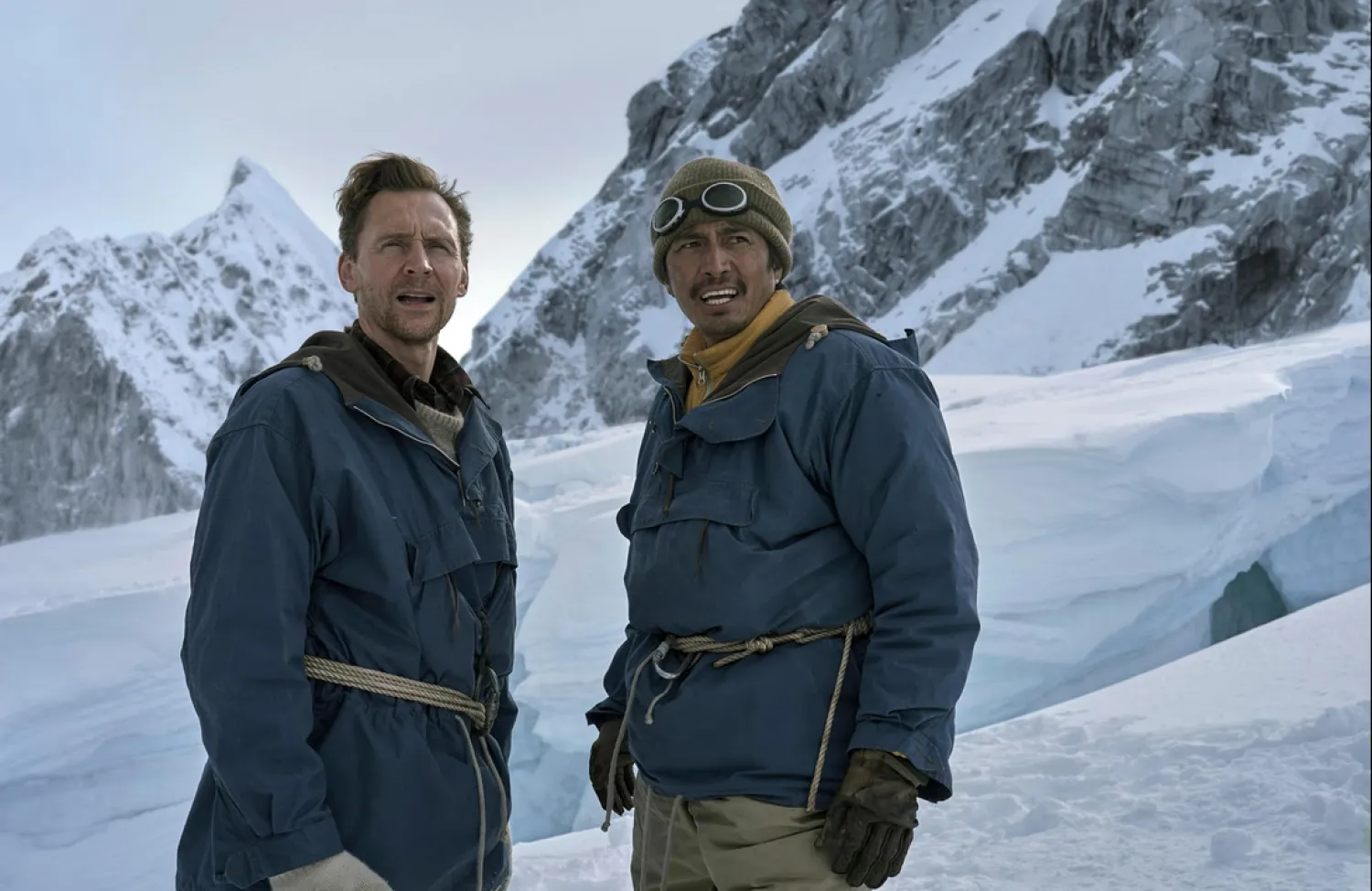
Genden Phuntsok and Tom Hiddleston in ‘Tenzing’ (Apple TV)
TT

‘Tenzing’ Makes Sure We Know Who the Real Heroes of Everest Are

Genden Phuntsok and Tom Hiddleston in ‘Tenzing’ (Apple TV)

New York: Jeanette Catsoulis

Stately and occasionally stirring, Jennifer Peedom’s movie “Tenzing” has an old-fashioned earnestness that’s gently disarming.

The film’s real-life subject is Tenzing Norgay (Genden Phuntsok), the Nepali-Indian mountaineer who, alongside Sir Edmund Hillary (Tom Hiddleston), became the first person reported to reach the summit of Mount Everest in 1953.

Neither a straight-up biopic nor a flat-out adventure yarn (its tone is too buttoned-up and British for that), “Tenzing” is instead a dramatic portrait of one man’s intense, all-consuming longing.

As a child in 1924 on the Tibetan Plateau, Tenzing watches, rapt, as the “men from away places” prepare to climb the mountain he knows only by its Tibetan name, Chomolungma.
One of those men is the English mountaineer George Mallory (Johnny Flynn), who would die on that ascent and whose brief exchange with Tenzing ignites a dream that swiftly becomes an obsession.

Almost three decades later, that drive will secure Tenzing, now an experienced climber, a spot as head Sherpa on Hillary’s expedition.

This places him in an awkward limbo: Neither a member of the British climbing team nor an ethnic Sherpa, he is viewed as an outsider by both groups.

His intelligence and preternatural climbing ability win him a promotion and respect; but Peedom, throughout her first narrative feature (after several mountain-climbing documentaries), remains keenly aware of the expedition’s class boundaries and not-so-subtle racism.

Shot in Nepal and New Zealand, “Tenzing” brings a chilly majesty to Everest’s treacherous slopes, with Stefan Duscio’s camera confirming Tenzing’s belief in the mountain’s mystical power. But a screenplay (by Luke Davies) that over-relies on confusing flashbacks and insists too often on Tenzing’s spiritual connection to Everest can cause other characters to fade to near-irrelevance. (Hillary, a polite New Zealander, is so reserved I forgot at times he was even there.) Harder to overlook is Willem Dafoe’s Colonel Hunt, the expedition leader and a man who clearly bathes in starch.

Whatever your feelings about Everest’s current ruination, there is no doubt that Tenzing — who, with Hillary, pioneered the mountain’s popular Southeast Ridge route, the site of an infamous 2014 disaster— deserves this spotlight.

And if it’s somewhat sentimental beam colors him as a little too saintly, Phuntsok’s performance is so modest and joyful that it’s difficult to mind. Whether trudging through a monsoon or hauling a grateful Hillary out of a nasty crevasse, this is a man who’s living his best life.

In any event, the film’s more worshipful tendencies are easily mitigated by its classical beauty and what can only be called its dignified — and occasionally breathtaking — handling of danger.

Tenzing may be on a spiritual quest, but the Sherpas harbor no illusions about their position or their militaristic overlords. Savvy and tart-tongued, they understand perfectly that their skills and discomfort are serving inflated foreign egos, men who “get to pretend they are heroes.”

“Tenzing,” in its quietly empathetic way, makes sure we know who the real heroes are.

The New York Times


'Godfather' Star Al Pacino to Receive Life Achievement Award from Actors' Guild

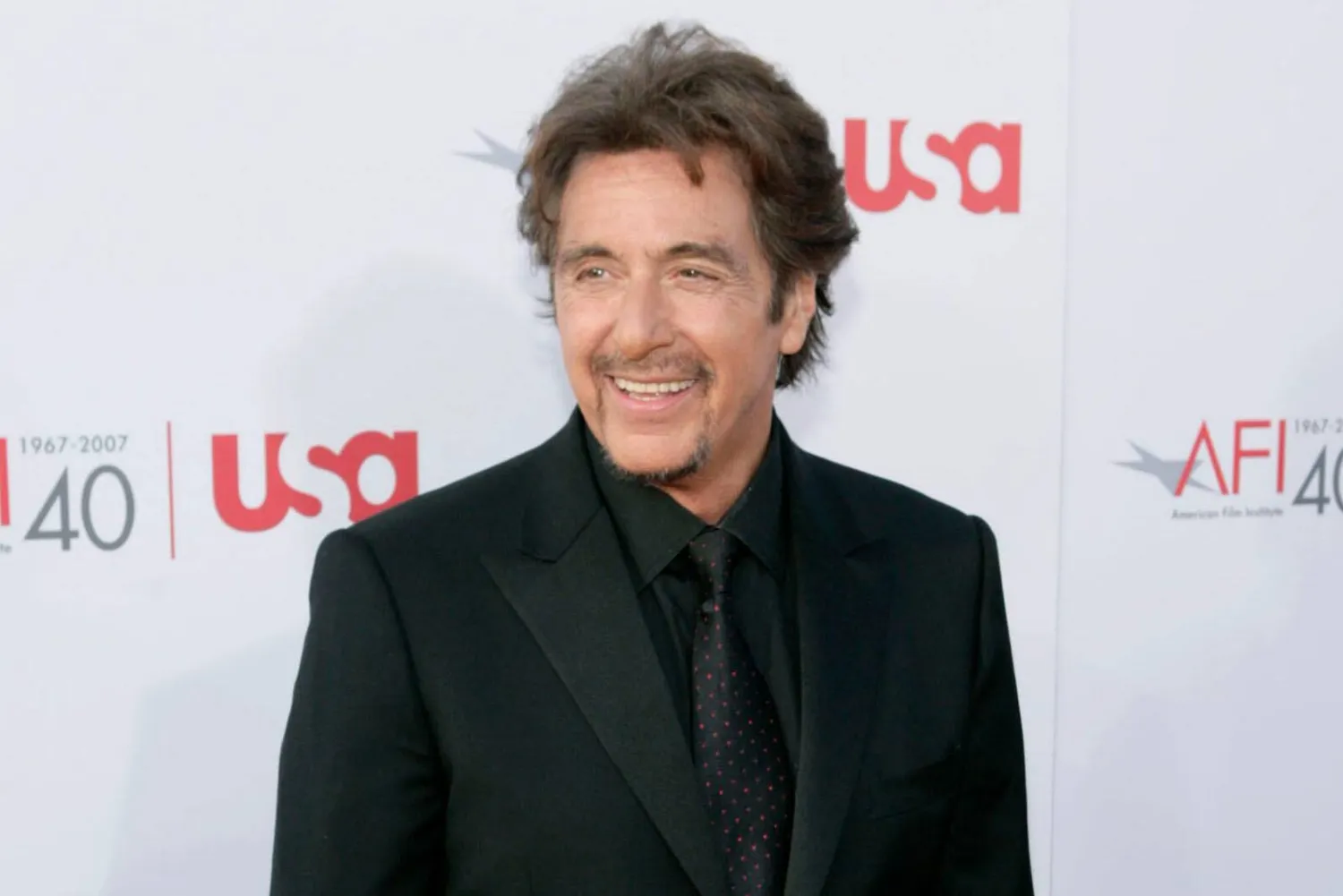
FILE - Honoree Al Pacino appears at the American Film Institute Life Achievement Award event in Los Angeles on June 7, 2007. (AP Photo/Matt Sayles, File)
TT

'Godfather' Star Al Pacino to Receive Life Achievement Award from Actors' Guild

FILE - Honoree Al Pacino appears at the American Film Institute Life Achievement Award event in Los Angeles on June 7, 2007. (AP Photo/Matt Sayles, File)

Celebrated actor Al Pacino will receive a lifetime achievement award for his career achievements and humanitarian work next year, the actors' union SAG-AFTRA has announced.

The American actor, best known for playing Michael Corleone in "The Godfather" films is the 62nd recipient of the SAG-AFTRA Life Achievement Award. The union will present the award to him in Los Angeles at the 33rd Actor Awards on February 28, 2027 as part of a ceremony to be live-streamed on Netflix.

Pacino's recognition follows a career spanning more than six decades across film, television and stage. He is known for numerous memorable characters, including real-life police officer Frank Serpico ⁠in 1973's "Serpico," Miami ⁠mobster Tony Montana in 1983's "Scarface" and more recently Hollywood agent Marvin Schwarz in Quentin Tarantino's 2019 film "Once Upon a Time ... in Hollywood."

The award is presented annually to an actor who embodies the "finest ideals of the acting profession," according to the union.

"I wondered and wandered most of my life but have always felt at home with a script ⁠and my fellow actors," Pacino said in a statement from the actors' union.

"It's the work and the actors along the way that have been among the greatest joys of my life. It's an honor to be recognized by SAG-AFTRA in celebrating the journey," he added on Thursday.

Pacino won the Best Actor Oscar for his performance as Lieutenant Colonel Frank Slade in the 1992 film "Scent of a Woman," and has also won multiple Emmy, Tony and Golden Globe awards.

"Like so many actors, I have spent my life in awe and appreciation of the ⁠force of ⁠nature that is Al Pacino. When you watch him perform, you are witnessing a student and a master," SAG-AFTRA President Sean Astin added in the statement.

Pacino also participated in the "America: A Tribute to Heroes" telethon following the September 11, 2001 attacks, and in 2009 received the Arthritis Foundation's Jane Wyman Humanitarian Award for his charitable work.

The 86-year-old actor was born Alfredo James Pacino in New York. He struggled throughout the 1960s to find steady work before his eventual film breakthrough in 1972's "The Godfather."

SAG-AFTRA represents approximately 160,000 actors, announcers, broadcast journalists, dancers, DJs, news writers, news editors, program hosts, puppeteers, recording artists, singers, stunt performers, voiceover artists, influencers and other entertainment and media professionals.