


Arab Strategy Forum 2024 Affirms Rising Influence of GCC Countries

Part of the Arab Strategy Forum 2024 (Asharq Al-Awsat)
TT

Arab Strategy Forum 2024 Affirms Rising Influence of GCC Countries

Part of the Arab Strategy Forum 2024 (Asharq Al-Awsat)

Sheikh Mohammed bin Rashid Al Maktoum, Vice President and Prime Minister of the UAE and Ruler of Dubai, affirmed that “maintaining distance from global polarizations is the best way to ensure the stability and prosperity of the region.”

He highlighted that the costs of wars are high in terms of both lives and resources, emphasizing that the continuation of conflicts means everyone loses in the pursuits of development and shaping the future.

“Our region urgently needs, more than ever, to reconcile its differences, unify efforts, and harness the energies of the people for comprehensive prosperity,” said the Dubai ruler.

The security and prosperity of the region are intertwined, and it is the collective responsibility of everyone to contribute to building a better tomorrow for future generations, he asserted.

Sheikh Mohammed made these remarks at the Arab Strategy Forum 2024, which is being held under the theme “The Political and Economic State of the Arab World.”

The forum was also attended by Prince Turki Al Faisal bin Abdulaziz, Chairman of the Board of the King Faisal Center for Research and Islamic Studies, along with several sheikhs in the UAE, ministers, officials, strategic experts, and thought leaders in politics and economics from various parts of the world.

Stressing the high human and resource costs of wars, Sheikh Mohammed underscored the need to put an end to the ongoing conflict and exert maximum efforts towards achieving lasting peace.

“Our unique position has historically given us an exceptional advantage to serve as a humanitarian and cultural bridge for communication between global entities,” he said.

“In the United Arab Emirates, we believe in the diversity of perspectives among nations in politics, economics, and their individual views on global affairs.”

“Our strategy involves dealing with emerging crises and facing developmental and social challenges,” clarified Sheikh Mohammed.

“We are confident that in the coming years, the Gulf Cooperation Council (GCC) countries will continue to consolidate their influential presence both regionally and internationally,” he added.

“They will also venture into new horizons in economic diversification, which is expected to have a positive impact on people of the region and the world,” Sheikh Mohammed said.


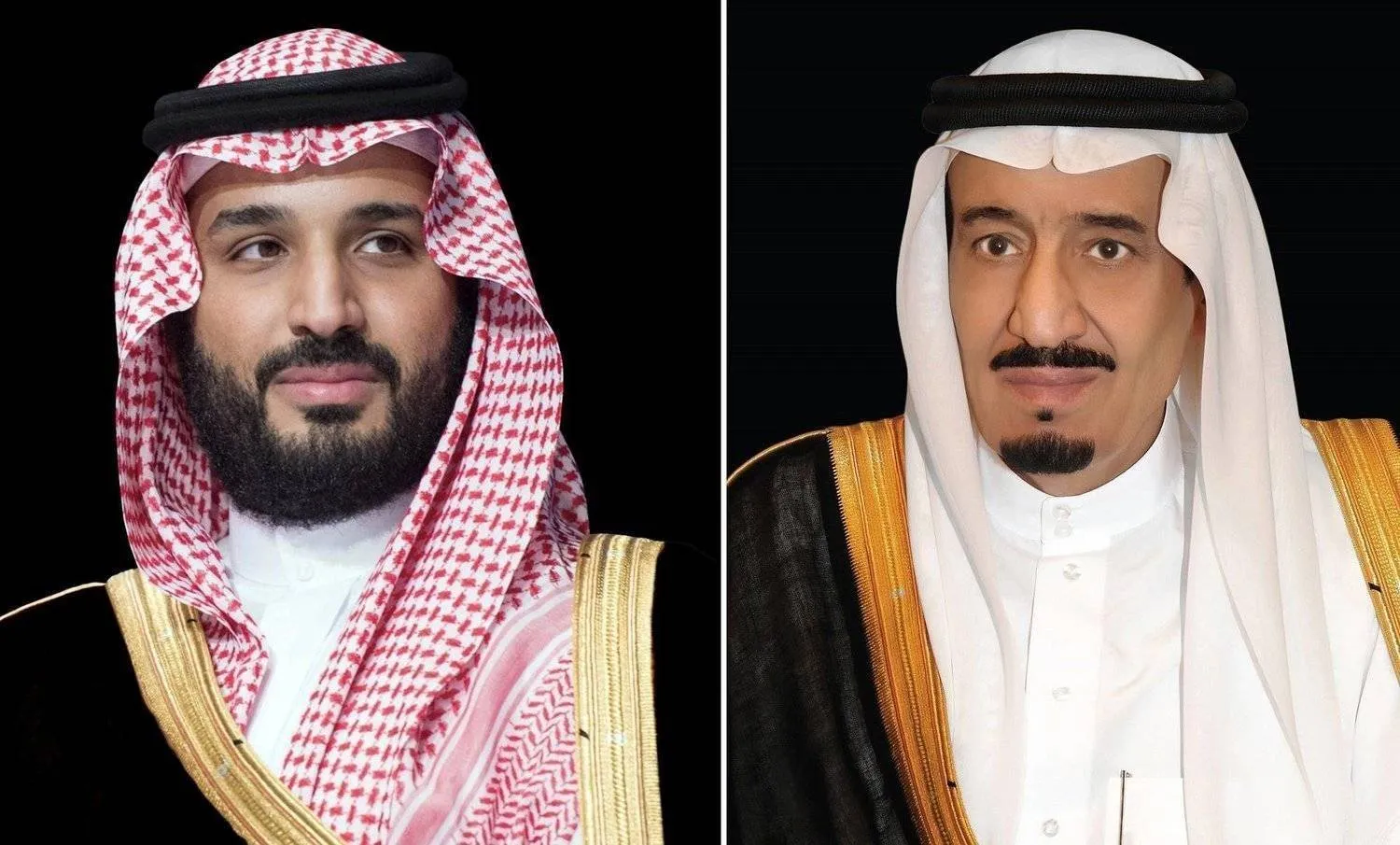

Saudi Defenses Intercept, Destroy 5 Drones and a Ballistic Missile

The armed forces' readiness succeeded in protecting the airspace and dealing with various threats without recording any damage (Ministry of Defense)
TT

Saudi Defenses Intercept, Destroy 5 Drones and a Ballistic Missile

The armed forces' readiness succeeded in protecting the airspace and dealing with various threats without recording any damage (Ministry of Defense)

Saudi air defenses intercepted five drones and a ballistic missile launched by Iran toward the Kingdom in recent hours.

The official spokesperson for the Saudi Ministry of Defense, Maj. Gen. Turki Al-Maliki, announced the interception and destruction of five drones in recent hours, as well as a ballistic missile targeting the Eastern Province.

Al-Maliki confirmed the success of the operations and the readiness of the armed forces to protect the airspace and respond to various threats, with no damage reported.


Saudi FM Discusses Regional Developments with His Japanese, Chinese Counterparts

Saudi Minister of Foreign Affairs Prince Faisal bin Farhan bin Abdullah/File Photo
TT

Saudi FM Discusses Regional Developments with His Japanese, Chinese Counterparts

Saudi Minister of Foreign Affairs Prince Faisal bin Farhan bin Abdullah/File Photo

Saudi Minister of Foreign Affairs Prince Faisal bin Farhan bin Abdullah received a phone call on Thursday from Minister for Foreign Affairs of Japan Toshimitsu Motegi.

The two sides discussed cooperation and recent regional developments.

Prince Faisal also held a separate phone call with Member of the Political Bureau of the Communist Party of the Central Committee and Minister of Foreign Affairs of the People's Republic of China Wang Yi, during which they discussed the latest developments in the region.


Saudi Arabia, Arab, and Islamic Nations Condemn Israel’s Death Penalty Law for Palestinians

Logo of the Saudi Ministry of Foreign Affairs
TT

Saudi Arabia, Arab, and Islamic Nations Condemn Israel’s Death Penalty Law for Palestinians

Logo of the Saudi Ministry of Foreign Affairs

The foreign ministers of Saudi Arabia, Egypt, Jordan, Indonesia, Pakistan, Qatar, Türkiye and the UAE strongly condemned on Thursday Israel’s law that allows the imposition of the death penalty in the occupied West Bank and its de facto application against Palestinians, the Saudi Press Agency reported.

The ministers warned against the increasingly discriminatory, escalating Israeli practices that entrench a system of apartheid and a rejectionist discourse that denies the inalienable rights and the very existence of the Palestinian people in the Occupied Palestinian Territory (OPT).

The ministers warned that this legislation represents a dangerous escalation, especially due to its discriminatory targeting of Palestinian prisoners, and emphasized that such measures could intensify tensions and further destabilize the region.

The ministers also expressed deep concern over the conditions of Palestinian prisoners in Israeli detention, warning of mounting risks amid credible reports of ongoing abuses, including torture, inhumane and degrading treatment, starvation, and denial of basic rights. They emphasized that these practices reflect a broader pattern of violations against the Palestinian people.

The ministers reiterated their firm opposition to Israel’s racially discriminatory, oppressive, and aggressive policies directed against Palestinians.

The ministers further emphasized the urgent need to refrain from measures imposed by the occupying power that risk further inflaming tensions on the ground. They stressed the importance of ensuring accountability and called for strengthened international efforts to uphold stability and prevent further deterioration.