Iran has created a secret network of military agencies with global reach to import at least $2 billion in hardware, explosives and heavy-duty trucks since January 2025, evading both the US naval blockade and Western sanctions, a Reuters investigation has found.
Hidden behind names starting with the letters MOD, for the Ministry of Defense, are more than 5,000 agencies that form a formidable financial and military machine. Their financial footprints are on bills of lading and other shipping data dating back to 2016. Some are tied to the Iranian Revolutionary Guard Corps (IRGC) and to business conglomerates known as bonyads that are controlled by Iran's elite.
The findings offer a window into one of the war’s great mysteries: How is the IRGC replenishing its missile and drone arsenals while firing them in their thousands?
In the 18 months from January 2025 to June 2026 – including four months into this year’s war – a single one of these agencies, MOD 346428, imported huge quantities of rocket propellants, explosives and weapons components that are critical for making drones and missiles, as well as heavy-duty trucks that can serve as missile launchers. The hardware came in by land, sea and air – much of it recorded as originating in China, Russia and Germany.
This investigation of the MOD network is based on thousands of Iranian bank and government records, corporate filings and import data.
The secret agencies all share the same Tehran address as Iran’s Ministry of Defense and Armed Forces Logistics, or MODAFL. They list their incorporation date as February 11, 1979, the day Khomeini took power in Iran after overthrowing the monarchy. Most were actually established in 2013, the records show, as Iran struggled under sanctions that saw its crude exports and currency plunge.
The agencies, identified for the first time by Reuters in collaboration with the Israeli-American risk consultancy 240 Analytics, form the backbone of Iran’s military procurement and sanctions evasion apparatus. They operate a web of frontmen and foreign shell companies, collectively known as trustees, who use the proceeds from illicit oil sales to buy goods for Iran.
Senior military leaders involved in Iran’s ballistic missile and drone programs use the network. Phone numbers registered to 91 of the agencies also appear in records from state-run Bank Sepah of IRGC personnel with accounts there. Among them are at least two commanders the US has accused of abuses against civilian protestors.
While Iran’s military has been under multiple US sanctions for decades, Reuters could find no evidence that any of the numbered agencies referenced in the documents have been designated by Western governments.
“What you have here is the regime's military lifeline during this conflict and for many years before,” said Miad Maleki, a former senior official at the US Treasury Department who helped design the American sanctions program against Iran. “This is the complete ecosystem of the Iranian military’s trade business.”
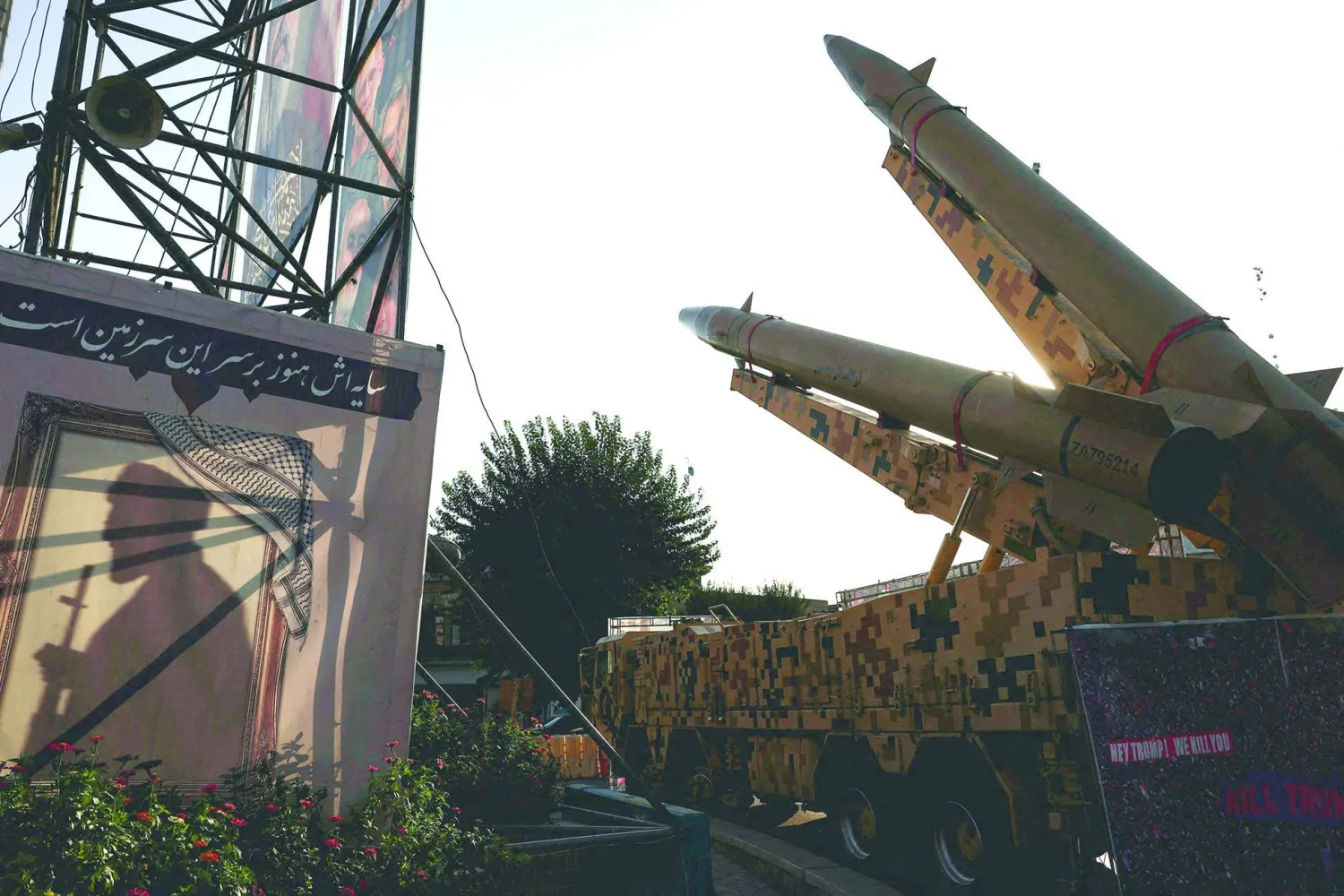
The weapons import network has provided many of the raw materials Iran needs to make missiles and drones. Those munitions are responsible for Iran’s relentless precision attacks against Gulf energy infrastructure, allowing Tehran to blunt America’s military assault.
In other reports this year, Reuters has shown how Iran withstood US pressure by exploiting crypto exchanges and illegal gambling networks to tap illicit revenues and circumvent sanctions, how the IRGC consolidated control of the Strait of Hormuz, and how the war has ushered in a new era of repression.
Maleki was one of four experts on Iranian sanctions and weapons who reviewed the Reuters findings and confirmed that many of the materials could be used in Iran’s missile and drone programs.
None of the Iranian government entities or companies contacted by Reuters responded to detailed requests for comment, including Tehran’s UN delegation to Geneva and the presidency.
In a statement in response to the Reuters findings, a Treasury Department spokeswoman said the United States “has severed the regime’s economic lifelines.”
“While the regime may continue its desperate attempts to evade our powerful sanctions, fund its military and weapons programs, and access foreign currency, we are always 10 steps ahead,” the spokeswoman said.
In tracking the materials, Reuters cross-checked a portion of some 19,000 import records using the shipping documents, footage from social media, and state media reports. Nearly all of the items that Iran imported were exempt from duty and specifically marked as military equipment, the data shows. The experts noted that much of the material, even explosives, can be considered dual-use, and so could also have civilian purposes.
The Wall Street Journal reported some of the shipments from China on September 23.
PARALLEL TRADE SYSTEM
The secret military agencies form a foreign-trade system parallel to the formal global economy that allows Iran to spend the money it earns abroad selling illicit oil on military hardware, said Maleki, who was the associate director of the Treasury’s Office of Foreign Assets Control until last year.
Money rarely crosses borders, where it might trip a sanctions alarm. Instead, for 97% of the shipments Reuters reviewed, the transactions were settled “without currency transfer,” the import data shows. Trusted frontmen in the diaspora, using cash held in foreign banks, bought the goods and shipped them home.
One end user of the network is the military unit overseeing Iran’s ballistic missile program. Another is Sahara Thunder, which was sanctioned by the US in 2024 for manufacturing and supplying drones to Russia that have devastated Ukraine. Reuters and 240 Analytics identified the Iranian military units by cross-referencing the import data with corporate registry filings, and emails and documents compiled on the website WikiIran.
Reuters could not determine the identities of the people who run WikiIran, a website that solicits leaked documents from the Islamic Republic and says it is operated by Iranians opposed to the government and “forced into exile.”
During the first six months of this year, according to the import data, deliveries included $1.9 million worth of detonators, tons of explosives, aircraft engine parts, rocket fuel ingredients and heavy-duty launch vehicles. All could be used as key components to build and fire ballistic missiles and drones including the Shahed series, according to weapons and sanctions experts.
“This looks like an industrial-scale effort to rebuild or expand Iran's existing fleet” of drones and missiles, said Peter Salisbury, an adjunct assistant professor at Columbia University who has spent the past several years researching Iranian arms transfers and supply chains. “This data clearly shows the Iranian ecosystem’s adaptability and its ability to find new routes.”
Salisbury and one of the other experts said they have used WikiIran’s data in the past and have found it to be accurate.
The United States and Israel have targeted Iran’s ballistic missile and drone operations from the start of this year’s war on February 28, including factories the Pentagon said were turning out munitions. Reuters could not determine the extent of the damage, but Iran has continued to fire on its neighbors and on ships trying to transit Hormuz.
The material entered Iran by cargo ship across the Caspian Sea from Russia, by truck from Central Asia, and by freight planes from China,, according to documents reviewed by Reuters and records provided by ImportGenius, a platform that aggregates import-export data.
In response to detailed questions about the Reuters findings, China’s Foreign Ministry said it was “unaware of the situation you describe.”
“We firmly oppose attempts to maliciously link regional hostilities to China or smear China’s reputation,” the Foreign Ministry said in a faxed statement.
Russia’s Defense Ministry, the White House and CENTCOM did not respond to requests for comment.
Beyond individual components, Iran is buying precision machinery that could be used to manufacture its own military equipment. The purchases include items coded as sophisticated computer-controlled lathes, electron-beam furnaces and particle accelerators, according to import data that runs to June. All have industrial purposes and can also be used to make military equipment, including drone and missile bodies.
On October 12, US President Donald Trump said he did not believe China and Russia were providing support to Iran. “If they are, it’s at a very low level, but I don’t believe they are at all,” he posted on social media. “They have too much to lose, and we would know about it, and know about it very fast!”