


Palestinian Authority Reportedly Accepts Funds Collected by Israel

Palestinian Prime Minister Mohammad Shtayyeh during a government meeting in Ramallah (AFP)
TT

Palestinian Authority Reportedly Accepts Funds Collected by Israel

Palestinian Prime Minister Mohammad Shtayyeh during a government meeting in Ramallah (AFP)

The Palestinian Authority (PA) is moving to accept the tax revenue money that will be transferred by Israel, even though part of it has been placed in the custody of Norway, according to a Palestinian source.

The source told Asharq Al-Awsat that the Authority responded to US intervention and other mediation that proposed receiving the funds now after part of them were placed in the custody of a third country.

The US pledged to resolve the crisis of the withheld funds at a later time in a way that ensures its transfer to the Authority and reassures Israel that they will not reach Hamas.

Initially, the PA rejected the Israeli plan to transfer funds, considering it incomplete and conditional, but agreed after intense pressure, said the source, adding that they thought the plan resulted from a significant US effort that clashed with Israel.

The source explained that after receiving the funds, the Authority will pay wages, the salaries of retirees in Gaza, and monthly grants to needy families.

The PA informed the US that it will not stop its obligations towards Gaza in any way because it is a political issue related to the unity of the Palestinian land under one authority.

The Authority has yet to accept receiving the tax revenues officially.

At the onset of the cabinet meeting on Monday, Prime Minister Mohammad Shtayyeh said that consultations were being conducted to decide on receiving the funds.

The Prime Minister said that the Israeli government approved the transfer of the portion of the money that "we spend on the Gaza Strip to Norway, provided that this money is placed in a special account there, and stipulated that this money not be transferred to us."

Shtayyeh explained that Norway decided to take this task as Chair of the International Aid Coordination Committee for Palestine.

The PM appreciated the international effort in this context and said, "We wait until the final features of the presented formula become clear, and we salute the employees for their stance in support of their people in Gaza and their patient, steadfast, patriotic, and honorable stance in rejecting blackmail and piracy."

The PM said that "what governs our decision is essentially the national interest, and strengthening the steadfastness of our people on our land, and that all of this money is our right and it is ours."

He stressed that whatever the outcome of the consultations, it will not be at the expense of Palestinian commitment to the people in the Gaza Strip, who are in greater need of this assistance than ever before.

On Sunday, Israel's cabinet approved a plan for frozen tax funds earmarked for Gaza to be held by Norway instead of transferred to the Authority.

The proposal, approved at Washington's request, stipulates that the funds be transferred to the Authority, provided that the funds allocated to the Strip are transferred to Norway.

The Israeli ministers agreed that if it turns out that the agreement has been violated, Finance Minister Bezalel Smotrich can end the monthly transfers to the account.

The US administration feared that the economic collapse of the Authority would lead to a violent escalation in the West Bank due to its inability to pay the salaries of its security forces.

Meanwhile, Secretary of the Executive Committee of the Palestine Liberation Organization (PLO) Hussein al-Sheikh rejected any deductions from Palestinians' financial rights or any conditions imposed by Israel that prevent the PA from paying the people in the Gaza Strip.

"We call on the international community to stop this behavior based on piracy and stealing the money of the Palestinian people and force Israel to transfer all of our money," he added.

Hours later, Sheikh said that the Palestinian leadership is considering all proposals to solve the current financial crisis as a result of the withholding of funds by Israel.

The Palestinian leadership insists on its commitment to the Palestinian people in the Gaza Strip.

The Authority hopes the funds will help alleviate the financial crisis that forced it to pay deducted salaries to its employees in the civil and military sectors.


Lebanon’s Leaders Unite on Technical, Security Track in Talks with Israel

Parliament Speaker Nabih Berri meets with UN Security Council Delegation in Beirut (Lebanese Parliament)
TT

Lebanon’s Leaders Unite on Technical, Security Track in Talks with Israel

Parliament Speaker Nabih Berri meets with UN Security Council Delegation in Beirut (Lebanese Parliament)

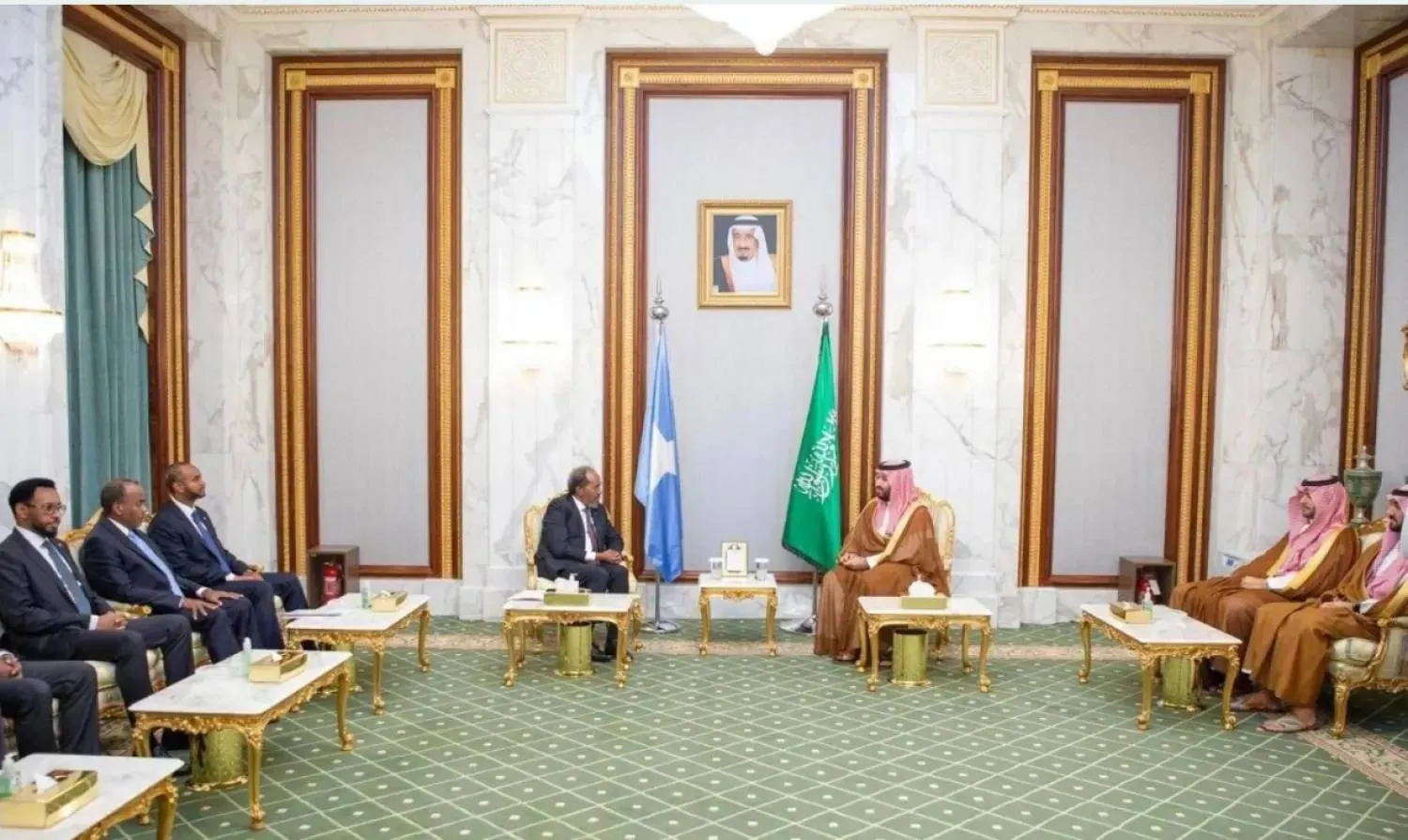
Cabinet sources said Lebanon’s three top leaders remain aligned as negotiations with Israel move into a new phase, marked by the appointment of a civilian envoy, former ambassador to Washington and lawyer Simon Karam, to lead Lebanon’s delegation to the Mechanism Committee.

The move is intended to jolt the committee out of months of stagnation and push it toward a security agreement anchored in enforcing a cessation of hostilities, after earlier rounds were dominated by routine tallies of Israeli violations conducted with United Nations peacekeepers.

The sources said the leaders’ agreement to pull the Mechanism out of its deadlock coincided with drawing political boundaries for the talks.

These boundaries are strictly limited to ending Israeli violations and attacks, securing a withdrawal from the south, releasing Lebanese detainees, and revisiting and correcting border demarcation in response to Lebanon’s reservations over disputed points along the Blue Line that it considers part of its sovereign territory.

The sources told Asharq Al-Awsat that Lebanon insists on restricting the negotiations to non-negotiable security issues. It will not allow the talks to drift into discussions on normalizing relations with Israel or striking a peace agreement.

This position is shared by President Joseph Aoun, Prime Minister Nawaf Salam, and Parliament Speaker Nabih Berri, who was the first to propose adding civilians to the Mechanism.

The three leaders reiterated their stance ahead of the first round of talks, attended by US envoy Morgan Ortagus and joined by Karam, in defiance of the agenda set by Israeli Prime Minister Benjamin Netanyahu.

They said Netanyahu is trying to raise the stakes to provoke Hezbollah against the state and sow confusion, even as the Israeli army continues its violations to turn the group’s base against it.

This became evident in the targeting of several homes between the banks of the Litani River, despite containing no weapons depots.

The sources said Netanyahu is escalating militarily to force Lebanon to accept Israeli terms, although he knows the negotiations will not deviate from their technical and security framework.

Lebanon, they said, remains committed to ensuring that only the state holds weapons.

The sources noted Berri’s insistence that he was the first to propose adding civilians to the Mechanism and asked where Hezbollah Secretary-General Sheikh Naim Qassem stands on this proposal.

They asked whether he ever objected to his “older brother’s” suggestion, given that Qassem had declared in an open letter to the three leaders that he rejects negotiations with Israel.

Qassem later walked back parts of that letter by having a senior Hezbollah official convey a message that Berri was not its intended target, in an effort to prevent a rupture within the Shiite political camp.

The sources also questioned why Hezbollah objects to the talks if its “older brother” is the one negotiating on its behalf and was behind the United States mediated ceasefire agreement brokered by Amos Hochstein.

They said the only card Hezbollah has left is raising the ceiling of its objections, since it no longer has the ability to reset the negotiating table at a time when the balance of power has tilted in Israel’s favor, particularly after the group’s unilateral support for Gaza cost it its previous deterrence and rules of engagement.

The sources said Hezbollah lacks alternatives that would allow it to reverse the balance of power and is limiting itself to loud political objections that it cannot translate into military action.

This comes despite its insistence on keeping its weapons and its accusation that the Salam government committed a mistake by agreeing to the principle that arms must be exclusively in the hands of the state, beginning from north of the Litani to Lebanon’s international border with Syria, in parallel with progress in the negotiations.

They said Hezbollah is forced to calibrate its position, since it cannot afford to break with Aoun or jeopardize its alliance with Berri, a rupture that would leave the group exposed at a moment when it seeks internal protection.

Any strain in these relationships would also create negative repercussions for the Shiite community. The sources asked why the group does not place its cards in Berri’s hands, as he is better positioned to navigate Shiite public sentiment that seeks the liberation of the south and the return of its residents to their villages.

Berri is viewed, even by rivals, as the essential gatekeeper to any settlement that could restore international attention to Lebanon and open a path for reconstruction. He enjoys Arab and international ties that Hezbollah lacks, as the group remains reliant solely on Iran.

The sources said the negotiations’ entry into a new phase prompted United States pressure on Israel to prevent the war from expanding, after Lebanon agreed to Washington’s request to add a civilian to the Mechanism and task him with leading the delegation.

They urged Hezbollah to stand behind the state’s diplomatic choice and said the group’s fears that the talks could lead to a peace treaty with Israel are unfounded.

They noted that Berri himself was the first to support bringing civilians into the process, which should reassure Hezbollah and encourage it to give diplomacy a chance.

They added that Salam is not acting unilaterally and is coordinating with Aoun. Both leaders are working together to implement the government’s commitment to ensuring that only the state holds weapons.

They also revealed that communication between Aoun and Berri has not stopped. The two men reviewed the atmosphere surrounding the Mechanism’s meeting in Naqoura before the latest cabinet session.

According to the sources, Berri instructed his parliamentary bloc and senior Amal Movement members not to comment on the negotiations, positively or negatively.

The directive came because he wants to centralize the political message and avoid dragging party members on both sides into disputes that could spill into the streets.

Hezbollah, they said, also wants to protect its relationship with its sole remaining ally in Lebanon after its former partners in the so-called Axis of Resistance endorsed the principle of exclusive state authority over weapons.

The sources said Hezbollah knows that avenues for repairing its Arab and international relations remain closed, unlike Berri who maintains wide ties.

They questioned what Hezbollah is counting on after its leadership rejected Egypt’s initiative, insisting, according to Western diplomatic sources cited by Asharq Al-Awsat, on linking its position to US-Iran negotiations in hopes of safeguarding Iran’s leverage in Lebanon after regional setbacks for the Axis.

They said the government will take note of Hezbollah’s objection, although it will have no impact on the course of the talks.

Hezbollah will not mobilize its supporters in the streets to avoid friction with Amal, particularly since Berri does not oppose the launch of negotiations, which remain tied to liberating the south and implementing Resolution 1701.

Any attempt by Hezbollah to outbid Berri for populist gain would backfire and weaken the group’s standing within its own community.


Iraq’s New Government Faces Unpredictable Prospects

Iraqi Prime Minister Mohammed Shia al-Sudani stands beside Nouri al-Maliki during a religious event in Baghdad (Government Media)
TT

Iraq’s New Government Faces Unpredictable Prospects

Iraqi Prime Minister Mohammed Shia al-Sudani stands beside Nouri al-Maliki during a religious event in Baghdad (Government Media)

Tension rippled through Iraq’s ruling Shiite alliance after authorities briefly listed Lebanon’s Hezbollah and Yemen’s Houthi group as terrorist organizations, then swiftly reversed the move, at a time when debate over the next government is intensifying.

The decision and the rapid retreat from it revived scrutiny of a long running point of friction between United States pressure on Baghdad and Iranian influence in the country.

Iraq’s presidency said on Friday it had no knowledge of the designation of the Houthis and Hezbollah as terrorist entities and no role in freezing their assets.

It said such decisions are not sent to the presidency and that it only reviews and endorses laws approved by parliament and presidential decrees.

The statement added that decisions by the cabinet, the committee that freezes terrorist assets, and anti money laundering directives are not referred to the presidency for approval and that it learned of the designation only through social media, prompting the clarification.

The listing appeared in the 17 November 2025 edition of the official Gazette, which cited the government’s counterterrorism obligations under a series of United Nations Security Council resolutions.

Authorities then moved to roll back the designation after a statement and a document from the Central Bank of Iraq confirmed that Baghdad’s approval had been limited to entities and individuals tied to ISIS and Al-Qaeda only.

Tension inside the Coordination Framework

Political figures and legal experts said the central bank operates as an independent institution and does not fall under direct government control.

But they said a corrective step taken by outgoing Prime Minister Mohammed Shia al-Sudani, including public clarification and an urgent investigation, escalated the dispute inside the Coordination Framework as negotiations over the next premier intensify.

Although the alliance issued no unified position, parties and factions close to it accused the government of making a deliberate move meant to signal alignment with the demands of the administration of President Donald Trump.

They made the accusation as presidential envoy Mark Savaya was expected in Baghdad after a similar visit by Washington’s envoy to Syria and Lebanon.

Sudani, who faces mounting pressure within his coalition and was even removed from an internal WhatsApp group by some Coordination Framework leaders according to political sources, issued a brief statement saying there would be no compromise on Iraq’s support for what he called peoples’ rights and sacrifices, a veiled reference to Hezbollah and the Houthis.

Former deputy prime minister Bahaa Araji, a political ally of Sudani, defended him. He said the incident was a technical error in a decision issued by a committee tied to the central bank which he described as an independent institution not subject to government will.

He said on X that the mistake would be corrected and that the investigation would prevent opportunists from exploiting it politically.

Impact on government formation

The episode unfolded as the Coordination Framework attempts to settle on a nominee for prime minister, amid clear divisions over whether to keep Sudani for a second term or replace him.

The uproar over what is now known as the central bank error has further complicated the alliance’s internal bargaining and opened the door to unexpected scenarios, political sources said.

At the same time, Shiite armed factions escalated their criticism. Ali al-Asadi, head of the political bureau of Harakat al-Nujaba, said listing the two groups as terrorists was an act of betrayal.

He also claimed Iraq had nominated US President Donald Trump for the Nobel Prize, which he called an insult to sacrifices. He said such a government does not represent the Iraqi people and posted a hashtag calling the move a death sentence for a second term.

The incident, which began as an administrative oversight and morphed into a political crisis, underscored the fragility of the balance Baghdad tries to maintain between its ties with the United States, its main financial and military partner, and its relations with groups aligned with Iran.


Trump’s Phase Two Remarks Revive Questions Over Gaza Article 17

Palestinians fill water containers at the Nuseirat camp for displaced families in central Gaza (AFP)
TT

Trump’s Phase Two Remarks Revive Questions Over Gaza Article 17

Palestinians fill water containers at the Nuseirat camp for displaced families in central Gaza (AFP)

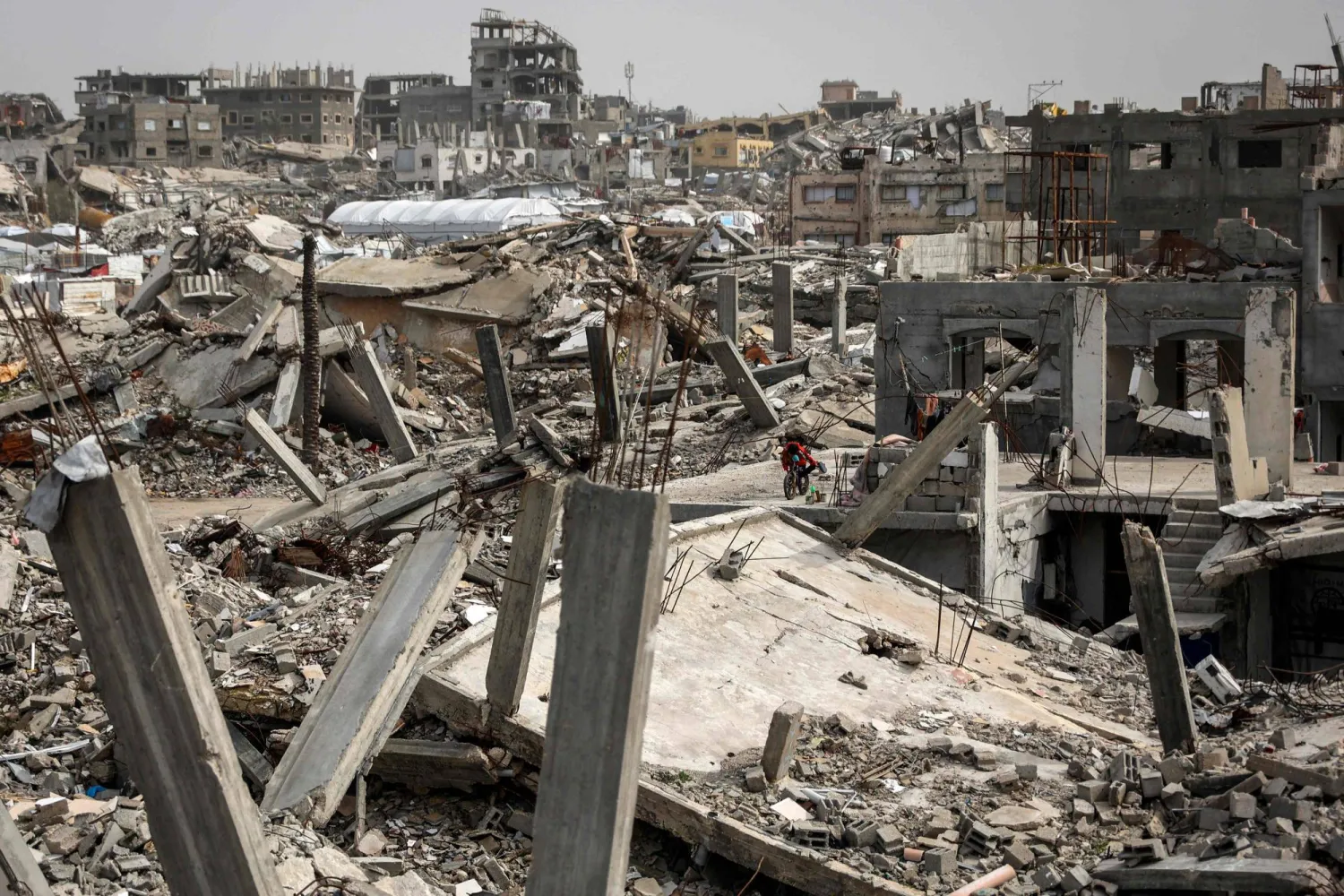
A brief and cryptic remark by US President Donald Trump about modifying phase two of the Gaza ceasefire agreement, offered without any details, has stirred questions over how the accord will be executed.

Analysts say the comment points to a possible change in implementing the deal’s provisions rather than adjusting its core terms.

Instead of moving toward an Israeli withdrawal from the enclave, where Israel controls about 55% of the territory, and the disarmament of Hamas, they expect Washington to pivot to article 17, which allows for unilateral application of the peace plan without adhering to its sequencing.

They said phase two will be difficult to reach while key issues remain unresolved, including forming a peace council, establishing a Gaza administrative committee and deploying a stabilization force.

Article 17 of the ceasefire agreement, which took effect on October 10, states that if Hamas delays or rejects the proposal, the measures listed above, including an expanded aid operation, will be carried out in areas free of terrorism that the Israeli army hands over to the international stabilization force.

The peace document signed in October by Hamas and Israel covered only the provisions of what is known as phase one.

This includes an initial truce, the withdrawal of Israeli forces, conditions for exchanging detainees and prisoners and facilitating humanitarian aid. No formal agreement has been reached on phase two, which relates to governing Gaza after the war.

Trump said on Thursday that phase two of his Gaza peace plan will be modified very soon, amid growing concern over its stalled implementation. He did not specify what the changes would entail.

Saeed Okasha, an Israeli affairs analyst at the Al-Ahram Center for Political and Strategic Studies, said Trump may be considering an adjustment anchored in article 17 to prevent the agreement from collapsing.

He said the article opens the way for dividing Gaza into an old Gaza and a new Gaza, an idea recently circulated by US envoy Steve Witkoff in several meetings last month.

Okasha said the amendment remains possible since the agreement was endorsed by the United Nations Security Council last month.

He said article 17 could be reactivated on grounds that Hamas has not met requirements for disarmament or other commitments, adding that such a shift could create a situation of neither war nor peace.

Ayman Al-Raqab, a Palestinian political analyst, said the lack of clarity over Trump’s intended changes has fueled concerns that any adjustment may entrench a division of Gaza at a time when Israel seeks to maintain a long term presence in the enclave. He said this aligns with proposals characterizing a new Gaza and an old Gaza.

Amid the uncertainty, the Axios news site reported that Trump plans to announce the start of phase two and unveil the new governance structure for Gaza before December 25. The site quoted two US officials as saying the formation of the international force and the governing body is in its final stages.

They expect Trump to meet Israeli Prime Minister Benjamin Netanyahu before the end of December to discuss the steps.

Al-Raqab said phase two still faces hurdles, including the absence of a peace council and a technocratic government, the lack of a police force to assume its duties and the pending formation of a stabilization force. He said no major moves are likely before January.

Okasha said he sees no immediate prospect other than Israel expanding the areas it controls in the enclave to about 60% as long as implementation of the agreement remains stalled, though without a major escalation similar to what Israel is carrying out in southern Lebanon.

Several days ago, the Israeli newspaper Yedioth Ahronoth reported on an Israeli plan to resettle about two million Palestinians in new areas under Israeli control east of the Yellow Line and to empty areas held by Hamas of all civilians while pursuing Hamas members there over time.

British newspaper The Telegraph also quoted Western diplomats as saying the US plan for Gaza carries the risk of dividing the enclave permanently, entrenching the presence of Israeli forces in the devastated strip.

About a week ago, Egyptian Foreign Minister Badr Abdelatty underscored during a meeting in Barcelona with European Union foreign policy chief Kaja Kallas the importance of preserving the territorial unity of Palestine, including the West Bank and Gaza, and rejected any measures that would entrench separation or undermine prospects for a two state solution.

Abdelatty reiterated that position on Wednesday, saying, “There is no place for talk of dividing Gaza. Gaza is an integrated territorial unit and is an inseparable part of the future Palestinian state together with the West Bank, including East Jerusalem. These are binding international legitimacy resolutions and certainly must be upheld.”

He said consultations continue with relevant parties on forming a Gaza administrative committee made up of technocrats to manage affairs on the ground.

Okasha said Egyptian efforts will continue to prevent any division of Gaza or any amendment that would undermine the agreement, adding that various scenarios remain possible as developments unfold around Trump’s plan.