Saudi Author Nasser al-Jassem Releases Tenth Story Collectionhttps://english.aawsat.com/culture/4824446-saudi-author-nasser-al-jassem-releases-tenth-story-collection
Saudi Author Nasser al-Jassem Releases Tenth Story Collection
New book by Nasser al-Jassem
Saudi novelist and storyteller Nasser al-Jassem released a new story collection entitled "The Blackboard of Love." The collection was published by Adab Publishing as part of the "100 Book Project" supported by the Saudi cultural fund.
The cover of the book features a painting by Artist Abdelaziz al-Awaji.
This is the author’s tenth collection after a number of previous publications.
The new collection features different kinds of stories compared to its precedents. Consisting of 84 pages, the new book embraces several stories, including ‘The Iraqi Dust’ (The Blackboard of Love), ‘The Russian’ (Madiha), ‘The Cheeks Bridge’ (the diabolic color), ‘The Red Wind’, ‘The Face of the Girl’ (Mayyas) and ‘Father of the Rings’.
Roman Treasure Trove Found During Excavation in Britain
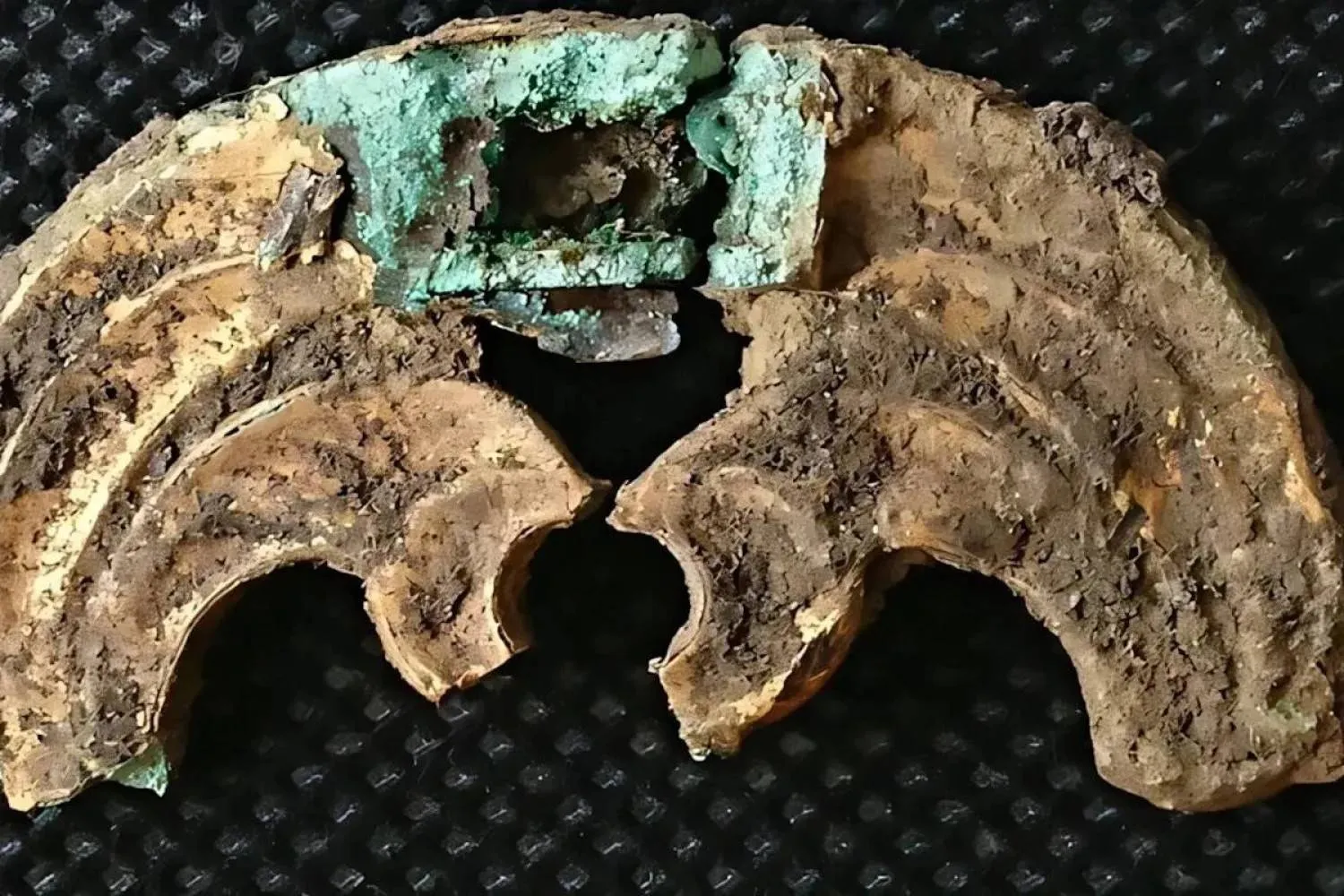
Roman peltate cavalry dangler (The Archaeological Practice Ltd via Newcastle University)
Archaeology students doing their first excavation found a major Roman-era treasure trove in UK’s Northumberland, shedding more light on life at the northernmost edge of the ancient empire.
The quantity and quality of the treasure, unearthed earlier this year, was a surprise even to experienced researchers, archaeologists from Newcastle University said, according to The Independent.
One of the most remarkable items in the trove was a gold-chain section measuring about 7cm.
It was so well preserved that, if it were complete, it could still be worn today, researchers said.
The chain was likely made using the sophisticated loop-in-loop technique, a hallmark of high-quality Roman goldsmithing. Its individual rings were carefully pinched into figure-eight shapes, folded, and then interwoven to create the chain.
Such chains were typically made from pure gold and associated with elite jewelry, military amulets, or special fittings for high-ranking officers and their families.
“Finding the gold chain was really surreal, especially given that it was the first day of my first dig. I didn't expect to find anything like that in my whole career, so it was definitely a surprise,” archaeology student Elise Zallu said.
“Finding a gold artifact is something many archaeologists can go an entire career without experiencing,” said Eric Tourigny of Newcastle University. “For a first-year student to discover a beautifully preserved Roman gold chain on their first day in the trench is truly remarkable.”
Another student, Shannon Wood, unearthed a folded piece of lead bearing traces of a Latin inscription.
The object was most likely a seal associated with trade, taxation, ownership, or the movement of goods through the Roman military supply network, researchers said. It functioned as a personal message or a “curse tablet.”
In the Roman Empire, people scratched prayers, grievances, requests, and even curses onto thin sheets of lead and deposited them in sacred places.
Saudi Film Nights Continues International Tour in Brazil with Four Saudi Filmshttps://english.aawsat.com/culture/5343192-saudi-film-nights-continues-international-tour-brazil-four-saudi-films
Saudi Film Nights Continues International Tour in Brazil with Four Saudi Films
Saudi Film Nights, organized by the Film Commission, continues its international tour with its upcoming stop in the Federative Republic of Brazil from November 20 to 28, 2026. Brazil marks the final stop of this year's tour.
The program features a series of film screenings across São Paulo, Rio de Janeiro, and Salvador, showcasing the diversity of contemporary Saudi cinema and the ongoing growth of the Kingdom’s film industry.
The decision to bring Saudi Film Nights to Brazil reflects the country’s influential position within the Latin American film landscape, its longstanding history of film production and hosting cultural and artistic events, and the opportunities it offers for cultural exchange, dialogue, and collaboration between filmmakers from Saudi Arabia and Brazil, SPA reported.
The Brazilian edition will present four Saudi films: two features, Unidentified and Saify, and two shorts, The Last Dismissal and Two Sisters.
At the Film Commission's invitation, the films were selected by actor and director Selton Mello and Ilda Santiago, co-founder and executive director of the Rio Film Festival. The invitation brings together Mello's artistic and cinematic experience and Santiago's extensive international curatorial expertise to offer a program suited to Brazilian audiences and bring them closer to Saudi cinema.
These works reflect the richness of contemporary Saudi narratives, offering diverse artistic and human perspectives.
The screenings will begin in São Paulo before moving to Rio de Janeiro and concluding in Salvador. The program will take place at prominent cultural and cinematic venues, including Espaço Petrobras de Cinema in São Paulo, Estação Claro Gávea in Rio de Janeiro, and Cine Glauber Rocha in Salvador. These venues are recognized for attracting audiences interested in international and independent cinema, providing Saudi films with an opportunity to reach diverse audiences across Brazil.
The Saudi Film Nights initiative has reached 17 countries and 40 cities following its stop in Brazil, with a total of 45 stops, including France, Morocco, Australia, China, India, Mexico, the United Kingdom, Japan, Sweden, Denmark, Finland, Norway, Spain, South Africa, the United Arab Emirates, Saudi Arabia, and Brazil.
This expansion aligns with the Film Commission’s ongoing efforts to foster collaboration with international cultural institutions and create new avenues for professional partnerships. The initiative also seeks to showcase and empower local creativity, reinforcing the Kingdom’s position as a cultural contributor that builds bridges of cross-cultural communication through the art of cinema.
Van Gogh's 'Chataigniers en Fleurs' Sells at Auction for Record $190.4 Millionhttps://english.aawsat.com/culture/5343093-van-goghs-chataigniers-en-fleurs-sells-auction-record-1904-million
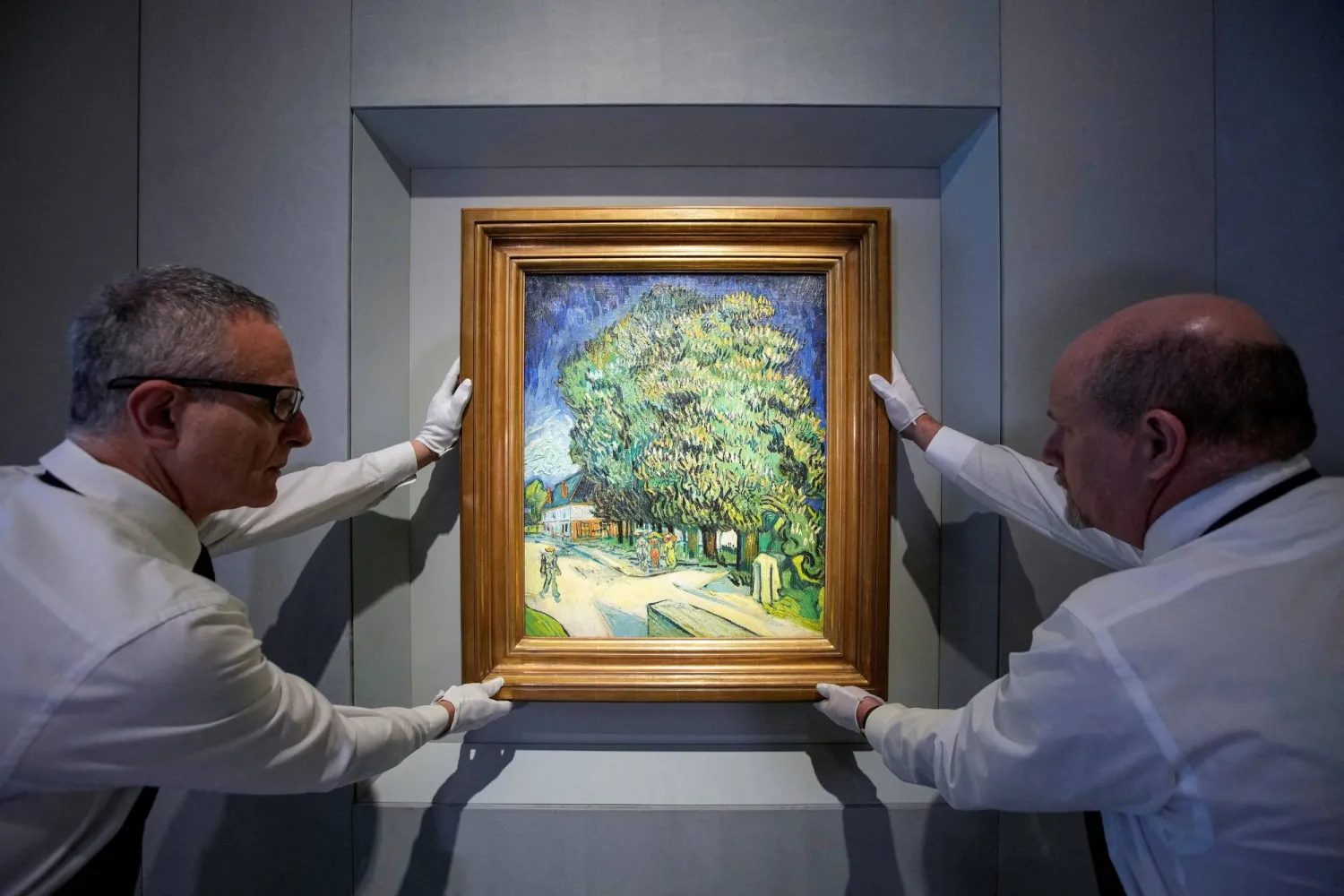
FILE PHOTO: Handlers organize Vincent van Gogh’s "Chataigniers en fleurs" during a media preview ahead of its auction in New York, at Sotheby's Modern & Contemporary Auctions in New York, US, November 6, 2026. REUTERS/Eduardo Munoz/File Photo
Van Gogh's 'Chataigniers en Fleurs' Sells at Auction for Record $190.4 Million
FILE PHOTO: Handlers organize Vincent van Gogh’s "Chataigniers en fleurs" during a media preview ahead of its auction in New York, at Sotheby's Modern & Contemporary Auctions in New York, US, November 6, 2026. REUTERS/Eduardo Munoz/File Photo
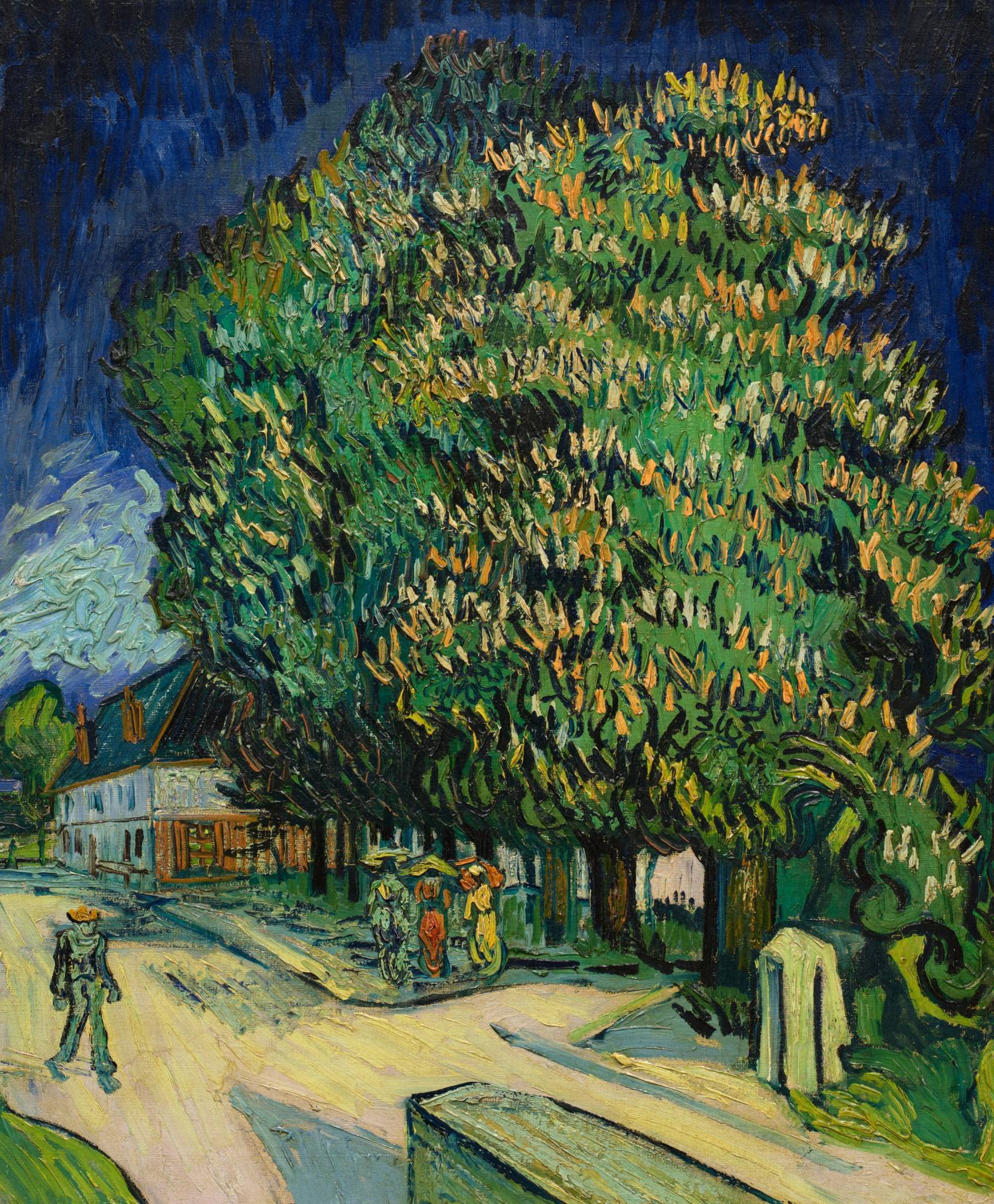
Vincent van Gogh's 1890 painting "Chataigniers en Fleurs," a radiant depiction of village life unseen in public for more than 50 years, was sold to a bidder on Wednesday for $190.4 million, an auction record for the famed Post-Impressionist.
Sotheby's of New York, which held the auction, said the sum also marked the second-highest price paid for any work of art sold by its auction house, surpassed only by Gustav Klimt's "Portrait of Elisabeth Lederer," which sold in November 2025 for $236.4 million, Reuters reported.
Announcing the sale in a press statement, the auction house made no mention of the buyer. But the New York Times reported the prevailing bidder was William Acquavella, a veteran art dealer and the head of Acquavella Galleries.
Van Gogh painted the canvas, dominated by a lush row of flowering chestnut trees lining a village road, days after he arrived in the French hamlet of Auvers-sur-Oise, northwest of Paris, where he spent the final two months of his life.
The composition features a solitary male figure in a hat, thought to possibly represent the artist himself, walking past a trio of colorfully dressed women carrying parasols in the shade of the trees.
The vibrantly worked brush strokes are said to connect the painting with other celebrated works of this period in van Gogh's career, including "The Starry Night" and "The Church at Auvers-sur-Oise."
Sotheby's characterized the painting as one of the most important works from that era of van Gogh's career remaining in private hands, and "among the most exceptional Post-Impressionist paintings ever to come to the market."
Vincent van Gogh's Chataigniers en fleurs (1890), the centerpiece of Sotheby's New York auction of the Blaquier-Arrieta Collection, is seen in a copy provided by Sotheby's in New York City, US November 18, 2026. Sotheby's/Handout via REUTERS
The van Gogh painting was part of a larger group of 12 masterpieces auctioned on Wednesday from the renowned Blaquier-Arrieta Collection of Impressionist and Modern paintings. "Chataigniers en Fleurs" had remained out of public view for more than a half century, since the Argentina-based Blaquier family acquired it 1975, according to Sotheby's.
The masterpiece was offered for sale under an agreement reached between the Blaquier family and heirs of the painting's former owner, Hungarian-born German Jewish publisher Samuel Fischer, to settle the family's claim that he had sold the painting in the 1930s under duress of Nazi persecution.
Sotheby's, which said it helped broker the deal, did not disclose terms of the agreement.
All 12 works auctioned from the collection sold for a total of $412 million, against Sotheby’s estimated value of roughly $450 million. One of those paintings, Paul Cezanne's "Harlequin," went for $111 million, with fees.
The $190.4 million paid on Wednesday for “Chataigniers en Fleurs” exceeded the previous van Gogh auction record of $117.2 million, fetched in 2022 at Christie’s for the landscape "Verger avec Cypres," from the collection of Microsoft co-founder Paul Allen, Sotheby's said.
لم تشترك بعد
انشئ حساباً خاصاً بك لتحصل على أخبار مخصصة لك ولتتمتع بخاصية حفظ المقالات وتتلقى نشراتنا البريدية المتنوعة