How an Iranian Ally in Iraq Was Made to Stand Down
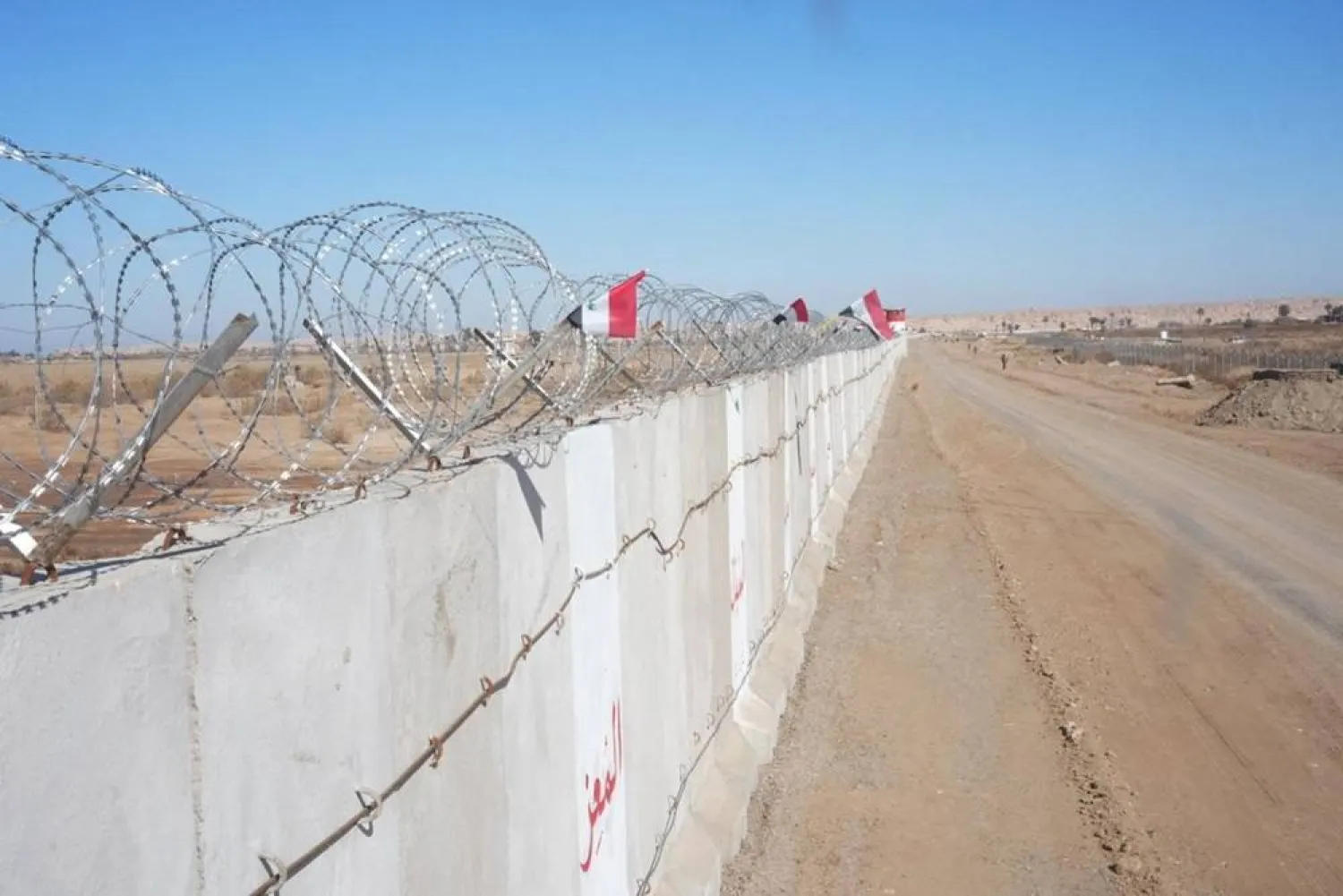
This handout photograph taken and released by the Iraqi Interior Ministry on January 28, 2024 shows a section of the border concrete wall, along the border with Syria in the Iraqi area of al-Baghouz, on the day of its inauguration. (Photo by Iraqi Interior Ministry / AFP)
TT
TT
How an Iranian Ally in Iraq Was Made to Stand Down
This handout photograph taken and released by the Iraqi Interior Ministry on January 28, 2024 shows a section of the border concrete wall, along the border with Syria in the Iraqi area of al-Baghouz, on the day of its inauguration. (Photo by Iraqi Interior Ministry / AFP)
A powerful Iraqi faction that led dozens of attacks against US forces since October was pushed to announce a suspension of attacks through pressure from Tehran and ruling Iraqi parties who felt the faction had crossed a red line, four sources said.
Washington has pointed to Iran-aligned armed group Kataib Hezbollah as the perpetrator of Sunday's drone attack on the Jordanian-Syrian border that killed three US troops and injured dozens more, and has vowed to respond forcefully.
Kataib Hezbollah on Tuesday announced it was stopping all attacks on US forces, citing unwillingness to embarrass the Iraqi government and making rare public note of disagreements with Iran and its so-called "Axis of Resistance".
The abrupt announcement was the clearest sign yet that Tehran and influential Iraqi groups want to avoid a regional conflict tied to the Gaza war, analysts and politicians said, drawing a line after dozens of attacks on US forces since October.
"The groups in Baghdad's government are worried about Iraq becoming a playground in the wider regional conflict and have domestic reasons not to want to risk the status quo," said Renad Mansour, senior research fellow at London's Chatham House think tank.
Dozens of attacks on US forces in Syria and Iraq by the so-called "Islamic Resistance in Iraq" - an umbrella group of hardline factions including Kataib Hezbollah - ended a months-long truce between the groups and US forces and upset the government's efforts to stabilize the country after decades of conflict.
Four sources, including a Shiite politician, an Iraqi official and a person who has met hardline factions in recent days, said killing US troops in Jordan, a neighboring Arab country and close US ally, was a step too far.
Fearing a large-scale US retaliation, Tehran publicly stated it was not involved and privately passed messages to Kataib Hezbollah to stand down, while ruling Iraqi Shiite factions helped broker an end to attacks, sources said.
A Kataib Hezbollah spokesperson could not be reached for comment. Iranian officials did not respond to requests for comment.
"This comes as a result of internal pressure and also a will by our neighbor (Iran) to de-escalate," a Shiite politician familiar with the matter said.
"It was a real team effort including with participation of the neighbor," another source said, adding that other Iraqi factions had also committed to stopping attacks but could resume if there was a forceful US response.
"If the US goes big in the next days, it may change things," the source said.
‘Precarious equilibrium’
In 2020, the US killed Iran Quds Force commander Qassem Soleimani and deputy leader of the Popular Mobilization Forces, Kataib Hezbollah leader Abu Mahdi al-Muhandis in a drone strike at Baghdad's international airport.
The strike came days after the US blamed Kataib Hezbollah for the killing of a US contractor, and some Iraqi officials fear a similarly powerful response could lead to a new cycle of violence.
Iraq's Shiite Coordination Framework, the government's main backer, includes Iraqi groups like Asaib Ahl al-Haq that fought US forces after the 2003 US-led invasion but have since turned their focus on gaining political and economic power.
These groups privately opposed recent attacks on US forces, according to five people familiar with the matter, leading to rare public disagreement with hardline factions who felt their political cover was being undermined.
"They felt that they had their back against the wall," said a person familiar with the thinking of senior leaders of groups in the "Islamic Resistance".
In announcing the end of their attacks, Kataib Hezbollah said Iran and other allies "often object to the pressure and escalation against the American occupation forces."
Mansour, of Chatham House, said: "It's always a balance of fighting and showing force but not wanting to escalate too far, so it's a very precarious equilibrium of violence they try to maintain."
"That balance is disrupted when you have the killing of American troops, such as in 2019 which prompted the US killing of Soleimani and Muhandis".
Iran's Postponed War: Who Holds the Power to Ignite It?
A US F-15E Strike Eagle fighter jet refuels from a KC-135 tanker aircraft during an aerial patrol over the Middle East (CENTCOM)
With Israel preparing for possible military strikes against Iran, and Washington showing restraint ahead of the US midterm elections, questions are mounting over whether the region is experiencing a temporary pause dictated by electoral calculations or a final opportunity for a political settlement.
While one strategic affairs expert expects a major confrontation by the end of November, two others downplay the influence of election results on decisions by US President Donald Trump and Israeli Prime Minister Benjamin Netanyahu, arguing that strategic considerations will ultimately prove decisive.
The question in Washington and Tel Aviv is no longer simply whether war with Iran will resume, but when, on what scale and with what objectives.
Reports that Israel prepared a large-scale bombing campaign against Iranian targets before postponing it following Trump's objections have revived a sensitive question: Is the war awaiting the conclusion of the US and Israeli elections, or does its postponement reflect deeper disagreements over the merits of escalation?
These questions are gaining urgency as elections approach in both countries. Assessments by three American experts reveal differing expectations about military developments and political calculations, but converge on one central point: Election results alone will not determine the outcome of the confrontation.
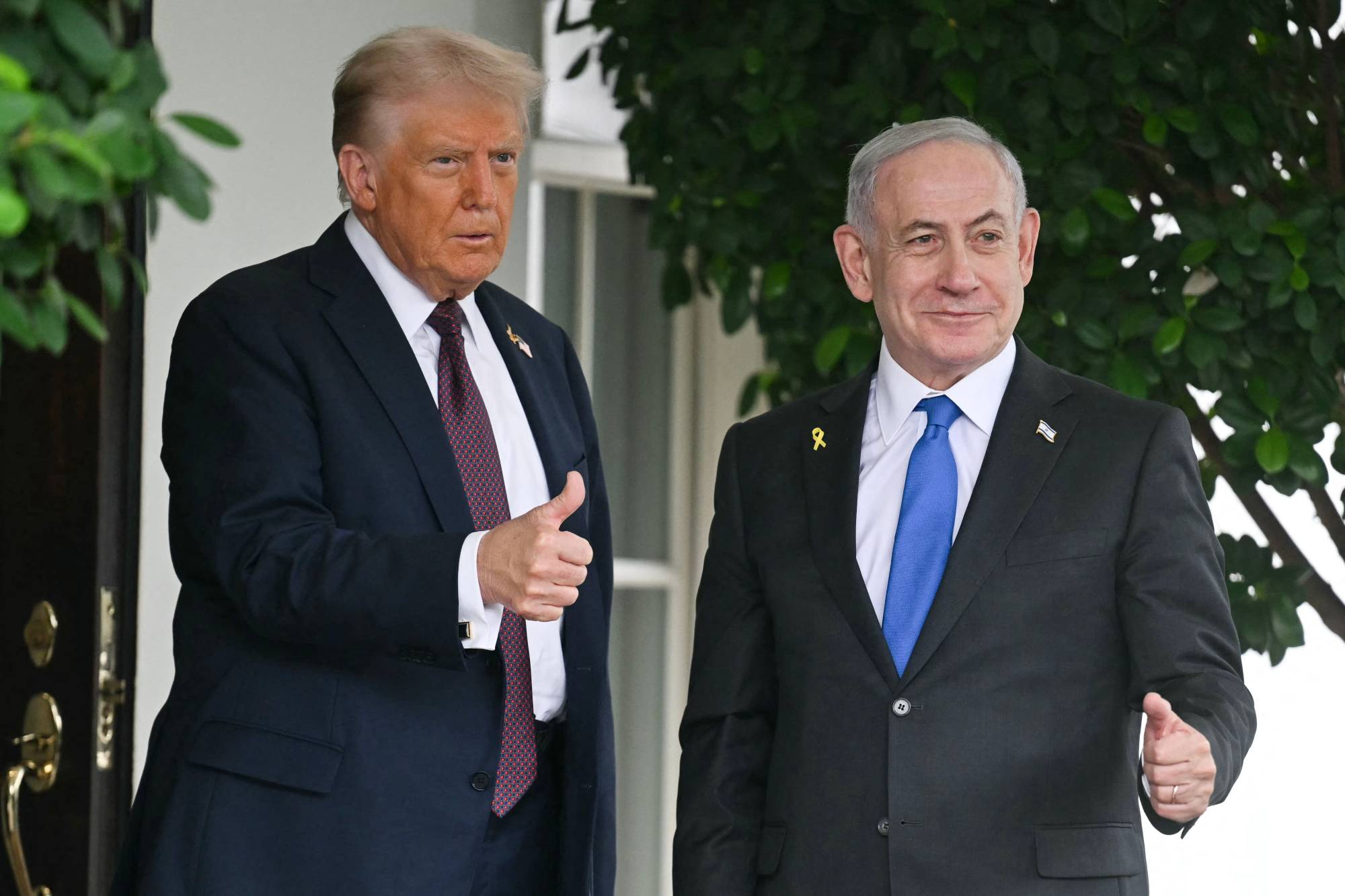
US President Donald Trump greets Israeli Prime Minister Benjamin Netanyahu as he arrives at the West Wing of the White House in Washington, DC on September 29, 2025. (Photo by Jim WATSON / AFP)
A War Awaiting Its Moment
The Financial Times reported Wednesday that Netanyahu had instructed the Israeli military to prepare a large-scale bombing campaign against Iran, initially scheduled for October 10, before the operation was canceled after Trump objected to resuming military action ahead of the US elections.
According to the newspaper, the plan included strikes on nuclear facilities, civilian infrastructure and sites associated with the Iranian regime.
Israeli officials also presented US Defense Secretary Pete Hegseth with a list of targets based on new intelligence during his unannounced visit to Israel on Monday.
Axios had previously reported that the Pentagon requested the completion of preparations for extensive military operations without setting a date for their execution.
The outlet cited officials as saying that Hegseth and US military commanders in the region were pushing for renewed strikes, while most of Trump's advisers favored continuing sanctions and economic pressure.
These developments suggest that the disagreement concerns the timing and necessity of military force more than the ultimate objectives.
Washington wants to secure Iranian concessions on Tehran's nuclear program and the Strait of Hormuz, while Israel fears that continued negotiations could allow Iran to rebuild its military capabilities.
Scenarios for Escalation
Offering a more pessimistic assessment, Farzin Nadimi, an expert on Iranian military and security affairs at the Washington Institute for Near East Policy, told Asharq Al-Awsat that all indicators point toward a major military confrontation involving the United States, Israel and Iran, and potentially other regional countries, by the end of November.
Nadimi did not rule out the possibility that intensive diplomatic efforts could prevent escalation, but considered the chances of success extremely slim.
He outlined a scenario beginning with a renewed wave of strikes targeting senior leaders and command-and-control centers, followed by attacks on nuclear and missile facilities and air defense systems, eventually escalating into a comprehensive bombing campaign against Iranian military and security installations.
Whether the campaign would expand to infrastructure, oil and gas facilities, and petrochemical plants would depend on the nature of Iran's response, he said.
Nadimi warned that Tehran might make a more determined effort this time to sink US warships and shoot down manned aircraft, while also deploying longer-range, medium-range ballistic missiles.
He raised an even more dangerous possibility: a ground incursion into Kuwait or Saudi Arabia from Iraq, carried out by Shiite factions linked to the Popular Mobilization Forces.
This remains a hypothetical scenario proposed by the researcher, rather than confirmed evidence of an Iranian plan to carry out such an operation.
At the same time, Nadimi ruled out a US ground invasion of Iran, suggesting that the next confrontation would more closely resemble the previous 39-day war.
Washington's Calculations
Brian Katulis, a foreign policy and regional affairs expert at the Middle East Institute, downplayed the significance of election results in determining the course of the war.
He told Asharq Al-Awsat that the US midterm elections were unlikely to substantially affect decisions by the Trump administration or Israel regarding Iran, because the threats posed by Tehran would remain the primary factor shaping their next steps.
Katulis noted that Trump is experiencing his weakest political position across his two presidential terms, amid declining approval ratings and the possibility that Republicans could lose seats in Congress.
In his view, however, that does not mean the election results will constrain the president's ability to take military action, given the executive branch's broad national security powers relative to those of Congress.
Katulis identified two more consequential factors in the administration's calculations.
The first is a shortage of certain types of ammunition and military equipment following the previous phase of the war, which has left US forces more exposed in the region and elsewhere. The second is the economic cost of another confrontation.
These concerns are particularly significant amid continuing tensions surrounding the Strait of Hormuz and global energy markets, as renewed operations against Iranian facilities could cause further disruptions to oil supplies.
As for Israel, Katulis argued that disagreements among political leaders tend to diminish when the perceived Iranian threat is at issue.
Beyond the Ballot Box
Michael Rubin, director of policy analysis at the Middle East Forum, went further, dismissing the possibility that the elections would fundamentally change the political dynamics governing decisions about war.
He told Asharq Al-Awsat that Trump would remain the ultimate decision-maker regardless of developments in Congress.
Indeed, Rubin suggested that Trump might feel greater freedom to make military decisions after the elections, given that he would not face another presidential election.
In Israel, Rubin argued that widespread opposition to Netanyahu does not necessarily translate into comparable divisions over Iran.
In his assessment, there is broad agreement among Israeli candidates on both the right and left regarding the nature of the threats posed by Iran, Hamas and Hezbollah.
Rubin also pointed to a striking possibility: Another Israeli prime minister might be able to act more effectively than Netanyahu because some objections from members of Congress, diplomats and foreign ministers are directed more at Netanyahu personally than at Israel itself.
Consequently, Netanyahu's electoral defeat would not necessarily reduce the likelihood of confrontation, just as Republican losses in Congress would not automatically give lawmakers the power to prevent Trump from resuming military operations.
Ultimately, the elections appear more likely to influence the timing of a confrontation than to determine its objectives.
Trump's decision to postpone military action does not mean the military option has been abandoned, just as Israel's preparations do not mean that a final decision to go to war has been made.
Negotiations remain the alternative path, despite continuing disagreements over nuclear concessions and the conditions for ending the war.
The conclusion of the elections could remove one reason for postponement, but it would not eliminate the military, economic and political obstacles.
The central question remains whether Washington will use its military preparations to secure a negotiated settlement or view the failure of diplomacy as justification for resuming the war.
In either case, Trump's decision, rather than election results alone, will be the most influential factor in determining the direction of the crisis.
What's Holding Up Washington's $14 bn Arms Sale to Taiwan?https://english.aawsat.com/features/5332261-whats-holding-washingtons-14-bn-arms-sale-taiwan
What's Holding Up Washington's $14 bn Arms Sale to Taiwan?
Washington -- Taipei's most important security backer -- has held off on an arms sale package worth $14 billion. I-Hwa Cheng / AFP/File
Taiwan has been waiting months for US President Donald Trump to approve a $14 billion sale of weapons and equipment, which the island democracy would use to fend off a potential Chinese attack.
Washington -- Taipei's most important security backer -- has sold many billions of dollars' worth of arms to Taiwan, most recently in December when it approved a record $11.1 billion package, said AFP.
China opposes American military support for Taiwan, which Beijing claims is part of its territory and has threatened to seize with force.
Trump, who last month hailed his "great friendship" with Chinese President Xi Jinping, has resisted US political pressure, including from Republican lawmakers, to give the green light for the current arms package.
AFP takes a look at what's in it and why it's being held up:
- Why is Taiwan buying US arms? -
Taiwan is spending huge sums upgrading its defense capabilities and expanding its domestic weapons production capacity, but it still needs US arms to deter China.
Since Washington switched diplomatic recognition from Taipei to Beijing in 1979, the United States has stuck to its commitments under the Taiwan Relations Act to provide weapons to Taiwan for its defense.
But Trump said in May that US arms sales to Taiwan could be a bargaining chip with China, setting off alarm bells across the world.
Taipei has reminded Trump of US commitments, and US officials including Secretary of State Marco Rubio have insisted American policy on Taiwan has not changed.
The sale would signal US support for Taiwan and send a message to Beijing that if it launched an attack, it would not face "Taiwan alone", said Wang Ting-yu, a senior lawmaker in President Lai Ching-te's Democratic Progressive Party.
- What's in the package? -
Taiwan is developing a multi-layered air defense system, known as the T-Dome, that it hopes could counter a potential Chinese attack.
Patriot missiles, an automated command and control system and a 360-degree air defense radar system are seen as critical components of this system and are among the items in the $14 billion package.
"Together these systems can strengthen the resilience of Taiwan's strategic air defenses," said Su Tzu-yun, a military expert at the Taipei-based Institute for National Defense and Security Research.
Money for the weapons system is expected to come from a $25 billion defense spending bill passed by Taiwan's parliament in May after months of political wrangling.
- Why has it been delayed? -
Trump and Xi met in Beijing in May -- the first of four expected meetings for 2026 -- as the rival leaders sought to ease trade tensions between their countries.
Xi issued a blunt warning to Trump that missteps on Taiwan could push the US and China into "conflict".
A record $14 billion arms sale to Taiwan could threaten the US-China trade truce.
"I'm going to make a determination. I'm going to see," Trump said after the summit in response to a question about whether he would go ahead with arms sales to Taiwan.
Rubio said in June that the proposed package was "under review", while officials said in May they were assessing whether American weapons stockpiles were sufficient for its Iran operations.
A US official said recently that the chances of the package being split into smaller chunks "have gone way up".
Some Taiwanese officials have said they do not care if the US bundles the arms into a single package or multiple -- they just want the weapons.
"Militarily... Taiwan is racing against time," said the analyst Su.
"Acquiring weapons is not like ordering at a drive-through. Production, delivery and training all take time before the systems can enter service and become effective."
A Look at the Major Candidates in Israel’s Election Next Weekhttps://english.aawsat.com/features/5332069-look-major-candidates-israel%E2%80%99s-election-next-week
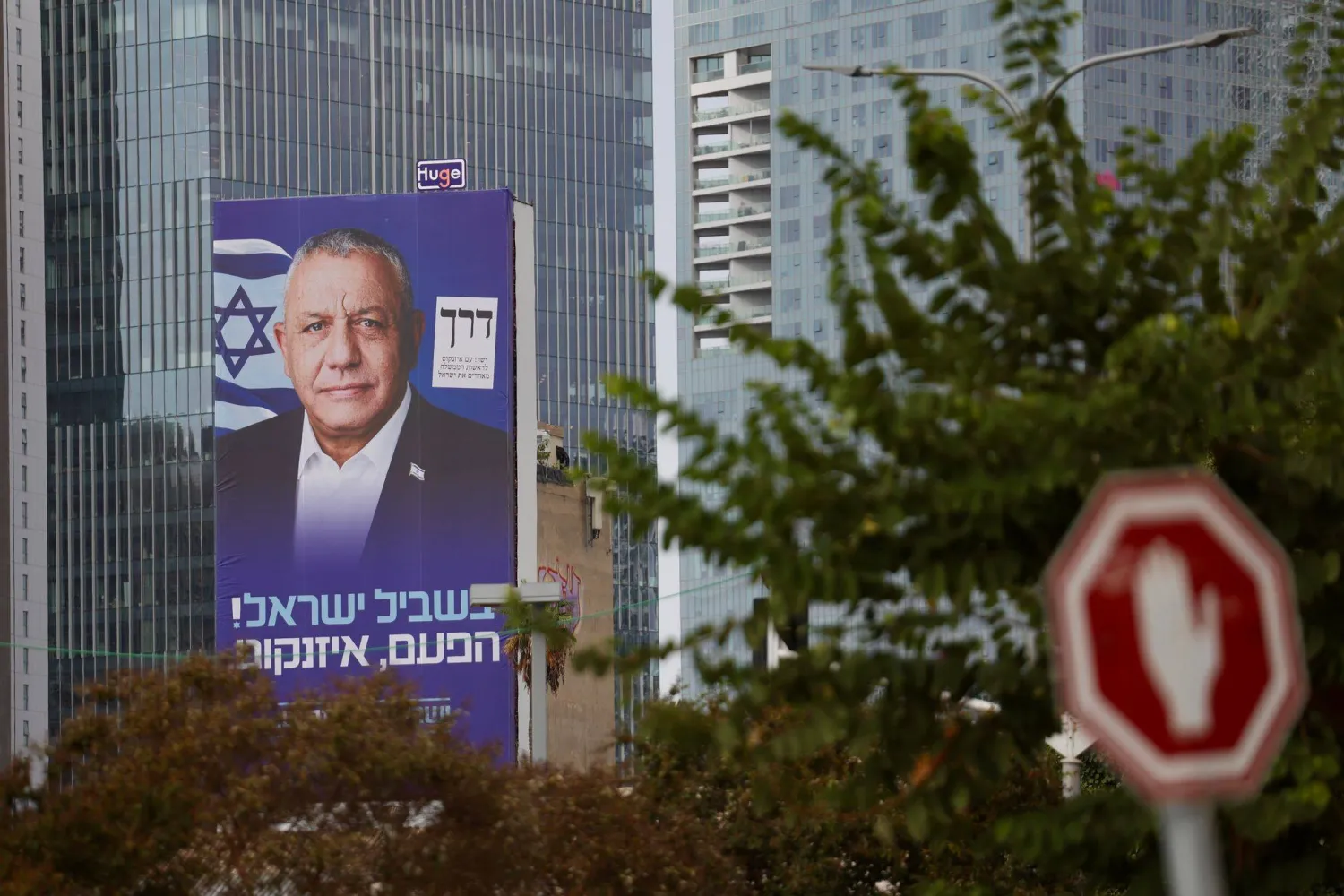
21 October 2026, Israel, Tel Aviv: An election campaign poster for the Gadi Eisenkot, is displayed in the street. (dpa)
TT
TT
A Look at the Major Candidates in Israel’s Election Next Week
21 October 2026, Israel, Tel Aviv: An election campaign poster for the Gadi Eisenkot, is displayed in the street. (dpa)
Three years after the Hamas-led attacks on Israel that triggered the war in Gaza, Israeli voters will decide next week whether to grant Benjamin Netanyahu yet another term as prime minister — or usher in a new era of Israeli politics.
Polling suggests a tight race between Netanyahu, leader of the nationalist Likud party, and his chief rival, Gadi Eisenkot, who leads the centrist Yashar! for control of the government.
Israelis vote for parties, which then form alliances to create a majority coalition. No single party has ever won a majority in the 120-member parliament, or Knesset.
Here is a look at some of the most important leaders of the major parties ahead of the election:
Benjamin Netanyahu, prime minister
Netanyahu, 77, is Israel’s longest-serving prime minister and the most dominant force in Israeli politics, having persevered through wars, crises, scandals and the Oct. 7, 2023 attack — the deadliest in Israel's history. He is the longtime leader of the Likud party, and supporters point to his record on security and the economy, as well as his close ties with US President Donald Trump, who has endorsed Netanyahu.
Netanyahu's opponents say he's responsible for the policy and security failures that preceded the Oct. 7, 2023, attack and accuse him of mismanaging the wars that followed. In 2024, the International Criminal Court issued a warrant for Netanyahu's arrest over allegations of war crimes and crimes against humanity. He is also embroiled in a years-long legal scandal at home, having been charged with fraud, breach of trust and accepting bribes. Netanyahu denies any wrongdoing.
Gadi Eisenkot, former military chief of staff
Eisenkot, 66, comes from a working-class family of Jewish Moroccan immigrants. He spent four decades rising through the ranks of Israel's military, eventually becoming the chief of staff. The general currently leads the largest opposition party — the centrist Yashar! — after entering politics in 2022. His son and two nephews were all killed in combat in Gaza following the Oct. 7 attacks.
Eisenkot also served as an observer in Netanyahu's war cabinet, but resigned after eight months, when he accused the prime minister of lacking a clear strategy. He has since positioned himself as a moderate alternative to Netanyahu, but remains hawkish on security. Eisenkot is credited with formulating Israel’s so‑called “Dahiyeh Doctrine,” a military strategy calling for the use of disproportionate power in areas from which militants launch attacks.
If he succeeds in forming a coalition, Eisenkot could become the first Israeli prime minister of Mizrahi descent. Israel's Mizrahim, who come from North Africa and the Middle East, have historically faced discrimination from the country's European-descended elite.
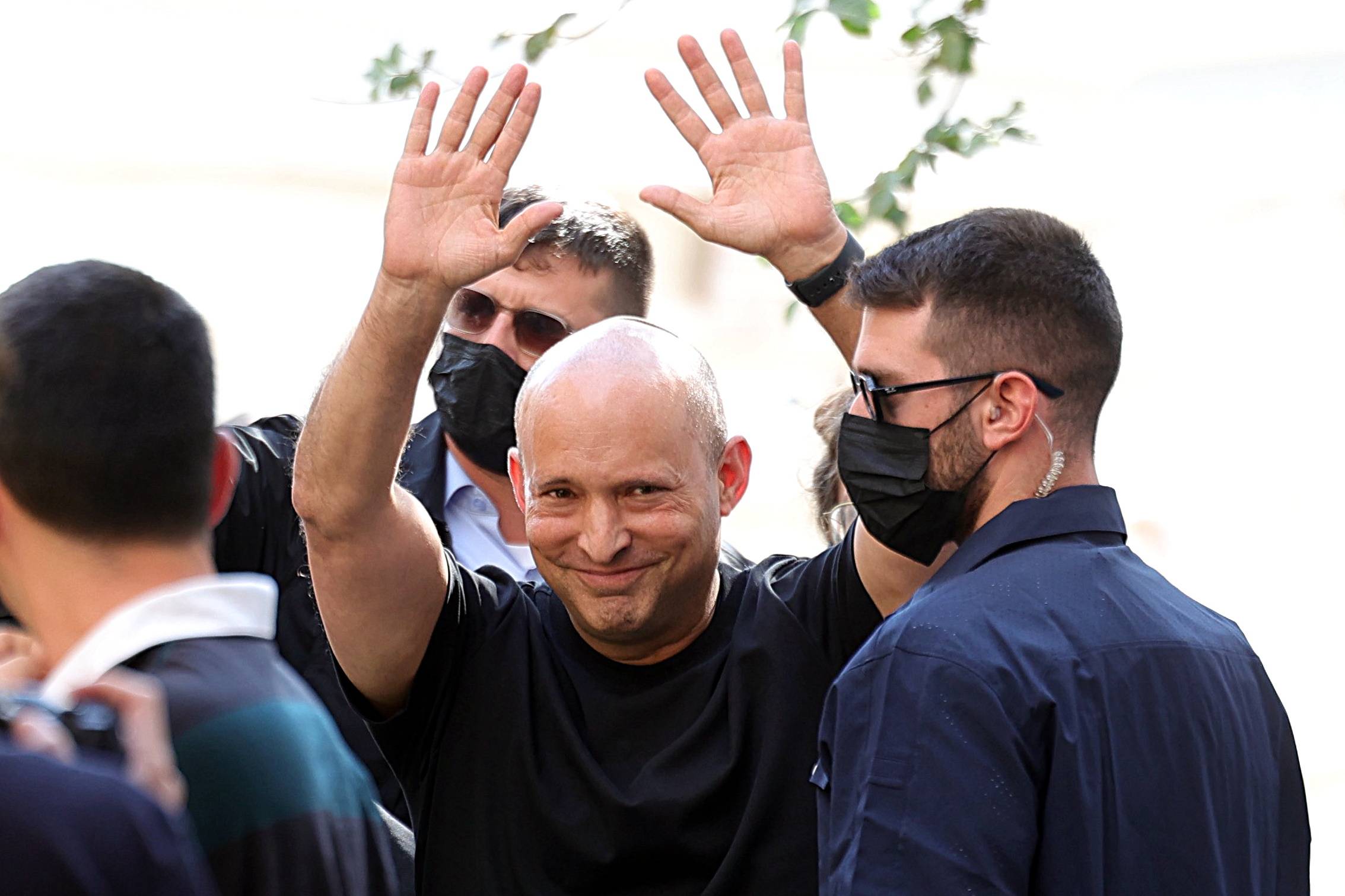
Former Israeli Prime Minister and candidate for Knesset, Naftali Bennett (C) reacts as he campaigns in Jerusalem, 19 October 2026. (EPA)
Naftali Bennett, former prime minister
Bennett, 54, is the right-wing and religiously observant leader of Beyachad (Together), a joint ticket with centrist politician Yair Lapid. He opposes Palestinian independence and supports settlement-building in the occupied West Bank.
Before entering the Knesset in 2013, Bennett served as Netanyahu's chief of staff and also was head of the Yesha Council, an umbrella organization of local authorities inside Israeli settlements. His conservative Yamina party won seven seats, which helped him cobble together a coalition of both left-wing and Arab parties. He then briefly served as prime minister in 2021, the result of a power-sharing agreement, also with Lapid.
While Bennett, like Netanyahu, takes a hard line toward the Palestinians, the two men have deep disagreements over Netanyahu's handling of security issues and his battle against the Israeli legal system.
Itamar Ben-Gvir, national security minister
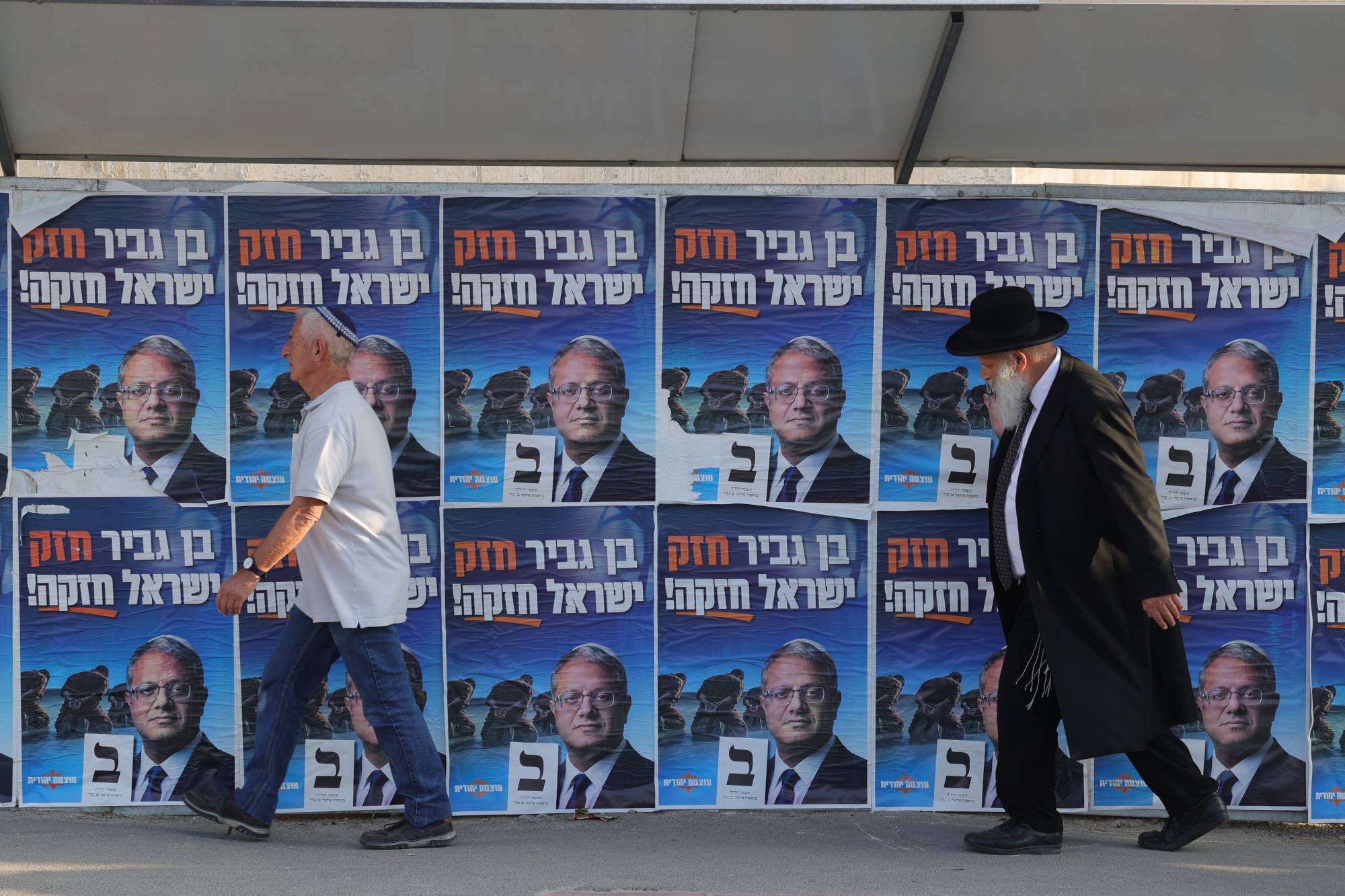
Ben-Gvir, 50, is Israel's national security minister and a far-right provocateur with multiple convictions, including for supporting a terrorist organization. He leads Otzma Yehudit (Jewish Power), an ultra-nationalist party whose strong showing in the last election secured him his Cabinet post and helped push Netanyahu's coalition further to the right.
Ultra-Orthodox Jews pass an election billboard of Minister of National Security and leader of the Otzma Yehudit party, Itamar Ben-Gvir, with a Hebrew slogan reading "Ben-Gvir strong, Israel strong", in an ultra-Orthodox neighborhood in Jerusalem, 21 October 2026. (EPA)
He is a trained lawyer who gained recognition by successfully defending right-wing Jewish extremists accused of violence against Palestinians. When Ben-Gvir was a teenager, the military refused to draft him because of his extreme views. He was also a follower of Meir Kahane, the violently racist rabbi who advocated for expelling Palestinians from Israel, Gaza and the West Bank.
Ben-Gvir has also laid out plans for what he says would be the “voluntary” emigration of roughly 2 million Palestinians from the Gaza Strip, where he has advocated for re-building Jewish settlements.
Mansour Abbas, Knesset member and leader of Ra'am
Abbas, 52, is a Palestinian Arab politician and dentist from northern Israel. He leads Ra'am, an Islamist party that was the first Arab-led party to join a governing coalition in 2021.
His strategy has been to focus on more local issues, such as crime in Arab communities, rather than the larger Israeli-Palestinian conflict, in the hopes it will win Ra'am more seats in the Knesset and court potential coalition partners.
As part of this push, Abbas named former police commander and centrist Jewish politician Yoav Segalovitz as the number two candidate on Ra'am's electoral list. Abbas has served in the Knesset since 2019.
لم تشترك بعد
انشئ حساباً خاصاً بك لتحصل على أخبار مخصصة لك ولتتمتع بخاصية حفظ المقالات وتتلقى نشراتنا البريدية المتنوعة