

The prospect of a full-scale war between Israel and Lebanon’s Hezbollah militia terrifies people on both sides of the border, but some see it as an inevitable fallout from Israel’s ongoing war against Hamas in Gaza.
Such a war could be the most destructive either side has ever experienced.
Israel and Hezbollah each have lessons from their last war, in 2006, a monthlong conflict that ended in a draw. They've also had four months to prepare for another war, even as the US tries to prevent a widening of the conflict, The Associated Press said.
Here’s a look at each side's preparedness, how war might unfold and what's being done to prevent it.
WHAT HAPPENED IN 2006? The 2006 war, six years after Israeli forces withdrew from south Lebanon, erupted after Hezbollah captured two Israeli soldiers and killed several others in a cross-border raid.
Israel launched a full-scale air and ground offensive and imposed a blockade that aimed to free the hostages and destroy Hezbollah’s military capabilities — a mission that ultimately failed.
Israeli bombing leveled large swaths of south Lebanon and Beirut’s southern suburbs. Hezbollah fired thousands of unguided rockets into northern Israel communities.
The conflict killed some 1,200 Lebanese, mostly civilians, and 160 Israelis, mostly soldiers.
A UN resolution ending the war called for withdrawal of Israeli forces from Lebanon and a demilitarized zone on Lebanon's side of the border.
Despite the deployment of UN peacekeepers, Hezbollah continues to operate in the border area, while Lebanon says Israel regularly violates its airspace and continues to occupy pockets of Lebanese land.
HOW PROBABLE IS WAR? An Israel-Hezbollah war “would be a total disaster,” UN Secretary-General Antonio Guterres warned last month, amid a flurry of shuttle diplomacy by the US and Europe.
Iran-backed Hezbollah seemed caught off-guard by Hamas' Oct. 7 attack on Israel, a regional ally. Since then, Hezbollah and Israel have exchanged daily cross-border strikes, escalating gradually. Israel also carried out targeted killings of Hezbollah and Hamas figures in Lebanon.
More than 200 people, mostly Hezbollah fighters but also more than 20 civilians, have been killed on Lebanon's side, and 18 on Israel's.
Tens of thousands have been displaced on both sides. There are no immediate prospects for their return.
Israeli political and military leaders have warned Hezbollah that war is increasingly probable unless the militants withdraw from the border.
Hezbollah leader Hassan Nasrallah hasn't threatened to initiate war but warned of a fight “without limits'' if Israel does. Hezbollah says it won't agree to a ceasefire on the Israel-Lebanon border before there's one in Gaza and has rebuffed a US proposal to move its forces several kilometers (miles) back from the border, according to Lebanese officials.
Despite the rhetoric, neither side appears to want war, said Andrea Teneti, spokesman for the UN peacekeeping mission in south Lebanon. However, “a miscalculation could potentially trigger a wider conflict that would be very difficult to control," he said.
HOW PREPARED ARE THEY? Both Hezbollah and the Israeli military have expanded capabilities since 2006 — yet both countries also are more fragile.
In Lebanon, four years of economic crisis have crippled public institutions, including its army and electrical grid, and eroded its health system. The country hosts more than 1 million Syrian refugees.
Lebanon adopted an emergency plan for a war scenario in late October. It projected the forcible displacement of 1 million Lebanese for 45 days.
About 87,000 Lebanese are displaced from the border area. While the government is relying on international organizations to fund the response, many groups working in Lebanon can't maintain existing programs.
The UN refugee agency has provided supplies to collective shelters and given emergency cash to some 400 families in south Lebanon, spokesperson Lisa Abou Khaled said. The agency doesn't have funds to support large numbers of displaced in the event of war, she said.
Aid group Doctors Without Borders said it has stockpiled some 10 tons of medical supplies and backup fuel for hospital generators in areas most likely to be affected by a widening conflict, in anticipation of a blockade.
Israel is feeling economic and social strain from the war in Gaza, which is expected to cost over $50 billion, or about 10 percent of national economic activity through the end of 2024, according to the Bank of Israel. Costs would rise sharply if there's war with Lebanon.
“No one wants this war, or wishes it on anyone,” said Tal Beeri, of the Alma Research and Education Center, a think tank focusing on northern Israel security. But he said he believes an armed conflict between Israel and Hezbollah is inevitable, arguing that diplomatic solutions appear unlikely and would only allow Hezbollah's strategic threats to increase.
Israel has evacuated 60,000 residents from towns nearest the border, where there's no warning time for rocket launches because of the proximity of Hezbollah squads.
In a war, there would be no point in additional evacuations since the militia's rockets and missiles can reach all of Israel.
After the Oct. 7 attack, the war in Gaza had broad domestic support, even if there's now a growing debate over its direction. Around half of Israelis would support war with Hezbollah as a last resort for restoring border security, according to recent polling by the think tank Israel Democracy Institute.
In Lebanon, some have criticized Hezbollah for exposing the country to another potentially devastating war. Others support the group’s limited entry into the conflict and believe Hezbollah’s arsenal will deter Israel from escalating.
HOW WOULD WAR PLAY OUT? A full-scale war would likely spread to multiple fronts, escalating the involvement of Iranian proxies in Syria, Iraq and Yemen — and perhaps even draw in Iran itself.
It could also drag the US, Israel's closest ally, deeper into the conflict. The US already has dispatched additional warships to the region.
Hezbollah has 150,000 to 200,000 rockets and missiles of various ranges, said Orna Mizrahi of the Israeli think tank Institute for National Security Studies. This arsenal is at least five times larger than that of Hamas and far more accurate, she said.
The militia's guided projectiles could reach water, electricity or communications facilities, and densely populated residential areas.
In Lebanon, airstrikes would likely wreak havoc on infrastructure and potentially kill thousands. Netanyahu has threatened to “turn Beirut into Gaza,” where Israel’s air and ground incursion has caused widespread destruction and killed more than 26,000 people, according to Hamas-controlled Gaza's Health Ministry.
Israel is far more protected, with several air defense systems, including the Iron Dome, which intercepts rockets with a roughly 90% success rate. But it can get overwhelmed if a mass barrage of rockets is fired.
Some 40% of Israel's population live in newer homes with private safe rooms fortified with blast protection to withstand rocket attacks. Israel also has a network of bomb shelters, but a 2020 government report says about one-third of Israelis lack easy access to them.
Lebanon has no such network, and shelters would be of little use against massive “bunker buster” bombs Israel has dropped in Gaza.
Hezbollah has limited air defenses, while those of the Lebanese army are outdated and insufficient because of budget shortfalls, said Dina Arakji, with the UK-based risk consultancy firm Control Risks.
The Lebanese army has remained on the sidelines over the past four months. In 2006, it entered fighting in a limited capacity, but it's unclear how it would react in the event of a new Israel-Hezbollah war.


Israel and Lebanon are Prepping for a War Neither Wants, But Many Fear It's Becoming Inevitable
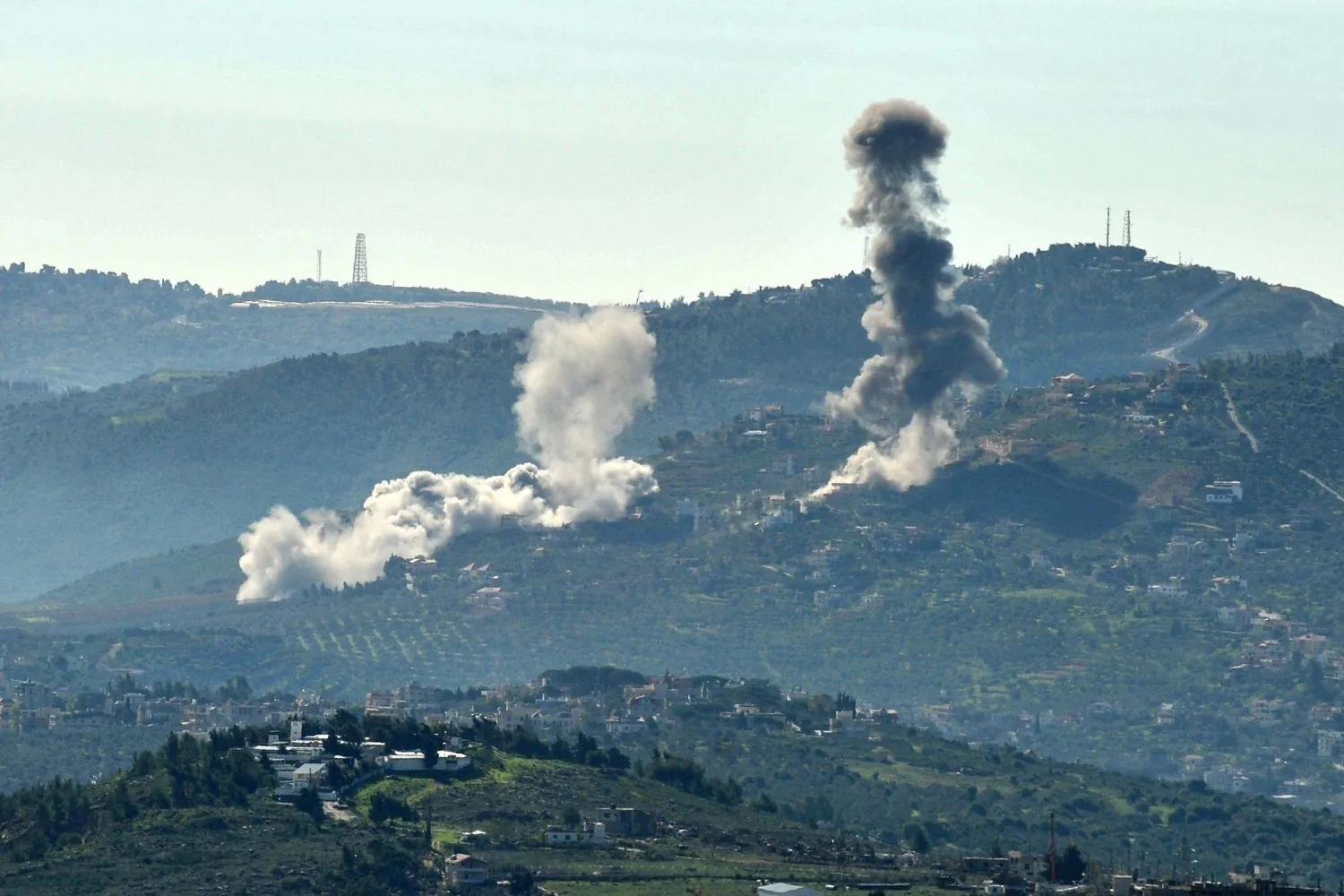
Smoke billows over the southern Lebanese village of Odaisseh near the border with Israel on January 19, 2024, during Israeli bombardment as fighting continues between Israel and the Palestinian group Hamas in Gaza. (Photo by RABIH DAHER / AFP)

Israel and Lebanon are Prepping for a War Neither Wants, But Many Fear It's Becoming Inevitable
Smoke billows over the southern Lebanese village of Odaisseh near the border with Israel on January 19, 2024, during Israeli bombardment as fighting continues between Israel and the Palestinian group Hamas in Gaza. (Photo by RABIH DAHER / AFP)





لم تشترك بعد
انشئ حساباً خاصاً بك لتحصل على أخبار مخصصة لك ولتتمتع بخاصية حفظ المقالات وتتلقى نشراتنا البريدية المتنوعة
