UN Experts: Terrorist Threat is High in Africa Conflict Zones and Afghanistan, and Rose in Europe

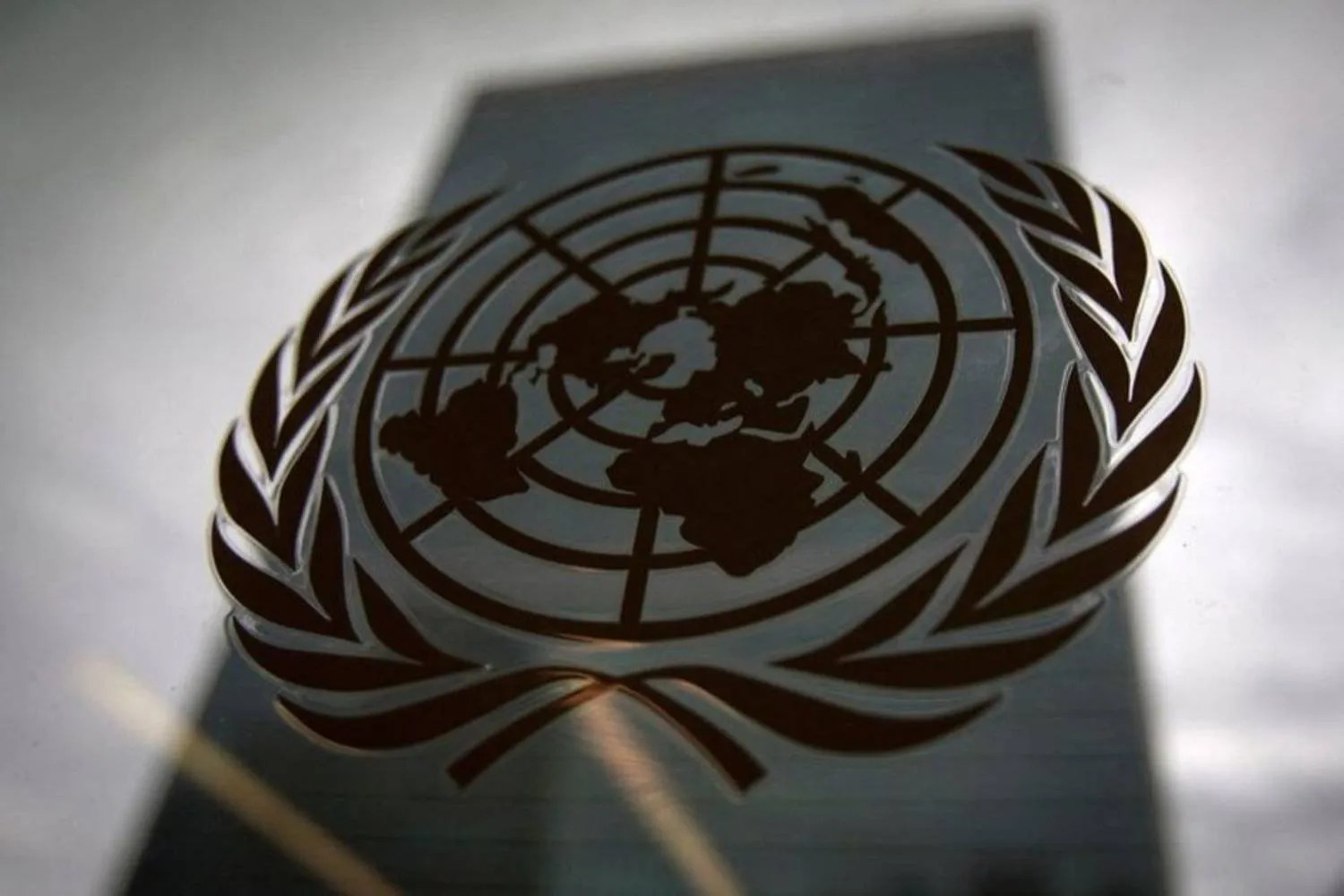
The United Nations headquarters building is pictured though a window with the UN logo in the foreground in the Manhattan borough of New York August 15, 2014. (Reuters)
TT

UN Experts: Terrorist Threat is High in Africa Conflict Zones and Afghanistan, and Rose in Europe

The United Nations headquarters building is pictured though a window with the UN logo in the foreground in the Manhattan borough of New York August 15, 2014. (Reuters)

The terrorist threat from al-Qaida, the ISIS group and their affiliates remains high in conflict zones in Africa and in Afghanistan – and threat levels have risen in some regions including Europe, UN experts said in a new report.
The panel of experts said in the 23-page report that the relationship between Afghanistan’s Taliban rulers and al-Qaida remains close, and unnamed member states report that “the high concentration of terrorist groups” in the country are undermining the security situation in the region, The Associated Press reported.
The greatest threat within Afghanistan still comes from the ISIS “with its ability to project into the region and beyond,” the experts said in the report to the UN Security Council covering the period until Dec. 16, 2023 which was circulated Wednesday. Regionally, they pointed to a succession of attacks in neighboring Iran and Pakistan and threats in Central Asian nations.
The panel said, however, that while none of the al-Qaida affiliated groups have recovered the capability to launch long-range operations, “they harbor global ambitions.” And it said “covert and calibrated efforts to rebuild capability” have been reported.
The ISIS group broke away from al-Qaida over a decade ago and attracted supporters from around the world. Despite its defeat in Iraq in 2017 and in Syria two years later. The panel said the combined ISIS strength in the two countries is still between 3,000 and 5,000 fighters. In Iraq, they are carrying out “a low-intensity insurgency with covert terrorist cells” while in Syria attacks have intensified since November, the experts said.
The panel said the three-month delay in naming the current ISIS leader, Abu Hafs al-Hashemi al-Qurayshi, following the death in fighting of his little-known predecessor “is judged indicative of internal difficulties and security challenges”
Some unnamed UN member nations have assessed that serious pressure from counter-terrorism operations in Syria and Iraq raise the possibility that the ISIS could move its leadership and “center of gravity” to Africa or Afghanistan, with Africa more likely, the experts said.
In West Africa and the Sahel, the panel said, “violence and threat have escalated again” in conflict zones, raising concerns among UN member nations. The experts point to “a deficit in counterterrorism capabilities,” which ISIS and al-Qaida affiliated groups are continuing to exploit.
“The situation is becoming ever more complex with the conflation of ethnic and regional disputes with the agenda and operations of these groups,” they said.
In east Africa, the experts said, the Somali government is continuing its military offensive against al-Shabab, an al-Qaida affiliate, but they said UN member nations assess that despite significant losses from air strikes and military operations, “al-Shabab remains resilient. It has an estimated 7,000 to 12,000 fighters, and an estimated $100 million annual income, mostly from illegal taxation in the capital Mogadishu and southern Somalia, they said.
The panel said al-Qaida has improved its media productions which appeared aimed at restoring the extremist group’s credibility, attracting recruits, and filling the void over its inability to announce a new leader.
But that messaging changed after Hamas’ Oct. 7 attacks in southern Israel, the experts said.
The attack killed 1,200 people, mostly civilians, and Hamas and other groups took about 250 people hostage, according to Israeli authorities. In Israel’s ongoing offensive in response in Gaza aimed at destroying Hamas, more than 27,000 people have been killed, according to the territory’s health ministry which doesn’t distinguish between civilian and combatant deaths.
The experts said Al-Qaida has focused on “the sanctity” of the Al-Aqsa mosque, the third holiest site in Islam which is in a compound in Jerusalem sacred to Jews and Muslims, with some communications stressing “an obligation for individuals to take action to the limits of their own ability.”
“Member States are concerned that it (al-Qaida) could exploit the situation to recover relevance and tap into popular dissent about the extent of civilian casualties, providing direction to those keen to act,” the panel said, and they “are concerned that the renewed narrative could inspire self-initiated attacks globally.”
Across Europe, the experts said, “formal terrorist threat levels have risen ... following fatal attacks in late 2023 in France and Belgium, in addition to numerous non-lethal terrorist incidents and arrests in several European countries.”



Danish Foreign Minister to Visit NATO Allies Over Greenland

Denmark's Foreign Minister Lars Lokke Rasmussen reacts, following his and Greenland's Foreign Minister Vivian Motzfeldt meeting with US Senators Angus King (I-ME), Lisa Murkowski (R-AK), Ruben Gallego (D-AZ) and a press conference, in Washington DC, US, January 14, 2026. (Reuters)
TT

Danish Foreign Minister to Visit NATO Allies Over Greenland

Denmark's Foreign Minister Lars Lokke Rasmussen reacts, following his and Greenland's Foreign Minister Vivian Motzfeldt meeting with US Senators Angus King (I-ME), Lisa Murkowski (R-AK), Ruben Gallego (D-AZ) and a press conference, in Washington DC, US, January 14, 2026. (Reuters)

Denmark's foreign minister is to visit fellow NATO members Norway, the UK and Sweden to discuss the alliance's Arctic security strategy, his ministry announced Sunday.

Foreign Minister Lars Lokke Rasmussen will visit Oslo on Sunday, travel to London on Monday and then to Stockholm on Thursday.

The diplomatic tour follows US President Donald Trump's threat to punish eight countries -- including the three Rasmussen is visiting -- with tariffs over their opposition to his plan to seize control of Greenland, an autonomous Danish territory.

Trump has accused Denmark, Norway, Sweden, France, Germany, the UK, the Netherlands and Finland of playing a "very dangerous game" after they sent a few dozen troops to the island as part of a military drill.

"In an unstable and unpredictable world, Denmark needs close friends and allies," Rasmussen stated in a press release.

"Our countries share the view that we all agree on the need to strengthen NATO's role in the Arctic, and I look forward to discussing how to achieve this," he said.

An extraordinary meeting of EU ambassadors has been called in Brussels for Sunday afternoon.

Denmark, "in cooperation with several European allies", recently joined a declaration on Greenland stating that the mineral-rich island is part of NATO and that its security is a "shared responsibility" of alliance members, the ministry statement added.

Since his return to the White House for a second term, Trump has made no secret of his desire to annex Greenland, defending the strategy as necessary for national security and to ward off supposed Russian and Chinese advances in the Arctic.


Iran Considers ‘Gradually’ Restoring Internet After Shutdown

10 January 2026, Iran, Tehran: A police station is set on fire during protests in Tehran in response to worsening economic conditions. ZUMA Press Wire/dpa
TT

Iran Considers ‘Gradually’ Restoring Internet After Shutdown

10 January 2026, Iran, Tehran: A police station is set on fire during protests in Tehran in response to worsening economic conditions. ZUMA Press Wire/dpa

Iranian authorities have said they are considering "gradually" restoring internet access after imposing a sweeping communications shutdown across the country more than a week ago, local media reported. 

On Sunday morning, AFP was able to connect to the internet from its Tehran office, though the vast majority of internet providers and mobile internet remain cut. 

It was not immediately clear why the limited connection was possible. 

Outgoing international calls have been possible since Tuesday, and text messaging was restored Saturday morning. 

Late Saturday, the Tasnim news agency reported "the relevant authorities announced that internet access would also be gradually restored", but gave no further details. 

Citing an unnamed "informed source", the agency said local messaging applications "will soon be activated" on Iran's domestic intranet. 

The unprecedented communications blackout was imposed as calls proliferated for anti-government demonstrations initially triggered by the country's economic malaise. 

For days, text messages and international phone calls -- and at times even local calls -- were cut off. 

Iran has since been relying on its intranet, which has supported local media websites, ride-hailing apps, delivery service and banking platforms. 

State television has since Saturday been promoting local messaging applications including Rubika -- which was largely unavailable earlier this week. 

Even before the blackout, popular applications such as Instagram, Facebook, X, Telegram and YouTube had been blocked in Iran for years, requiring VPN connections to bypass the restrictions. 

The protests, which began on December 28, have been widely seen as the biggest challenge to the Iranian leadership since the months-long demonstrations that followed the 2022 death in custody of Mahsa Amini. 

But the latest demonstrations appear to have subsided in recent days. 

Iranian officials have not given an exact death toll for the protests, but Norway-based rights group Iran Human Rights (IHR) reported that 3,428 people were verified to have been killed by security forces, while warning the actual toll could be several times higher. 

Other estimates place the toll at more than 5,000 -- and possibly as high as 20,000, IHR said. 

The opposition Iran International channel based outside the country has said at least 12,000 people were killed during the protests, citing senior government and security sources. 

Iran's judiciary has completely rejected that figure. 

Iranian officials have said the demonstrations were peaceful before turning into "riots" that included vandalism of public property. 

Authorities have blamed foreign influence, namely from Iran's foes the United States and Israel. 

On Saturday, supreme leader Ali Khamenei said "a few thousand" people had been killed by what he called "agents" of the two countries who instigated the unrest. 


Pakistan Security Forces Kill 12 Militants, Thwarting Attempted Hostage-taking in Southwest

File photo: Pakistani Army and security officials stand guard as the opposition party Pakistan Tehrik-e-Insaft (PTI) continue their protest for the third day demanding release of former Prime Minister Imran Khan, in Islamabad, Pakistan, 06 October 2024. EPA/SOHAIL SHAHZAD
TT

Pakistan Security Forces Kill 12 Militants, Thwarting Attempted Hostage-taking in Southwest

File photo: Pakistani Army and security officials stand guard as the opposition party Pakistan Tehrik-e-Insaft (PTI) continue their protest for the third day demanding release of former Prime Minister Imran Khan, in Islamabad, Pakistan, 06 October 2024. EPA/SOHAIL SHAHZAD

Pakistani security forces killed at least 12 militants and thwarted an attempted hostage-taking in southwestern Pakistan after assailants attacked a police station, the military said Friday.

In a statement, it said the attackers also targeted two banks and looted millions of rupees (dollars) during the assault in Kharan district of Balochistan province a day earlier. The militants attempted to seize hostages at the police station, but a swift response by security forces forced them to retreat, it said.

The military identified the assailants as “Fitna al-Hindustan,” a phrase the government uses for the outlawed Baloch Liberation Army, or BLA, and other separatist groups. It claimed the attackers, including those killed in the shootouts with security forces, were backed by India, though it provided no evidence. India has repeatedly denied Pakistan’s accusations that it supports separatists in Balochistan or Pakistani Taliban fighters.

Pakistan's Interior Minister Mohsin Naqvi in a statement praised the security forces for killing the militants and foiling the attacks by the insurgents in Kharan, reported The Associated Press.

Balochistan, Pakistan’s largest but least populated province, has long been the scene of insurgency by separatist groups, along with attacks by the Pakistani Taliban. The BLA, which the United States designated a terrorist organization in 2019, has been behind numerous attacks targeting security forces and civilians across the province in recent years.