


Senior Houthi Negotiator to Asharq Al-Awsat: Meeting with Saudi Brothers Helped Overcome Hurdles in the Roadmap

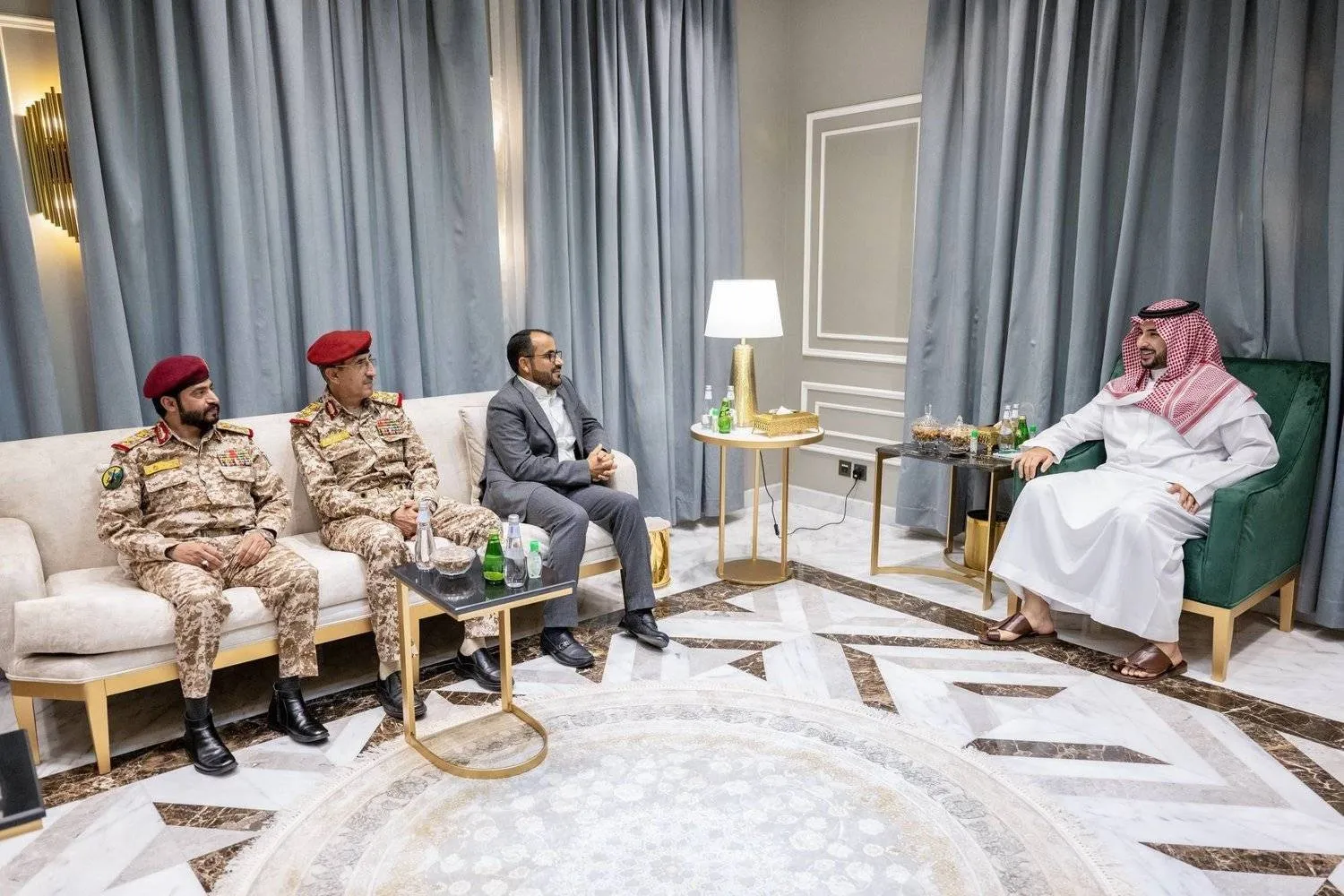
Saudi Defense Minister Prince Khalid bin Salman meets a Houthi delegation from Sanaa in Riyadh in September 2023. (SPA)
TT

Senior Houthi Negotiator to Asharq Al-Awsat: Meeting with Saudi Brothers Helped Overcome Hurdles in the Roadmap

Saudi Defense Minister Prince Khalid bin Salman meets a Houthi delegation from Sanaa in Riyadh in September 2023. (SPA)

Top Houthi negotiator and spokesman Mohammed Abdulsalam said the meeting held by the Sanaa delegation with Saudi leaderships “helped overcome the major obstacles that were hindering the roadmap” for peace in Yemen that is being pursued by United Nations envoy Hans Grundberg.

The crisis in Yemen is facing two major challenges: the roadmap and the Houthi attacks in the Red Sea.

For the first challenge, Grundberg is trying to ensure the success of the roadmap, while the Houthis are waging a battle against western forces in the Red Sea.

For the second, the Houthis have declared that they are championing Gaza by preventing Israeli ships from sailing in the Bab al-Mandeb Strait. They have then started to attack American and British ships in the vital waterway in wake of strikes carried out by Washington and the UK in retaliation to the militias’ Red Sea attacks.

Yemen and peace

Saudi diplomacy and its mediation efforts have created an unprecedented opportunity to start ending the crisis in Yemen.

Dr. Hesham Alghannam, Director General of the Security Research Center at Naif Arab University for Security Sciences (NAUSS), told Asharq Al-Awsat that the Houthis have been persuaded by the Saudi mediation because it favors them and the Yemeni people.

The ball has also been thrown into their court, meaning the crisis is being addressed as a Yemeni one, not a Saudi-Yemeni one, he added.

This paved the way for Grundberg to begin proposing a detailed roadmap to kick off dialogue between the Yemenis themselves, he went on to say.

In an interview to Asharq Al-Awsat, Abdulsalam said the peace path in Yemen is “going along well” and has been so since the nationwide truce took effect in April 2022 and through the Omani-sponsored talks with Saudi “brothers”.

Asked if the Houthis were prepared to begin political negotiations that includes partnership in rule, holding elections, voting on a constitution and completing the political process, he replied: “The roadmap covered the concerns of all parties and the humanitarian crisis” that the people throughout Yemen are suffering from.

He explained that tackling the humanitarian file will pave the way for political dialogue.

The UN roadmap already covers dialogue and humanitarian issues, such as the reopening of roads, airports and ports, and the release of prisoners.

Abdulsalam had previously told Asharq Al-Awsat that the Red Sea attacks will not impact the peace efforts in Yemen. Recent western statements have said otherwise, to which he replied: “The aim of the attacks is clear. They are a response to the pressing situation in Palestine, which is a threat to regional, Arab and Islamic peace.”

“It will impact us in Yemen. If Israel were to emerge victorious, or destroy or weaken the Palestinian people and their resistance, then that will negatively impact everyone,” he warned, while underscoring the “religious and moral obligations” towards the Palestinian cause.

This is why the situation in Gaza remains separate from the crisis in Yemen, he remarked.

“The western statements are an attempt to pressure us to back down from our position,” said Abdulsalam.

When do the attacks stop?

Some have said that the attacks in the Red Sea have gone long enough. Asharq Al-Awsat told Abdulsalam that there are concerns that the attacks would continue even after the war on Gaza ends.

He replied: “The military operations in the Red Sea are targeting Israeli vessels headed to Israel. The attacks will continue until the aggression on Gaza ends, the siege is lifted and food aid is delivered to northern and southern Gaza.”

“We will continue to stand by the oppressed Palestinian people. If the injustice and siege are lifted, then the operations will undoubtedly stop,” he stressed.

The legitimate Yemeni government believes that the western strikes are not a successful approach in dealing with the Houthis.

“Defensive operations are not the solution,” said Dr. Rashad al-Alimi, head of the Presidential Leadership Council (PLC), last month. “The solution is to eliminate the Houthis' military capabilities.”

Asked by Asharq Al-Awsat if the Houthis had any intentions to kick off dialogue with western parties to reach an understanding over the Red Sea, Abdulsalam said: “We are exchaninging views with the international community through mediation from our Omani brothers.”

“Our position remains unchanged about supporting the Palestinian people,” he stressed.

Hannah Porter, Yemen expert and senior research fellow with the Ark social enterprise group, said it remains unclear how and when the Houthi attacks will end.

In remarks to Asharq Al-Awsat, she said the western strikes are unlikely to weaken the Houthis enough to lead to a complete end to the attacks.

Even if their capabilities are weakened, the fact that they can still launch missiles and drones at ships in the Red Sea will continue to be viewed as a threat for the foreseeable future, she added.

Moreover, she noted that at the start of the Gaza war, the Houthis were demanding the end to the Israeli attack. Now, they are also demanding an end to American and British strikes on Yemen. They have vowed to continue to attack vessels affiliated with Israel, the US and UK until these demands are met.

The more the situation escalates, the less likely the Houthis are to cease their attacks, she said.

Even though American and British officials have said that they don't want more escalation, it is difficult to see an end to this current phase, she went on to say.

Furthermore, Porter speculated that the Houthis may end up being credited with the end to the Israeli attack on Gaza when it happens.

She added, however, that the Houthis attacks are unlikely to impact the decision-makers in Israel, but the militias will be keen on claiming that their attacks prompted Israel to stop the assault on Gaza or allowed aid into the enclave.

Drone Strikes on Dormitory, Shelter Kill 10 in Sudan's El-Obeid

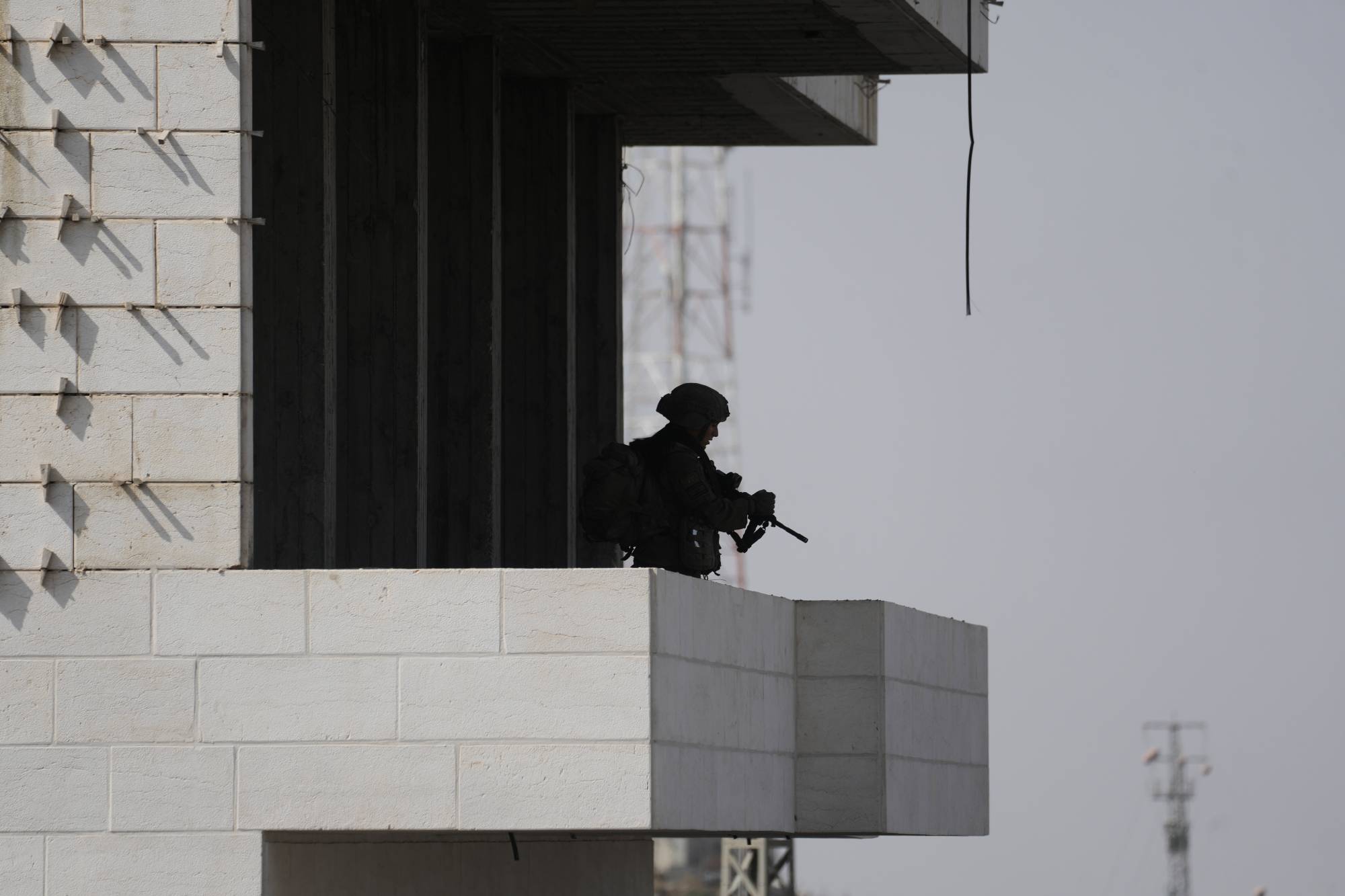
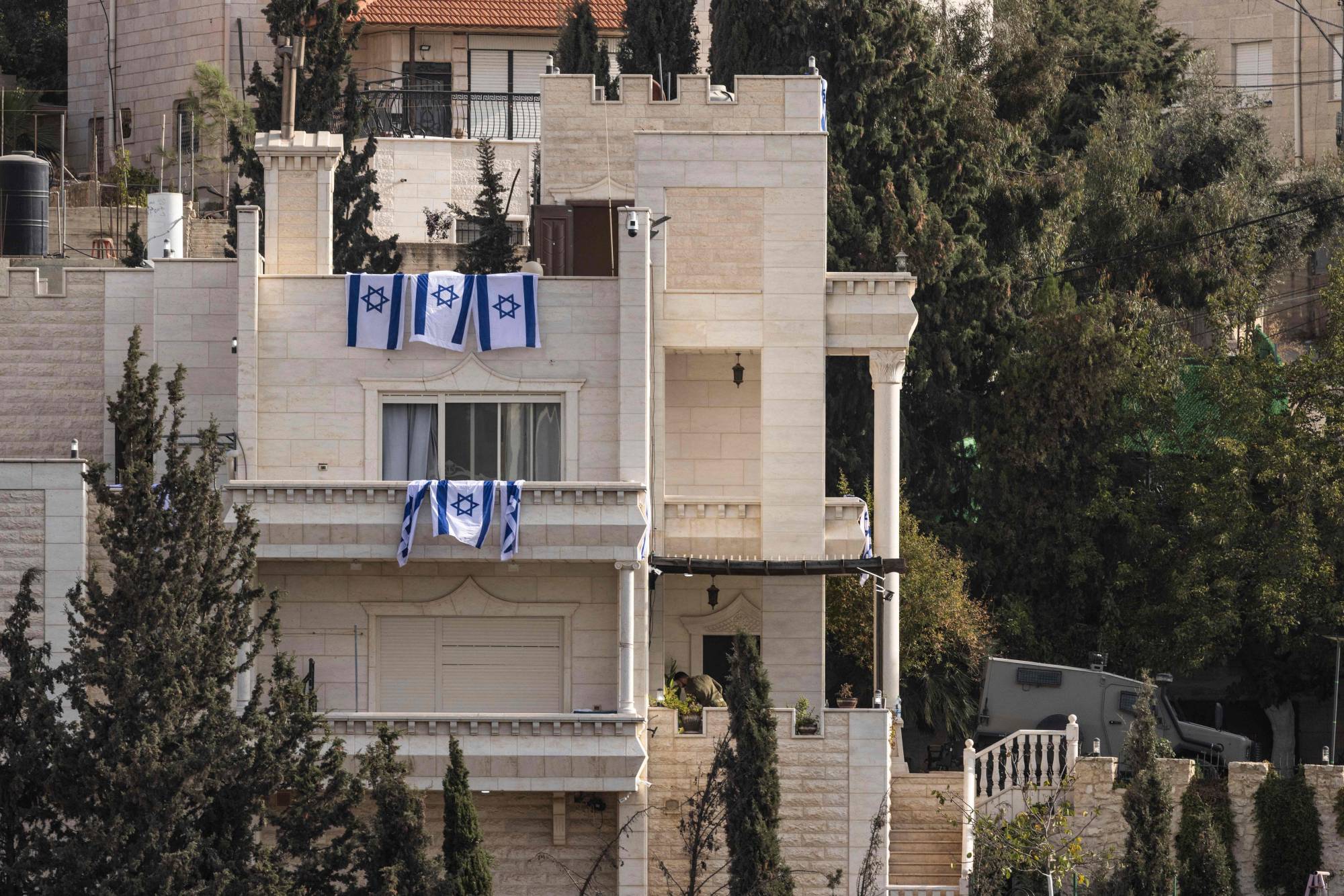
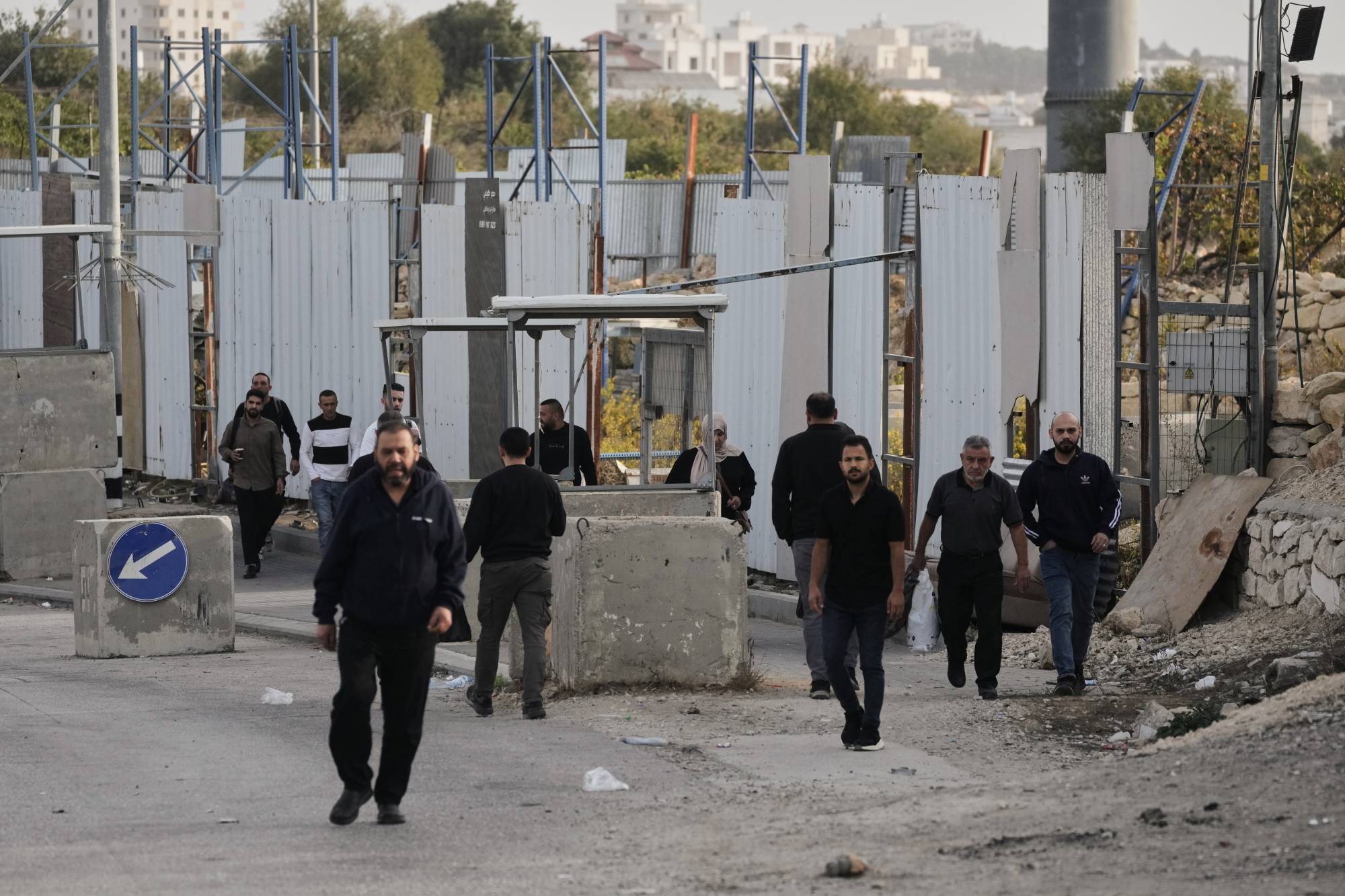
A lecture hall at the College of Development and Technological Sciences with its roof collapsed after an attack attributed to the paramilitary Rapid Support Forces (RSF), in El Obeid, North Kordofan, Sudan, September 15, 2026. REUTERS/El Tayeb Siddig
TT

Drone Strikes on Dormitory, Shelter Kill 10 in Sudan's El-Obeid

A lecture hall at the College of Development and Technological Sciences with its roof collapsed after an attack attributed to the paramilitary Rapid Support Forces (RSF), in El Obeid, North Kordofan, Sudan, September 15, 2026. REUTERS/El Tayeb Siddig

Drone attacks on a university dormitory and a center sheltering displaced families in Sudan's central city of El-Obeid killed at least 10 people this week, a Sudanese rights group and a medical source said on Friday.

The attacks came as fighting intensified in North Kordofan, a strategically important region where Sudan's army and the paramilitary Rapid Support Forces are battling for territory more than three years into a war that has shattered much of the country.

On Wednesday, a drone struck a dormitory at the University of Kordofan that was being used to house students and civilians, according to the Emergency Lawyers group, a Sudanese rights organization that monitors abuses during the conflict.

The group said the attack killed five people and wounded 47 others, but did not say who was responsible.

A day later, another drone hit a center sheltering families displaced by fighting from across the Kordofan region, killing five people and injuring 13 others, a North Kordofan government official and a medical source at a local hospital told AFP.

The government official accused the RSF of carrying out the attack. The paramilitary group did not immediately respond to the allegation.

In recent months, both the army and the RSF have increasingly deployed drones, killing more than 1,100 during the first five months of this year alone, according to United Nations figures.

El-Obeid, the capital of North Kordofan, has emerged as a key battleground in Sudan's war, owing to its strategic location at a crossroads linking the country's central and western regions.

The UN has repeatedly warned that escalating violence in El-Obeid and the broader Kordofan region risked triggering further atrocities, issuing in July what it described as a red alert over conditions there.

More than 300,000 people have been displaced from the region since the RSF captured El-Fasher, the military's last major stronghold in Darfur, following a major offensive last year, according to the UN.

The war between Sudan's army and the RSF has killed more than 200,000 people, aid workers estimate, displaced more than 13 million and created the world's largest hunger and displacement crises.


UKMTO: Crude Oil Tanker Struck by Unknown Projectile off Oman

Vessels at the Strait of Hormuz, as seen from Musandam, Oman, June 24, 2026. REUTERS/Stringer
TT

UKMTO: Crude Oil Tanker Struck by Unknown Projectile off Oman

Vessels at the Strait of Hormuz, as seen from Musandam, Oman, June 24, 2026. REUTERS/Stringer

The master of a crude oil tanker has reported ‌being ‌struck by ‌an ⁠unknown projectile 4 nautical ⁠miles east of Oman, ⁠the United ‌Kingdom ‌Maritime Trade Operations (UKMTO) ‌said ‌early on Saturday.

UKMTO said all ‌crew were reported safe ⁠and ⁠no environmental impact was currently reported.


Iran-Aligned Faction Demands Downsizing of ‘World’s Largest Embassy’

Members of Iraq’s Popular Mobilization Forces parade in Baghdad’s Tahrir Square to mark the withdrawal of US troops from Iraq (DPA)
TT

Iran-Aligned Faction Demands Downsizing of ‘World’s Largest Embassy’

Members of Iraq’s Popular Mobilization Forces parade in Baghdad’s Tahrir Square to mark the withdrawal of US troops from Iraq (DPA)

As Iraq’s government steps up celebrations marking the end of the international coalition’s mission and the US withdrawal, an Iran-aligned armed faction is demanding a smaller US mission in Baghdad and an end to what it calls “Washington’s economic dominance.”

Since last Wednesday, authorities in Baghdad have mobilized resources for official celebrations of what they have designated “National Sovereignty Day.”

Iran and its allies have hailed the departure of the last troops - mainly from an air base in Erbil, in the Kurdistan region - as a “victory,” even as some Iraqis voice concern over geopolitical challenges.

An agreed timetable

Prime Minister Ali al-Zaidi told a “Sovereignty Day” conference on Friday that Iraq’s foundations of “political, economic and security sovereignty” were taking firm hold.

“Iraqis have passed every difficult test,” he told executive and legislative officials, saying the country had reached a moment when it was renewing its resolve to protect the state and its system of government.

Al-Zaidi said Iraq’s restored sovereignty was reflected in the withdrawal of foreign troops and the complete end of the international coalition’s mission.

He also cited an agreement for Turkish forces and Kurdistan Workers’ Party members to withdraw, an end to the presence of foreign armed groups in Iraq, and the unification of Peshmerga forces to strengthen unified security and military decision-making.

He reaffirmed that Iraq would not be used as a launchpad for attacks on neighboring countries, and pledged to bring weapons under control in line with the constitution and the law, following an agreed timetable to address the factions’ status and integrate them into state institutions.

Iraqi Prime Minister Ali al-Zaidi attends the Sovereignty Day Conference marking the withdrawal of US-led coalition forces from Iraq, in Baghdad, Iraq, October 1, 2026. Iraqi Prime Minister's Media Office/Handout via REUTERS

The government had originally given the factions until Sept. 30 to surrender their weapons, coinciding with the end of the coalition’s mission. The groups had used the coalition’s presence to justify keeping their arms.

The government later dropped that deadline and extended it to June 2027.

Barzani in Baghdad

Al-Zaidi’s speech made no mention of the role of foreign forces. Kurdistan Region President Nechirvan Barzani, however, praised the US-led coalition for helping Iraqis defeat ISIS.

“Sovereignty means that the state has the final say,” Barzani said in a speech delivered in Arabic. Decisions on war and peace must rest exclusively with the state’s legitimate authorities, he added, and the constitution and federal system must be upheld.

During that difficult period, the United States, the coalition and Iraq’s friends had stood by the country and provided help at the Iraqi government’s request, he said.

“Today, as they leave Iraqi territory under the agreement concluded with the federal government, we will not forget that support and assistance,” Barzani said, adding that Iraqis would always regard it with appreciation and respect.

“But true gratitude should evolve into assuming national responsibility in Iraq.”

“The world’s largest embassy”

The Nujaba Movement, led by Iran-aligned Akram al-Kaabi, warned against any continued US military presence, including through security companies or advisers.

“Dealing on an equal footing requires the US Embassy to be like other embassies, rather than a vast security and military compound,” the movement said in a statement on Friday, describing it as the world’s largest embassy.

Nujaba demanded an end to US dominance over Iraq’s economy and resources and to American interference in its political affairs.

It also called for freeing Iraqi skies from US aircraft it described as attacking, and keeping US forces away from Iraq’s borders in Syria, Jordan and Kuwait.

Iraqi Prime Minister Ali al-Zaidi delivers a speech during the Sovereignty Day Conference marking the withdrawal of US-led coalition forces from Iraq, in Baghdad, Iraq, October 1, 2026. Iraqi Prime Minister's Media Office/Handout via REUTERS

After the withdrawal

Experts and activists are questioning what comes next.

Foreign troops stationed in Iraq under an agreement with its government had not undermined sovereignty in the first place, political activist Montadhar Naser said.

“Nevertheless, their departure signals that Iraq no longer needs any outside force,” he told Asharq Al-Awsat.

The authorities must now prove they can exercise full control on the ground, he said, while factions continue to defy the state and the law and push Iraq to the brink of regional military confrontations.

Political science professor Talib Mohammed Karim said Iraq’s political groups agreed on sovereignty in principle, but differed over what it meant and how to achieve it.

“The international community, meanwhile, engages with Iraq according to the extent to which it makes unified decisions through its institutions,” he told Asharq Al-Awsat.
