


KAUST Launches 1st Initiative to Enhance Scientific, Sustainability Literacy for Children

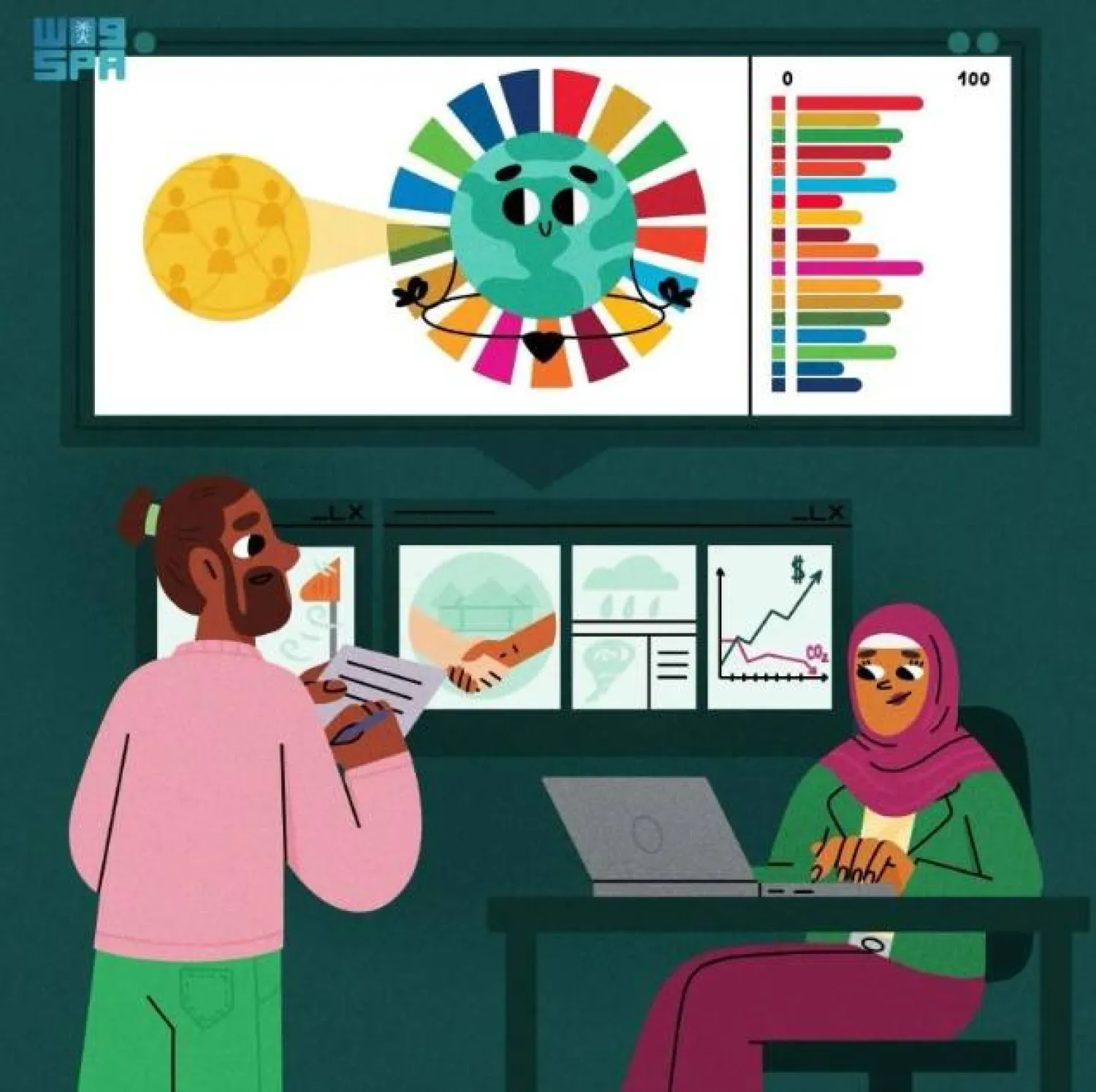
King Abdullah University of Science and Technology (KAUST) launched its first educational initiative designed to enhance scientific and sustainability literacy for children. SPA
TT

KAUST Launches 1st Initiative to Enhance Scientific, Sustainability Literacy for Children

King Abdullah University of Science and Technology (KAUST) launched its first educational initiative designed to enhance scientific and sustainability literacy for children. SPA

King Abdullah University of Science and Technology (KAUST) launched its first educational initiative designed to enhance scientific and sustainability literacy for children, underscoring the critical role of science in achieving the UN Sustainable Development Goals (SDGs).

The initiative was launched in partnership with the United Nations Development Program (UNDP) office in the Kingdom and "Frontiers for Young Minds," an open-access scientific journal dedicated to children.

The initiative, titled "The SDG Collection: How Science Can Help Us to Achieve the Sustainable Development Goals," includes a series of articles on each of the 17 SDGs and will be published in Frontiers for Young Minds.

The initiative builds upon previous partnership efforts between KAUST and the journal, which included a collection of scientific articles tailored for children and translated into Arabic. It made complex scientific concepts easily accessible and appealing to Arabic-speaking children worldwide.

The project aligns with Saudi Vision 2030, which emphasizes the role of sustainable research in stimulating social and economic development, and inspiring future generations to achieve sustainable development.

KAUST Professor of Practice of Sustainability and Head of Sustainability Ana Margarida Costa indicated that the initiative reflects the university's utilization of science and educational programs to address global challenges.

Through these scientific articles about SDGs collection, the aim is not only to educate young minds but also to inspire them to take concrete actions for a sustainable world, said Costa.

“The collection, edited by KAUST experts, will feature contributions from KAUST's diverse pool of researchers and will leverage an in-person, interactive, peer-review process involving students from local schools, including the KAUST School (TKS),” Costa added.

KAUST Enrichment for Youth Director Nicki Talbot, currently leading the engagement with TKS, emphasized that the initiative allows children to participate in reviewing research papers authored by KAUST researchers, which is a wonderful example of the university's commitment to empowering and educating youth.

Talbot also pointed out that it would involve the inclusion of new audiovisual materials, such as talk shows and interviews with authors led by students, to bridge the gap between researchers and children.

Talbot noted that the initiative’s translation into Arabic would improve its accessibility, ensuring that children throughout the Kingdom and the Arab region can fully benefit from this educational resource aimed at raising awareness about the global sustainable development agenda.



UK Proposal to Charge Tourists to Visit Museums Sparks Backlash

FILE PHOTO: People walk in front of the British Museum in London, Britain, September 28, 2023. REUTERS/Hollie Adams/File Photo
TT

UK Proposal to Charge Tourists to Visit Museums Sparks Backlash

FILE PHOTO: People walk in front of the British Museum in London, Britain, September 28, 2023. REUTERS/Hollie Adams/File Photo

Britain is considering introducing entry fees for tourists visiting some of England's most renowned museums, a proposal that has drawn criticism from restitution groups and countries while disputed artefacts remain on display.

Free admission to Britain's national museums and galleries was introduced in 2001 by former Labour Prime Minister Tony Blair in a bid to make culture more accessible to all.

Last month, the UK government said it would work with the museum sector to explore the potential benefits of charging international visitors at ⁠national museums, including how ⁠this could support the arts sector. It would provide an update of the consultation before the end of the year, it said.

However, the proposal is facing backlash amid growing calls worldwide for artefacts to be sent back to their communities or countries of origin, Reuters reported.

Although some efforts have been made to confront the long-standing issue, artifacts as well as human ⁠remains taken during the colonial era are still held in various museums across Europe. Some long-standing claims for artifacts involving the British Museum include Greece's Parthenon Sculptures, known as Elgin marbles, and Nigeria's Benin Bronzes.

The British Museum has previously said that the strength of its collection lies in enabling millions of visitors to understand the world's cultures and how they are interconnected.

Ghana, which has some of its regalia and other artifacts in British institutions, said charging foreign visitors to view such objects raises issues of "fairness," particularly where restitution discussions remain ongoing, ⁠foreign minister ⁠Samuel Okudzeto Ablakwa told Reuters.

The proposal, if implemented, would be "unethica," said Eric Phillips, vice chair of the Caribbean Community's reparations commission, a bloc of 15 member states including Jamaica and Barbados.

"Why should we have to pay to see our heritage?" Phillips said.

Arley Gill, chairman of Grenada's national reparations committee, said the priority should be to return the artifacts to their "rightful owners."

Open Restitution Africa (ORA) said Africans and others already face barriers to accessing artifacts taken from their countries and held in Western museums, including visa requirements and travel costs.

"Introducing entry fees further compounds these inequalities," ORA said.

Meanwhile, the US-based non-profit Restitution Study Group said a fee exemption for such visitors would be a "meaningful gesture."

The government declined to comment on the criticism.


Riyadh Art Unveils 75 Works in Expanding Public Art Collection Across Capital

The artworks are strategically distributed across major streets, public squares, cultural centers, and key urban hubs. SPA
TT

Riyadh Art Unveils 75 Works in Expanding Public Art Collection Across Capital

The artworks are strategically distributed across major streets, public squares, cultural centers, and key urban hubs. SPA

The Royal Commission for Riyadh City, through its “Riyadh Art” program, has unveiled 75 new artworks as part of a growing permanent collection installed across key locations in the capital.

The initiative forms part of broader efforts to expand the presence of public art in urban spaces, with additional installations planned in the coming period.

The program aims to enrich daily life in Riyadh by integrating art into the urban fabric, contributing to a dynamic cultural environment that reflects the capital's regional and international stature.

As one of the world’s largest public art initiatives, the Riyadh Art program now features 75 installations, with plans to expand the collection by adding 115 more works. The current collection includes contributions from 35 Saudi artists and 100 international artists representing 45 countries.

Among the internationally renowned artists featured are Anish Kapoor, Giuseppe Penone, and Jeff Koons, alongside prominent Saudi artists such as Zaman Jassim, Mohammed Alsaleem, and Manal AlDowayan.

The artworks are strategically distributed across major streets, public squares, cultural centers, and key urban hubs, enabling residents and visitors to engage with them as part of their everyday environment and reinforcing the role of art in public life.

The collection comprises both commissioned and acquired works. Commissioned pieces are specifically designed to respond to their surroundings, integrating with the urban context and patterns of movement within each location.

Recent commissions were selected through an international competition that attracted 161 artists, with 72 shortlisted participants submitting 70 proposals. These contributions have helped shape a diverse and evolving collection spanning the city’s main axes and public spaces.


New Tools Rescue Old Art at Madrid’s Prado Museum

A conservator works on the restoration of gilded moldings at the Prado museum's sculpture restoration department in Madrid on October 23, 2025. (Pierre-Philippe Marcou/ AFP)
TT

New Tools Rescue Old Art at Madrid’s Prado Museum

A conservator works on the restoration of gilded moldings at the Prado museum's sculpture restoration department in Madrid on October 23, 2025. (Pierre-Philippe Marcou/ AFP)

In a quiet space secluded from the throngs of daily visitors to Madrid's Prado art museum, a team of experts perpetuate an ancient tradition of restoring centuries-old European cultural treasures.

Creations by some of art's most illustrious names -- Goya, Velazquez, Rubens, Caravaggio, Bosch and El Greco -- are conserved in the vast, bright space at one of the world's most-visited museums.

The Prado has always put an emphasis on the conservation and restoration of art since it opened to the public in 1819.

Cutting-edge technology and modern tools to analyze and treat paintings and sculptures allow Almudena, Marta, Maria, Alvaro, Alicia, Elena, Sonia and Eva to maintain the tradition.

The team is capable of caring for the museum's most prized collections as well as works from other institutions.

In February, the Prado launched the restoration of "Pablo de Valladolid", an emblematic portrait that Spanish master Velazquez produced in the 17th century.

But the work will first undergo a deep technical analysis by new equipment, the museum said in a statement.

Scanning technology will allow the experts to identify and locate the materials used by the artist, while multispectral infrared reflectography will reveal details invisible to the naked eye.

Everything contributes to a deeper understanding of the artist's technique, the work's state of conservation and preparing its restoration.