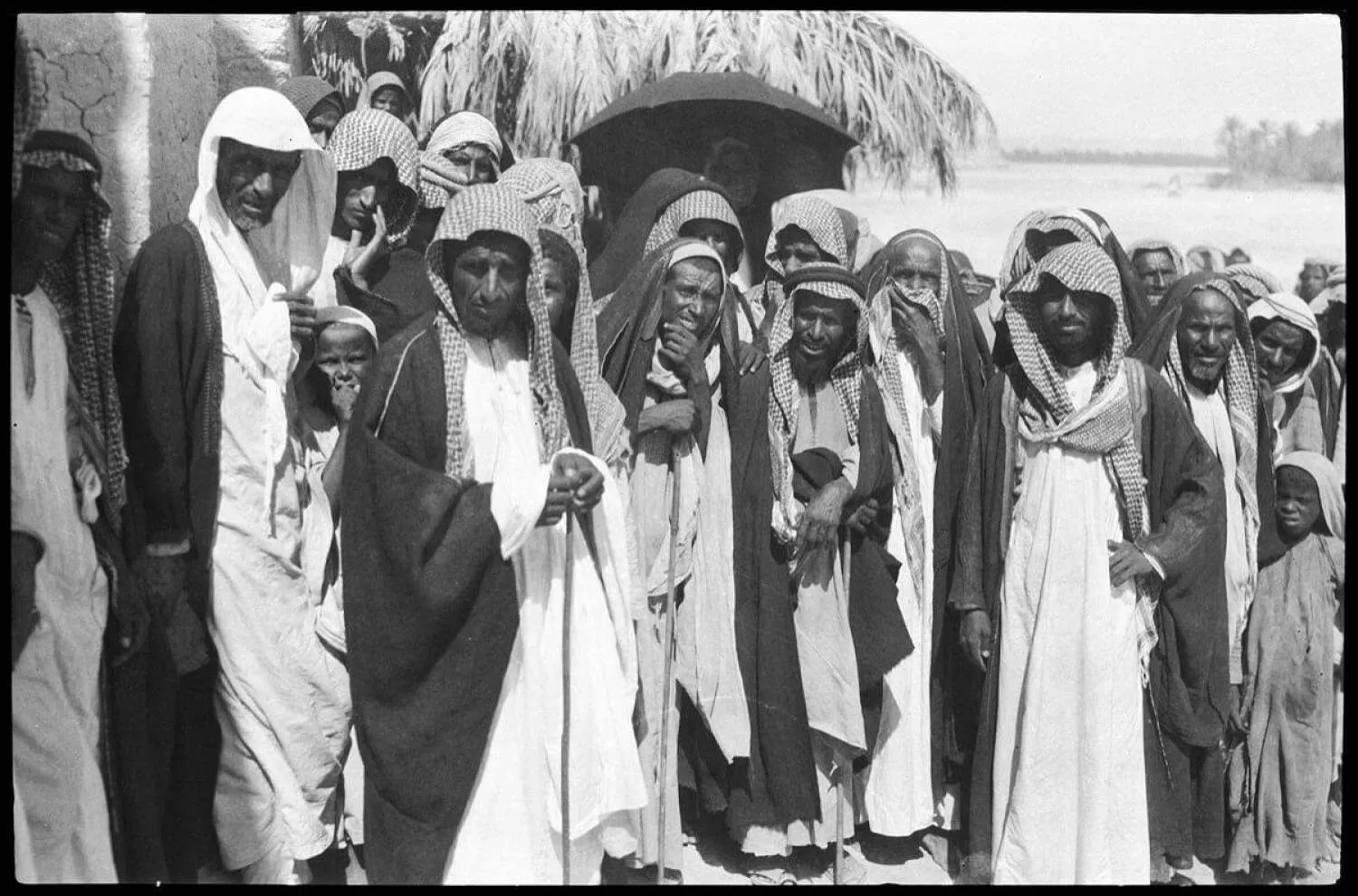

The first Saudi state, upon its establishment, sought to support social harmony by boosting security and imposing strict penalties against crime, which significantly impacted creating a healthy environment, said a Saudi researcher and expert in sociology and anthropology, Abdulrahman al-Shuqir.
In an exclusive interview with Asharq Al-Awsat, Shuqir pointed out that the local Saudi heritage is a gateway to the world.
He considered research into the social aspects and practice of people's daily lives during the first Saudi state to be one of the most important studies in contemporary sociology.
After the first Saudi state emerged, it sought to support the maintenance of social harmony by strengthening security and imposing strict penalties against illegal actions.
Asharq Al-Awsat asked the expert whether security is one of the components of community identity and its relationship with heritage, which Shuqir described as an "organic relationship."
He recalled that civilization is a social system that helps man increase his cultural production, noting that after establishing the first Saudi state, security emerged as one of the most important standards.
He cited the era of Imam Abdul Aziz bin Mohammad as an example of security, indicating that state enemies and opponents attested to that.
- A misleading history that obscured the achievement
Shuqir said there is cultural identity wherever there is an interactive and active society, which leads to the emergence of heritage, customs, and values.
He explained that the local Saudi heritage passed through three primary stages.
Firstly, most of the Saudi material and intangible heritage was established in the "Medieval Society" between 600 and 1139 AH and began before the establishment of the Saudi state.
Shuqir also noted that the vast heritage was erased and marginalized, leading many historians to describe society as lacking achievement.
Saudi historians and researchers have been influenced by the misleading history established for them for three centuries, said Shuqir.
He indicated that this motivated the documentation of the "Popular Memory" project by exploring the daily practices of ordinary people in Saudi society.
According to the expert, the kingdom's history moved along two different paths during the three centuries, including viewing society from religious and daily life perspectives.
He explained that the daily life perspective is the spirit of the Saudi state, evidenced by the imams of the state, which approved religious schools of thought, appointed Shiite judges in respective positions, and provided security for the people to practice their social and economic activities without change.
History has been neglected for a long time, even though it belongs to the nature of the state and confirms its openness and policies that contribute to keeping it strong, said Shuqir.
Regarding the sources of local identity, Shuqir explained that the essence of identity, culture, arts, and the tangible and intangible heritage that regulates human behavior today lies in medieval society. He recalled clear cognitive distinctions with the historical eras that came after and before, including the long period that separated the Islamic era from the first Saudi state.
Therefore, when addressing some aspects of contemporary life, such as marriage customs, war dance, arts, games, and proverbs, historians refer to the achievements of society in the Middle Ages, which do not belong to the Islamic ages that preceded it, nor does it belong to the Salafist heritage.
He further explained that the Saudi state was built on and contained the existing heritage by supporting its central culture and subcultures of various regions and tribes.
- A civilizational achievement for the first state
Shuqir believes that the sources of cultural identity are multiple and stem from the collective memory accumulated over generations, and its features began with the Thamudic era, approximately 3,000 years ago.
The Arab tribes of pre-Islamic times enacted some customs and values, and Islam came and added the religious spirit, rejecting some values and promoting others.
- "Najd: the complete story"
In studying the Middle Ages, Shuqir stated there was a great conviction that the future can be understood by considering history and identifying reality.
He spent eight years studying the Najdi society for hundreds of years and initially called it "Najd... the complete story," indicating that he reviewed history utilizing new research approaches and methods and found new theories at the level of the Arab world.
One of the most prominent conclusions is that society is the origin and that the state gains its stability by caring for society and enhancing its values and subcultures, said Shuqir, adding that the Saudi state achieved that.
The fall of the Abbasid state heralded the rise of an unprecedented Najdi civilization.
He recalled that after the second Abbasid state weakened, Najd and many regions in the Arab Peninsula were neglected, adding that after the collapse of Islamic civilization, the area became isolated and did not benefit from the renaissance.
After its marginalization, Najd experienced a massive increase in the population of individuals looking for safety away from conflict areas, he said, leading to the establishment of its renaissance after the Islamic world became dispersed.
At the beginning of the 7th century AH, the Najd region began to experience an unprecedented boom and became a "huge factory" for establishing agricultural towns and villages and restoring the road network.
Therefore, according to Shuqir, the downfall of the Abbasid state constituted the rebirth of the Arab and Islamic nations, leaving a void that the Mamluks, then the Ottomans, tried to fill.
However, according to the expert, the Saudi state was more likely to be accepted by the Islamic world due to the strength of Arabism, the proximity to the Two Holy Mosques, and the Saudi political awareness of this vacuum.
He indicated that the new vision is one of the basic ideas contradicting the prevailing views on Najdi history by transforming the declining renaissance index into a rising index regarding social, economic, political, and religious urbanization.
He further explained that it negated the prevalent critique, which asserts the difference between the results based on texts and those based on evidence, analysis, and reliable research methods.
- Diriyah brings together the identity of Saudi society
He said that attention to identity and heritage issues carries an added and sustainable value that flows into an integrated project.
People with living historical and cultural resources can withstand crises and derive moral strength from their history.
The Saudi regions enjoy a large cultural reserve and heritage encompassing all their historical eras. It possesses a linguistic product and a great literary heritage in pre-Islamic times and a contribution to the Islamic conquests at the beginning of Islam, according to Shuqir.
Shuqir believes Diriyah still possesses a radiant spirit that brings together the identity of Saudi society, as it was during the first Saudi state.
He believes that Diriyah can become once again the state's capital, as it was before, and be re-integrated according to a broader historical and cultural plan for its historical capitals.
Shuqir enjoys valuable knowledge and experiences, resulting in dozens of research and studies on sociology, history, and anthropology. He utilized his experiences and employed them in studying Saudi society.
He recalled that his career and interest in the historical development of society began in his early years, indicating that he used to travel a lot between various Saudi regions.
During travels, he met with several storytellers and notables and read about each region's history, heritage, and literature.
Shuqir has many publications about the society, but what caught his attention recently was the emergence of generations of readers immersed in the world's literary heritage, passionately following US, European, and Russian books, including ones that won the Nobel Prize for Literature.
He said that Saudi local heritage and popular literature are the gateway to the world, adding that many researchers had previously emphasized that globalism begins from localism.
Shuqir began writing about the customs of the society, which was widely accepted by Saudi youth, and some of them returned to reading Saudi novels, amazed at the creativity in their culture that parallels world literature.