West Bank Museum Showcases Gaza 'Artistic Demonstration' against War

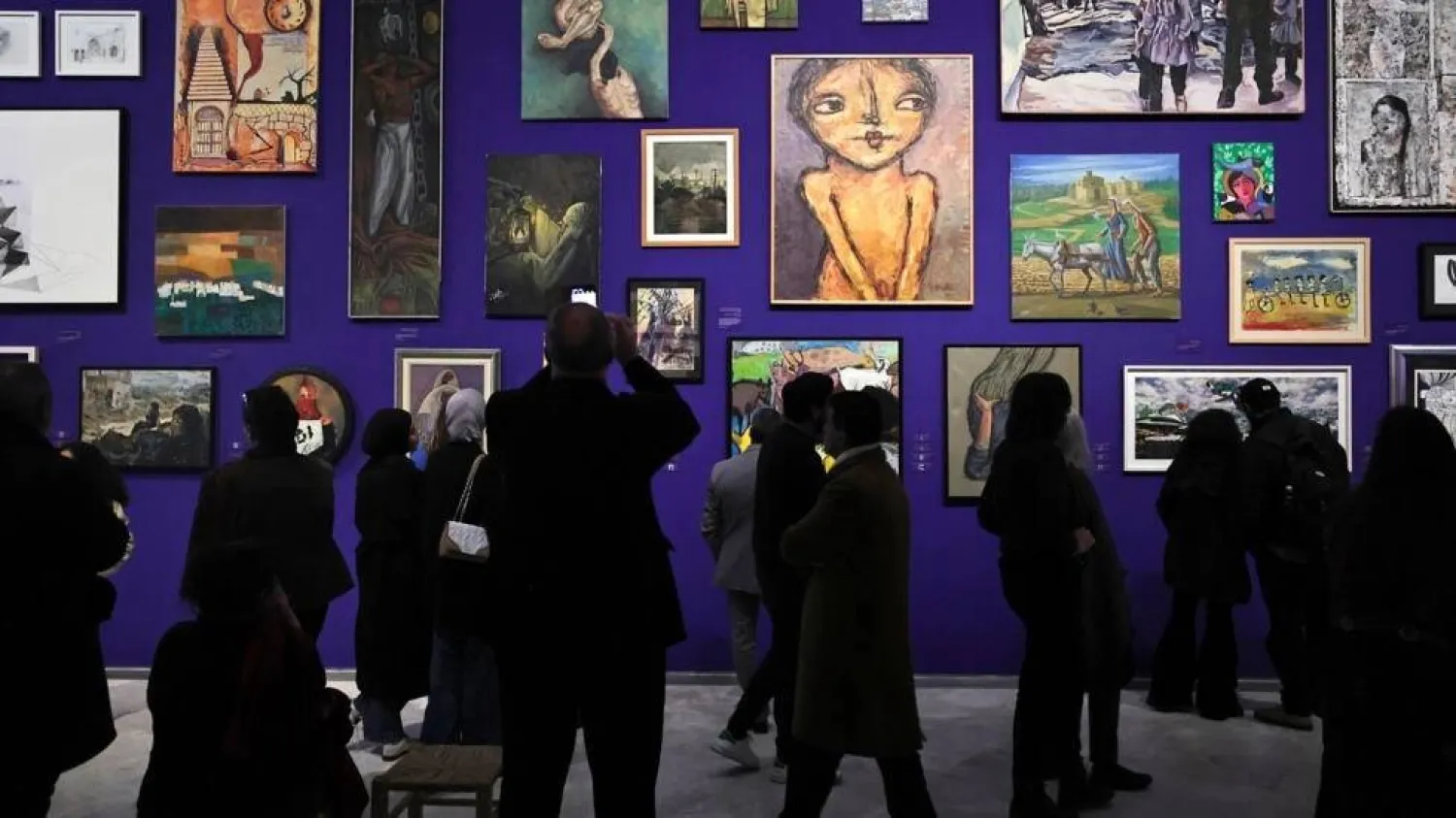
The Palestinian Museum's display features contemporary artworks alongside traditional costumes from war-torn Gaza. Zain JAAFAR / AFP
TT

West Bank Museum Showcases Gaza 'Artistic Demonstration' against War

The Palestinian Museum's display features contemporary artworks alongside traditional costumes from war-torn Gaza. Zain JAAFAR / AFP

At a museum in the Israeli-occupied West Bank, Gazan works on display are proclaimed to be an "ongoing artistic demonstration" in solidarity with the war-ravaged Palestinian territory.
"This is not an exhibition", reads the sign at the entrance to the Palestinian Museum in Birzeit, near Ramallah, showcasing art and heritage from the Gaza Strip.
Alongside contemporary pieces, the works include old, traditional paintings and costumes, as well as archeological artifacts, said board member Ehab Bessaiso, a former culture minister.
He told AFP that the museum had launched the initiative to "preserve Palestinian heritage work in Gaza, which has faced destruction due to the war".
Fighting has raged in Gaza since October 7, when Hamas carried out an unprecedented attack on southern Israel.
Gaza's bloodiest war has devastated the small Hamas-ruled coastal territory, with its cultural heritage just one of the many casualties of war.
Bessaiso said the museum had received "the works of hundreds of artists" from Gaza that had been held in West Bank universities and cultural centers and by individuals.
The display presents "the Gazan artistic scene in a new way" which helps "to face the challenges and difficulties which artists and culture are confronting in Gaza amid the destruction and siege", he said.
In a January report, the Palestinian culture ministry said 24 cultural centers in Gaza had been destroyed "in whole or in part" since the start of the war.
They include the Arab Orthodox Cultural and Social Center, the Rashad Shawa Cultural Center -- which includes a theater, library and printing presses -- and the Al-Sununu for Culture and Arts Association in Gaza City.
Historical buildings such as mosques, churches, the old Phoenician port and the Al-Qarara Cultural Museum have also been destroyed.
'Whole lives stolen'
"It's a beautiful thing to see the work of artists from Gaza here in the West Bank, especially because Gaza no longer has a place to show them after all the destruction there," said Alma Abdulghani, a visitor in her 30s.
The war erupted with Hamas's October 7 attack, which resulted in the deaths of about 1,160 people in Israel, mostly civilians, according to an AFP tally of official figures.
Israel's retaliatory offensive has killed at least 29,782 people, mostly women and children, according to Gaza's health ministry.
Bessaiso said the museum display is "a journey through Gazan Palestinian art, especially following the killing of dozens of artists, writers, poets and journalists".
"This journey affirms the oneness of the Palestinian people, which the (Israeli) occupation is trying to destroy."
The names of 115 artists are on display at the main entrance, with black marks around the names of those killed in the war, among them visual artist Heba Zagout and painter Mohammed Sami Qariqa.
"Those who have had their homes, dreams, memories, loved ones and their whole lives stolen by the genocidal war," read the words inscribed above their names.
The museum administration described the display, which opened in mid-February, as "an alternative space to the one that once existed in Gaza before the war's fires destroyed it".
It said the project aims to be "an alternative platform for the voices" from Gaza, where repeated communications blackouts during the war have prevented them "from reaching us".
'Cut off life'
In the main exhibition hall, a pile of rubble evokes the destruction that has befallen Gaza.
The scene is completed by a constant buzzing noise, a nod to the Israeli surveillance drones that are ever-present in the skies above Gaza, and footage of ambulances transporting a never-ending stream of wounded.
Mohammed al-Huwajia, a visual artist from Rafah in southern Gaza, told AFP by video call that the "exhibition is a reminder of the solidarity between the West Bank and Gaza".
It "affirms that we still exist", he added.
Near the main entrance to the exhibition, traditional dresses and bridal gowns from multiple Gazan cities are on display, as well as braided necklaces and bracelets dating from the British Mandate years.
A painting by Gaza-born artist Tayseer Barakat depicts military machines and vehicles, while another 16 carry written messages about the war.
"This series is a message and an expression of what I saw and heard of what our people in Gaza are living through in this insane war," said Barakat, who was born in Gaza's Jabalia refugee camp and has lived in the West Bank since 1984.
"How do you lose more than 7,000 people? Rain bombs on them one after another, and then prevent them from being removed from the rubble," says the writing on one painting.
"How do we lose a population of two and a half million people? Cut them off from communications, electricity, water and life," says another.



Saudi Arabia, Syria Underline Depth of their Cultural Ties

Syrian President al-Sharaa receives the Saudi minister of culture and the accompanying delegation at the Conference Palace in Damascus on Thursday. (SPA)
TT

Saudi Arabia, Syria Underline Depth of their Cultural Ties

Syrian President al-Sharaa receives the Saudi minister of culture and the accompanying delegation at the Conference Palace in Damascus on Thursday. (SPA)

Saudi Arabia and Syria underlined the strength of their cultural relationship during high-level meetings held in Damascus on Thursday, on the sidelines of the opening of the Damascus International Book Fair 2026, where the Kingdom is participating as guest of honor.

Syrian President Ahmad al-Sharaa received Saudi Minister of Culture Prince Badr bin Abdullah bin Farhan at the Conference Palace in the capital.

Earlier the same day, Prince Badr met with his Syrian counterpart, Minister of Culture Mohammad Yassin Saleh, during an official visit to attend the fair. T

he Saudi minister congratulated Syria on hosting the exhibition and expressed his wishes for continued prosperity, progress, and stability for the Syrian government and people.

Both meetings highlighted the depth of cultural relations between the two countries, the importance of expanding joint cultural cooperation across various fields, and the alignment of positions on issues of mutual interest in a way that serves both nations.

The Saudi delegation included senior officials and advisers, among them representatives from the Royal Court, the Ministry of Culture, and the King Abdulaziz Public Library, reflecting broad institutional engagement in the visit.

In the evening, Prince Badr attended the opening ceremony of the fair’s special session, held under the patronage and in the presence of al-Sharaa. The event drew wide official and cultural participation, including Arab ministers, political and intellectual figures, and a distinguished group of writers and cultural figures.

In a post on the X platform, Prince Badr thanked “our brothers in Syria for their generous hospitality and their efforts in organizing the Damascus International Book Fair.”

The minister also inaugurated the Kingdom’s pavilion at the fair in the presence of the Syrian minister of culture and the Qatari minister of culture.

Saudi Arabia’s guest-of-honor participation continues until Feb. 16 and reflects its growing prominence and leadership in the Arab and global cultural landscape.

This participation aligns with Saudi Vision 2030, which places culture at the heart of national development, viewing it as a space for dialogue, a bridge for civilizational communication, and a tool for strengthening ties among Arab peoples.

The Saudi Literature, Publishing and Translation Commission is leading the Kingdom’s participation, highlighting the development of the cultural sector and reaffirming the central role of books as carriers of knowledge and awareness.

The Saudi pavilion boasts a comprehensive cultural program featuring intellectual seminars, poetry evenings, a manuscript exhibition, traditional Saudi fashion displays, hospitality corners, archaeological replicas, and performing arts that express the depth of the Kingdom’s cultural heritage.

On the sidelines of the visit, Prince Badr, accompanied by Minister Saleh, toured the National Museum of Damascus, which houses rare artifacts spanning prehistoric eras, ancient Syrian civilizations, classical and Islamic periods, as well as traditional and modern art.


UNESCO Honors Al-Bisht Al-Hasawi as Thousands Flock to Al-Ahsa Festival

Visitors can explore interactive displays, participate in live workshops, and witness the meticulous process of tailoring this iconic symbol of prestige - SPA
TT

UNESCO Honors Al-Bisht Al-Hasawi as Thousands Flock to Al-Ahsa Festival

Visitors can explore interactive displays, participate in live workshops, and witness the meticulous process of tailoring this iconic symbol of prestige - SPA

The third edition of Al-Bisht Al-Hasawi Festival is drawing thousands of regional and international visitors to Ibrahim Palace in historic Al-Hofuf.

Organized by the Heritage Commission, this year’s festival celebrates the inscription of the Bisht on UNESCO’s Representative List of the Intangible Cultural Heritage of Humanity.

The event showcases Al-Ahsa’s centuries-old tradition of hand-weaving and gold embroidery, a craft passed down through generations of local families, SPA reported.

Visitors can explore interactive displays, participate in live workshops, and witness the meticulous process of tailoring this iconic symbol of prestige.

With UNESCO's participation and representatives from six countries, the festival has evolved into a global platform for cultural dialogue, cementing the Bisht’s status as a world-class cultural treasure.


Saudi, Syrian Culture Ministers Tour National Museum of Damascus

The ministers observed the museum’s extensive collections spanning prehistoric eras to modern art. SPA
TT

Saudi, Syrian Culture Ministers Tour National Museum of Damascus

The ministers observed the museum’s extensive collections spanning prehistoric eras to modern art. SPA

Saudi Minister of Culture Prince Badr bin Abdullah bin Farhan and his Syrian counterpart, Mohammed Yassin Saleh, have toured the National Museum of Damascus during the Kingdom’s participation as guest of honor at the 2026 Damascus International Book Fair.

The ministers observed on Thursday the museum’s extensive collections spanning prehistoric eras to modern art.

A particular focus was placed on the Arab-Islamic wing, featuring significant artifacts from the Umayyad period.

The Kingdom's participation as guest of honor at the 2026 Damascus International Book Fair, which runs until February 16, stems from the role culture plays within Saudi Vision 2030.