



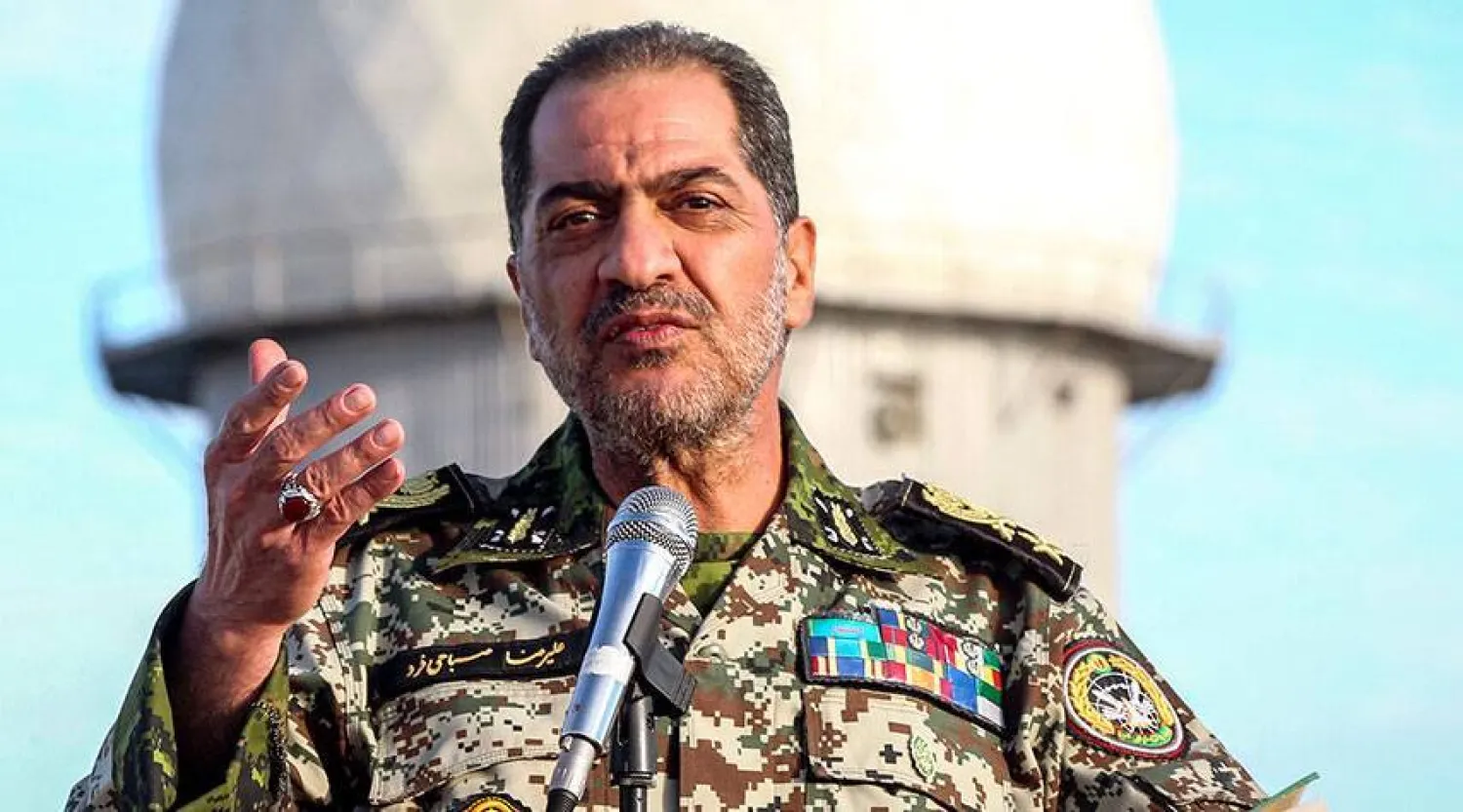

Commander of Iran’s air force Ali Reza Sabahi-Fard claimed on Friday that western sanctions on Tehran will not stop it from developing its missile capabilities and drones.
He stressed that the future of Iran’s missile industry was "bright", reported Iran’s Mehr news agency.
The United States on Thursday threatened future action against Iran at the UN nuclear watchdog if Tehran keeps "stonewalling" the watchdog by denying it the cooperation and answers it seeks on issues including long-unexplained uranium traces.
Sabahi-Fard declared before members of the air force that human capabilities and expertise were the "first line of effective and superior defense."
"Sanctions cannot obstruct and halt our drive in air defense," he vowed,
Moreover, he said Iran’s "superior" defense capabilities are highlighted when it preempts threats. It can take unexpected counter measures in various areas, he added.
Iran unveiled in February new weaponry including what it said was the locally made Arman anti-ballistic missile system and the Azarakhsh low-altitude air defense system.
The announcement came amid heightened tensions in the region, with Yemen’s Iran-backed Houthi militias carrying out a string of attacks on vessels linked to the US, UK and Israel in the Red Sea in a show of solidarity with the Gaza Strip.
"With the entry of new systems into the country's defense network, the air defense capability of the Islamic Republic of Iran will increase significantly," reported Iran’s IRNA news agency at the time.
It said the Arman missile system "can simultaneously confront six targets at a distance of 120 to 180 km", while the Azarakhsh missile system "can identify and destroy targets... up to a range of 50 km with four ready-to-fire missiles".
In June Iran presented what officials described as its first domestically made hypersonic ballistic missile, named Fattah, with a range of 1,400 km.


