


Israel Strikes Lebanon's East, Killing One

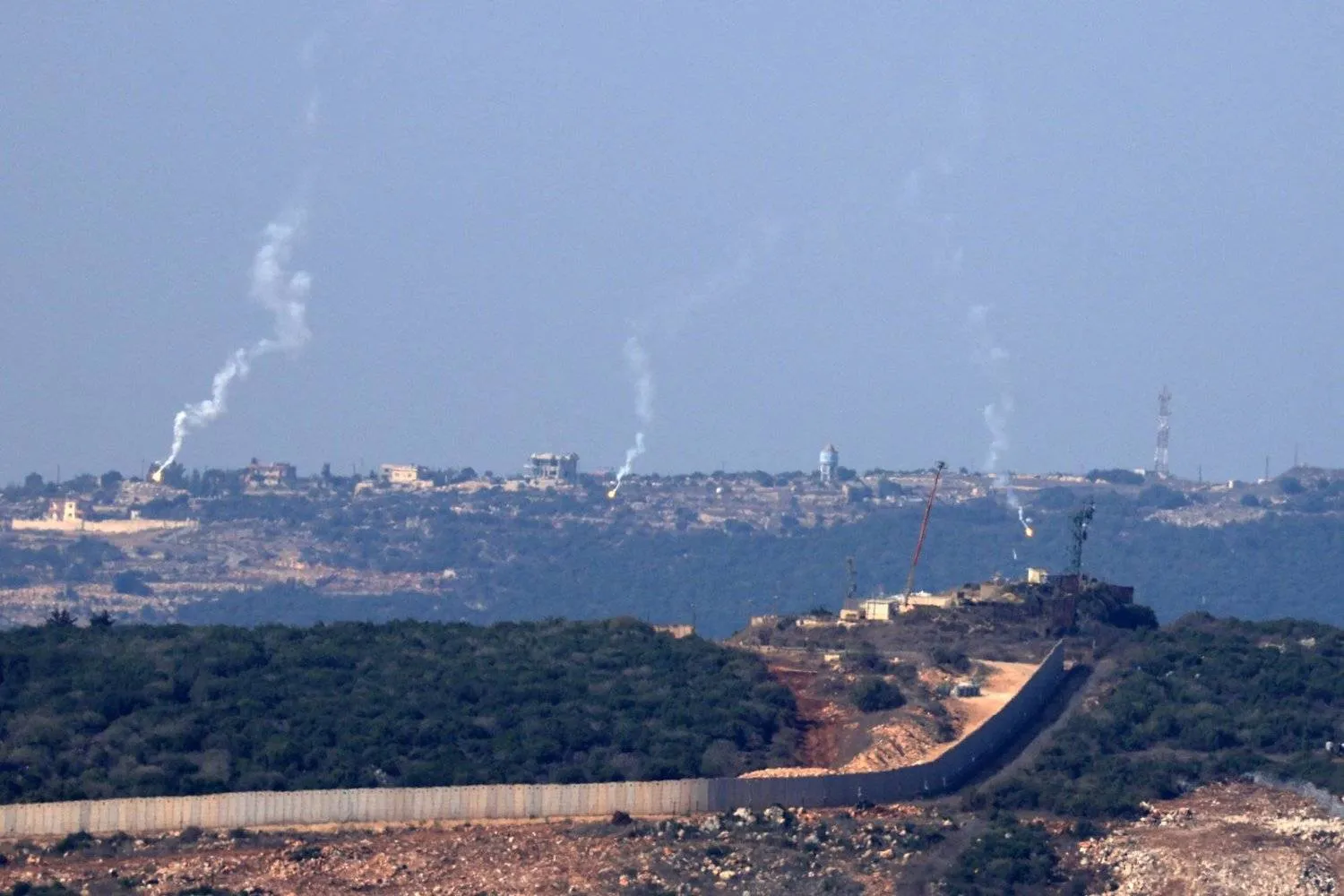
Flares are fired from northern Israel over the southern Lebanese border village of Aita al-Shaab, on October 28,2023. (Photo by FADEL SENNA / AFP)
TT

Israel Strikes Lebanon's East, Killing One

Flares are fired from northern Israel over the southern Lebanese border village of Aita al-Shaab, on October 28,2023. (Photo by FADEL SENNA / AFP)

Israeli airstrikes near Lebanon's eastern city of Baalbek killed one person on Monday, a security source said, in the second raid in the region since cross-border hostilities began after the Gaza war.

Since October 8, the day after the war broke out in the Gaza Strip, Hamas ally Hezbollah and its arch-foe Israel have exchanged near-daily fire.

Strikes have largely remained confined to border regions, but several have hit Hezbollah positions further north in recent weeks, raising fears of a full-blown conflict.

"Israeli aircraft targeted a former Hezbollah building near Dar Al Amal Hospital," a security source told AFP, adding that Israel "conducted another raid on a warehouse west of Baalbek".

The strikes killed one person and injured six others, he added.

The governor of the Baalbek-Hermel region, Bachir Khodr, also said a man had been killed in the strikes near Baalbek in a post on social media platform X.

Another security official confirmed the strikes, without mentioning casualties.

Lebanon's state-run National News Agency (NNA) reported Israeli airstrikes on two locations, including the strike on the warehouse.

The NNA also reported Israeli raids "targeting a residential building in the town of Ansar... south of Baalbek".

"Fire and plumes of smoke could be seen rising from the targeted location," the NNA added.

The Israeli military later confirmed its jets had hit two sites belonging to "Hezbollah's aerial forces".

"The strikes were in retaliation to Hezbollah aircraft attacks launched towards the Golan Heights over recent days," it added.

The city of Baalbek in the Bekaa valley is a Hezbollah bastion, bordering Syria.

On February 26, Israeli strikes targeted Baalbek, some 100 kilometres (62 miles) from the border, killing two Hezbollah members in the deepest such raid into Lebanese territory since the hostilities began.

Hezbollah has repeatedly said that it will only stop its attacks on Israel with a ceasefire in Gaza.

But Israeli Defense Minister Yoav Gallant said recently that any truce in Gaza would not change Israel's goal of pushing Hezbollah out of southern Lebanon, by force or diplomacy.

Since the start of the Israel-Hamas war in October, at least 316 people, mainly Hezbollah fighters but also 53 civilians, have been killed in Lebanon, according to an AFP tally.

In Israel, at least 10 soldiers and seven civilians have been killed in the cross-border hostilities.



PAM Party Wins Most Seats in Morocco's Parliamentary Election

A man arrives to vote during parliamentary elections in Rabat, Morocco September 23, 2026. REUTERS/Ahmed El Jechtimi
TT

PAM Party Wins Most Seats in Morocco's Parliamentary Election

A man arrives to vote during parliamentary elections in Rabat, Morocco September 23, 2026. REUTERS/Ahmed El Jechtimi

The Authenticity and Modernity Party (PAM) won the largest number of seats in Morocco's legislative election, followed by its partners in the outgoing government, RNI, and the Istiqlal party, according to official preliminary results on Thursday.

Liberal-centrist PAM took 97 seats in the 395-seat parliament, ahead of the RNI with 66, while the Istiqlal Party secured 65 seats, the Interior Minister Abdelouafi Laftit said in a news briefing on Thursday.

The Justice and Development Party rebounded to 54 seats, from only 13 in the previous election, buoyed by the return of its former prime minister Abdelilah Benkirane.

Leftist parties such as USFP, PPS and FGD took 26, 19 and 8 seats respectively.

Turnout stood at 38.02%, down from 50% in the 2021 election, according to official data. About 27 million Moroccans are of voting age, but only 15.8 million are registered to vote, a drop of about 12% from 2021 election.

Turnout is seen as a barometer for citizens' engagement and trust in elected institutions.

The parliamentary poll is not expected to fundamentally alter the balance of power in Morocco, where the king retains sweeping powers over policy direction, defense and foreign affairs.

Under a constitution adopted in 2011, the king appoints the prime minister from the party that wins the most seats.

If King Mohammed VI appoints PAM’s current leader, Fatima Ezzahra El Mansouri, as head of government, she would become the second woman to hold such a position in the Arab region, after Tunisia’s Najla Bouden.

PAM will have to negotiate a coalition even as its leaders have ruled out partnering again with RNI as the two parties trade accusations over failed policies.

PAM campaigned on a $37 billion platform promising 1 million new jobs and continued investment in healthcare, social protection and better wages.


Norway Gives Additional $13 Million in Aid to Palestinians

Palestinian motorists wait in line to cross the Beit Furik military checkpoint, east of Nablus, West Bank, 20 September 2026. EPA/ALAA BADARNEH
TT

Norway Gives Additional $13 Million in Aid to Palestinians

Palestinian motorists wait in line to cross the Beit Furik military checkpoint, east of Nablus, West Bank, 20 September 2026. EPA/ALAA BADARNEH

Norway's government said on Thursday it will give an additional 125 million Norwegian crowns ($13.17 million) in aid to the occupied Palestinian territories through the United Nations and the World ⁠Bank, including public sector ⁠budget support.

Norway recognized a Palestinian state in 2024 and chairs the international donor ⁠group for the Palestinians.

Norway's Foreign Minister Espen Barth Eide said in a statement the need for international support was "greater than ever.”

Eide also criticized Israeli settlement activity ⁠in ⁠the occupied West Bank.

Norway is providing around 1 billion Norwegian crowns in assistance to the Palestinians in 2026.


Postwar Arrangements Top al-Zaidi’s New York Talks

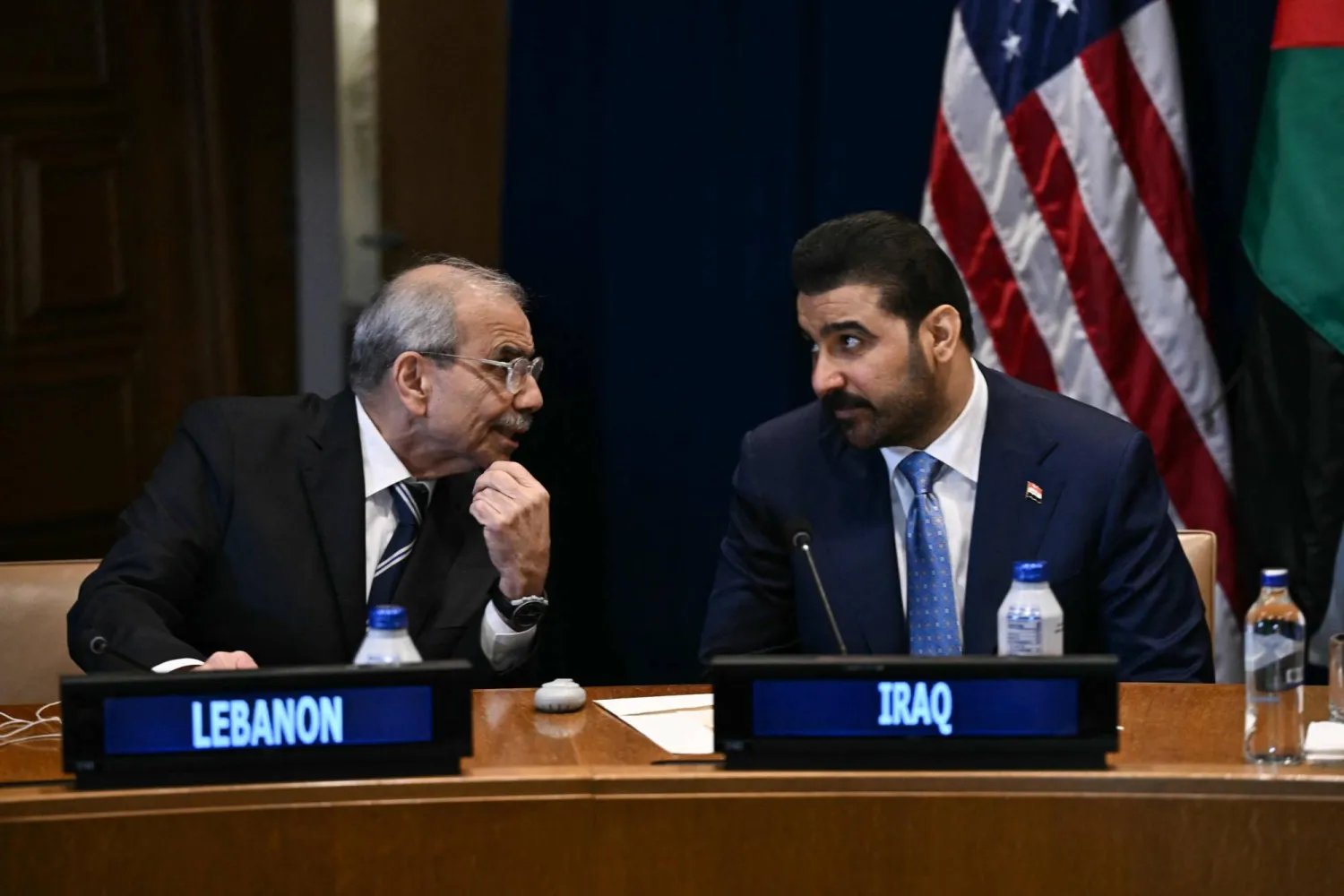
Lebanese Prime Minister Nawaf Salam (L)speaks with Iraqi Prime Minister Ali al-Zaid during a Gulf Cooperation Council (GCC) multilateral meeting on the sidelines of the 81st United Nations General Assembly in New York on September 22, 2026. (Photo by Brendan SMIALOWSKI / AFP)
TT

Postwar Arrangements Top al-Zaidi’s New York Talks

Lebanese Prime Minister Nawaf Salam (L)speaks with Iraqi Prime Minister Ali al-Zaid during a Gulf Cooperation Council (GCC) multilateral meeting on the sidelines of the 81st United Nations General Assembly in New York on September 22, 2026. (Photo by Brendan SMIALOWSKI / AFP)

Iraqi Prime Minister Ali al-Zaidi is seeking to restore normal relations with neighboring and regional countries through a series of meetings in New York, where he is attending the UN General Assembly.

Al-Zaidi met US President Donald Trump on Wednesday to discuss strengthening bilateral cooperation and regional developments. The prime minister’s media office said the talks covered economic and investment partnerships between Baghdad and Washington, as well as joint efforts to bolster regional and international security and stability.

Al-Zaidi’s talks in New York have drawn particular attention, including his participation in a multilateral meeting with Trump to discuss postwar regional arrangements and his meeting with Syrian President Ahmad al-Sharaa.

Baghdad says it has been hurt by the closure of the Strait of Hormuz because of the war, but faces sharp contradictions at home because parties in the ruling Coordination Framework and armed factions are allied with Iran, one of the parties to the conflict with the United States.

Government spokesman Haider al-Aboudi said Iraq was pursuing an important program to coordinate positions and create opportunities for cooperation, noting that al-Zaidi had held several meetings in New York to coordinate policies and safeguard shared interests.

“Iraq has listened to the proposals of world leaders, but it has its own vision for producing solutions to secure energy supplies and stabilize the region,” al-Aboudi told reporters.

He explained that Iraq was guided by legal and constitutional principles of good-neighborly relations and non-interference in internal affairs while pursuing greater cooperation and integration to promote stability.

Al-Zaidi and Al-Sharaa

Al-Aboudi’s remarks followed a series of meetings al-Zaidi held with world leaders, most notably Syrian President Ahmad al-Sharaa.

Before a multilateral meeting convened by Trump on the sidelines of the UN General Assembly, journalists captured al-Sharaa and al-Zaidi shaking hands for the first time since the Iraqi premier took office.

Al-Zaidi’s office later confirmed that the two leaders met on the sidelines of the 81st UN General Assembly.

According to the statement, the talks covered regional and international developments, bilateral relations and ways to strengthen them in line with mutual interests, as well as efforts to promote de-escalation and ease regional tensions.

Al-Sharaa, for his part, told reporters that Damascus was working to provide a safe corridor for Iraqi oil exports through Syrian ports. He pointed to a strategic project to build an oil pipeline from Iraqi fields to Syrian ports, bypassing the Strait of Hormuz.

The Syrian president described Damascus’ relations with Iraq’s Kurdistan region as “very good,” citing shared interests in several areas. He also highlighted Kurdistan Democratic Party leader Masoud Barzani’s role in stabilizing Syria and integrating the Syrian Democratic Forces (SDF) into the state.

Postwar arrangements

Al-Zaidi also joined a multilateral meeting attended by Trump following what was described as a “productive” meeting between US and Iranian officials on Tuesday evening.

Al-Zaidi’s office reported that the meeting addressed security and stability, protecting global trade, securing supply chains and preserving development levels in regional economies.

Participants also discussed proposed strategies and arrangements for the postwar period and ways to advance peace and stability by prioritizing dialogue and diplomatic solutions.

The meeting included delegation heads from Saudi Arabia, Bahrain, Kuwait, the United Arab Emirates, Qatar, Oman, Jordan, Lebanon, Syria, Egypt and Türkiye, as well as the United States.

Baghdad political science professor Talib Mohammed Karim described al-Zaidi’s meetings as “an opportunity to give Baghdad greater room to build a more balanced foreign policy.”

The Iraqi government, he told Asharq Al-Awsat, was seeking security and economic cooperation and ways to protect shared interests at a complex geopolitical moment, without allowing regional relationships to become extensions of Iraq’s internal conflicts.