


IBM President Highlights Saudi Arabia’s Rapid Rise in AI

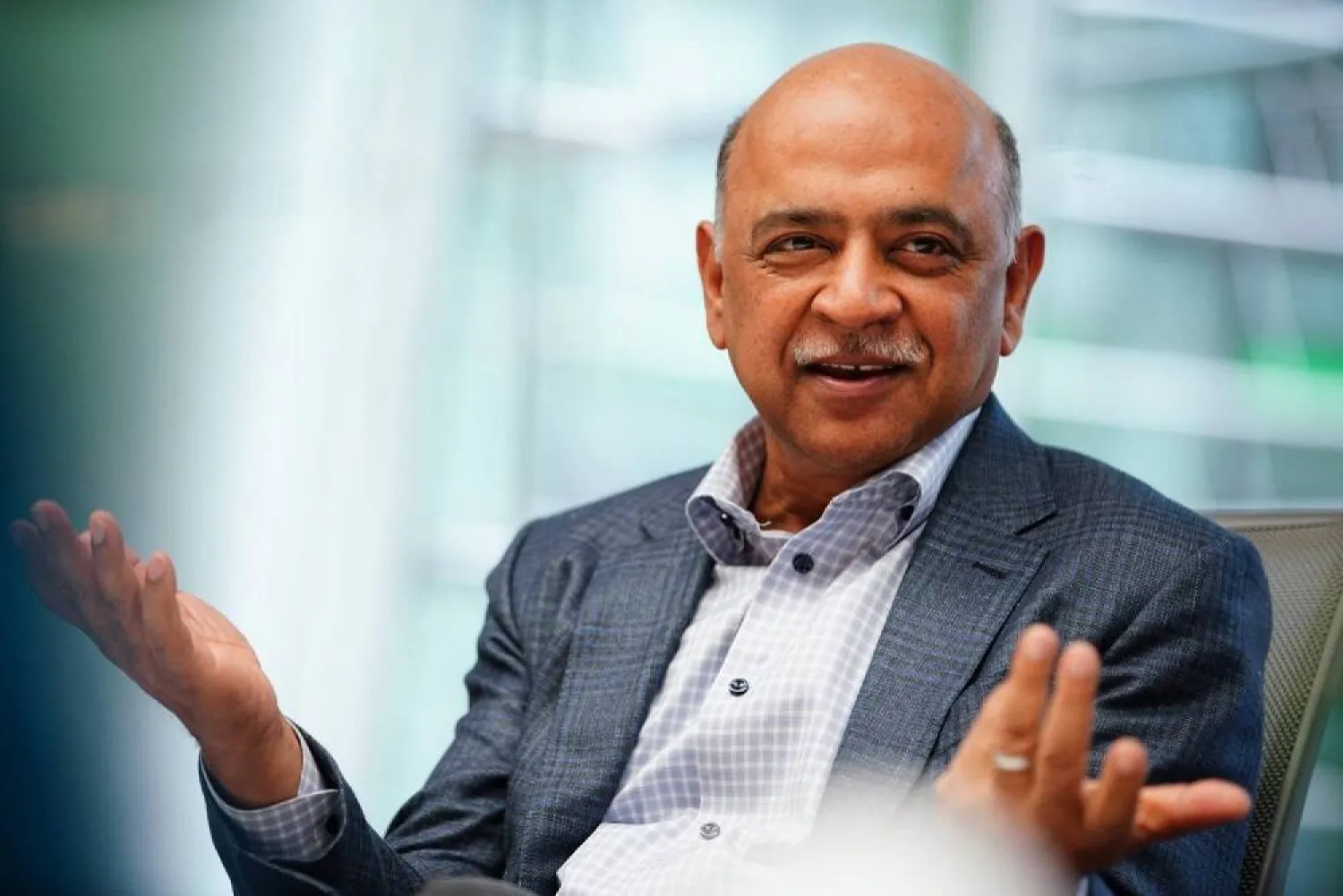
IBM Chairman and CEO Arvind Krishna. (Getty Images)
TT

IBM President Highlights Saudi Arabia’s Rapid Rise in AI

IBM Chairman and CEO Arvind Krishna. (Getty Images)

IBM Chairman and CEO Arvind Krishna said Saudi Arabia was rapidly emerging as a global leader in the field of artificial intelligence.

In an exclusive interview with Asharq Al-Awsat, Krishna noted that his company, a global leader in the field of hybrid cloud, artificial intelligence, and consulting services, announced plans to invest more than $200 million in talent and infrastructure by establishing a new software center in Riyadh, in support for Saudi Vision 2030, which aims to transform the Kingdom into a leading global technology hub.

Krishna pointed out the strategic importance of artificial intelligence, explaining that its economic impact in the Middle East is estimated at about $320 billion by 2030. He stressed that Saudi Arabia would reap great benefits, with gains reaching $135.2 billion, which represents more than 42 percent of the size of the economy related to new technology.

He also underlined the “regional benefits” of establishing the new software center in Riyadh, saying that Saudi Arabia “is rapidly emerging as a world leader in the field of artificial intelligence, and the new IBM center represents a major achievement.”

The center will work to drive innovation in the fields of data, AI, and sustainability programs, with the aim of accelerating skills development and creating high-quality jobs for young IT professionals in Saudi Arabia. The center’s focus on digital innovation, product development, management and design will stimulate the creation of globally exportable solutions, enriching the technological infrastructure in the Kingdom.

IBM's recent projects in Saudi Arabia also include expanded cooperation with Riyadh Air and Salam Telecom. Krishna promised that the cooperation with Riyadh Air aims to “revolutionize travel experiences” and support the company’s inaugural flight in 2025 with advanced solutions.

The IBM president pointed out that Watsonx, the company’s latest data and AI platform, is designed to improve productivity, simplify workflow, and automate tasks across industries. He noted that introducing Arabic language models into the new platform represented an important step towards enhancing the use of large Arabic language models in various sectors.

According to Krishna, the rapid technological development has decreased the lifespan of skills acquired today by half within seven years, which highlights the importance of continuous learning.

For this reason, IBM’s work in Saudi Arabia includes partnerships aimed at raising the skills of up to 100,000 Saudis in the digital sector, he stated.

He added that his company, through its cooperation with educational and governmental bodies, was able to provide training courses and research accelerators, to support the Kingdom’s goals of becoming a global digital leader.

Krishna said he was confident that IBM’s significant investment in the new software center in Riyadh not only reflects a long-term commitment to technological advancement in the Kingdom, but also paves the way for pioneering innovations that could shape the future of the global technology landscape.



Gold Falls on Investor Caution ahead of Key US Economic Data

Gold bars being washed after removal from molds at a refinery in Sydney (AFP)
TT

Gold Falls on Investor Caution ahead of Key US Economic Data

Gold bars being washed after removal from molds at a refinery in Sydney (AFP)

Gold fell on Tuesday, though held above the $5,000-per-ounce level, as investors stayed cautious ahead of key US jobs and inflation data due later this week that could help gauge the US Federal Reserve's interest rate trajectory.

Spot gold fell 0.7% to $5,030.80 per ounce by 0716 GMT. The metal gained 2% on Monday, as the dollar weakened to its lowest level in more than ‌a week. ‌Gold scaled a record high of $5,594.82 on ‌January ⁠29.

US gold ‌futures for April delivery lost 0.5% to $5,051.70 per ounce.

Spot silver slipped 2.1% to $81.63 an ounce, after rising nearly 7% in the previous session. It had hit an all-time high of $121.64 on January 29.

"We're in a situation where gold has something of a built-in upside bias broadly, and now it's a question of ⁠just how much will short-term Fed policy expectations matter," said Ilya Spivak, head of ‌global macro at Tastylive.

The US dollar ‍edged higher on Tuesday, ‍making greenback-priced metals more expensive for overseas buyers.

Spivak added that ‍gold is being pulled back to the $5,000 level from both the upper and lower price ranges, while silver is showing more volatility on speculative trading.

Investors are awaiting a string of US economic data - retail sales due Tuesday, the nonfarm payrolls report on Wednesday and inflation data on Friday. Markets are currently pricing ⁠in at least two 25-basis-point rate cuts in 2026, with the first expected in June.

The non-yielding bullion tends to do well in a low-interest-rate environment.

White House economic adviser Kevin Hassett said on Monday that US job gains could be lower in the coming months.

For gold, "$5,000 is a support and $80 for silver. But intraday, both metals will be broadly range-bound, with a slight tilt towards negativity because of profit booking," Jigar Trivedi, a senior research analyst at IndusInd Securities, said, adding that investors are ‌cautious given recent volatility.

Spot platinum shed 2% to $2,080.30 per ounce, while palladium lost 1.1% to $1,721.75.


Macron Calls on Europe to Invest in Its Strategic Sectors

French President Emmanuel Macron delivers a speech during a meeting with students from the "Prepas Talents du service public" as part of a program that aims to give every young person an opportunity to join the civil service, at the Elysee Palace in Paris, France, 06 February 2026. (EPA)
TT

Macron Calls on Europe to Invest in Its Strategic Sectors

French President Emmanuel Macron delivers a speech during a meeting with students from the "Prepas Talents du service public" as part of a program that aims to give every young person an opportunity to join the civil service, at the Elysee Palace in Paris, France, 06 February 2026. (EPA)

French President Emmanuel Macron has called on Europe to boost investment in strategic sectors or risk being "swept aside" in the face of competition from the United States and China, in an interview published on Tuesday.

The French leader warned that US "threats" and "intimidation" were not over and urged against complacency, in an interview with several European publications including Le Monde, The Economist and The Financial Times.

Ahead of a European Union meeting, he advocated for "simplifying" and "deepening the EU's single market", and for "diversifying" trade partnerships.

"There are threats and intimidation. And then, suddenly, Washington backs down. And we think it's over. But don't believe it for a second. Every day, there are threats against pharmaceuticals, digital technology..." he said.

"When there is blatant aggression... we must not bow down or try to reach a settlement," he said.

"We tried this strategy for months, and it's not working. But above all, it strategically leads Europe to increase its dependence."

He said that the EU's public and private investment needed "some EUR1.2 trillion ($1.4 trillion) per year", including green and digital technologies, defense and security.

He also renewed his call for common European debt, an idea France has championed for years, but other countries have rejected.

"Now is the time to launch a common borrowing capacity for these future expenditures, future-oriented Eurobonds," Macron said.


World Defense Show Sees Surge in Agreements, Strategic Partnerships

Minister of Industry and Mineral Resources Bandar Alkhorayef witnesses the signing of a memorandum of cooperation between the National Industrial Development Center and Airbus (Asharq Al-Awsat). 
TT

World Defense Show Sees Surge in Agreements, Strategic Partnerships

Minister of Industry and Mineral Resources Bandar Alkhorayef witnesses the signing of a memorandum of cooperation between the National Industrial Development Center and Airbus (Asharq Al-Awsat). 

The second day of the third edition of the World Defense Show 2026 in Riyadh witnessed intensified momentum in the signing of defense agreements and strategic partnerships with international entities.

It reflects Saudi Arabia’s drive to localize technology, build national capabilities in the military and defense sectors, and deepen local supply chains in line with Vision 2030.

On the sidelines of the exhibition, the Saudi Ministry of Defense signed 28 contracts with local and international companies specializing in military industries.

Four contracts were signed by Dr. Khaled Al-Biyari, Assistant Minister of Defense for Executive Affairs, with chief executives of France’s MBDA, Raytheon Saudi Arabia, South Korea’s Hanwha Aerospace, and Italy’s Leonardo.

Al-Biyari also attended the signing of eight additional contracts concluded by Ibrahim Al-Suwayed, Undersecretary of Defense for Procurement and Armament, with local and global companies from France, Türkiye, South Korea, and Italy.

A further 16 contracts were signed by executive directors at the Ministry’s Procurement and Armament Agency with representatives of defense firms.

The agreements aim to enhance the readiness and combat efficiency of the armed forces, ensure the sustainability of military systems, and support the localization of defense manufacturing. These efforts align with Vision 2030 targets to localize more than 50 percent of spending on military equipment and services.

In a parallel development, Al-Biyari and German State Secretary at the Federal Ministry of Defense Jens Plötner signed draft arrangements for defense cooperation between the two countries.

The exhibition also highlighted efforts to localize the aviation industry. The Minister of Industry and Mineral Resources oversaw the signing of a memorandum of cooperation between the National Industrial Development Center and European aerospace company Airbus.

The memorandum includes plans to establish engineering centers for manufacturing, assembly, and maintenance, transfer technology and expertise, and develop a logistics ecosystem to support the aviation industry.

It also covers attracting global suppliers to invest locally, exploring procurement and export options, and identifying incentives and financing mechanisms to support joint projects. Training programs and educational partnerships are also planned to qualify Saudi talent to lead the aviation sector and related industries.

Innovation and integration were the central themes of the exhibition’s second day. Eng. Ahmad Al-Ohali, Governor of the General Authority for Military Industries, reaffirmed Saudi Arabia’s commitment to developing integrated and globally competitive defense industries.

He noted that the exhibition reflects national goals to advance localization, strengthen supply chains, and enhance operational readiness across defense and security sectors.

Chief of the General Staff General Fayyadh Al-Ruwaili outlined strategic directions for developing the national defense system in light of evolving global operational conditions. Senior local and international officials participated in discussions on building a resilient defense framework capable of addressing future challenges.

The program also featured “Thought Leadership” sessions focusing on the evolution of defense industries, investment opportunities in aviation and space, and supply chain development.

Activities continued at the Defense Industry Lab and the Saudi Supply Chain Zone, designed to strengthen collaboration among manufacturers and accelerate technology transfer.

Exhibition Chief Executive Officer Andrew Pearcey said the strong international participation reflects Saudi Arabia’s growing role in shaping the future of defense technologies. The World Defense Show brings together 1,468 exhibitors from 89 countries, with live demonstrations and strategic programs covering air, land, sea, space, and security domains.

Further strengthening industrial capabilities, GE Aerospace signed an industrial participation agreement with the General Authority for Military Industries to enhance repair and maintenance capabilities for F110 engines.

A separate memorandum of understanding was also signed to explore building a globally competitive aviation industrial base and accelerating the Kingdom’s manufacturing roadmap. The authority said the agreement would support knowledge transfer, international certification, and the localization of engine component manufacturing.

Major global defense and aerospace companies also reaffirmed their commitment to supporting Saudi Arabia’s localization agenda. Boeing highlighted its support for enhancing readiness and domestic capabilities, while RTX, through Raytheon Saudi Arabia, showcased advanced defense systems and emphasized workforce development and integrated solutions aligned with the exhibition’s theme, “The Future of Defense Integration.”

The World Defense Show continues to consolidate its role as a global platform connecting manufacturers, investors, entrepreneurs, and decision-makers.

Supported by regulatory development, incentive programs, and human capital initiatives, Saudi Arabia has made tangible progress in localization. By 2024, localized military spending had reached nearly 25 percent, local content stood at 40.7 percent, and Saudization reached 63 percent, reinforcing the Kingdom’s ambition to become a regional hub for defense and aviation industries by 2030.