


Kuwait Holds Parliamentary Elections as Emir Urges Voters to Make ‘Sound’ Choice

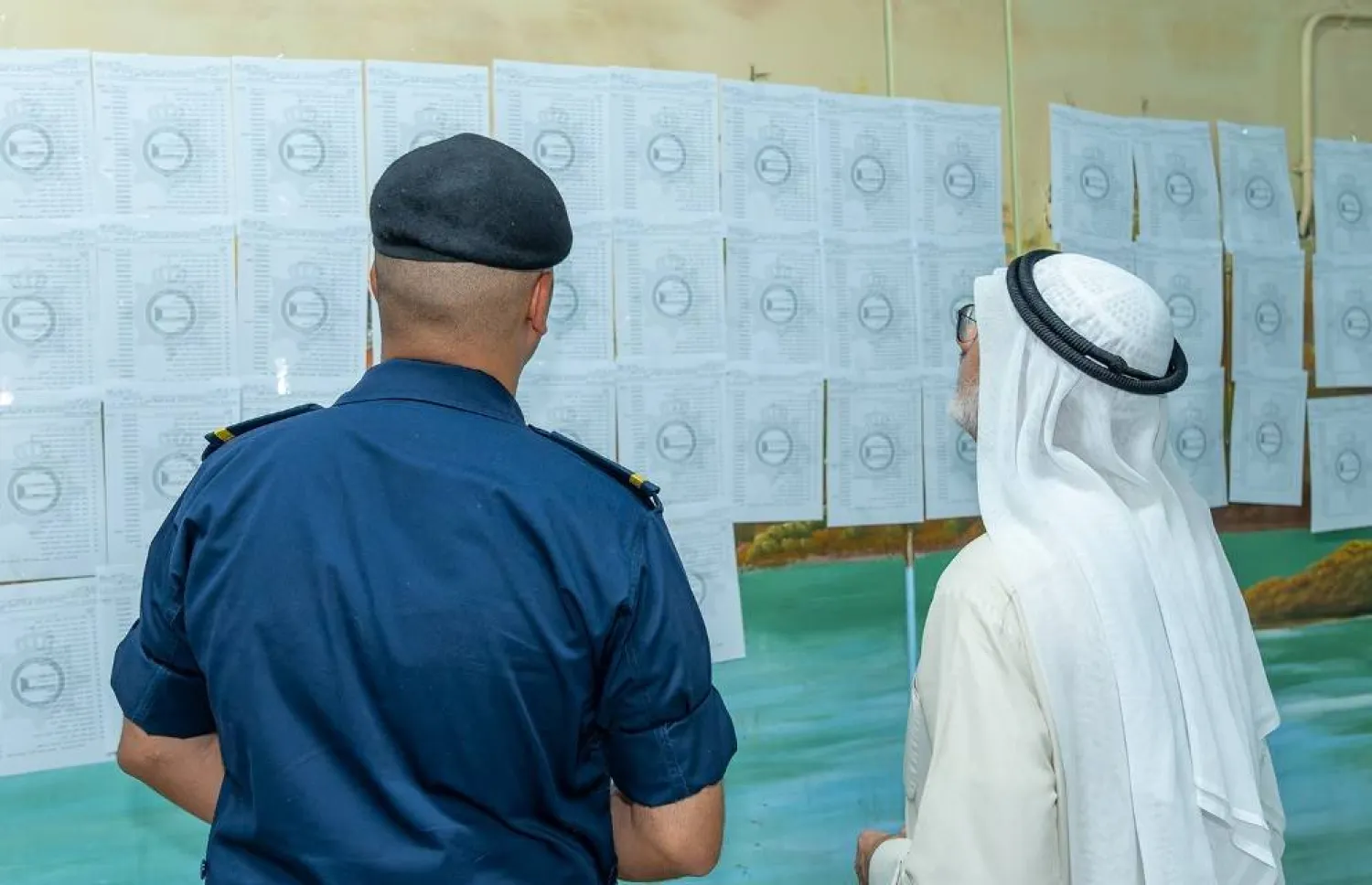
Two hundred candidates, including 13 women, are running in the National Assembly elections. (KUNA)
TT

Kuwait Holds Parliamentary Elections as Emir Urges Voters to Make ‘Sound’ Choice

Two hundred candidates, including 13 women, are running in the National Assembly elections. (KUNA)

Kuwait will hold parliamentary elections on Thursday, the first since Emir Sheikh Mishal Al-Ahmad Al-Jaber Al-Sabah ascended the throne in December 2023.

Sheikh Mishal hoped voters would select candidates who would be their best representatives, and hoped future MPs would benefit from past experiences and live up to their national responsibilities.

Two hundred candidates, including 13 women, are running in the National Assembly elections – the 21st in Kuwait’s history. Around 834,000 Kuwaitis are eligible to vote.

The National Assembly is comprised of 50 members. Kuwait has been divided into five electoral districts, with ten MPs representing each.

In a speech on the occasion of the last ten days of the holy fasting month of Ramada, Sheikh Mishal urged voters to select candidates who best represent them.

“Your sound selection is your path for building a future for your nation and the generations,” he added.

“We hope the elections will lead to the formation of an enlightened National Assembly whose members would benefit from previous parliamentary experiences and rise up to their responsibilities,” he went on to say.

He hoped for a heavy turnout, remarking that boycotters would be relinquishing their constitutional right.

Sheikh Mishal hailed all efforts and measures aimed at preserving the national identity, saying an attack against it is an attack on the state.

Moreover, he urged the people to “open a new chapter” and steer clear of “intolerance, personal interests and practices that could threaten national unity.”

This is the second time elections are held during Ramadan. Polling stations will open at 12:00 and close at midnight.




GCC Commits to Peace and Good Neighborliness, Says Security of Gulf States Is ‘Indivisible’

Heads of delegations are seen at the 167th Ministerial Council of the Gulf Cooperation Council (GCC) in Manama on Wednesday. (GCC)
TT

GCC Commits to Peace and Good Neighborliness, Says Security of Gulf States Is ‘Indivisible’

Heads of delegations are seen at the 167th Ministerial Council of the Gulf Cooperation Council (GCC) in Manama on Wednesday. (GCC)

The 167th Ministerial Council of the Gulf Cooperation Council (GCC) condemned on Wednesday the latest Iranian attacks against Bahrain, Kuwait and Jordan as “flagrant violations against their sovereignty and security of their people.”

Meeting in Manama, the council slammed the attacks as violations of international law, United Nations Charter and values of good neighborliness.

“These hostile acts do not serve any understanding or rapprochement, but rather distance peoples from one another, undermine the foundations of trust, sow discord and close the doors of dialogue to which the GCC states have always called for,” it said in a statement.

“Aggression does not build relations, and intimidation does not create stability,” it stressed, while expressing its full solidarity with Bahrain, Kuwait and Jordan.

“The security of the GCC states is indivisible, and that any attack against one of them is an attack against them all,” it went on to say.

The council reassured the citizens of its states and residents on their territories that the joint defense capabilities and air defense systems are confronting these attacks with high efficiency and readiness, and that the leaderships of the GCC states are moving forward in safeguarding the security and stability of the region.

“These attacks will only increase the cohesion, determination and resolve of the peoples of the GCC states to resist and confront them,” continued the statement.

Moreover, it underscored the right of GCC states to defend themselves “individually and collectively, and to respond to this aggression by all legitimate means, in accordance with Article 51 of the Charter of the United Nations, which guarantees the inherent right of states to defend themselves if an armed attack occurs against them.”

“The council holds Iran fully responsible for these acts and their grave repercussions on the security of the region, international navigation and energy supplies, and demands their immediate cessation and a complete end to any targeting of the GCC states, their interests and their citizens,” urged the statement.

The council called upon the Security Council and the international community to assume their responsibilities in condemning this aggression and holding its perpetrators accountable, in a manner that ensures respect for the sovereignty of states and the preservation of regional and international peace and security.

The council, while renewing the GCC states’ commitment to the option of peace, good neighborliness and diplomatic solutions as a means of settling disputes, posed “a fundamental question to the aggressor: How can future relations be built amid the continuation of these attacks and the insistence on pursuing them?”

“Persistence in the path of aggression will only lead to further isolation, while the door to understanding remains open to those who choose the language of wisdom and good neighborliness,” it added.


Saudi Foreign Ministry: Saudi Arabia Condemns Blatant Iranian Attacks Against Bahrain, Kuwait and Jordan

Saudi Foreign Ministry: Saudi Arabia Condemns Blatant Iranian Attacks Against Bahrain, Kuwait and Jordan
TT

Saudi Foreign Ministry: Saudi Arabia Condemns Blatant Iranian Attacks Against Bahrain, Kuwait and Jordan

Saudi Foreign Ministry: Saudi Arabia Condemns Blatant Iranian Attacks Against Bahrain, Kuwait and Jordan

The Saudi Ministry of Foreign Affairs expressed the Kingdom of Saudi Arabia’s strong condemnation and denunciation of the blatant Iranian attacks and flagrant violations of the sovereignty of the Kingdom of Bahrain, the State of Kuwait, and the Hashemite Kingdom of Jordan, considering them a threat to the security and safety of their territories and airspace.

In a statement, the ministry said: “The Kingdom affirms that the continuation of these attacks threatens regional and international security and undermines efforts aimed at de-escalation and the restoration of security and stability in the region.”

The Kingdom also reiterated its full solidarity with Bahrain, Kuwait, and Jordan, and its support for all measures taken by these nations to safeguard their sovereignty, security, stability, and the safety of their citizens and residents.


Saudi Foreign Minister Arrives in Bahrain for GCC Ministerial Meeting

Saudi Minister of Foreign Affairs Prince Faisal bin Farhan bin Abdullah arrives in Manama  - SPA
Saudi Minister of Foreign Affairs Prince Faisal bin Farhan bin Abdullah arrives in Manama - SPA
TT

Saudi Foreign Minister Arrives in Bahrain for GCC Ministerial Meeting

Saudi Minister of Foreign Affairs Prince Faisal bin Farhan bin Abdullah arrives in Manama  - SPA
Saudi Minister of Foreign Affairs Prince Faisal bin Farhan bin Abdullah arrives in Manama - SPA

Saudi Minister of Foreign Affairs Prince Faisal bin Farhan bin Abdullah arrived in Manama on Wednesday to participate in the 167th meeting of the Gulf Cooperation Council (GCC) Ministerial Council, chaired by Bahrain’s minister of foreign affairs, in his capacity as the current session chair, and attended by foreign ministers of the GCC member states.

He was welcomed at Manama International Airport by Bahraini Foreign Minister Dr. Abdullatif bin Rashid Al Zayani and GCC Secretary-General Jasem Albudaiwi.