


AI-Generated Fashion Models Could Bring More Diversity to the Industry - Or Leave It with Less

A model presents a creation by Gefferson Vila Nova during the Sao Paulo Fashion Week 2024 (SPFW) at the Iguatemi shopping mall in Sao Paulo, Brazil, 13 April 2024. SPFW continues through 14 April with a total of 27 shows. (EPA)
TT

AI-Generated Fashion Models Could Bring More Diversity to the Industry - Or Leave It with Less

A model presents a creation by Gefferson Vila Nova during the Sao Paulo Fashion Week 2024 (SPFW) at the Iguatemi shopping mall in Sao Paulo, Brazil, 13 April 2024. SPFW continues through 14 April with a total of 27 shows. (EPA)

London-based model Alexsandrah has a twin, but not in the way you’d expect: Her counterpart is made of pixels instead of flesh and blood.

The virtual twin was generated by artificial intelligence and has already appeared as a stand-in for the real-life Alexsandrah in a photo shoot. Alexsandrah, who goes by her first name professionally, in turn receives credit and compensation whenever the AI version of herself gets used — just like a human model.

Alexsandrah says she and her alter-ego mirror each other “even down to the baby hairs.” And it is yet another example of how AI is transforming creative industries — and the way humans may or may not be compensated.

Proponents say the growing use of AI in fashion modeling showcases diversity in all shapes and sizes, allowing consumers to make more tailored purchase decisions that in turn reduces fashion waste from product returns. And digital modeling saves money for companies and creates opportunities for people who want to work with the technology.

But critics raise concerns that digital models may push human models — and other professionals like makeup artists and photographers — out of a job. Unsuspecting consumers could also be fooled into thinking AI models are real, and companies could claim credit for fulfilling diversity commitments without employing actual humans.

“Fashion is exclusive, with limited opportunities for people of color to break in,” said Sara Ziff, a former fashion model and founder of the Model Alliance, a nonprofit aiming to advance workers’ rights in the fashion industry. “I think the use of AI to distort racial representation and marginalize actual models of color reveals this troubling gap between the industry’s declared intentions and their real actions.”

Women of color in particular have long faced higher barriers to entry in modeling and AI could upend some of the gains they've made. Data suggests that women are more likely to work in occupations in which the technology could be applied, and are more at risk of displacement than men.

In March 2023, iconic denim brand Levi Strauss & Co. announced that it would be testing AI-generated models produced by Amsterdam-based company Lalaland.ai to add a wider range of body types and underrepresented demographics on its website. But after receiving widespread backlash, Levi clarified that it was not pulling back on its plans for live photo shoots, the use of live models or its commitment to working with diverse models.

“We do not see this (AI) pilot as a means to advance diversity or as a substitute for the real action that must be taken to deliver on our diversity, equity and inclusion goals and it should not have been portrayed as such,” Levi said in its statement at the time.

The company last month said that it has no plans to scale the AI program.

The Associated Press reached out to several other retailers to ask whether they use AI fashion models. Target, Kohl’s and fast-fashion giant Shein declined to comment; Temu did not respond to a request for comment.

Meanwhile, spokespeople for Nieman Marcus, H&M, Walmart and Macy's said their respective companies do not use AI models, although Walmart clarified that “suppliers may have a different approach to photography they provide for their products but we don’t have that information.”

Nonetheless, companies that generate AI models are finding a demand for the technology, including Lalaland.ai, which was co-founded by Michael Musandu after he was feeling frustrated by the absence of clothing models who looked like him.

“One model does not represent everyone that’s actually shopping and buying a product,” he said. “As a person of color, I felt this painfully myself.”

Musandu says his product is meant to supplement traditional photo shoots, not replace them. Instead of seeing one model, shoppers could see nine to 12 models using different size filters, which would enrich their shopping experience and help reduce product returns and fashion waste.

The technology is actually creating new jobs, since Lalaland.ai pays humans to train its algorithms, Musandu said.

And if brands “are serious about inclusion efforts, they will continue to hire these models of color,” he added.

London-based model Alexsandrah, who is Black, says her digital counterpart has helped her distinguish herself in the fashion industry. In fact, the real-life Alexsandrah has even stood in for a Black computer-generated model named Shudu, created by Cameron Wilson, a former fashion photographer turned CEO of The Diigitals, a UK-based digital modeling agency.

Wilson, who is white, designed Shudu in 2017, described on Instagram as the “The World’s First Digital Supermodel.” But critics at the time accused Wilson of cultural appropriation and digital Blackface.

Wilson took the experience as a lesson and transformed The Diigitals to make sure Shudu — who has been booked by Louis Vuitton and BMW — didn’t take away opportunities but instead opened possibilities for women of color. Alexsandrah, for instance, has modeled in-person as Shudu for Vogue Australia, and writer Ama Badu came up with Shudu’s backstory and portrays her voice for interviews.

Alexsandrah said she is “extremely proud” of her work with The Diigitals, which created her own AI twin: “It’s something that even when we are no longer here, the future generations can look back at and be like, ‘These are the pioneers.’”

But for Yve Edmond, a New York City area-based model who works with major retailers to check the fit of clothing before it's sold to consumers, the rise of AI in fashion modeling feels more insidious.

Edmond worries modeling agencies and companies are taking advantage of models, who are generally independent contractors afforded few labor protections in the US, by using their photos to train AI systems without their consent or compensation.

She described one incident in which a client asked to photograph Edmond moving her arms, squatting and walking for “research" purposes. Edmond refused and later felt swindled — her modeling agency had told her she was being booked for a fitting, not to build an avatar.

“This is a complete violation,” she said. “It was really disappointing for me.”

But absent AI regulations, it’s up to companies to be transparent and ethical about deploying AI technology. And Ziff, the founder of the Model Alliance, likens the current lack of legal protections for fashion workers to “the Wild West.”

That's why the Model Alliance is pushing for legislation like the one being considered in New York state, in which a provision of the Fashion Workers Act would require management companies and brands to obtain models’ clear written consent to create or use a model’s digital replica; specify the amount and duration of compensation, and prohibit altering or manipulating models’ digital replica without consent.

Alexsandrah says that with ethical use and the right legal regulations, AI might open up doors for more models of color like herself. She has let her clients know that she has an AI replica, and she funnels any inquires for its use through Wilson, who she describes as "somebody that I know, love, trust and is my friend.” Wilson says they make sure any compensation for Alexsandrah's AI is comparable to what she would make in-person.

Edmond, however, is more of a purist: “We have this amazing Earth that we’re living on. And you have a person of every shade, every height, every size. Why not find that person and compensate that person?”


Pieter Mulier Named Creative Director of Versace

(FILES) Pieter Mulier attends the 2025 CFDA Awards at The American Museum of Natural History on November 03, 2025 in New York City. (Photo by Dimitrios Kambouris / GETTY IMAGES NORTH AMERICA / AFP)
TT

Pieter Mulier Named Creative Director of Versace

(FILES) Pieter Mulier attends the 2025 CFDA Awards at The American Museum of Natural History on November 03, 2025 in New York City. (Photo by Dimitrios Kambouris / GETTY IMAGES NORTH AMERICA / AFP)

Belgian fashion designer Pieter Mulier has been named the new creative director of the Milan fashion house Versace starting July 1, according to an announcement on Thursday from the Prada Group, which owns Versace.

Mulier is currently creative director of the French fashion house Alaïa, and was previously the right-hand man of fellow Belgian designer and Prada co-creative director Raf Simons at Calvin Klein, Jil Sander and Dior.

In his new role, Mulier will report to Versace executive chairman Lorenzo Bertelli, the designated successor to manage the family-run Prada Group. Bertelli is the son of Miuccia Prada and Prada Group chairman Patrizio Bertelli.

“We believe that he can truly unlock Versace’s full potential and that he will be able to engage in a fruitful dialogue,’’ The Associated Press quoted Lorenzo Bertelli as saying of Mulier in a statement.

Mulier takes over from Dario Vitale, who departed in December after previewing just one collection during his short-lived Versace stint.

Mulier was honored last fall by supermodel and longtime Alaïa muse Naomi Campbell at the Council of Fashion Designers of America for his work paying tribute to brand founder Azzedine Alaïa. Mulier took the creative helm in 2021, after Alaïa’s death.


Ralph Lauren’s Margin Caution Eclipses Stronger‑than‑expected Quarterly Results

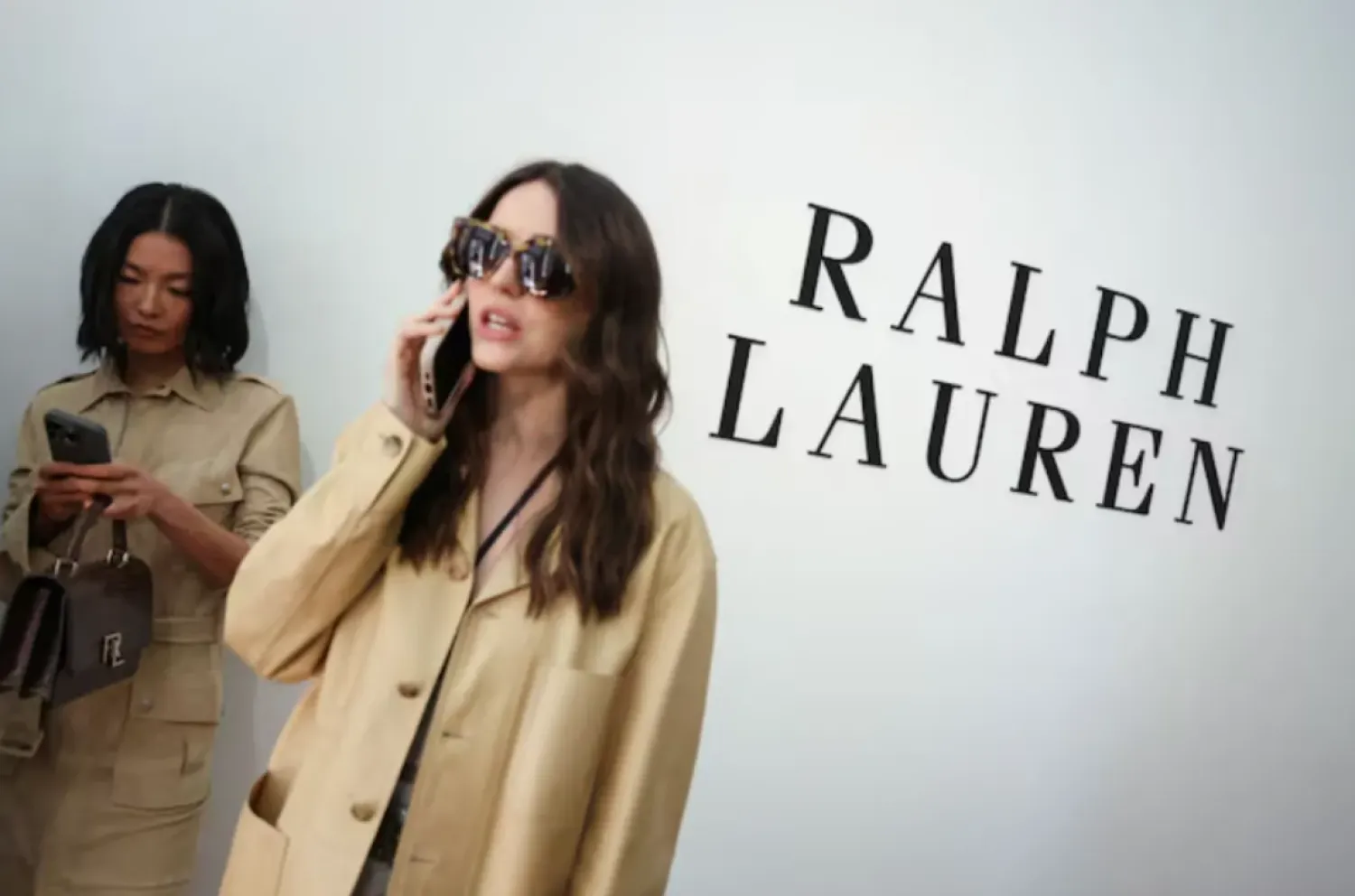
Guests wait after viewing the latest Ralph Lauren collection in New York City, US, April 17, 2025. REUTERS/Caitlin Ochs/File photo
TT

Ralph Lauren’s Margin Caution Eclipses Stronger‑than‑expected Quarterly Results

Guests wait after viewing the latest Ralph Lauren collection in New York City, US, April 17, 2025. REUTERS/Caitlin Ochs/File photo

Ralph Lauren posted third-quarter results above Wall Street estimates on Thursday, but the luxury retailer's warning of margin pressure tied to US tariffs sent its shares down nearly 6.4% in premarket trading.

The company expects fourth-quarter margins, its smallest revenue period, to shrink about 80 to 120 basis points due to higher tariff pressure and marketing spend.

Ralph Lauren, which sources its products from regions such as China, India and Vietnam, has relied on raising prices and reallocating production to regions with lower duty exposure to offset US tariff pressures, Reuters reported.

"Ralph Lauren has been able to raise prices for some time now. There is some limit on how long it can continue to do this. I think (the company's) gross margins are near peak levels," Morningstar analyst David Swartz said.

The company, which sells $148 striped linen shirts and $498 leather handbags, has tightened inventory, lifted full-price sales and refreshed core styles, boosting its appeal among wealthier and younger customers, including Gen Z.

Higher-income households are still splurging on luxury items, travel and restaurant meals, while lower- and middle-income consumers are strained by higher costs for rents and food as well as a softer job market.

The New York City-based company saw quarterly operating costs jump 12% year-on-year as it ramped up brand building efforts through sports-focused brand campaigns such as Wimbledon and the US Open tennis championship.

The luxury retailer said revenue in the quarter ended December 27 rose 12% to $2.41 billion, above analysts' estimates of a 7.9% rise to $2.31 billion, according to data compiled by LSEG.

It earned $6.22 per share, excluding items, compared to expectations of $5.81, aided by a 220 basis points increase in margins and an 18% rise in average unit retail across its direct-to-consumer channel.

Ralph Lauren now expects fiscal 2026 revenue to rise in the high single to low double digits on a constant currency basis, up from its prior forecast of a 5% to 7% growth.


Saudi Fashion Commission, Kering Launch 'Kering Generation Award X MENA'

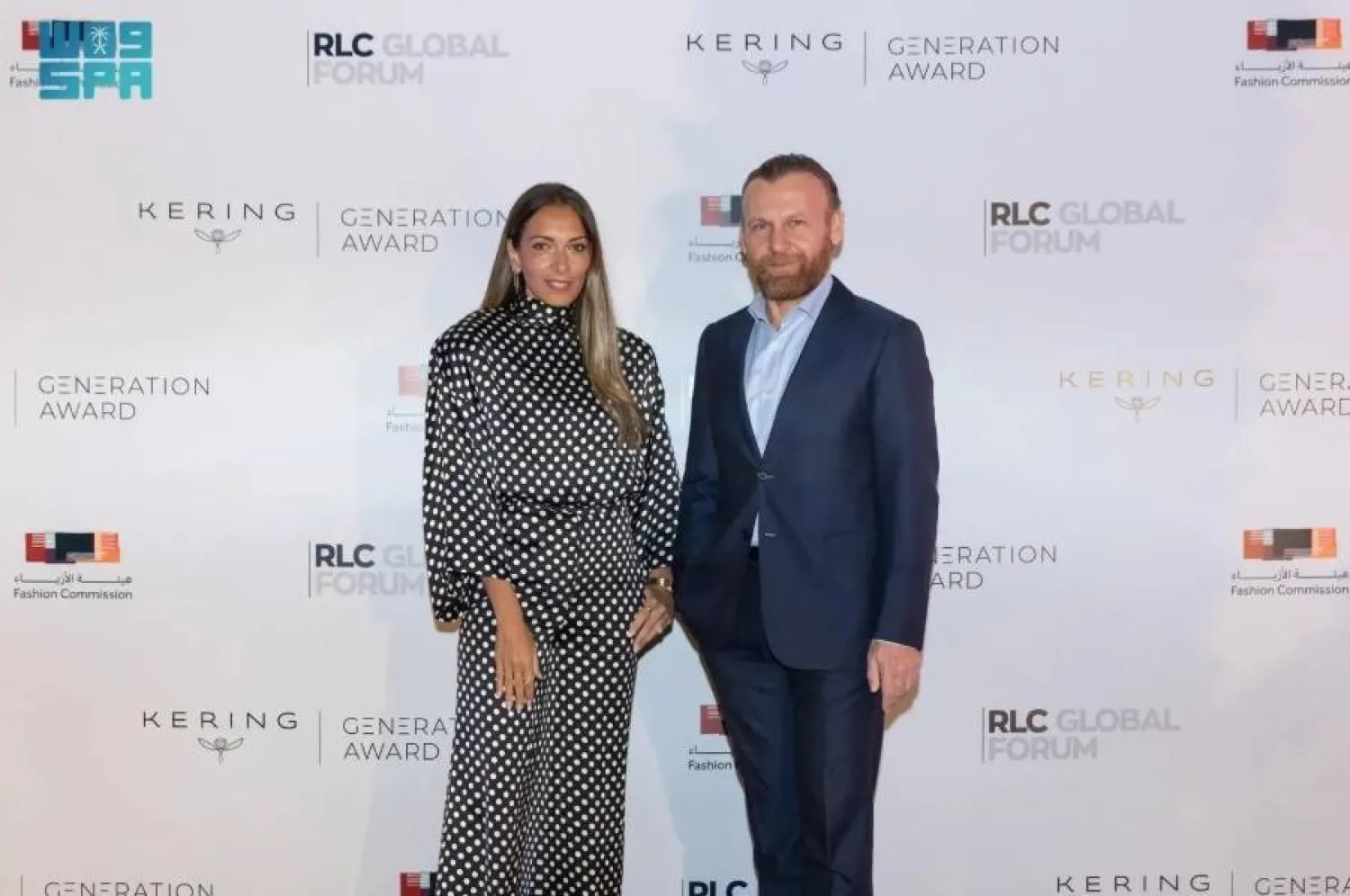
This year's award builds on the strong success of the 2025 award, which attracted more than 500 applications, shortlisted 21 finalists, and recognized three winners. SPA
TT

Saudi Fashion Commission, Kering Launch 'Kering Generation Award X MENA'

This year's award builds on the strong success of the 2025 award, which attracted more than 500 applications, shortlisted 21 finalists, and recognized three winners. SPA

Saudi Arabia’s Fashion Commission and global luxury group Kering have launched the "Kering Generation Award X MENA" across the Middle East and North Africa (MENA) for 2026.

The announcement was made on Tuesday during the opening of the RLC Global Forum, hosted at the French Embassy in Riyadh.

This year's award builds on the strong success of the 2025 award, which attracted more than 500 applications, shortlisted 21 finalists, and recognized three winners.

Participants benefited from mentorship programs, workshops, and opportunities to strengthen their global presence. Building on this momentum, the 2026 program seeks to expand its impact across the MENA region.

The 2026 award focuses on four key areas of sustainable fashion: innovation in regenerative materials and clean production, circular design and sustainable business models, nature conservation and animal welfare, and consumer awareness and cultural engagement.

The program targets startups across the MENA region that operate in, or positively influence, the sustainable fashion sector, provided they demonstrate innovation capabilities and the ability to deliver measurable sustainability outcomes.