Norway Calls on Donors to Resume Funding to Palestinian UNRWA Agency

10 February 2024, Palestinian Territories, Gaza City: Palestinians examine the damage to the United Nations Relief and Works Agency for Palestine Refugees (UNRWA) buildings on their way back to their homes in the wake of the Israeli army withdrew from North of Gaza City. (dpa)
TT

Norway Calls on Donors to Resume Funding to Palestinian UNRWA Agency

10 February 2024, Palestinian Territories, Gaza City: Palestinians examine the damage to the United Nations Relief and Works Agency for Palestine Refugees (UNRWA) buildings on their way back to their homes in the wake of the Israeli army withdrew from North of Gaza City. (dpa)

Norway called on international donors on Tuesday to resume payments to the UN agency for Palestinians refugees (UNRWA) after a report found Israel had yet to provide evidence that some UNRWA staff were linked to terrorist groups.

The United States, Britain and others earlier this year paused payments to UNRWA following Israel's claims, while Norway, also a major donor to the organization, argued that funding cuts put the population of Gaza at risk.

A review of the agency's neutrality led by former French foreign minister Catherine Colonna on Monday concluded Israel had yet to back up its accusations that hundreds of UNRWA staff were operatives in Gaza terrorist groups.

"I would now like to call on countries that have still frozen their contributions to UNRWA to resume funding," Norway's foreign minister Espen Barth Eide said in a statement.

A separate investigation by internal UN investigators is looking into Israeli allegations that 12 UNRWA staff took part in the Hamas-led Oct. 7 attacks which triggered the Gaza war.

"Norway has emphasized that it is unacceptable to punish an entire organization, with 30,000 employees, and all Palestine refugees for the alleged misdeeds of a small number of the organization's employees," Barth Eide said.

While 10 countries have since ended their suspensions, the United States, Britain, Italy, the Netherlands, Austria and Lithuania have not. A UN spokesperson on Monday said UNRWA currently had enough funding to pay for operations until June.


Israeli Army Takes Logistical Steps to Entrench Presence in South Lebanon

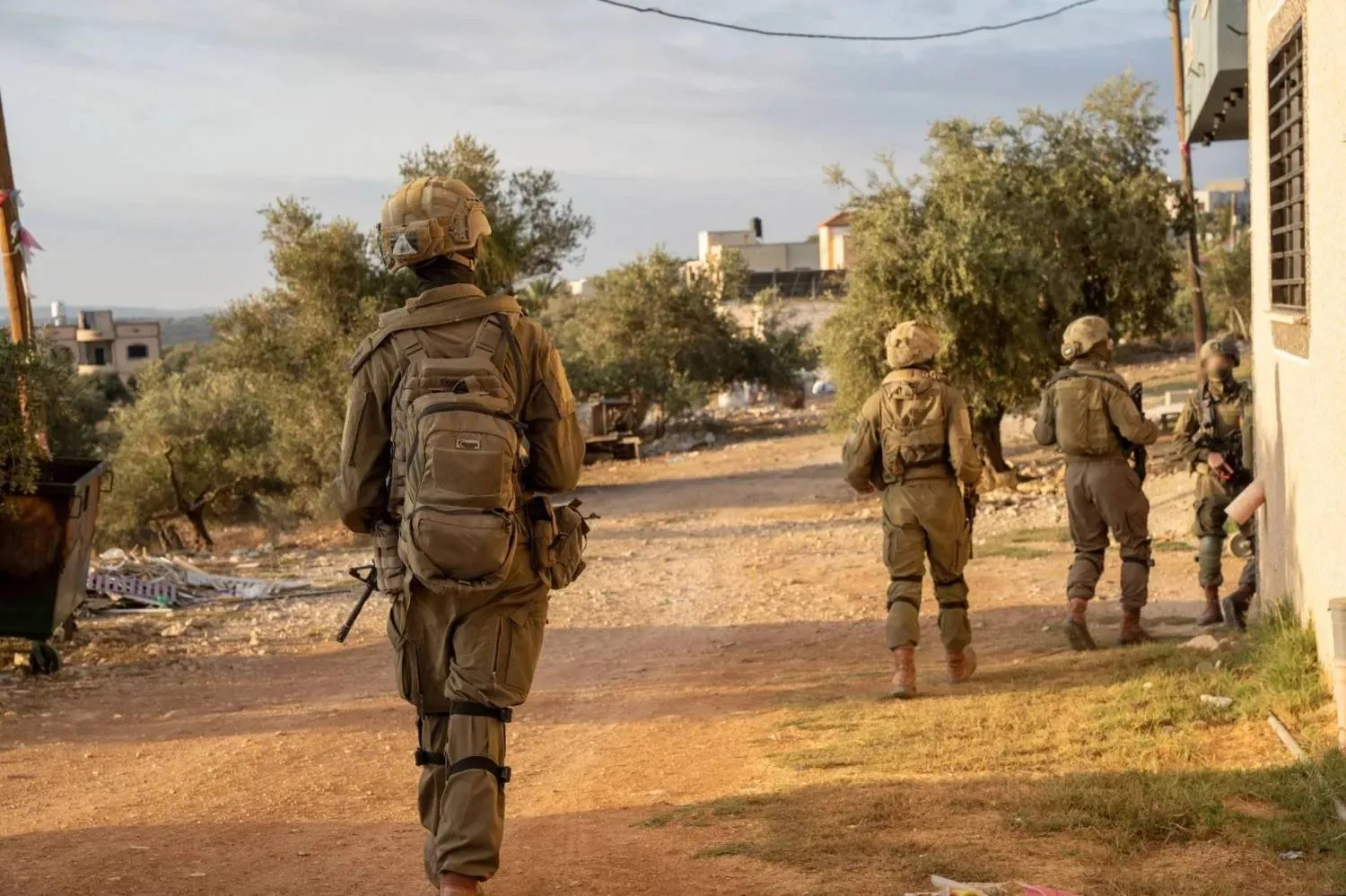
Israeli soldiers on an operational mission in a village in South Lebanon (Israeli military) 
TT

Israeli Army Takes Logistical Steps to Entrench Presence in South Lebanon

Israeli soldiers on an operational mission in a village in South Lebanon (Israeli military) 

The Israeli army is taking logistical steps to prepare for a prolonged presence in South Lebanon, fortifying positions and improving road networks while expanding scorched areas north of what it calls the “Yellow Line.”

Israeli strikes have also extended deeper into Lebanon, reaching Wadi Zibqin in the western sector and the vicinity of Mayfadoun in the east, in what local sources described as an expansion of depopulated areas through gunfire, artillery shelling, airstrikes and drone activity.

The expansion comes amid operational challenges reported by Israeli media, particularly fiber-optic-guided explosive drones. Ynet reported that the Israeli military has yet to find a comprehensive solution to the threat and is testing various systems, focusing on protection, early detection and warning.

Long-term preparations

The measures offer no indication that Israeli forces intend to withdraw from South Lebanon in the foreseeable future.

Ynet reported that the military was fortifying positions and improving access roads even after the 55th Reserve Paratroopers Brigade completed its mission and handed over its positions to replacement forces.

The brigade completed about 100 days of mobilization, including 80 days of operations in Lebanon, concentrated between the border and what the Israeli military calls the “Yellow Line,” reaching depths of about 12 kilometers (7.5 miles).

Forces from the Bislamach Brigade and the Gefen Battalion of the officers’ course are replacing the 55th Brigade, conducting drills and improving positions that provide observation and fire control over areas farther inside Lebanon.

Israeli security officials cited by Ynet indicated that troops would spend the winter in protected compounds inside villages. Buildings were equipped over the summer with generators, air conditioning, and sanitary facilities, while access routes were prepared in advance.

The report also cited concerns that limiting operations to securing the deployment line could erode readiness and increase the risk of attacks on Israeli forces in South Lebanon.

Second line of villages

Alongside fixed military positions established by the Israeli army since May, now numbering 17, according to southern Lebanese security sources who spoke to Asharq Al-Awsat, Israeli forces are expanding their fire zone toward a second line of villages bordering the “Yellow Line,” with the aim of turning them into depopulated, hazardous areas.

Local sources reported intensified gunfire and artillery shelling in recent days, accompanied by persistent drone flights. The attacks have reached the outskirts of Wadi Zibqin and Mayfadoun, southeast of Nabatieh, where residents remain, and some displaced people have returned over the past three months.

Lebanon’s official National News Agency reported an Israeli airstrike on Kfar Tibnit after artillery shelling between Arnoun and Kfar Tibnit. Israeli artillery also struck near the public school in Mayfadoun and Dawhat Kfar Roummane, as well as the outskirts of Haris and Haddatha.

A Merkava tank fired several shells at Houla, while Israeli fire targeted the outskirts of Shaqra and Kounine woodland. A series of strikes hit Kfar Tibnit and Wadi al-Hujair, with explosions heard in Sidon and surrounding areas.

In the western sector, Israeli artillery intermittently shelled Mansouri from Bayyada and Tayr Harfa, south of Tyre, with fire extending to Wadi Hassan near Majdal Zoun. Israeli forces also carried out a powerful explosion in Mansouri that was heard as far as Mount Lebanon, following another blast near Baraachit in the Bint Jbeil district. A suspicious object left from previous Israeli attacks also exploded on the outskirts of Srifa.

Soldiers injured

Separately, the Israeli military announced Sunday that a soldier was seriously wounded and an officer moderately injured Friday in Majdal Zoun after a grenade was improperly thrown.

Eight other Israeli soldiers were injured Friday in a separate incident in South Lebanon involving a collision between two vehicles.


Yemeni Army Continues Strikes Against Houthis

Yemeni Armed Forces Spokesperson Majid Al-Nazili (SABA)
TT

Yemeni Army Continues Strikes Against Houthis

Yemeni Armed Forces Spokesperson Majid Al-Nazili (SABA)

Yemeni army spokesman Colonel Majid Al-Nazili said the Yemeni armed forces carried out 1,122 operations targeting the Houthi militias as part of a campaign to “liberate” the country, restore state institutions and end the Houthi coup.

In a statement posted on X he said that the armed forces were “continuing military operations across various fronts and battlefields in line with approved plans.”

He added that the Yemeni army carried out 1,122 precision strikes against Houthi targets, including weapons positions, fortifications, supply routes, reinforcements and command-and-control centers, across the Saada, Jawf, Taiz and coastal fronts.

He said the strikes involved fighter jets, drones, artillery, missiles, rocket launchers and snipers.

According to field figures, the operations resulted in the neutralization of 1,747 militia members and the destruction or disabling of 364 military vehicles, equipment, and transport and supply assets.

He said the armed forces would continue military operations to liberate state territory, restore state institutions, assert national sovereignty, and fulfil their assigned missions.


Al-Zaidi Warns Coordination Framework Over Failure to Bring Arms Under State Control

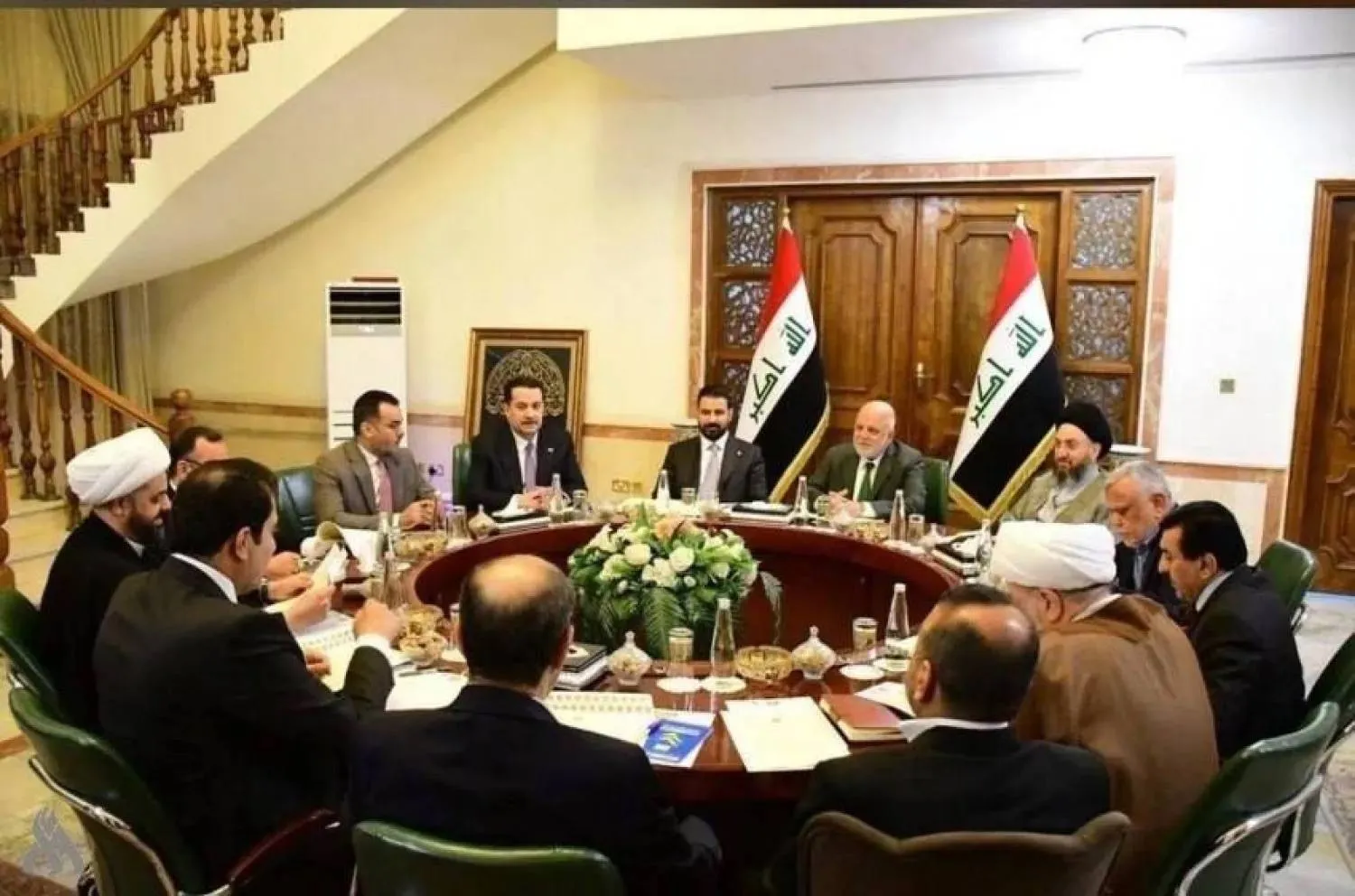
A meeting of the Coordination Framework attended by Prime Minister Ali al-Zaidi (Iraqi News Agency) 

TT

Al-Zaidi Warns Coordination Framework Over Failure to Bring Arms Under State Control

A meeting of the Coordination Framework attended by Prime Minister Ali al-Zaidi (Iraqi News Agency) 


Iraqi Prime Minister Ali al-Zaidi has warned the Shiite Coordination Framework of the consequences of failing to meet agreed deadlines for bringing weapons under state control, as Washington reaffirmed that its economic partnership with Baghdad was moving forward.

Al-Zaidi hosted a meeting of Coordination Framework leaders late Saturday, stressing the need to resolve outstanding issues, including completing the formation of his Cabinet and regulating weapons in a way that strengthens state sovereignty and security in Iraq and the wider region.

An informed source told Asharq Al-Awsat that al-Zaidi also stressed the need to support the work of a four-party committee negotiating with armed factions to reach a final agreement on handing over weapons to the Popular Mobilization Forces within agreed timelines.

The prime minister also briefed the meeting on key issues discussed with the US administration during his recent visit to Washington and the potential economic, political and security consequences for Iraq if the weapons issue remains unresolved, the source added.

The warning coincided with a message from US Secretary of State Marco Rubio marking Iraq’s National Day on Oct. 3.

Rubio pointed to al-Zaidi’s July visit to Washington and his meeting with President Donald Trump at the White House, noting that it reaffirmed the friendship between the two countries and their shared commitment to a strong and prosperous future.

He added that economic partnerships announced during the visit demonstrated the potential for trade and investment cooperation between US and Iraqi companies, while welcoming Iraq’s efforts to strengthen its sovereignty and contribute to regional security and stability.

Another informed source told Asharq Al-Awsat that Washington understood the difficulties al-Zaidi faced in dealing with armed groups and political forces, including some within the Coordination Framework, that appeared reluctant to embrace his plan.

According to the source, the Framework’s shift toward relatively longer deadlines for surrendering weapons followed a private meeting between al-Zaidi and Trump without other members of the Iraqi delegation. The source also cited Trump’s response to al-Zaidi’s request for an exemption allowing Iranian flights to land at Najaf airport.

In a National Day address, al-Zaidi described Iraq as a state that “makes its own decisions and protects its land and airspace,” with weapons subject to the commander-in-chief of the armed forces.

He declared that Iraq had completed its sovereignty on Sept. 30, 2026, with the end of the international coalition’s military mission, adding that political instability had cost the country significant development opportunities and repeatedly forced it “back to square one.”

Al-Zaidi also highlighted his government’s efforts to protect Iraq’s interests, security, sovereignty and national decision-making from the repercussions of regional conflict while pursuing a balanced foreign policy based on national interests and mutual respect.

He outlined government efforts to diversify the economy, empower the private sector and link public spending to results. He also cited plans to provide one million residential land plots, establish a fund for future generations and economic cities, and implement the Development Road project to turn Iraq into a trade and energy corridor and investment hub linking East and West.

Political and strategic affairs researcher Hani Ashour told Asharq Al-Awsat that the departure of US and international coalition forces made restructuring Iraq’s security strategy increasingly necessary, particularly by bringing factional weapons under state control and strengthening the armed forces.

Ashour, however, pointed to major obstacles, including Iraq’s economic difficulties following the closure of the Strait of Hormuz and political forces’ preference for dialogue with armed factions.

Such negotiations, he cautioned, could drag on and remain tied to the US-Iran conflict and its repercussions, potentially giving armed factions renewed justification to retain their weapons and reaffirm their allegiance to Iran.

A meeting of the Coordination Framework attended by Prime Minister Ali al-Zaidi (Iraqi News Agency)