Malala Yousafzai Vows Support for Gaza after Backlash

Nobel Peace Prize laureate Malala Yousafzai participates in a panel discussion in Johannesburg in December 2023. PHILL MAGAKOE / AFP/File
TT

Malala Yousafzai Vows Support for Gaza after Backlash

Nobel Peace Prize laureate Malala Yousafzai participates in a panel discussion in Johannesburg in December 2023. PHILL MAGAKOE / AFP/File

Nobel laureate Malala Yousafzai on Thursday condemned Israel and reaffirmed her support for Palestinians in Gaza, after a backlash in her native Pakistan over a Broadway musical she co-produced with former US Secretary of State Hillary Clinton.
Yousafzai, who was awarded the Nobel Peace Prize in 2014, has been condemned by some for partnering with Clinton, an outspoken supporter of Israel's war against Hamas.
The musical, titled "Suffs," depicts the American women's suffrage campaign for the right to vote in the 20th century and has been playing in New York since last week, said AFP.
"I want there to be no confusion about my support for the people of Gaza," Yousafzai wrote on X, the former Twitter. "We do not need to see more dead bodies, bombed schools and starving children to understand that a ceasefire is urgent and necessary."
She added: "I have and will continue to condemn the Israeli government for its violations of international law and war crimes."
Pakistan has seen many fiercely emotional pro-Palestinian protests since the war in Gaza began last October.
Yusafzai's "theatre collaboration with Hillary Clinton -- who stands for America's unequivocal support for genocide of Palestinians -- is a huge blow to her credibility as a human rights activist," popular Pakistani columnist Mehr Tarar wrote on social media platform X on Wednesday.
"I consider it utterly tragic."
Whilst Clinton has backed a military campaign to remove Hamas and rejected demands for a ceasefire, she has also explicitly called for protections for Palestinian civilians.
Yousafzai has publicly condemned the civilian casualties and called for a ceasefire in Gaza.
The New York Times reported the 26-year-old wore a red-and-black pin to the "Suffs" premier last Thursday, signifying her support for a ceasefire.
But author and academic Nida Kirmani said on X that Yousafzai's decision to partner with Clinton was "maddening and heartbreaking at the same time. What an utter disappointment."
The war began with an unprecedented Hamas attack on Israel on October 7 that resulted in the deaths of around 1,170 people, according to an AFP tally of Israeli official figures. Hamas also abducted 250 people and Israel estimates 129 of them remain in Gaza, including 34 who the military says are dead.
Clinton served as America's top diplomat during former president Barack Obama's administration, which oversaw a campaign of drone strikes targeting Taliban militants in Pakistan and Afghanistan's borderlands.
Yousafzai earned her Nobel Peace Prize after being shot in the head by the Pakistani Taliban as she pushed for girls' education as a teenager in 2012.
However, the drone war killed and maimed scores of civilians in Yousafzai's home region, spurring more online criticism of the youngest Nobel Laureate, who earned the prize at 17.
Yousafzai is often viewed with suspicion in Pakistan, where critics accuse her of pushing a Western feminist and liberal political agenda on the conservative country.



Trump Says Not Putting US Troops in Region Amid Iran War

Plumes of smoke rise from the site of a strike in Tehran on March 16, 2026. (AFP)
TT

Trump Says Not Putting US Troops in Region Amid Iran War

Plumes of smoke rise from the site of a strike in Tehran on March 16, 2026. (AFP)

US President Donald Trump on Thursday suggested he was not looking at deploying more soldiers to the Middle East amid the Iran war.

"I'm not putting ‌troops anywhere," ‌Trump said, ‌asked ⁠by a reporter whether ⁠he was planning to send more service members to the region. "If I were, I certainly wouldn't tell ⁠you. But I'm not ‌putting ‌troops. We will do whatever ‌is necessary to ‌keep the price."

Trump spoke at the White House during an Oval Office meeting with ‌Japanese Prime Minister Sanae Takaichi.

Reuters reported on ⁠Wednesday ⁠that the Trump administration is considering deploying thousands of US troops to reinforce the Iran operation, citing a US official and three people familiar with the matter.


Pentagon Seeks $200 Billion in Additional Funds for the Iran War

US Secretary of Defense Pete Hegseth holds a briefing with Chairman of the Joint Chiefs of Staff General Dan Caine, amid the US-Israeli war on Iran, at the Pentagon in Washington, D.C., US, March 19, 2026. REUTERS/Evan Vucci
TT

Pentagon Seeks $200 Billion in Additional Funds for the Iran War

US Secretary of Defense Pete Hegseth holds a briefing with Chairman of the Joint Chiefs of Staff General Dan Caine, amid the US-Israeli war on Iran, at the Pentagon in Washington, D.C., US, March 19, 2026. REUTERS/Evan Vucci

The Pentagon is seeking $200 billion in additional funds for the Iran war, a senior administration official says.

The department sent the request to the White House, according to the official, who spoke on condition of anonymity to discuss the private information.

It’s an extraordinarily high number and comes on top of extra funding the Defense Department already received last year in President Donald Trump’s big tax cuts bill, The AP news reported.

Congress is bracing for a new spending request but it is not clear the White House has transmitted the request for consideration. It is unclear the spending request would have support.

The new funding request was first reported by The Washington Post. Asked about the figure at a press conference Thursday, Defense Secretary Pete Hegseth did not directly confirm the figure, saying it could change. But he said “we’re going back to Congress and our folks there to to ensure that we’re properly funded.”

“It takes money to kill bad guys,” Hegseth said.


What Cargo Ships are Passing Hormuz Strait?

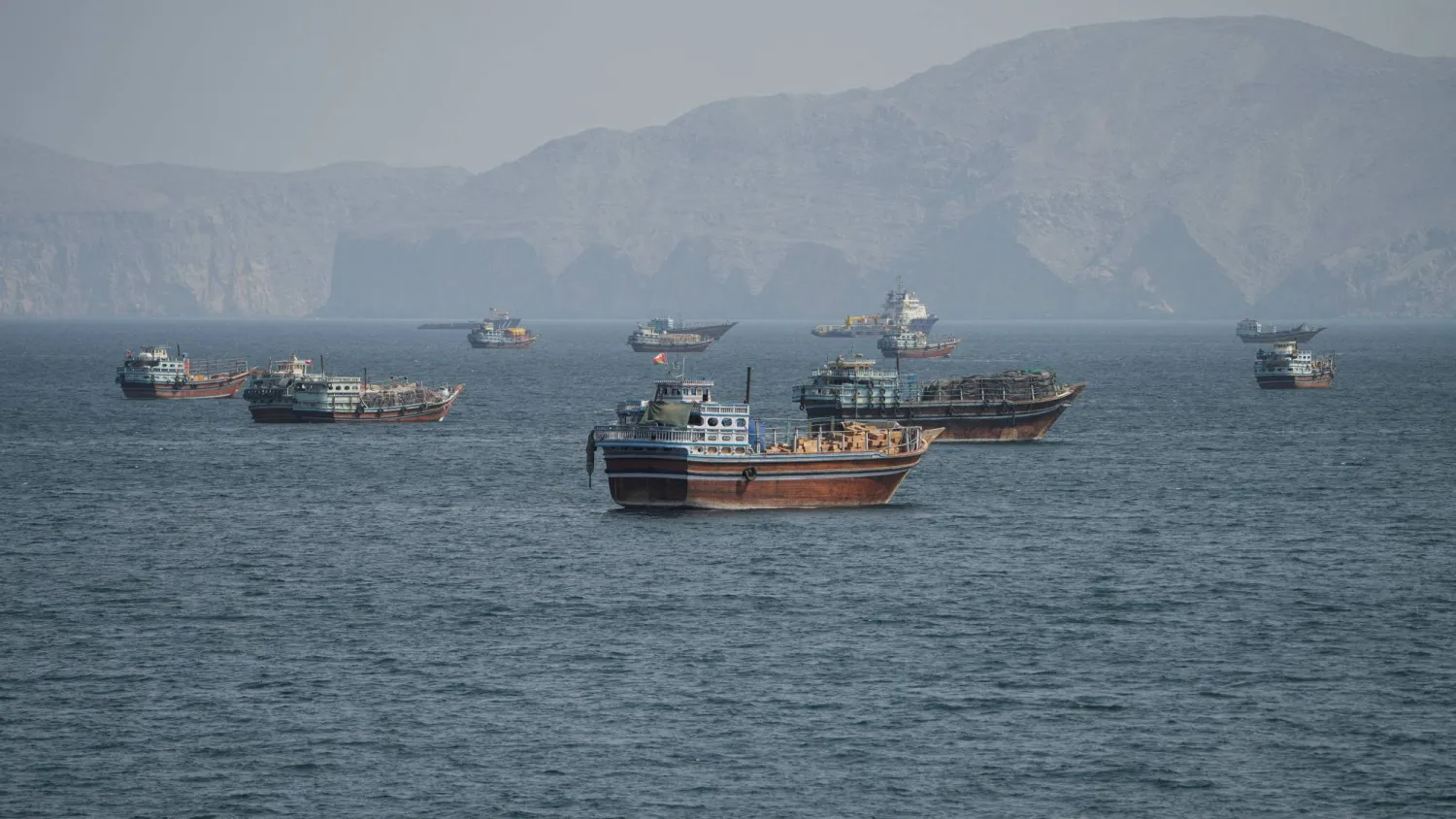
Commercial vessels offshore in Dubai last week © - / AFP/File
TT

What Cargo Ships are Passing Hormuz Strait?

Commercial vessels offshore in Dubai last week © - / AFP/File

Just a trickle of cargo ships and tankers -- most of them Iranian -- have made it through the Strait of Hormuz since Iranian forces blocked the crucial trade route in the Middle East war.

Here are facts and figures about vessels that have passed through the 167-kilometre (104-mile) long strait since the war broke out with US-Israeli strikes on Iran on February 28, according to AFP.

- 95% shipping drop -

From March 1 to 19, commodities carriers made just 114 crossings, according to analytics firm Kpler -- a decrease of 95 percent from peacetime.

Of these, 69 crossings were by oil tankers and more than half were loaded, Kpler data showed, with most travelling east out of the strait.

Traffic "is being led mostly by bulk carriers, tankers and container ships," said Richard Meade, editor of leading shipping intelligence journal Lloyd's List, in a briefing on Thursday.

"But we have seen a bit of an uptick in gas carriers moving over the last week."

- Iranian, Greek, Chinese ships -

Most of the ships passing the strait are owned or flagged in Iran, said Bridget Diakun, an analyst at data company Lloyd's List Intelligence.

After that, Greek ships accounted for 18 percent of crossings and Chinese ones 10 percent in recent days, she said.

"Although Iran is continuing to control the Strait and exit its own oil, everything else is largely still at a standstill," said Meade.

- 35 sanctioned ships -

Overall since the war started, around a third of the ships transiting the strait were under US, EU or UK sanctions, according to an AFP analysis of passage data.

Of the oil and gas tankers, more than half were under sanctions.

Since March 16 "anything heading westbound has been shadow fleet, gas carriers or tankers... they absolutely dominate the traffic going through," Diakun told the Lloyds briefing.

- Oil to China -

Commodities analysts at JPMorgan bank said in a report released Monday that most of the oil passing through the strait was headed for Asia, principally China.

Data in the report indicated it was receiving more than a million barrels day from Hormuz -- far below the pre-war level of nearly five million.

Cichen Shen, Asia Pacific editor at Lloyd's List, said there were indications online that Chinese authorities were working on "some sort of exit plan" for their big tankers stuck in the region.

- 1.3 mn barrels of Iran oil -

The JPMorgan analysts said overall 98 percent of the observable oil traffic through the strait was Iranian, averaging 1.3 million barrels a day "in early March".

A fifth of the world's oil and liquefied natural gas passes through the strait in peacetime.

- Indian, Pakistani ships -

"There are indications that some ships are transiting under Iranian 'approval', with some vessels following a route through the Strait closer to the Iranian coastline than normal," including Indian and Pakistani vessels, marine consultancy Clarksons said in a note.

Meade of Lloyds List added: "Several governments, including China, but (also) India, Pakistan, Iraq, Malaysia, they're all in direct talks with Tehran, coordinating vessel transits" with Iran's Revolutionary Guards.

- Alternative routes surge -

Shipping companies are carving out other ways to get their cargos through the region. Major shipping firm CMA CGM said it was moving freight across Gulf countries by rail and road to avoid the strait.

"Gulf maritime traffic patterns indicate early signs of global rebalancing," said marine intelligence group Windward in a report.

In recent days transit volumes through the Bab el-Mandeb strait off east Africa surged 280 percent, and 70 percent through the Suez Canal, it said, indicating that "shipping is adapting through alternative corridors."