Saudi Electronic University Launches GameOn Hackathon

Saudi Electronic University Launches GameOn Hackathon
TT

Saudi Electronic University Launches GameOn Hackathon

Saudi Electronic University Launches GameOn Hackathon

The Saudi Electronic University (SEU), in collaboration with HP and AMD, has launched the “GameOn” hackathon, held under the theme “From Diriyah, the ancient capital, to Neom, the city of the future".
This event challenges participants to bridge the gap between Saudi Arabia's rich history and futuristic vision.
Hackathon supervisor Dr. Asmaa Al-Hammadi said that the goal of the event is to equip students with essential knowledge and skills in programming, game development, and e-sports management in order to foster healthy competition among university students, and drive them to excel in innovative outcomes that demonstrate Saudi culture and heritage while making a global impact, SPA reported.
She said that the registration for the hackathon is set to close on May 10, 2024. Eligible to participate are students enrolled in a bachelor's program who may register using their university email account.
Teams may be formed by students from different universities and the proposed project should be consistent with Saudi culture and heritage. A team may consist of a minimum of two and a maximum of three students; team members must have passed at least 70% of one of the self-paced learning courses.
Al-Hammadi added that the hackathon consists of three rounds. In the first round, participants submit the outline of an electronic game Storyboard with an explanation of the graphics, backgrounds, and visual elements. They must also highlight the game's connection to Saudi culture and heritage.
Moving on to the second round, the teams will start creating and programming the electronic game, making it operable on computers. During this phase, a winner will be selected for each category in the elimination stage.
The qualifying teams will then proceed to the third stage, during which SEU will incubate the winning projects, provide technical support, and establish connections with potential investors.
The hackathon offers valuable prizes in three challenge categories.
Real-World Games depict real-world Saudi cultural heritage, including historical events, traditional art, shared values, and storytelling elements. Examples include National Day and Founding Day.
Location-Based Games enhance players' experience at Saudi heritage sites, and combine gaming elements with real-world heritage exploration, offering interactive and educational opportunities to learn about cultural heritage in specific locations like Diriyah and AlUla.
Discovery Games involve physical artifacts, history, archaeology, and art, providing insights into Saudi cultural heritage through virtual museum experiences, historical sites, and archaeological landmarks like UNESCO sites in Saudi Arabia.
These games offer interactive and educational opportunities to learn about cultural heritage in specific locations, such as Diriyah, AlUla, and Asir, and aim to reveal monuments, historical evidence, arts, and costumes related to Saudi cultural heritage through virtual museums.


US Closes Loophole on China’s Access to AI Chips After Nvidia Scandal

Semiconductor chips are seen on a printed circuit board in this illustration picture taken February 17, 2023. (Reuters)
TT

US Closes Loophole on China’s Access to AI Chips After Nvidia Scandal

Semiconductor chips are seen on a printed circuit board in this illustration picture taken February 17, 2023. (Reuters)

The US Commerce Department on Monday issued a rule aimed at stopping Chinese companies from using advanced American AI chips housed in data centers in other countries.

The move comes days after a spy scandal forced Jensen Huang to step down as head of Nvidia, amid widening suspicions that he may have helped Chinese companies gain access to his company's most powerful AI chips in violation of US rules.

The Commerce Department, led by Howard Lutnick, has been accused by other voices inside the Trump White House of failing to properly enforce export controls that bar sales of Nvidia's most powerful AI chips to China.

One loophole allowed Chinese firms to rent AI computing power from data centers in Southeast Asia and elsewhere that run on US hardware not available for export to China.

Scrutiny of that loophole grew after Huang resigned last week over his relationship with Alice Huang, a former executive at Singapore-based Megaspeed.

US investigators suspect the Nvidia customer of illegally channeling the company's technology to China.

She is also suspected by some in US government to be an asset for Chinese secret services, according to The New York Times.

Megaspeed is under US investigation for possible export control violations and has denied wrongdoing. Alice Huang, who is not related to Jensen Huang, has not been charged, and Beijing has rejected the espionage allegations.

Treasury Secretary Scott Bessent on Friday blamed the Commerce Department for failing to blacklist Megaspeed over the alleged violations.

Under the new rule, data centers anywhere in the world will need a US license to provide large volumes of computing power from advanced chips to companies headquartered in China, Macau or other countries under US arms embargoes.

The rule also requires licenses to ship advanced chips to Singapore, Malaysia, Thailand, Indonesia and Brazil, which it says present a "higher-than-normal risk of diversion."

The rule "is designed to ensure that existing restrictions on access to sensitive American technology cannot be circumvented through remote computing arrangements involving data centers in third countries," the department's Bureau of Industry and Security (BIS) said in a statement.

BIS said the rule was "written by and at the direction of" the Treasury Department and the National Security Council.

The rule also formally rescinds the AI Diffusion Rule issued under former president Joe Biden. That rule set up a global licensing system for AI chips, and the Trump administration said in May 2025 that it would scrap it.


Tesla Invites Select Customers to Buy Cybercab for Personal Use

A passenger waves from a Tesla Cybercab driverless taxi as it travels through downtown Austin, Texas, US, October 27, 2026. (Reuters)
TT

Tesla Invites Select Customers to Buy Cybercab for Personal Use

A passenger waves from a Tesla Cybercab driverless taxi as it travels through downtown Austin, Texas, US, October 27, 2026. (Reuters)

Tesla said on Friday it was inviting select customers to buy the Cybercab for personal use, marking a push towards delivering fully designed autonomous vehicles to customers.

Tesla posted the announcement on X ‌with an ‌image of the golden butterfly door ‌two-seater, ⁠priced at $29,990 with ⁠an “Autonomy Subscription” of $299 a month.

Chief Executive Elon Musk said in a post on X that the offering would be available nationwide as Tesla receives regulatory approval.

"The monthly fee is too ⁠high," Musk said, adding that ‌it should match the ‌cost of Tesla Full Self Driving and connectivity ‌for other models, which is about $115 ‌per month.

The EV maker aims to start selling its Cybercab robotaxis to the public by the end of this year, ‌Lars Moravy, Tesla's vice president of vehicle engineering, said last month.

The ⁠Cybercab will work unsupervised in all the same geo locations as the robotaxi, Tesla’s head of artificial intelligence, Ashok Elluswamy, said in a separate X post.

Tesla launched its unsupervised robotaxi service in Austin, Texas, in June 2025, expanded the offering to Dallas and Houston in April 2026 and rolled it out in Miami in July 2026.


Microsoft Says All Services Restored After Global Outage

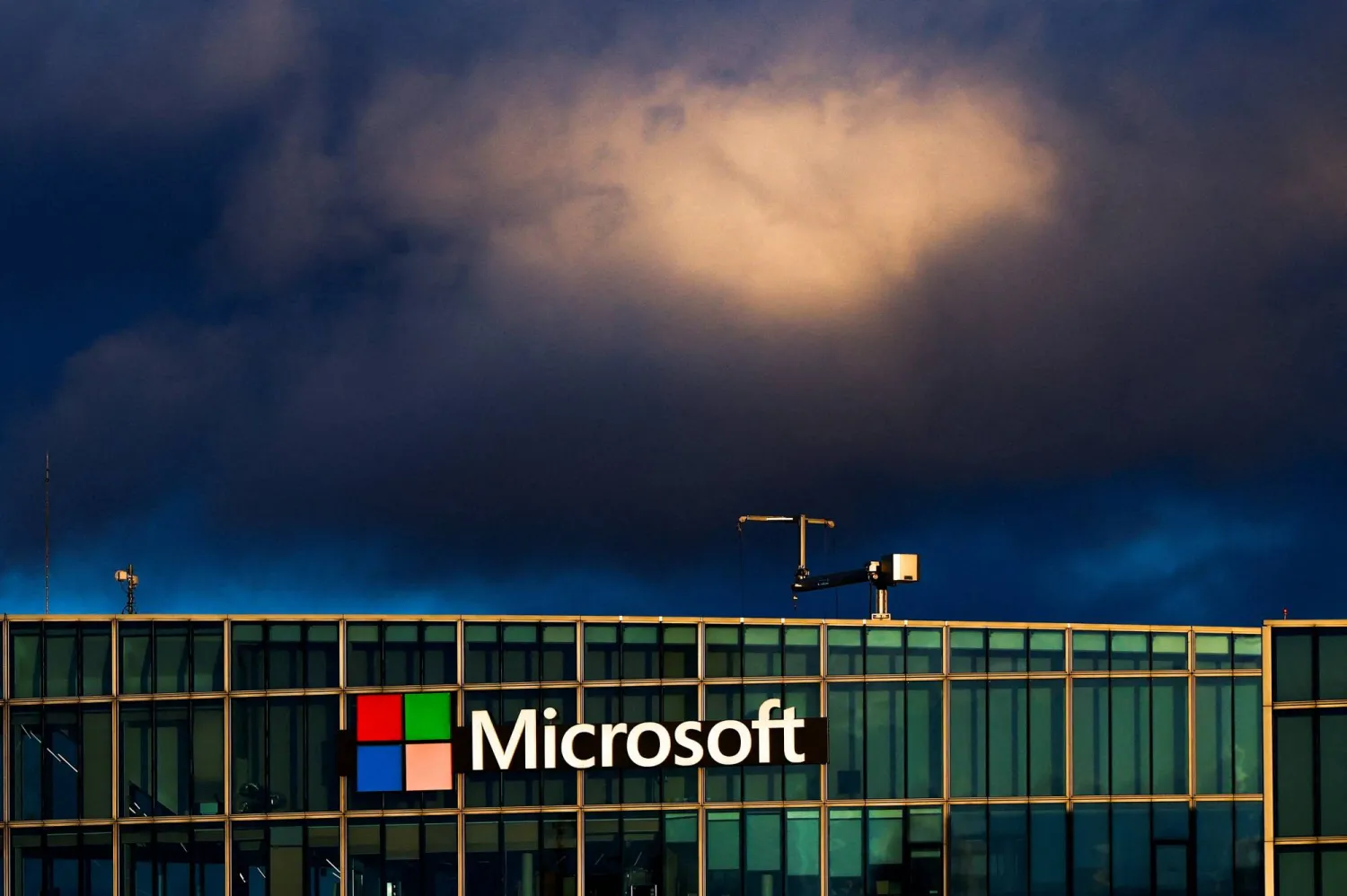
A view shows a Microsoft logo at Microsoft offices in Issy-les-Moulineaux near Paris, France, January 9, 2025. (Reuters)
TT

Microsoft Says All Services Restored After Global Outage

A view shows a Microsoft logo at Microsoft offices in Issy-les-Moulineaux near Paris, France, January 9, 2025. (Reuters)

Microsoft said on Saturday that services had fully recovered across Teams, Outlook and its other products, ending a global outage that crippled online communications for businesses and governments for over 24 hours. 

"We have completed our efforts to address the underlying issue of the incident and restored service to the remaining impacted customers and regions," the company posted on X. 

Microsoft had said server issues were behind the incident that also affected its Copilot AI assistant, and that it was not aware of any malicious activity, ruling out AI as the cause. 

Outlook and Teams are two of the most widely used workplace applications with hundreds of millions of users. The outage prevented people from performing essential functions such as sending emails, managing calendars and hosting virtual meetings. 

It affected government agencies from Australia and Japan to the United States, caused delays at trading firms, hindered some companies from publishing earnings and prompted airlines to warn customers of communication lags, according to public statements. 

Organizations that host Microsoft services on ‌their own servers, rather than ‌in the cloud, were somewhat spared. 

ANOTHER OUTAGE FOR MICROSOFT 

The outage, reports of which started climbing around ‌1725 GMT on ⁠Thursday according to ⁠Ookla, is one of the longest in Microsoft's history and the second disruption to its services this year. 

Microsoft said the outage specifically hit features tied to Exchange Online — its cloud-based email and scheduling hub — leaving unconnected applications operational. 

The incident deepens questions about the global reliance on a handful of Big Tech companies that supply both the essential software and the cloud infrastructure that underpins it. 

It also highlighted the dependence on Microsoft's workplace software, with outage reports spiking as employees began their workdays across Asia and Europe, according to Downdetector's parent company, Ookla. 

Downdetector logged more than 7.4 million reports worldwide, peaking at nearly 20,000 a minute, more than 1,500 times normal levels. 

"It shows how much of the working day now runs through one provider's email and collaboration tools," said Luke Kehoe, lead industry analyst at Ookla. 

Microsoft shares closed flat at $523.88 on Friday. The stock has ⁠gained roughly 8% so far this year. 

Disruptions and financial losses from the outage could result in numerous insurance claims, ‌but the overall hit to insurers is expected to be limited, said Mario De Cicco, vice president ‌of European financial institutions at Morningstar DBRS. 

De Cicco estimated global insured losses from the incident at between $300 million and $500 million, well below the $400 million to $1.5 billion financial toll from the ‌2024 CrowdStrike outage that crashed more than 8 million Windows-based computers and caused widespread disruptions. 

Microsoft also faced an outage with its 365 services in January this ‌year and in October last year. Last month, it reported an outage of its Azure cloud platform that impacted its suite of productivity software and a range of industries worldwide. 

"The bigger worry is that this is not the first Microsoft 365 outage this year," said Josh Gilbert, a market analyst at trading platform eToro. 

"If reliability starts to look like a recurring problem, it hands every IT department a reason to think twice before putting even more of their business in one provider's hands." 

Still, some analysts have questioned whether such ‌incidents can push customers on to rivals due to the steep switching costs of replacing tools embedded so deeply in daily operations. 

TRADES HAD TO BE CONFIRMED BY FAX 

A spokesperson for the UK government said it was ⁠working with Microsoft to find a solution ⁠for the outage that hit organizations such as the NHS and London's Metropolitan Police. 

Lack of access to emails and other services was impacting the Metropolitan Police's ability to report some crimes online, though its ability to respond to calls was not affected. 

The NHS said its local services were turning to alternate measures such as using IT systems or paper records. 

For businesses, the fallout was widespread. 

European exchange operator Euronext reported email disruptions, British insurer Aviva activated backups for its earnings calls and Danish shipping giant Maersk warned customers of delayed updates. 

American AI giants OpenAI and Anthropic also faced issues with Microsoft connectors that were later resolved, while Indian airlines IndiGo, Akasa Air and Air India said their email support services were impacted. 

The outage also disrupted fund management at Taiwanese securities firms, life insurers, and investment trust companies. One of the companies went as far as cancelling a bond repurchase transaction, a source familiar with the situation told Reuters. 

Another Taiwanese financial company resorted to using fax to confirm trades, a second source said. 

In the US, electric truck maker Workhorse Group rescheduled its results on Thursday to November 16, while Switzerland's Richemont briefly delayed its first-half results announcement on Friday. 

In Australia, where the spy agency and federal police were among organizations caught in the outage, Cyber Security Minister Tony Burke said Microsoft does not suspect a cyberattack.