
A senior source in Hamas cast doubt on Israel’s intentions to sustain the ceasefire in Gaza and move to its second phase, which provides for withdrawal from additional parts of the enclave and the reopening of the Rafah land crossing.
The source said, however, that the movement would abide by its obligations, including handing over Gaza’s governance to a Palestinian body and discussing a specific formula regarding the group's weapons, among other conditions.
The source, who is familiar with the details of contacts and negotiations, told Asharq Al-Awsat that Israel wants to keep Gaza in a state of instability by trying to impose new rules of engagement in the enclave, enforcing them by firepower as it has done since the start of this year.
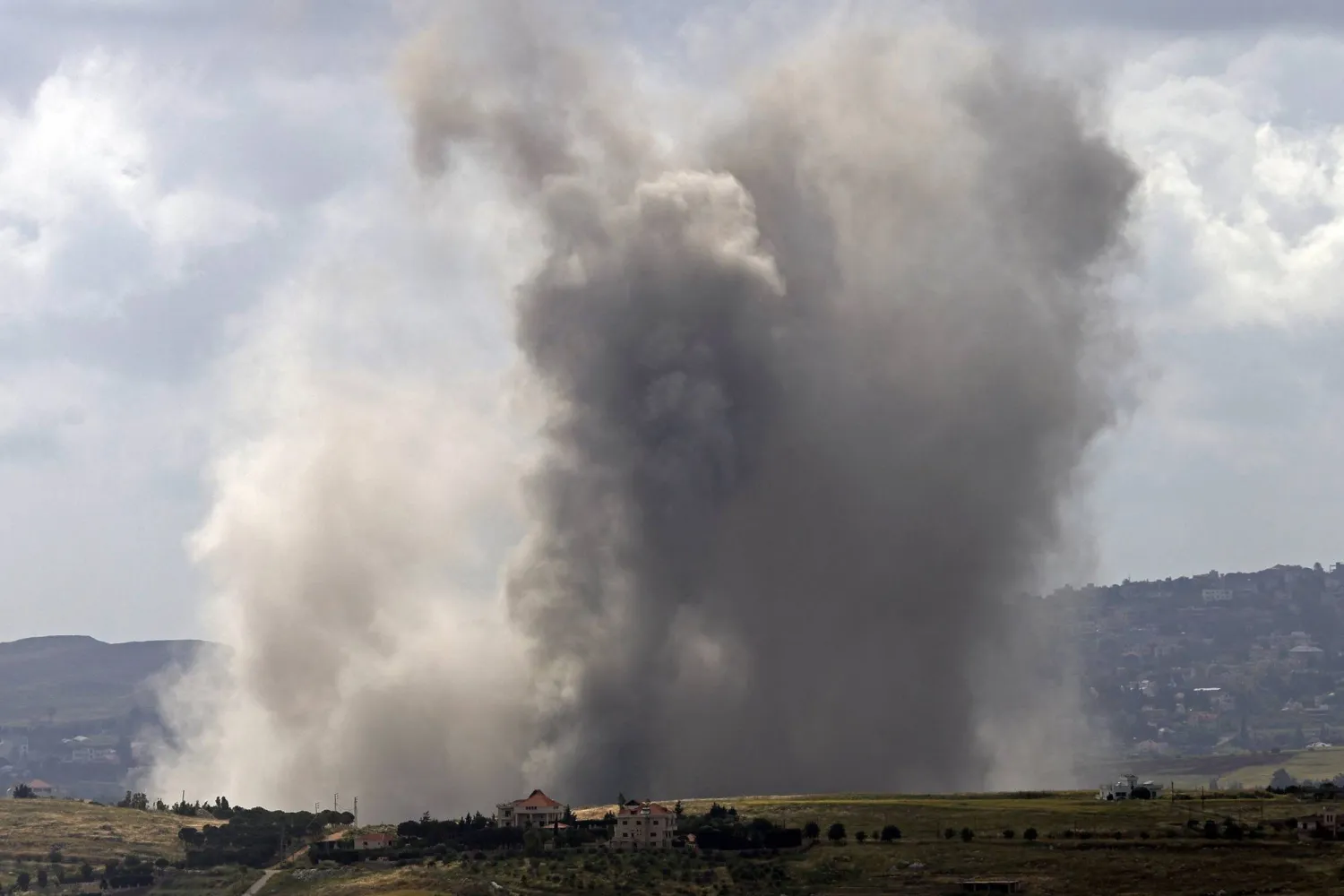
About 21 Palestinians have been killed in a series of Israeli violations and three targeted strikes over eight days since the beginning of the year, hitting three Hamas members. This brings the death toll since the ceasefire took effect on Oct. 10, 2025, to about 431 people.
The latest assassination took place on Thursday evening after a suicide drone exploded in a tent belonging to a prominent member of the Qassam Brigades, Hamas’s armed wing, in Khan Younis, killing four people, including three children.
That followed another assassination on Wednesday evening of a field commander in the Qassam Brigades who led the Tuffah and Daraj battalion, after his family home was struck in the Tuffah neighborhood east of Gaza City.
The outcome of the operation remains unclear, with several wounded and others still missing under the rubble. The Israeli army claimed the strike was in response to gunfire toward its forces in the north of the enclave.
A Palestinian was killed on Thursday afternoon when a drone dropped a bomb on a group of Palestinians in the town of Bani Suheila east of Khan Younis, while a girl was killed by Israeli drone fire in Jabalia in northern Gaza.
The Israeli army said it detected a failed rocket launch from northern Gaza that fell inside the enclave, adding that its forces shelled the launch site. Field sources told Asharq Al-Awsat that the explosion occurred after children tampered with unexploded ordnance in an area northwest of Gaza City.
The senior source said Israel is seeking to impose security control over Gaza by continuing the same scenario it has followed for months, assassinating fighters from time to time on the pretext that its forces came under fire near the so-called yellow line, while it carries out daily killings of civilians along the same line, particularly to its west.
More than 200 Palestinians have been killed in those western areas without any real threat to the forces, while the number of cases of people crossing the line did not exceed 15.
Israel wants to kill Palestinians whenever and however it wishes and does not want security conditions to return to normal or the ceasefire to be maintained, the source said, adding that Israel wants to constantly remind residents that the war continues daily and will not end.
He said Israel is keen to keep Gaza in a state of war through various means, including a Lebanon-style scenario.
The Israeli war does not stop at killings, shelling and demolitions, which are daily operations, but extends to the humanitarian situation, the source said.
Israel regularly blocks the entry of aid and prevents many commercial goods from entering through the crossings, sometimes banning items it had previously allowed, such as dairy products that were permitted for 10 days before being stopped, a pattern that applies to other goods as well, it added.
Israel controls everything related to Gaza and works to squeeze the population by all means, including depriving them of their most basic rights, the source stressed, adding that it exploits unlimited US support to evade its obligations under the first phase of the ceasefire by using various flimsy pretexts.
Talks in Egypt
The source revealed that Hamas’s leadership is following up with mediators on all issues related to the violations, failure to adhere to the humanitarian protocol and the move to the second phase. He said efforts are underway to push in that direction, with meetings to be held in Cairo and other capitals in the coming days.
Cairo is set to host a Hamas leadership delegation next week to discuss these issues. Some of the movement’s leaders from Gaza have already arrived in Egypt in recent days and held a series of internal meetings and others with Palestinian factions, Asharq Al-Awsat learned.
Palestinian Vice President Hussein al-Sheikh and intelligence chief Majed Faraj recently visited Cairo and met senior officials to discuss the transition to the second phase, including the Palestinian Authority’s readiness to take part in operating the Rafah crossing and to form a technocratic committee to assume its duties, paving the way for the authority’s return to governing Gaza once the second phase is fully implemented.
Hamas outside administrative arrangements
Hamas spokesman Hazem Qassem said the movement is awaiting the formation of an independent committee to run Gaza across all sectors, a committee it agreed to establish alongside other factions.
He explained that Hamas would facilitate the handover and the committee’s work, adding that the movement had already decided it would not be part of administrative arrangements in the enclave.
According to Yedioth Ahronoth, Israel is preparing to open the Rafah crossing in both directions by January 15, the likely date for US President Donald Trump to announce the move to the second phase.
The paper said the crossing would open even if the last remaining body of an Israeli hostage in Gaza has not been recovered, which Hamas and Islamic Jihad are trying to locate under heavy pressure from mediators.
Israel is likely to allow the limited entry of a few dozen people a day under tight security supervision, it reported.