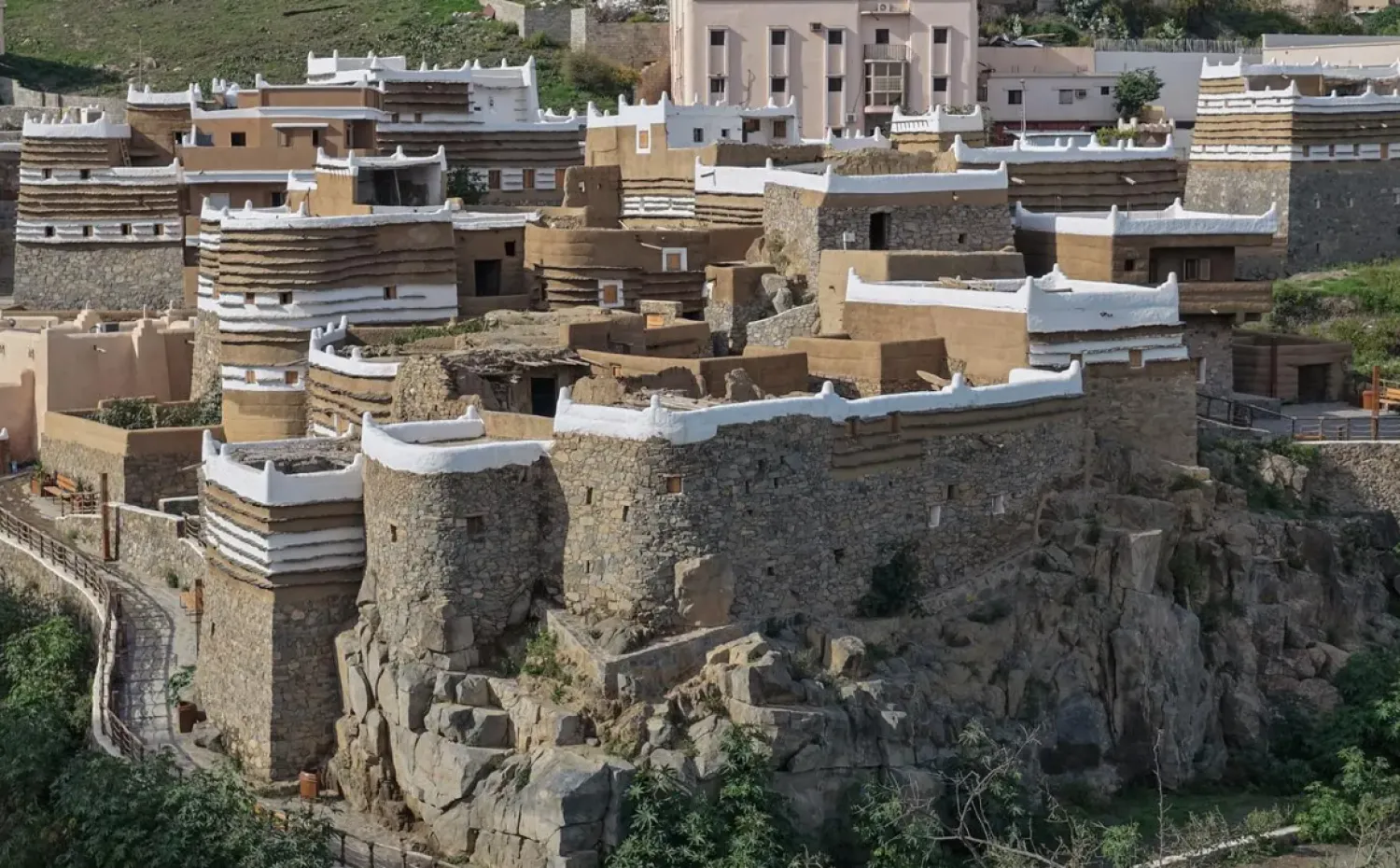
Al-Nasb Heritage District in Abha is one of the most prominent living examples of traditional architecture in Aseer Region, preserving its long history and architectural details that embody people’s connection to their local environment and document the social and cultural patterns that have shaped the identity of the place across generations.
The district’s significance lies in its unique architectural composition, where mud and stone buildings stand side by side in visual harmony. They were built using local materials such as stone, clay, and juniper trunks, while the narrow alleyways and closely set buildings give the district a cohesive social character that reflects the spirit of past communities in the region and the close relationship between people and place.
The Heritage Commission has revived the district through an integrated restoration and rehabilitation project aimed at preserving its original elements and enhancing its sustainability, as part of national efforts to protect urban heritage and highlight it as a cultural and tourism asset, SPA reported.
The site is also distinguished by its natural setting, as the district overlooks the banks of Abha Valley and surrounding farms, giving it a distinctive visual and aesthetic dimension. Its narrow passageways and closely set buildings illustrate a traditional urban pattern that strengthens ties among residents and captures the nature of social life in that era.
The district is now a growing destination for culture and tourism in Abha, attracting visitors and heritage enthusiasts who come to explore the details of authentic architecture and learn about the traditional ways of life that have shaped Aseer Region’s identity across generations. The project helps raise awareness of the importance of preserving archaeological sites as a key pillar in forming national memory.
The project is part of the Kingdom’s efforts to protect and effectively manage cultural heritage, in line with the targets of Saudi Vision 2030, which gives special attention to the cultural sector. It seeks to turn heritage sites into vibrant spaces that support cultural tourism and sustainable development while reconnecting society with its historical roots.