


Rafah Residents Flee ‘Hell’ of Israeli Onslaught

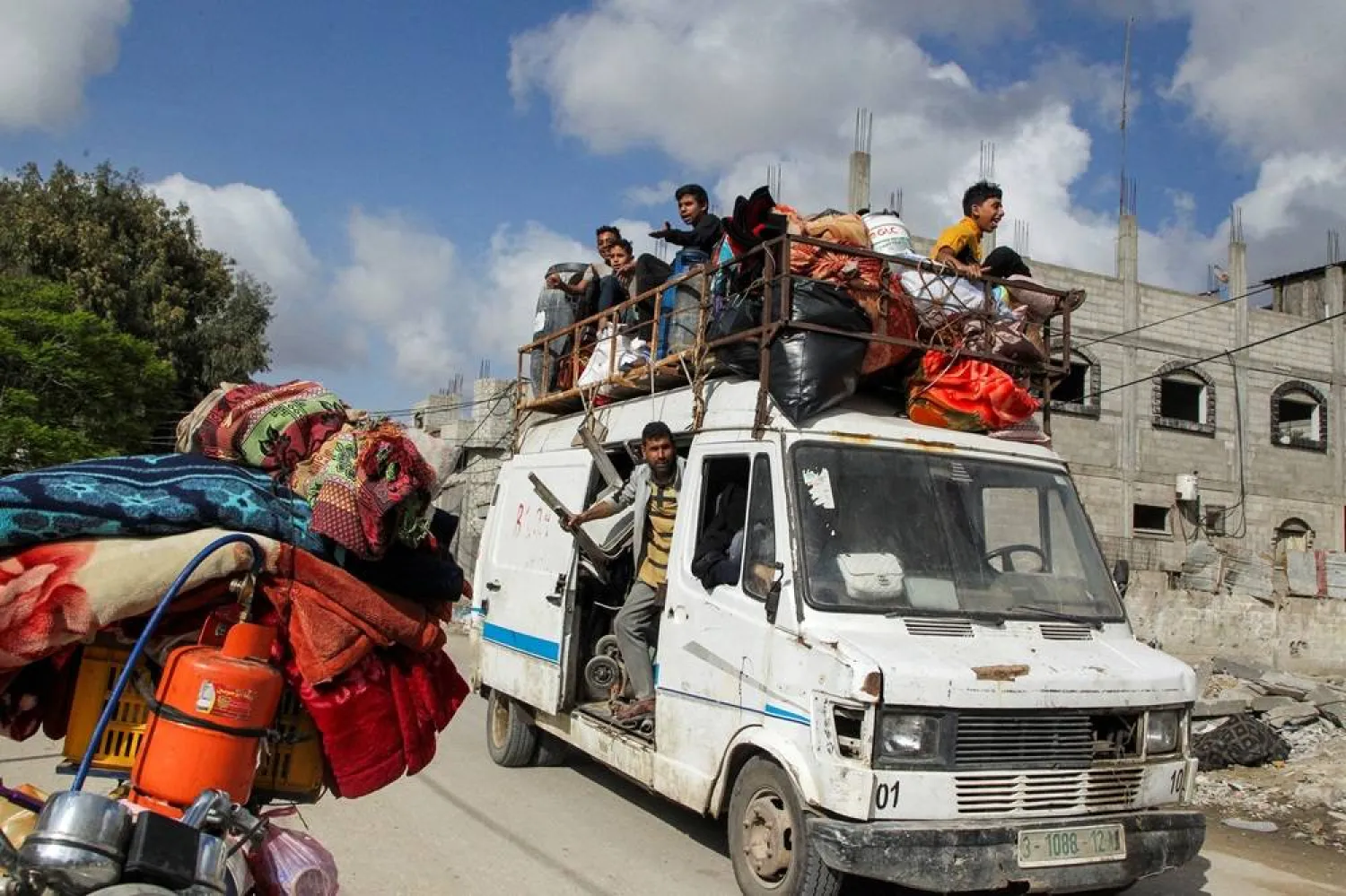
 Displaced Palestinians travel in a vehicle as they flee Rafah, after Israeli forces launched a ground and air operation in the eastern part of southern Gaza city, amid the ongoing conflict between Israel and Hamas, in Rafah, in the southern Gaza Strip May 12, 2024. (Reuters)
Displaced Palestinians travel in a vehicle as they flee Rafah, after Israeli forces launched a ground and air operation in the eastern part of southern Gaza city, amid the ongoing conflict between Israel and Hamas, in Rafah, in the southern Gaza Strip May 12, 2024. (Reuters)
TT

Rafah Residents Flee ‘Hell’ of Israeli Onslaught

 Displaced Palestinians travel in a vehicle as they flee Rafah, after Israeli forces launched a ground and air operation in the eastern part of southern Gaza city, amid the ongoing conflict between Israel and Hamas, in Rafah, in the southern Gaza Strip May 12, 2024. (Reuters)
Displaced Palestinians travel in a vehicle as they flee Rafah, after Israeli forces launched a ground and air operation in the eastern part of southern Gaza city, amid the ongoing conflict between Israel and Hamas, in Rafah, in the southern Gaza Strip May 12, 2024. (Reuters)

War-weary Gazans flooded towards coastal areas of the Gaza Strip's southern city of Rafah on Sunday, fleeing heavy bombardment in eastern zones after Israel ordered them to evacuate.

"We endured three days that can be considered hell," said Mohammed Hamad, a 24-year-old resident of eastern Rafah who was among the 300,000 Palestinians that Israel says have fled the fighting.

Despite international opposition to any major military operation in Rafah, Israel has shifted its focus to the heavily populated area in what it says is an effort to destroy the last bastion of Hamas.

Eastern parts of the city have been heavily bombarded in recent days, according to witnesses, as Israel sent tanks and ground troops into the areas in "targeted raids".

"They were among the worst nights for us since the beginning of the war," Hamad told AFP from Al-Mawasi, an area Israel has designated a "humanitarian zone" despite aid groups warning that it is unprepared for such an influx.

Rafah's population had swelled to around 1.4 million after hundreds of thousands of Palestinians fled fighting in other areas of the Gaza Strip and sought shelter there during more than seven months of war.

"They started by distributing flyers in the morning, and immediately began brutal artillery and aerial bombardment without giving people a chance to think or organize their belongings properly," Hamad said.

- 'We wish for death' -

AFP photographers saw dozens of families loading furniture and household items on trucks and fleeing from Rafah, many heading for Khan Yunis, the main city in the south of the Palestinian territory.

Many people, especially women and children, lingered on streets outside their homes before moving out.

The war began with Hamas's unprecedented October 7 attack on Israel, which resulted in the deaths of more than 1,170 people, mostly civilians, according to an AFP tally of Israeli official figures.

Israel's retaliatory offensive has killed at least 35,034 people in Gaza, mostly women and children, according to the Hamas-run territory's health ministry.

Israeli forces on Tuesday seized and closed the Palestinian side of the Rafah crossing into Egypt -- through which all fuel passes into Gaza.

"There are no medical services or humanitarian aid being provided to the displaced people in the northern Gaza Strip," said Mahmud Basal, spokesman for Gaza's civil defense agency.

"What we are witnessing in terms of killing and destruction reminds us of the early days of the aggression."

Umm Mohammed Al-Mughayyir said she has had to move her family seven times to escape the fighting.

"We have reached a point where we wish for death," she said.

"We have people with special needs, elderly individuals, and children with us. Where do we go when the bombardment never stops, day and night?"

Volker Turk, the UN high commissioner for human rights, said on Sunday that a full-scale Israeli assault on Rafah "cannot take place", insisting that it cannot be squared with international law.

"The latest evacuation orders affect close to a million people in Rafah. So where should they go now? There is no safe place in Gaza!" he said in a statement.



EU Condemns Israel's West Bank Control Measures

The Israeli settlement of Har Homa, seen from the West Bank city of Bethlehem, Tuesday, Dec. 17, 2024. (AP)
TT

EU Condemns Israel's West Bank Control Measures

The Israeli settlement of Har Homa, seen from the West Bank city of Bethlehem, Tuesday, Dec. 17, 2024. (AP)

The European Union on Monday condemned new Israeli measures to tighten control of the West Bank and pave the way for more settlements in the occupied Palestinian territory, AFP reported.

"The European Union condemns recent decisions by Israel's security cabinet to expand Israeli control in the West Bank. This move is another step in the wrong direction," EU spokesman Anouar El Anouni told journalists.


Atrocities in Sudan's El-Fasher Were 'Preventable Human Rights Catastrophe'

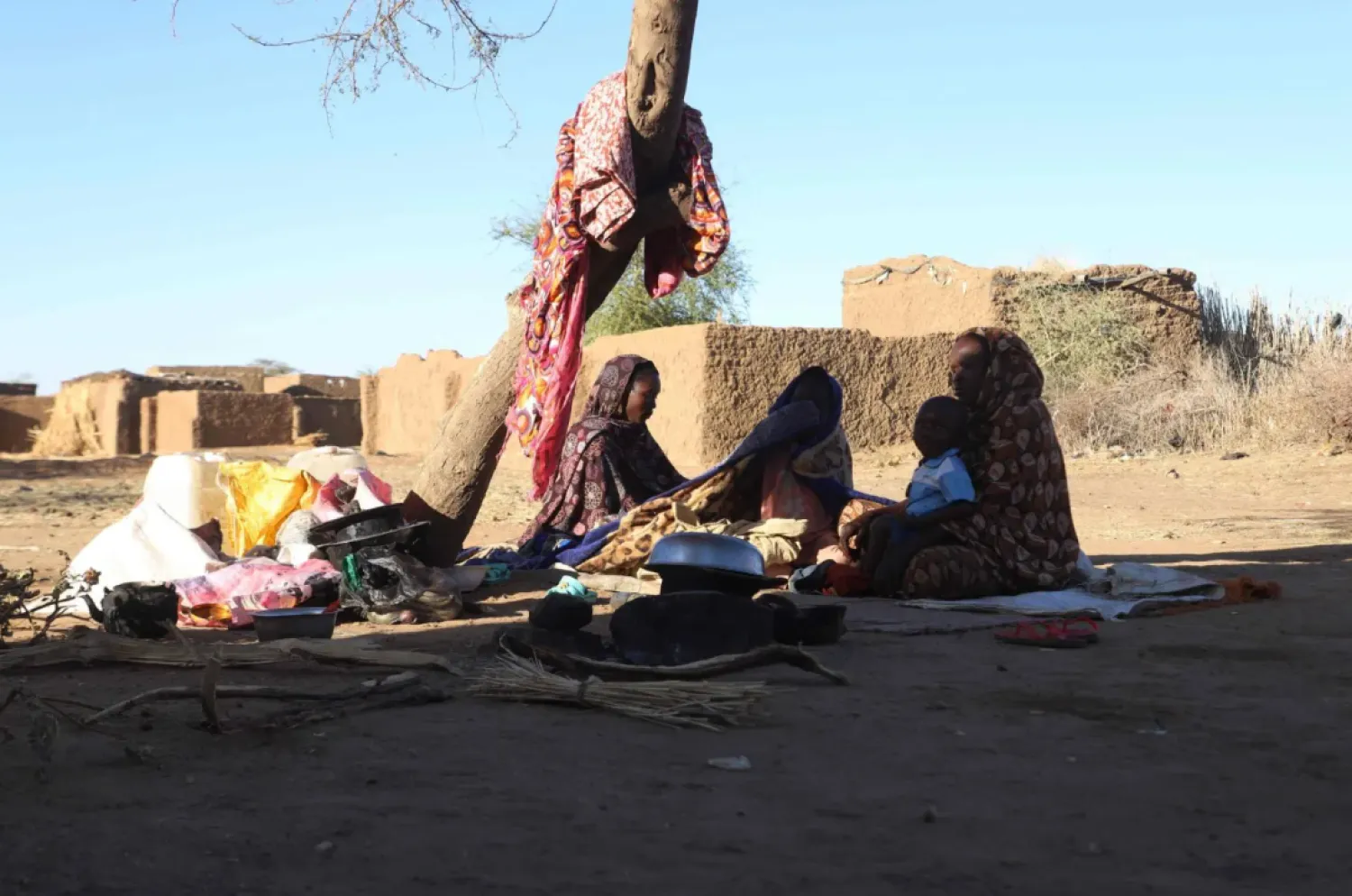
Sudanese displaced people who left El Fasher after its fall, sit in the shade in Tawila at the Rwanda camp reception point on December 17, 2025. (Photo by AFP)
TT

Atrocities in Sudan's El-Fasher Were 'Preventable Human Rights Catastrophe'

Sudanese displaced people who left El Fasher after its fall, sit in the shade in Tawila at the Rwanda camp reception point on December 17, 2025. (Photo by AFP)

The atrocities unleashed on El-Fasher in Sudan's Darfur region last October were a "preventable human rights catastrophe", the United Nations said Monday, warning they now risked being repeated in the neighbouring Kordofan region.


"My office sounded the alarm about the risk of mass atrocities in the besieged city of El-Fasher for more than a year ... but our warnings were ignored," UN rights chief Volker Turk told the Human Rights Council in Geneva.


He added that he was now "extremely concerned that these violations and abuses may be repeated in the Kordofan region".


Arab League Condemns Israel's Decisions to Alter Legal, Administrative Status of West Bank

A general view shows the opening session of the meeting of Arab foreign ministers at the Arab League Headquarters (Reuters)
TT

Arab League Condemns Israel's Decisions to Alter Legal, Administrative Status of West Bank

A general view shows the opening session of the meeting of Arab foreign ministers at the Arab League Headquarters (Reuters)

The General Secretariat of the Arab League strongly condemned decisions by Israeli occupation authorities to impose fundamental changes on the legal and administrative status of the occupied Palestinian territories, particularly in the West Bank, describing them as a dangerous escalation and a flagrant violation of international law, international legitimacy resolutions, and signed agreements, SPA reported.

In a statement, the Arab League said the measures include facilitating the confiscation of private Palestinian property and transferring planning and licensing authorities in the city of Hebron and the area surrounding the Ibrahimi Mosque to occupation authorities.

It warned of the serious repercussions of these actions on the rights of the Palestinian people and on Islamic and Christian holy sites.

The statement reaffirmed the Arab League’s firm support for the legitimate rights of the Palestinian people, foremost among them the establishment of their independent state on the June 4, 1967 borders, with East Jerusalem as its capital.