


Tunisian President: We Refuse to Throw People in Jail for their Opinions

Tunisians block a street during a demonstration in Tunis on May 24, 2024. (Photo by Sofiene HAMDAOUI / AFP)
TT

Tunisian President: We Refuse to Throw People in Jail for their Opinions

Tunisians block a street during a demonstration in Tunis on May 24, 2024. (Photo by Sofiene HAMDAOUI / AFP)

Tunisian President Kais Saïed said he refuses to throw people in jail for their opinions, adding that the freedom of expression is enshrined in the country's charter.
During a meeting on Friday with Justice Minister Leila Jaffel, the President said, “I am fully opposed to throwing people in jail for their opinions and this is guaranteed by law, even more than in other countries”.
He said the protection of rights and freedoms is an “irreversible choice” in Tunisia. However, he rejected any foreign interference in the country’s affairs.
“We do not tolerate attempts to harm the country and tarnish its image abroad. Any interference in internal affairs is rejected,” he said, adding that Tunisia’s sovereignty is above any consideration.
Hundreds of Tunisians participated in a protest in the capital Tunis on Friday following a series of arrests of lawyers and journalists.
Protesters chanted, “Down with police repression”, “No fear, the streets are the people's.” They also raised signs that read: “No sovereignty without freedom.”
The protesters denounced what they call the “systematic crackdown on freedom of expression and public freedoms in the country.” They demanded the repeal of Decree 54 of 2022, on the fight against cybercrime.
Two Tunisian media figures received one-year jail sentences last Wednesday after making comments the authorities deemed critical, in the latest prosecutions under Decree 54, a 2022 ban on spreading false news.
Civil society activist Hind Al-Shawish said the march was organized by activists known for their defense of the revolution.
She said the march “expresses our anger and protest against the regime of President Saeid, which has threatened the Tunisian people, suppressed freedoms of expression, and further crippled the economic situation.”
For his part, political activist Ziad Makhlouf demanded the withdrawal of Decree 54, which was approved by President Saeid. “The basic principles of this march call for diversity and the freedom of expression and organization,” he said.



EU Condemns Israel's West Bank Control Measures

The Israeli settlement of Har Homa, seen from the West Bank city of Bethlehem, Tuesday, Dec. 17, 2024. (AP)
TT

EU Condemns Israel's West Bank Control Measures

The Israeli settlement of Har Homa, seen from the West Bank city of Bethlehem, Tuesday, Dec. 17, 2024. (AP)

The European Union on Monday condemned new Israeli measures to tighten control of the West Bank and pave the way for more settlements in the occupied Palestinian territory, AFP reported.

"The European Union condemns recent decisions by Israel's security cabinet to expand Israeli control in the West Bank. This move is another step in the wrong direction," EU spokesman Anouar El Anouni told journalists.


Atrocities in Sudan's El-Fasher Were 'Preventable Human Rights Catastrophe'

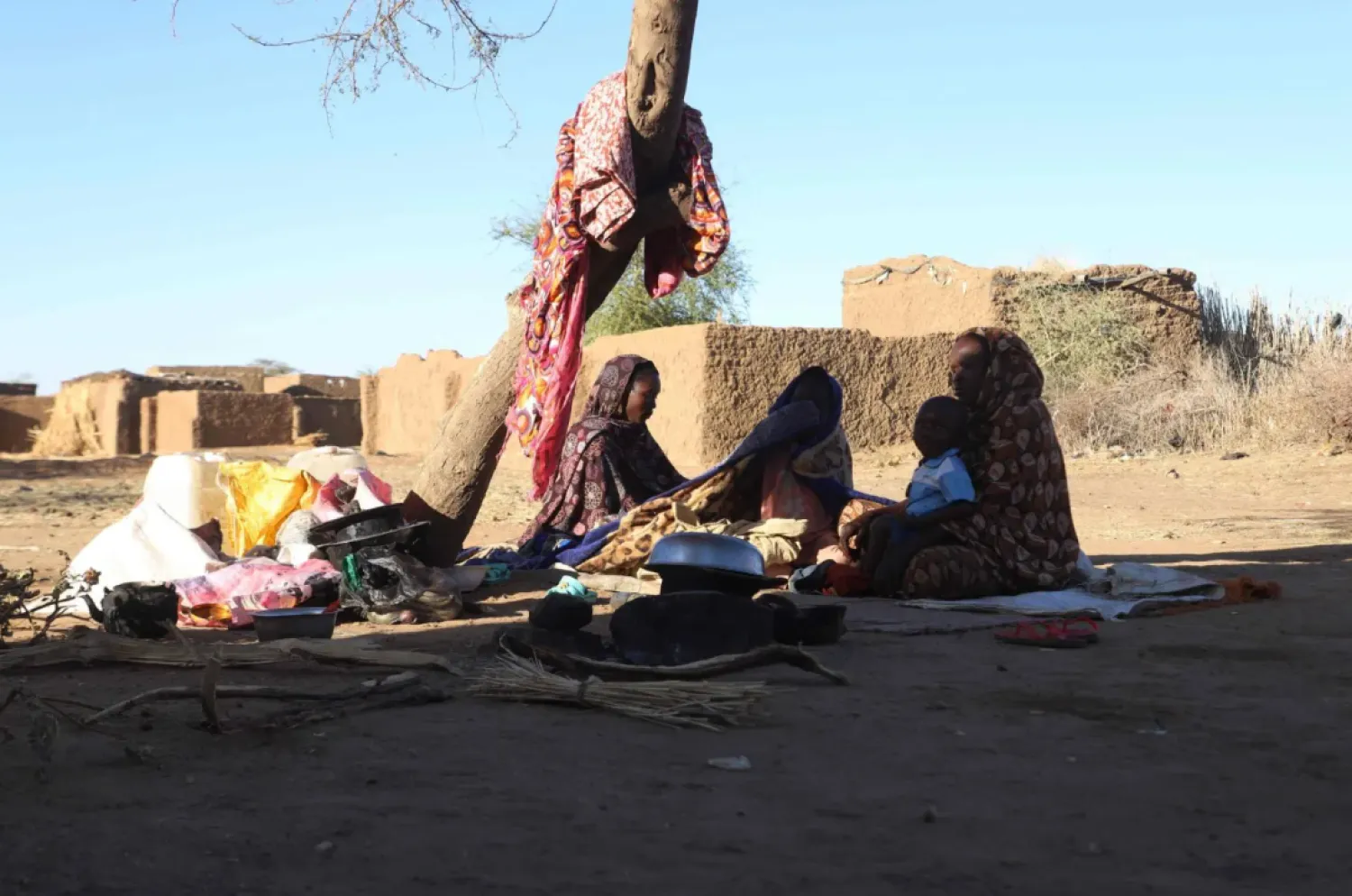
Sudanese displaced people who left El Fasher after its fall, sit in the shade in Tawila at the Rwanda camp reception point on December 17, 2025. (Photo by AFP)
TT

Atrocities in Sudan's El-Fasher Were 'Preventable Human Rights Catastrophe'

Sudanese displaced people who left El Fasher after its fall, sit in the shade in Tawila at the Rwanda camp reception point on December 17, 2025. (Photo by AFP)

The atrocities unleashed on El-Fasher in Sudan's Darfur region last October were a "preventable human rights catastrophe", the United Nations said Monday, warning they now risked being repeated in the neighbouring Kordofan region.


"My office sounded the alarm about the risk of mass atrocities in the besieged city of El-Fasher for more than a year ... but our warnings were ignored," UN rights chief Volker Turk told the Human Rights Council in Geneva.


He added that he was now "extremely concerned that these violations and abuses may be repeated in the Kordofan region".


Arab League Condemns Israel's Decisions to Alter Legal, Administrative Status of West Bank

A general view shows the opening session of the meeting of Arab foreign ministers at the Arab League Headquarters (Reuters)
TT

Arab League Condemns Israel's Decisions to Alter Legal, Administrative Status of West Bank

A general view shows the opening session of the meeting of Arab foreign ministers at the Arab League Headquarters (Reuters)

The General Secretariat of the Arab League strongly condemned decisions by Israeli occupation authorities to impose fundamental changes on the legal and administrative status of the occupied Palestinian territories, particularly in the West Bank, describing them as a dangerous escalation and a flagrant violation of international law, international legitimacy resolutions, and signed agreements, SPA reported.

In a statement, the Arab League said the measures include facilitating the confiscation of private Palestinian property and transferring planning and licensing authorities in the city of Hebron and the area surrounding the Ibrahimi Mosque to occupation authorities.

It warned of the serious repercussions of these actions on the rights of the Palestinian people and on Islamic and Christian holy sites.

The statement reaffirmed the Arab League’s firm support for the legitimate rights of the Palestinian people, foremost among them the establishment of their independent state on the June 4, 1967 borders, with East Jerusalem as its capital.
