Families Navigating Adolescence without Social Media

Teenagers themselves are aware that too much social media is bad for them ( The AP ) 
TT

Families Navigating Adolescence without Social Media

Teenagers themselves are aware that too much social media is bad for them ( The AP ) 

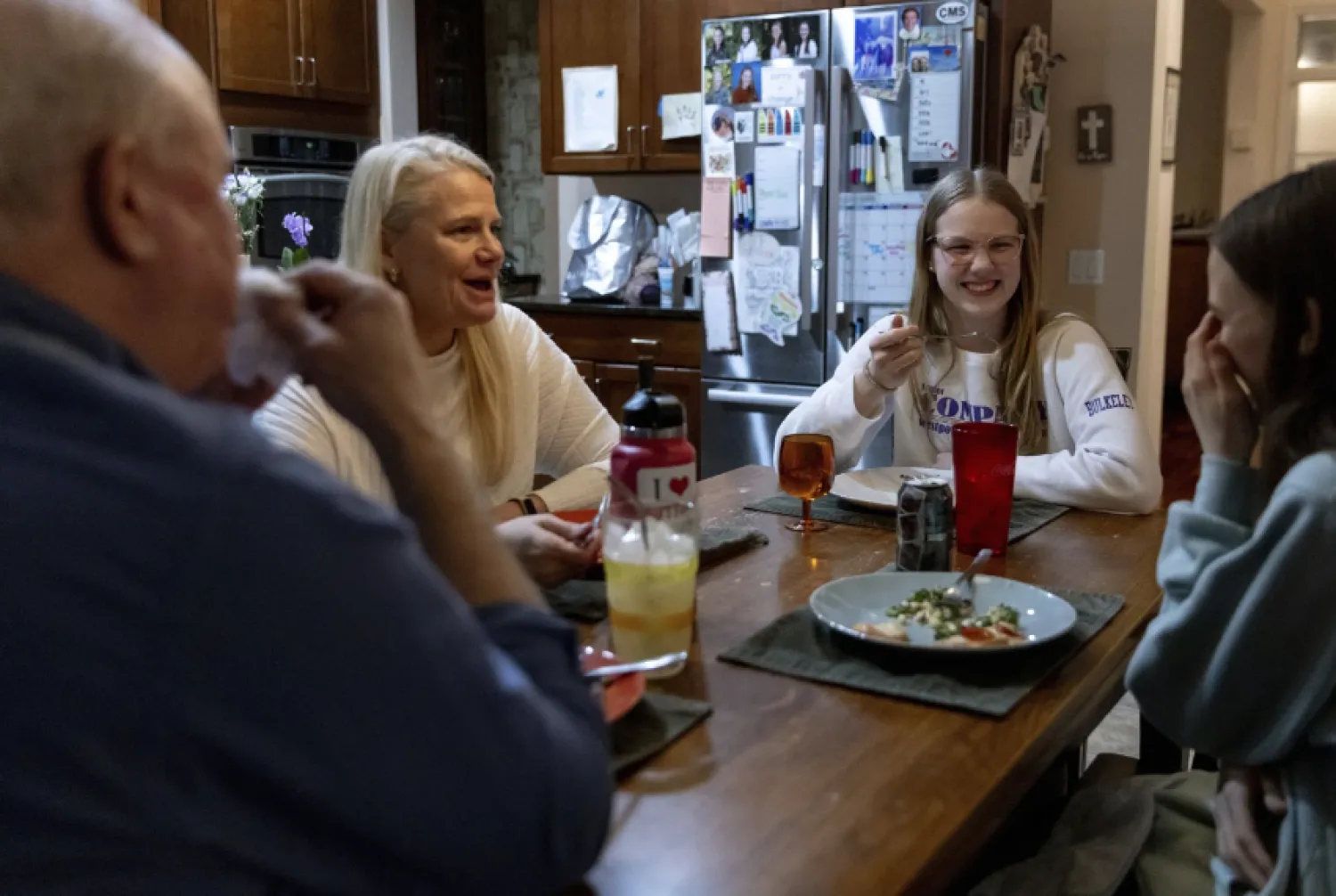
Kate Bulkeley's pledge to stay off social media in high school worked at first. She watched the benefits pile up: She was getting excellent grades. She read lots of books. The family had lively conversations around the dinner table and gathered for movie nights on weekends.

Then, as sophomore year got underway, the unexpected problems surfaced. She missed a student government meeting arranged on Snapchat. Her Model UN team communicates on social media, too, causing her scheduling problems. Even the Bible Study club at her Connecticut high school uses Instagram to communicate with members.

Gabriela Durham, a high school senior in Brooklyn, says navigating high school without social media has made her who she is today. She is a focused, organized, straight-A student with a string of college acceptances — and an accomplished dancer who recently made her Broadway debut. Not having social media has made her an “outsider,” in some ways. That used to hurt; now, she says, it feels like a badge of honor.

With the damaging consequences of social media increasingly well documented, some parents are trying to raise their children with restrictions or blanket bans. Teenagers themselves are aware that too much social media is bad for them, and some are initiating social media “cleanses” because of the toll it takes on mental health and grades, The AP reported.

But it is hard to be a teenager today without social media. For those trying to stay off social platforms while most of their peers are immersed, the path can be challenging, isolating and at times liberating. It can also be life-changing.

This is a tale of two families, social media and the ever-present challenge of navigating high school. It's about what kids do when they can't extend their Snapstreaks or shut their bedroom doors and scroll through TikTok past midnight. It's about what families discuss when they're not having screen-time battles. It's also about persistent social ramifications.

The journeys of both families show the rewards and pitfalls of trying to avoid social media in a world that is saturated by it.

-A FUNDAMENTAL CHANGE

Concerns about children and phone use are not new. But there is a growing realization among experts that the COVID-19 pandemic fundamentally changed adolescence. As youth coped with isolation and spent excessive time online, the pandemic effectively carved out a much larger space for social media in the lives of American kids.

No longer just a distraction or a way to connect with friends, social media has matured into a physical space and a community that almost all US teenagers belong to. Up to 95% of teenagers say they use social media, with more than one-third saying they are on it “almost constantly,” according to the Pew Research Center.

More than ever, teenagers live in a seamless digital and non-digital world in ways that most adults don’t recognize or understand, says Michael Rich, a pediatrics professor at Harvard Medical School and head of the nonprofit Digital Wellness Lab at Boston Children’s Hospital.

“Social media is now the air kids breathe,” says Rich, who runs the hospital’s Clinic for Interactive Media and Internet Disorders.

For better or worse, social media has become a home-base for socializing. It’s where many kids turn to forge their emerging identities, to seek advice, to unwind and relieve stress. It impacts how kids dress and talk. In this era of parental control apps and location tracking, social media is where this generation is finding freedom.

It is also increasingly clear that the more time youth spend online, the higher the risk of mental health problems.

Kids who use social media for more than three hours a day face double the risk of depression and anxiety, according to studies cited by US Surgeon General Vivek Murthy, who issued an extraordinary public warning last spring about the risks of social media to young people.

Those were the concerns of the Bulkeleys and Gabriela’s mother, Elena Romero. Both set strict rules starting when their kids were young and still in elementary school. They delayed giving phones until middle school and made social media off limits until 18. They educated the girls, and their younger siblings, on the impact of social media on young brains, on online privacy concerns, on the dangers of posting photos or comments that can come back to haunt you.

In the absence of social media, at least in these two homes, there is a noticeable absence of screen time battles. But the kids and parents agree: It’s not always easy.

-WHEN IT'S EVERYWHERE, IT'S HARD TO AVOID

At school, on the subway and at dance classes around New York City, Gabriela is surrounded by reminders that social media is everywhere — except on her phone.

Growing up without it has meant missing out on things. Everyone but you gets the same jokes, practices the same TikTok dances, is up on the latest viral trends. When Gabriela was younger, that felt isolating; at times, it still does. But now, she sees not having social media as freeing.

“From my perspective, as an outsider,” she says, “it seems like a lot of kids use social media to promote a facade. And it’s really sad. Because social media is telling them how they should be and how they should look. It’s gotten to a point where everyone wants to look the same instead of being themselves.”

There is also friend drama on social media and a lack of honesty, humility and kindness that she feels lucky to be removed from.

Gabriela is a dance major at the Brooklyn High School of the Arts and dances outside of school seven days a week. Senior year got especially intense, with college and scholarship applications capped by an unexpected highlight of getting to perform at Broadway’s Shubert Theatre in March as part of a city showcase of high school musicals.

After a recent Saturday afternoon dance class in a Bronx church basement, the diverging paths between Gabriela and her peers is on full display. The other dancers, aged 11 to 16, sit cross-legged on the linoleum floor talking about social media.

“I am addicted,” says 15-year-old Arielle Williams, who stays up late scrolling through TikTok. “When I feel like I’m getting tired I say, ‘One more video.’ And then I keep saying, ‘One more video.’ And I stay up sometimes until 5 a.m.”

The other dancers gasp. One suggests they all check their phones’ weekly screen time.

“OH. MY,” says Arielle, staring at her screen. “My total was 68 hours last week.” That included 21 hours on TikTok.

Gabriela sits on the sidelines of the conversation, listening silently. But on the No. 2 subway home to Brooklyn, she shares her thoughts. “Those screen-time hours, it’s insane.”

As the train rumbles from the elevated tracks in the Bronx into the underground subway tunnels in Manhattan, Gabriela is on her phone. She texts with friends, listens to music and consults a subway app to count down the stops to her station in Brooklyn. The phone for her is a distraction limited to idle time, which has been strategically limited by Romero.

“My kids’ schedules will make your head spin,” Romero says as the family reconvenes Saturday night in their three-bedroom walkup in Bushwick. On school days, they’re up at 5:30 a.m. and out the door by 7. Romero drives the girls to their three schools scattered around Brooklyn, then takes the subway into Manhattan, where she teaches mass communications at the Fashion Institute of Technology.

Grace, 11, is a sixth grade cheerleader active in Girl Scouts, along with Gionna, 13, who sings, does debate team and has daily rehearsals for her middle school theater production.

“I’m so booked my free time is to sleep,” says Gabriela, who tries to be in bed by 10:30 p.m.

According to The AP, in New York City, it’s common for kids to get phones early in elementary school, but Romero waited until each daughter reached middle school and started taking public transportation home alone. Years ago, she sat them down to watch “The Social Dilemma,” a documentary that Gabriela says made her realize how tech companies manipulate their users.

Her mom’s rules are simple: No social media on phones until 18. The girls are allowed to use YouTube on their computers but not post videos. Romero doesn’t set screen-time limits or restrict phone use in bedrooms.

“It’s a struggle, don’t get me wrong,” Romero says. Last year, the two younger girls “slipped.” They secretly downloaded TikTok for a few weeks before getting caught and sternly lectured.

Romero is considering whether to bend her rule for Gionna, an avid reader interested in becoming a Young Adult “Bookstagrammer” — a book reviewer on Instagram. Gionna wants to be a writer when she grows up and loves the idea that reviewers get books for free.

Her mother is torn. Romero's main concern was social media during middle school, a critical age where kids are forming their identity. She supports the idea of using social media responsibly as a tool to pursue passions.

“When you’re a little older,” she tells her girls, “you’ll realize Mom was not as crazy as you thought.”

KAUST Unveils Landmark Coral Facility on Red Sea, Advancing Saudi Scientific Expertise and Marine Conservation

KCRI is designed to restore the Red Sea reefscape and offer a framework that coral restoration programs worldwide can adopt. (SPA)
TT

KAUST Unveils Landmark Coral Facility on Red Sea, Advancing Saudi Scientific Expertise and Marine Conservation

KCRI is designed to restore the Red Sea reefscape and offer a framework that coral restoration programs worldwide can adopt. (SPA)

The King Abdullah University of Science and Technology (KAUST) launched the KAUST Coral Restoration Initiative’s large-scale coral facility, restoring and advancing one of Saudi Arabia’s most precious natural assets, reported the Saudi Press Agency on Wednesday.

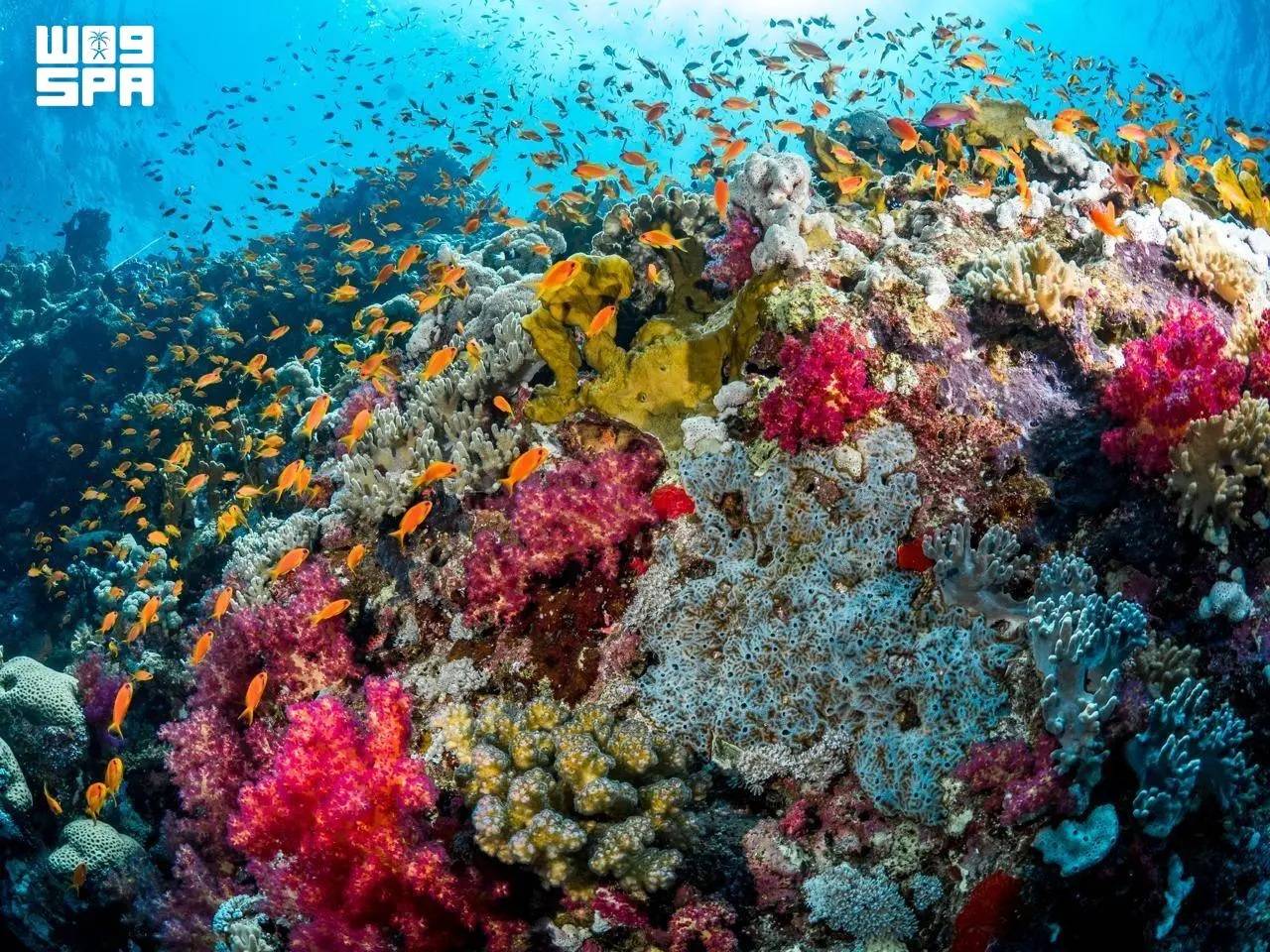
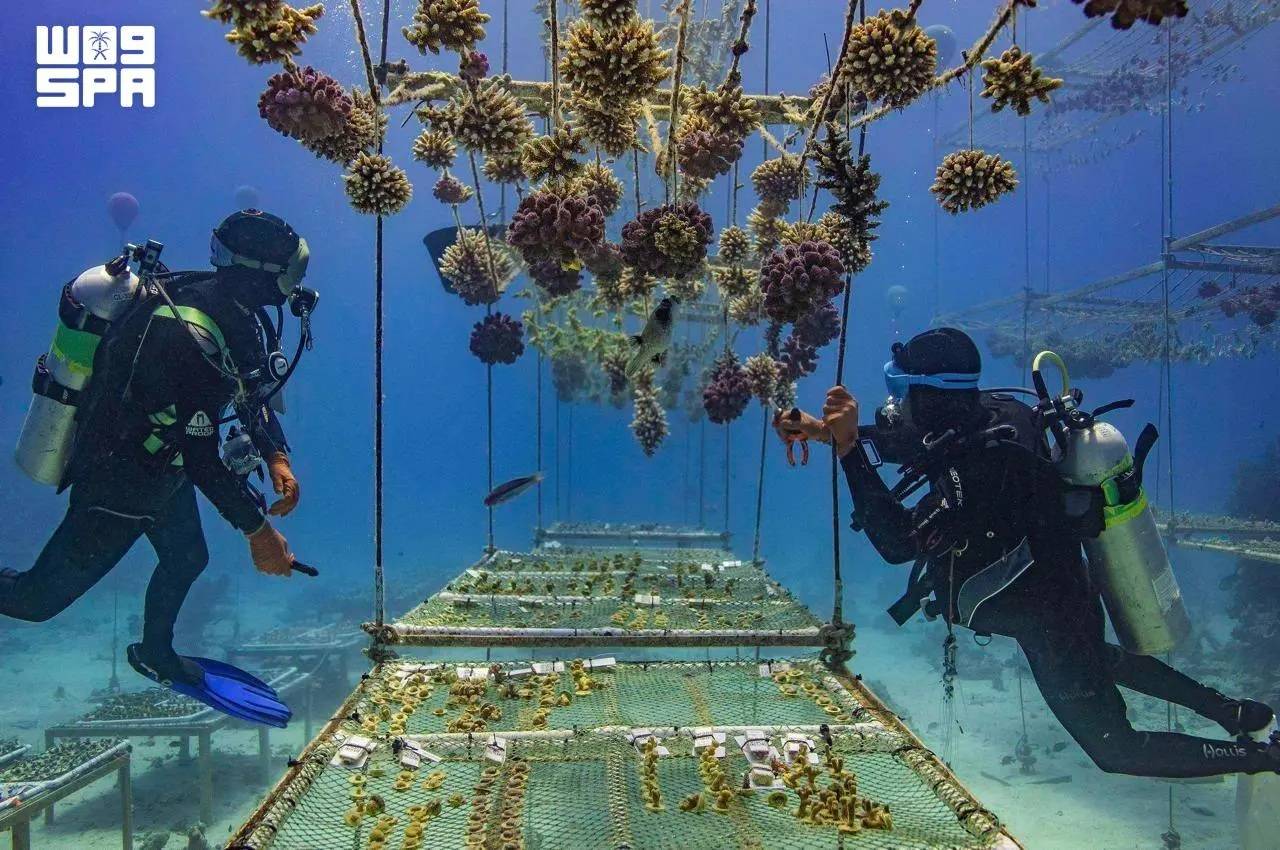
On Saudi Arabia’s Red Sea coast, the KAUST Coral Restoration Initiative (KCRI) land-based nursery and research campus is now growing corals at scale. It is designed to produce up to 360,000 corals a year, to outplant more than two million corals across 100 hectares of reef at Shushah Island by 2030, and to establish a resilient reef ecosystem by 2040.

This opening of the world’s largest coral restoration facility, announced at COP31 in Antalya, arrives at a moment of acute urgency for the world’s reefs. The fourth global coral bleaching event, confirmed by NOAA as the most severe in recorded history, affected more than 84% of the world’s reef area between 2023 and 2025.

Coral reefs support around a quarter of all marine species, protect coastlines from storms and sustain the livelihoods of more than 500 million people. (SPA)

The Red Sea is the right place to start. Its corals live in some of the warmest, saltiest waters on Earth, and they hold lessons about resilience that reefs everywhere will need. KCRI combines the Red Sea’s unique corals with KAUST’s world-class marine science to learn how corals can be grown at scale and conditioned to withstand warmer water before they return to the reef.

The initiative also draws on the expertise of the Coral Research and Development Accelerator Platform (CORDAP), which works internationally to accelerate scientific and technological solutions for coral reef conservation and restoration.

KCRI brings four components together in a single restoration system, including a large-scale land-based coral nursery, sea-based nurseries, more than 50 research programs spanning coral probiotics, heat-resilient corals, robotics and AI-driven modelling and eCoral, an AI-driven digital twin of the reefscape that guides where and how every coral is planted and monitored.

Saudi scientists, divers and aquarists are playing an important role in KCRI’s restoration efforts, developing specialist expertise in coral cultivation, marine science and reef restoration. (SPA)

Saudi scientists, divers and aquarists are playing an important role in KCRI’s restoration efforts, developing specialist expertise in coral cultivation, marine science and reef restoration. Beyond its restoration activities, KCRI represents a long-term investment in Saudi Arabia’s marine science capabilities.

Coral reefs support around a quarter of all marine species, protect coastlines from storms and sustain the livelihoods of more than 500 million people. KCRI is designed to restore the Red Sea reefscape and offer a framework that coral restoration programs worldwide can adopt.

KAUST is also working with international partners on how coral diversity can be safeguarded for future generations.


Portugal Closes All Schools and Non-Essential Services Ahead of a Major Atlantic Storm

Heavy machinery clears the debris from a landslide along the Marocos road in Machico municipality, on the Portuguese island of Madeira, due to severe weather caused by the passage of Storm Charles, 11 November 2026. (EPA)
TT

Portugal Closes All Schools and Non-Essential Services Ahead of a Major Atlantic Storm

Heavy machinery clears the debris from a landslide along the Marocos road in Machico municipality, on the Portuguese island of Madeira, due to severe weather caused by the passage of Storm Charles, 11 November 2026. (EPA)

Portugal closed all schools and shuttered non-essential public services on Wednesday as a major Atlantic storm headed for the country's mainland.

Streets remained largely deserted ahead of the arrival of Storm Charles after the government told people to stay at home as heavy rain and rough seas were expected to batter the Portuguese coast, with wind gusts of up to 140 kph (85 mph).

It was the first time in living memory that Portugal’s roughly 8,000 schools had canceled classes nationwide over a storm forecast.

Buses without passengers drove through the country's capital, Lisbon, where some streets flooded due to clogged drains. A national supermarket chain closed its stores, while an international technology conference in Lisbon attended by around 70,000 people called off the day's events.

In January, the country's center-right government faced harsh criticism for its weak response when Storm Kristin hit central Portugal, felling thousands of trees and causing widespread property damage that is still being repaired.

The brunt of Storm Charles was expected to hit the Atlantic coast on Wednesday afternoon and evening, coming from the southwest after it had struck the Portuguese island of Madeira on Tuesday with 130 kph (81 mph) winds.


Once the World's Fastest, Ocean Liner Will Become Largest Artificial Reef

The S.S. United States crossed the Atlantic more than 800 times. (Getty Images)
TT

Once the World's Fastest, Ocean Liner Will Become Largest Artificial Reef

The S.S. United States crossed the Atlantic more than 800 times. (Getty Images)

An ocean liner that is longer than the Titanic and was once the fastest on the seas is headed to a final home on the floor of the Gulf of Mexico as the world's largest artificial reef.

The S.S. United States is scheduled to be sunk Wednesday off the coast of the Florida Panhandle, fulfilling a long-planned $13.5 million project aimed at attracting more divers and fishing enthusiasts to the area while creating a home for tuna, marlin and swordfish.

The project will keep what had been a technological marvel when it made its maiden voyage in 1952 from becoming scrap metal.

The S.S. United States crossed the Atlantic more than 800 times, carrying old Hollywood stars like Grace Kelly and Elizabeth Taylor. Other passengers have included President John F. Kennedy and Britain’s former King Edward VIII. In 1968, a young Bill Clinton took it when he went to Oxford University, decades before he was elected president.

In preparation for the sinking, organizers removed the 65-foot smokestacks and plan to have them anchor a new museum that celebrates the ship. Once aboard, passengers were treated to dinners that included caviar, roast duckling, smoked ox tongue and Calf's Head en Tortue.

“It was our goal to make sure that she wasn’t lost forever,” said David Lawrence, a member of the board for the S.S. United States Conservancy, which is dedicated to preserving the ship.

The ship will be sunk without using explosives

Federal environmental and explosives rules prevent Okaloosa County, Florida, and its contractor from using explosives to scuttle the ship, said Nick Tomecek, the county's spokesperson. Concerns about inclement weather prompted officials to move up the sinking by a day.

The S.S. United States has pipes that pulled seawater into tanks as part of the system that cooled its boilers, he said, and those tanks have been removed so that once the valves are opened, water will flood the hull. Workers also have cut 10-foot by 10-foot holes in the decks, and more than 400 portholes have been removed.

The ship is to sink in about 180 feet (55 meters) of water, with its top deck about 60 feet (18 meters) below the surface — shallow enough that inexperienced divers can visit. It will settle on the floor of the waters about 25 miles (40 kilometers) southwest of Destin, between Panama City and Pensacola.

Larger than the Titanic, the ship's first voyage set a speed record

More than 3,000 workers helped build the S.S. United States in 1950 and 1951 in Virginia. An Associated Press reporter and President Harry Truman's daughter, Margaret, were among 1,700 passengers for the first voyage.

The ship's average speed for that trip was almost 41 miles (66 kilometers) per hour, besting a record set by Britain's R.M.S. Queen Mary in 1938 by 4.5 miles (7.2 kilometers) per hour, according to the AP's dispatch.

The S.S. United States set the record even though its journey ended in the face of a full gale that reached 69 miles (111 kilometers) per hour — “so strong it blew a ping pong table off the deck,” AP reported.

At 990 feet (302 meters), the ship is 108 feet (33 meters) longer than the ill-fated Titanic, which hit an iceberg and sank on its first voyage across the Atlantic.

“She really embodies and expresses this country’s best,” said Susan Gibbs, the granddaughter of the ship's designer. “She represents pride and resilience and strength and beauty.”

The ship's resting place has many artificial reefs

About 500 artificial reefs are located in the waters near where the S.S. United States will rest, Tomecek said.

Previously, the largest artificial reef came from the 2006 scuttling of an aircraft carrier, the USS Oriskany in the Gulf off of Pensacola — near enough to the S.S. United States site that an experienced diver could visit both in the same day, Tomecek said. The Oriskany, launched in 1950, was 911 feet (278 meters) in length.

“We're trying to be the best diving destination in the world,” Tomecek said.

The ship was decommissioned in 1969. Attempts by a hotel magnate and Norwegian Cruise Lines to use the ship never floated, and from 1996 until recently, it sat along a dock in Philadelphia.

“I’m just so happy that we are able to save parts of her,” Gibbs said.