US Envoy Tries to Calm Israel-Lebanon Tensions

Senior Advisor to the US President Amos Hochstein (L) meets with Lebanese Parliament Speaker Nabih Berri in Beirut. Photo: Parliament of Lebanon/dpa
TT

US Envoy Tries to Calm Israel-Lebanon Tensions

Senior Advisor to the US President Amos Hochstein (L) meets with Lebanese Parliament Speaker Nabih Berri in Beirut. Photo: Parliament of Lebanon/dpa

Israeli strikes in southern Lebanon killed three Hezbollah fighters on Wednesday, the militant group said, as US envoy tasked with avoiding a devastating regional war returned to Israel after meeting officials in Lebanon.
United States President Joe Biden's senior adviser Amos Hochstein, met with House Speaker Nabih Berri and other officials in Lebanon and then travelled to Israel in his latest attempt to deescalate tensions. Hochstein told reporters in Berlin on Tuesday that it was a “very serious situation” and that a diplomatic solution to prevent a larger war was urgent.
Hezbollah has new weapons and intelligence capabilities that could help it target more critical positions deeper inside Israel in case of an all-out war, the militant group's leader warned on Wednesday.
Hassan Nasrallah’s comments came as the monthslong cross-border conflict simmering between Hezbollah and Israel appears to be reaching a boiling point, and a day after a top US envoy met Lebanese officials in his latest attempt to ease tensions.
"We now have new weapons. But I won’t say what they are," he said in a televised address commemorating a top Hezbollah commander killed in an Israeli airstrike in southern Lebanon last week. “When the decision is made, they will be seen on the front lines.”
Hezbollah has used locally made explosive drones for the first time since the start of the Israel-Hamas war in Gaza in October, as well as surface-to-air missiles to chase off Israeli jets.
Nasrallah said in 2021 that Hezbollah has 100,000 fighters but now he claimed the number is much higher, without elaborating. He also said he has rejected offers from allied countries and militias in the region that could add tens of thousands to his ranks.
A nearly 10-minute-long video allegedly filmed by a Hezbollah surveillance drone and released Tuesday shows parts of Haifa — a city far from the Israel-Lebanon border. In his speech Wednesday, Nasrallah said Hezbollah has much more footage — an apparent threat it could reach sites deep in Israel.
Israel’s military chief, Lt. Gen. Herzi Halevi, visited Israeli air-defense soldiers near the border with Lebanon on Wednesday, saying Israel was aware of Hezbollah's capabilities demonstrated in the video and has solutions for these threats.
“We of course have infinitely greater capabilities," he said. "I think the enemy is only familiar with a few of them and (we) will confront them at the right time.”
Hezbollah, an ally of the Palestinian militant group Hamas, has been exchanging strikes with Israel almost daily since the war in Gaza erupted on Oct. 7, with the aim to pull Israeli forces away from the embattled Gaza Strip.
Hezbollah's attacks escalated after Israel expanded its offensive into the southern Gaza city of Rafah in May, and spiked further in June after an Israeli strike killed high-ranking Hezbollah commander Taleb Sami Abdullah, the most senior militant killed so far during the Israel-Hamas war.
Also Tuesday, the Israeli army said it has “approved and validated” plans for an offensive in Lebanon, although the decision to actually launch such an operation would have to come from the country's political leadership.
Nasrallah said a wider war with Lebanon would have regional implications and that Hezbollah would attack any other country in the region that assisted Israel in the war effort, citing Cyprus, which has hosted Israeli forces for training exercises. He suggested Cyprus might allow Israel to use its bases in event of a wider war.
In response, Cypriot President Nikos Christodoulides said his island nation “is in no way involved” in any military operations in the region. Cyprus is “part of the solution, not part of the problem” he said, pointing out the Cyprus-Gaza maritime corridor used to deliver aid to the Palestinian territory.
Only a cease-fire in Gaza would halt the Lebanon-Israel border fighting or the attacks on Western and Israel-linked targets from Yemen's Houthis and Iraqi militias allied with Hezbollah.
Israel views Hezbollah as its most direct threat, and the two fought a 34-day war in 2006 that ended in a stalemate. Hezbollah's military capabilities have grown significantly since then, and the United States and Israel estimate the group, along with other Lebanese militant factions, has about 150,000 missiles and rockets. Hezbollah also has been working on precision-guided missiles.
Hezbollah said at least four of its fighters were killed Wednesday in Israeli strikes as Hochstein returned to Israel for a new round of meetings there.
Lebanese state media reported the strikes along the border and near the coastal city of Tyre, about 30 kilometers (20 miles) away. The Israeli military said two Hezbollah launches damaged several vehicles in northern Israel.
Kamel Mohanna, the head of the Amel Association, a nongovernmental organization providing health services in different areas of Lebanon, said the association health center in the town of Khiam was hit and damaged by the Israeli shelling.
Israeli strikes have killed more than 400 people in Lebanon, most of them Hezbollah and other militants, but also over 80 civilians and non-combatants. In northern Israel, 16 soldiers and 11 civilians have been killed by strikes launched from Lebanon.



Türkiye, Hamas Discuss Gaza Ceasefire Deal’s Second Phase, Turkish Source Says

Palestinian children play next to tents in a makeshift camp for displaced people set up on the beach in Gaza City, Tuesday, Dec. 16, 2025. (AP)
TT

Türkiye, Hamas Discuss Gaza Ceasefire Deal’s Second Phase, Turkish Source Says

Palestinian children play next to tents in a makeshift camp for displaced people set up on the beach in Gaza City, Tuesday, Dec. 16, 2025. (AP)

Turkish Foreign Minister Hakan Fidan on Wednesday ​met with Hamas political bureau officials in Ankara to discuss the ceasefire in Gaza and advancing the ‌agreement to ‌its ‌second ⁠phase, ​a ‌Turkish Foreign Ministry source said according to Reuters.

The source said the Hamas officials told Fidan that they had fulfilled ⁠their requirements as ‌part of the ‍ceasefire ‍deal, but that Israel's ‍continued targeting of Gaza aimed to prevent the agreement from ​moving to the next phase.

The Hamas members ⁠also said humanitarian aid entering Gaza was not sufficient, and that goods like medication, equipment for housing, and fuel were needed, the source ‌added.


Israel Says It Killed Hamas Financial Officer in Gaza

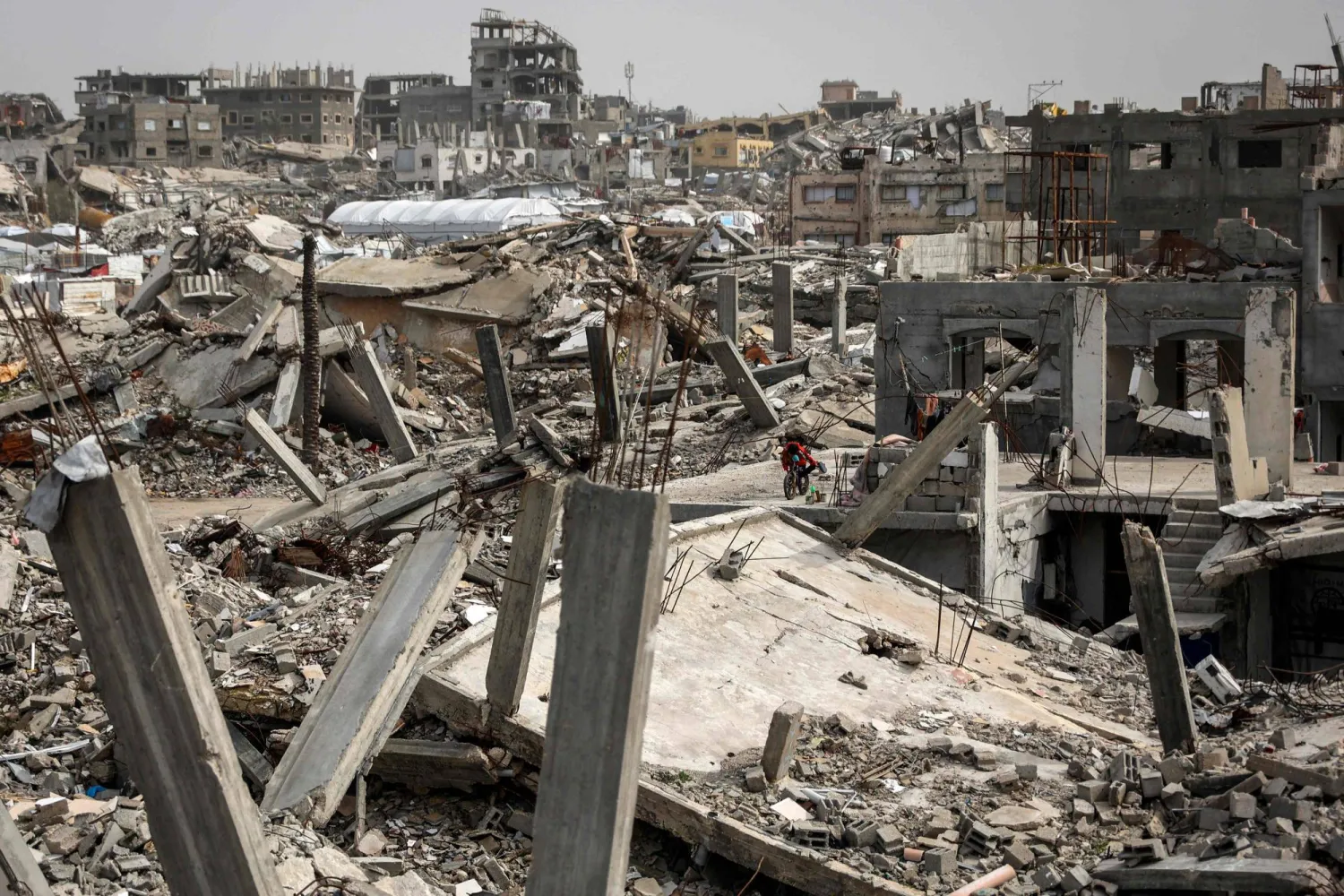
Buildings destroyed during Israeli ground and air operations stand in the Gaza Strip, as seen from southern Israel, Thursday, Dec. 18, 2025. (AP)
TT

Israel Says It Killed Hamas Financial Officer in Gaza

Buildings destroyed during Israeli ground and air operations stand in the Gaza Strip, as seen from southern Israel, Thursday, Dec. 18, 2025. (AP)

The Israeli army said Wednesday that it had identified a Hamas financial official it killed two weeks ago in a strike in the Gaza Strip.

Abdel Hay Zaqut, a financial official in Hamas's armed wing, on December 13 in the same strike that killed military commander Raed Saad, seen by Israel as one of the architects of Hamas's October 7, 2023 attack.

The Israeli army's Arabic-language spokesperson, Avichay Adraee, said on Wednesday that Zaqut was killed while he was in a vehicle alongside Raed Saad in "a joint operation by the Israeli army and the Shin Bet", Israel's internal security agency.

Zaqut "belonged to the financial department of the armed wing" of Hamas, Adraee wrote on X.

"Over the past year, Zaqut was responsible for collecting and transferring tens of millions of dollars to Hamas's armed wing with the aim of continuing the fight against the State of Israel," he said.

Hamas's leader for the Gaza Strip, Khalil al-Hayya, confirmed on December 14 the death of Saad and "his companions", though he did not name Zaqut.

The Israeli army said Saad headed the weapons production headquarters of Hamas's military wing and oversaw the group's build-up of capabilities.

Since October 10, a fragile truce has been in force in the Gaza Strip, although Israel and Hamas accuse each other of violations.

The war began with Hamas's 2023 attack on Israel, which resulted in the deaths of more than 1,200 people, most of them civilians, according to an AFP tally based on official figures.

Israel's retaliatory campaign has killed more than 70,000 people in the Gaza Strip, according to the health ministry in the Hamas-run territory, a figure the UN deems is credible.


Lebanon Central Bank Governor Expresses Reservations Over Draft Law on Deposit Recovery

 Lebanese Prime Minister Nawaf Salam heads a cabinet meeting in Beirut, Lebanon December 23, 2025. (Reuters)
Lebanese Prime Minister Nawaf Salam heads a cabinet meeting in Beirut, Lebanon December 23, 2025. (Reuters)
TT

Lebanon Central Bank Governor Expresses Reservations Over Draft Law on Deposit Recovery

 Lebanese Prime Minister Nawaf Salam heads a cabinet meeting in Beirut, Lebanon December 23, 2025. (Reuters)
Lebanese Prime Minister Nawaf Salam heads a cabinet meeting in Beirut, Lebanon December 23, 2025. (Reuters)

Lebanon’s Central Bank governor has expressed some reservations over a draft law allowing depositors to gradually recover funds ​frozen in the banking system since a financial collapse in 2019, a move critical to reviving the economy.

Karim Souaid described the proposed timetable for the cash component of deposit repayments as "somewhat ambitious" in a statement on Tuesday.

He suggested ‌it may ‌be adjusted without hindering ‌the depositors' ⁠rights ​guarantee "regular, ‌uninterrupted, and complete payments over time".

He also urged the cabinet to conduct a careful review of the draft law , calling for clarifications to ensure fairness and credibility before it is submitted to parliament.

The central ⁠bank governor said the draft required further refinement, ‌including clearer provisions to guarantee equitable ‍treatment of depositors ‍and to reinforce the state’s commitments ‍under the law.

The 2019 financial collapse - the result of decades of unsustainable financial policies, waste and corruption - led the state to default ​on its sovereign debt and sank the Lebanese pound.

The draft law marks ⁠the first time Beirut has put forward legislation aimed at addressing a vast funding shortfall - estimated at $70 billion in 2022 but now believed to be higher.

Prime Minister Nawaf Salam on Monday urged ministers to swiftly approve the draft legislation.

The cabinet discussed the law on Monday and Tuesday and is set to continue discussions ‌on Friday.