


Israel Strikes Kill at Least 11 in Gaza, Tanks Push Further into Rafah

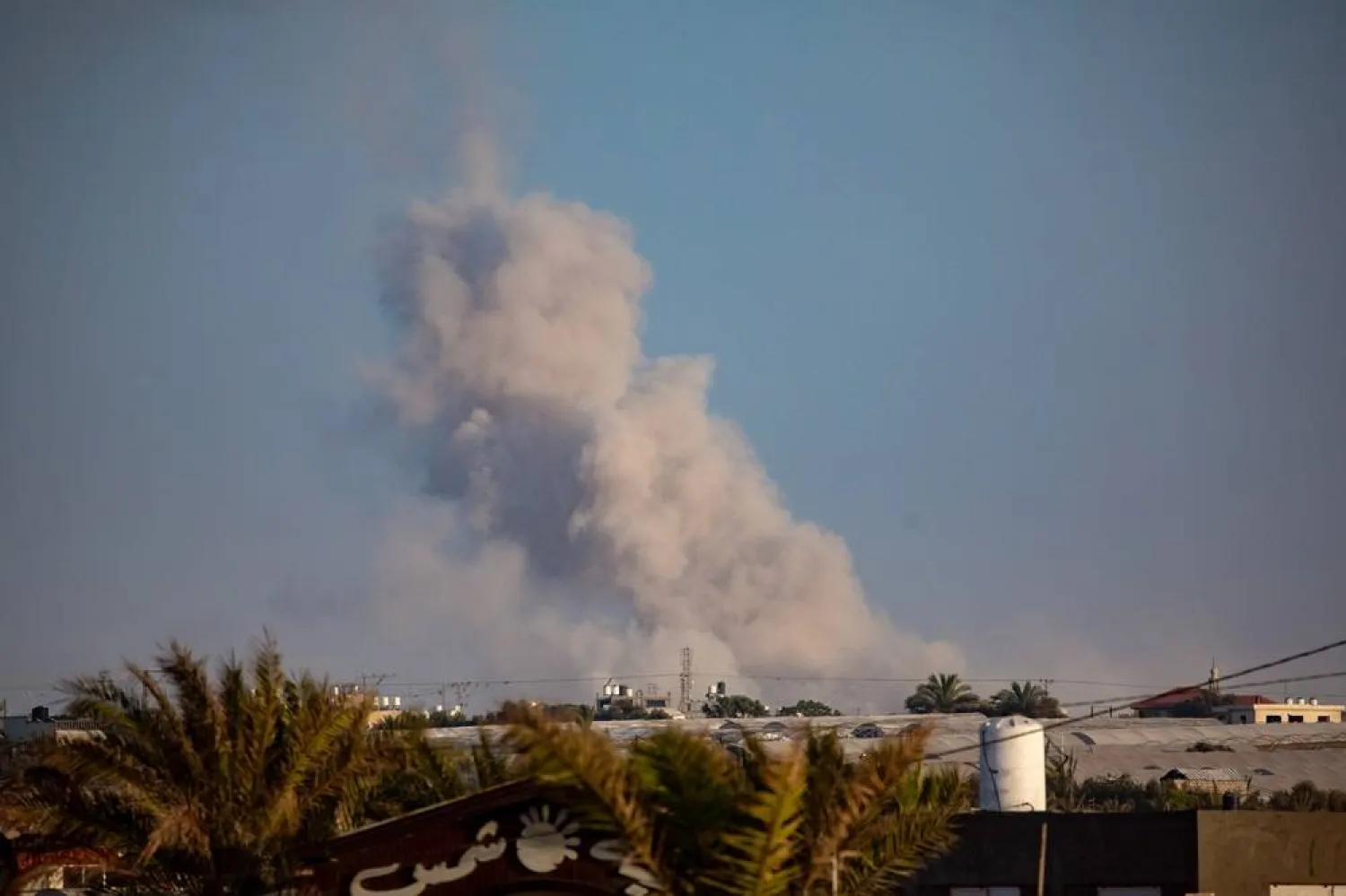
Smoke rises after an Israeli air strike on Rafah, southern Gaza Strip, 23 June 2024. (EPA)
TT

Israel Strikes Kill at Least 11 in Gaza, Tanks Push Further into Rafah

Smoke rises after an Israeli air strike on Rafah, southern Gaza Strip, 23 June 2024. (EPA)

Two Israeli air strikes targeting aid supplies killed at least 11 Palestinians in Gaza on Monday, medics said, as Israeli tanks pushed deeper into Rafah in the south and fought their way back into areas in the north they had already subdued months ago.

One strike at a food distribution center in Gaza City, near the Shati historic refugee camp, killed three people. Another, near Bani Suhaila town in the southern Gaza Strip, killed at least eight, including guards who accompany aid trucks, the medics said.

There was no immediate comment from Israel, which denies attacking aid efforts and accuses militants of causing harm to civilians by operating among them.

Overnight, an Israeli air strike at a medical clinic in Gaza City killed the director of Gaza's Ambulance and Emergency Department, the enclave's health ministry said. Israel's military said that strike had killed a senior Hamas armed commander.

The health ministry said the killing of Hani al-Jaafarawi brought the number of medical staff killed by Israeli fire since Oct. 7 to 500. At least 300 others have so far been detained.

In a statement, the Israeli military said the strike targeted Mohammad Salah, who it said was responsible for developing Hamas weaponry.

NO CEASEFIRE ACCORD

More than eight months into the fighting, international mediation backed by the United States has so far failed to bring a ceasefire agreement. Hamas says any agreement must bring an end to the war, while Israel says it will agree only temporary pauses in fighting until Hamas is eradicated.

In Rafah, near the border with Egypt, Israeli forces which took control of the eastern, southern, and central parts of the city pursued their raid into the western and northern areas, said residents, describing heavy fighting.

On Sunday, residents had said Israeli tanks had advanced to the edge of the Mawasi displaced persons' camp in the northwest of Rafah, forcing many families to leave northward to Khan Younis and to Deir Al-Balah in central Gaza, the only city in the enclave where tanks have not yet invaded.

"The situation in Tel Al-Sultan, in western Rafah, remains very dangerous. Drones and Israeli snipers are hunting people who try to check on their houses, and tanks continue to take over areas overseeing Al-Mawasi further west," Bassam, a resident of Rafah, told Reuters via a chat app.

The Israeli military said forces continued "intelligence-based targeted operations" in Rafah, locating weapons and rocket launchers and killing fighters "who posed threats to them."

In the north of the enclave, where Israel had said its forces completed operations months ago, residents said tanks had pushed back into Gaza City's Zeitoun suburb and were pounding several areas there.

In Deir al-Balah, now the last refuge for many thousands of Gazans following the assault on Rafah, medics at a clinic were trying to treat malnutrition in children and measure the extent of hunger stalking the Strip.

"With the displacement, communities are settling in new locations that do not have access to clean water, or there is not adequate access to food," said Muaamar Said, a doctor with aid group International Medical Corps. "We fear there are more cases being missed."

NETANYAHU SAYS INTENSE FIGHTING COULD END SOON

Israel's ground and air campaign in Gaza was triggered when Hamas-led fighters stormed into southern Israel on Oct. 7, killing around 1,200 people and seizing more than 250 hostages, according to Israeli tallies.

The Israeli offensive in retaliation has killed almost 37,600 people, according to Palestinian health authorities, and has left Gaza in ruins.

Since early May, fighting has focused on Rafah, on Gaza's southern edge where around half of the enclave's 2.3 million people had been sheltering after fleeing other areas.

Netanyahu said the phase of intense fighting against Hamas would end "very soon".

In an interview with Israel's channel 14, he said forces based in Gaza would be freed to move to the north, where Israel has warned of a potential full-blown war against Lebanon's Hezbollah movement, which has struck the border region in what it says is solidarity with the Palestinians.

"After the intense phase is finished, we will have the possibility to move part of the forces north. And we will do this," Netanyahu said.

The interview was Netanyahu's first since the start of the war in a television format he has favored in election campaigns.

He said he would support only a temporary ceasefire, before troops would return to fighting. Hamas said this was evidence that he was reneging on a truce offer touted by the White House and backed by the United Nations.

The remarks showed that Netanyahu was using ceasefire negotiations only as a stalling tactic while combat continues, Ezzat El-Reshiq, a senior Hamas political official who lives in exile, said in a statement.

US Army Names 2 Iowa Guard Members Killed in Attack in Syria

 This undated combo photo created with images released by the Iowa National Guard shows Sgts. William Nathaniel Howard, left, and Edgar Brian Torres-Tovar. (Iowa National Guard via AP)
This undated combo photo created with images released by the Iowa National Guard shows Sgts. William Nathaniel Howard, left, and Edgar Brian Torres-Tovar. (Iowa National Guard via AP)
TT

US Army Names 2 Iowa Guard Members Killed in Attack in Syria

 This undated combo photo created with images released by the Iowa National Guard shows Sgts. William Nathaniel Howard, left, and Edgar Brian Torres-Tovar. (Iowa National Guard via AP)
This undated combo photo created with images released by the Iowa National Guard shows Sgts. William Nathaniel Howard, left, and Edgar Brian Torres-Tovar. (Iowa National Guard via AP)

The two Iowa National Guard members killed in a weekend attack that the US military blamed on the ISIS group in Syria were identified Monday.

The US Army named them as Sgt. Edgar Brian Torres-Tovar, 25, of Des Moines, and Sgt. William Nathaniel Howard, 29, of Marshalltown.

Iowa Gov. Kim Reynolds ordered all flags in Iowa to fly at half-staff in their honor, saying that, “We are grateful for their service and deeply mourn their loss.”

The Pentagon’s chief spokesman, Sean Parnell, has said a civilian working as a US interpreter also was killed. Three other Guard members were wounded in the attack, the Iowa National Guard said Monday, with two of them in stable condition and the other in good condition.

The attack was a major test for the rapprochement between the United States and Syria since the ouster of autocratic leader Bashar al-Assad a year ago, coming as the US military is expanding its cooperation with Syrian security forces. Hundreds of American troops are deployed in eastern Syria as part of a coalition fighting ISIS.

The shooting Saturday in the Syrian desert near the historic city of Palmyra also wounded members of the country's security forces and killed the gunman. The assailant had joined Syria’s internal security forces as a base security guard two months ago and recently was reassigned amid suspicions that he might be affiliated with ISIS, a Syrian official said.

The man stormed a meeting between US and Syrian security officials who were having lunch together and opened fire after clashing with Syrian guards, Interior Ministry spokesperson Noureddine al-Baba said Sunday.

Al-Baba acknowledged that the incident was “a major security breach” but said that in the year since Assad’s fall, “there have been many more successes than failures” by security forces.

The Army said Monday that the incident is under investigation, but military officials have blamed the attack on an ISIS member.

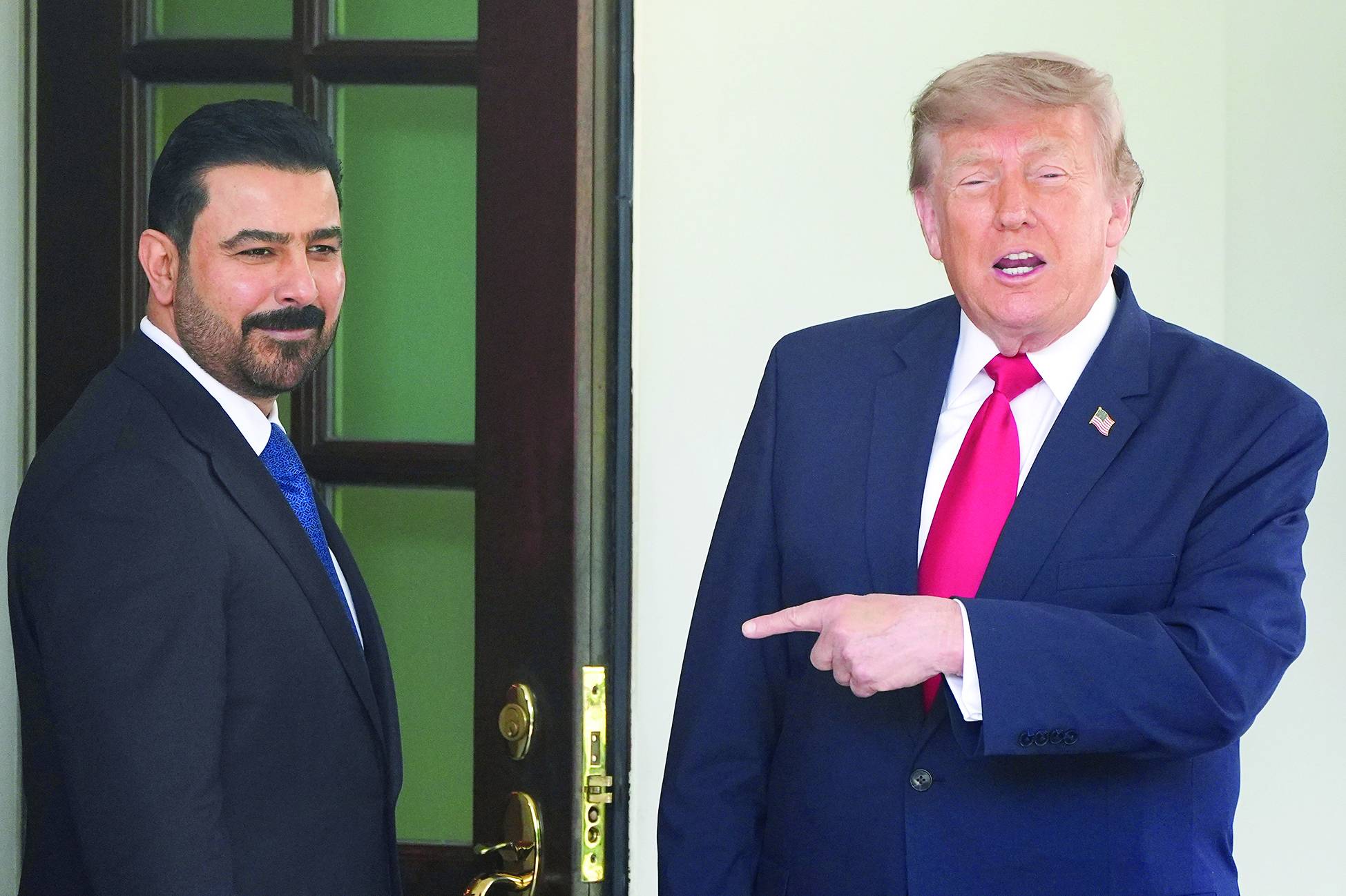
President Donald Trump said over the weekend that “there will be very serious retaliation” for the attack and that Syrian President Ahmed al-Sharaa was “devastated by what happened,” stressing that Syria was fighting alongside US troops.

Trump welcomed Sharaa, who led the lightning opposition offensive that toppled Assad's rule, to the White House for a historic meeting last month.


Western and Arab Diplomats Tour Lebanon-Israel Border to Observe Hezbollah Disarmament Efforts

 UN vehicles drive past buildings destroyed by Israel's air and ground offensive against Hezbollah in southern Lebanon, as seen from Israel's northernmost town of Metula, Sunday, Nov. 30, 2025. (AP)
UN vehicles drive past buildings destroyed by Israel's air and ground offensive against Hezbollah in southern Lebanon, as seen from Israel's northernmost town of Metula, Sunday, Nov. 30, 2025. (AP)
TT

Western and Arab Diplomats Tour Lebanon-Israel Border to Observe Hezbollah Disarmament Efforts

 UN vehicles drive past buildings destroyed by Israel's air and ground offensive against Hezbollah in southern Lebanon, as seen from Israel's northernmost town of Metula, Sunday, Nov. 30, 2025. (AP)
UN vehicles drive past buildings destroyed by Israel's air and ground offensive against Hezbollah in southern Lebanon, as seen from Israel's northernmost town of Metula, Sunday, Nov. 30, 2025. (AP)

Western and Arab diplomats toured an area along Lebanon’s border with Israel Monday where Lebanese troops and UN peacekeepers have been working for months to end the armed presence of the militant Hezbollah group.

The delegation that included the ambassadors of the United States and Saudi Arabia was accompanied by Gen. Rodolphe Haykal, commander of the Lebanese Armed Forces, as well as top officers in the border region.

The Lebanese government has said that by the end of the year, the army should have cleared all the border area south of the Litani river from Hezbollah’s armed presence.

Hezbollah’s leader Sheik Naim Qassem had said that the group will end its military presence south of the Litani River but vowed again over the weekend that they will keep their weapons in other parts of Lebanon.

Parts of the zone south of the Litani River and north of the border with Israel were formerly a Hezbollah stronghold, off limits to the Lebanese national army and UN peacekeepers deployed in the area.

During the tour, the diplomats and military attaches were taken to an army post that overlooks one of five hills inside Lebanon that were captured by Israeli troops last year.

“The main goal of the military is to guarantee stability,” an army statement quoted Haikal as telling the diplomats. Haykal added that the tour aims to show that the Lebanese army is committed to the ceasefire agreement that ended the Israel-Hezbollah war last year.

There were no comments from the diplomats.

The latest Israel-Hezbollah war began Oct. 8, 2023, a day after Hamas attacked southern Israel, after Hezbollah fired rockets into Israel in solidarity with Hamas. Israel launched a widespread bombardment of Lebanon in September last year that severely weakened Hezbollah, followed by a ground invasion.

The war ended in November 2024 with a ceasefire brokered by the US.

Israel has carried out almost daily airstrikes since then, mainly targeting Hezbollah members but also killing 127 civilians, according to the office of the UN High Commissioner for Human Rights.

On Sunday, the Israeli military said it killed three Hezbollah members in strikes on southern Lebanon.

Over the past weeks, the US has increased pressure on Lebanon to work harder on disarming Hezbollah and canceled a planned trip to Washington last month by Haykal.

US officials were angered in November by a Lebanese army statement that blamed Israel for destabilizing Lebanon and blocking the Lebanese military deployment in south Lebanon.

A senior Lebanese army official told The Associated Press Monday that Haykal will fly to France this week where he will attend a meeting with US, French and Saudi officials to discuss ways of assisting the army in its mission. The officer spoke on condition of anonymity because he wasn’t authorized to speak publicly.

The Lebanese army has been severely affected by the economic meltdown that broke out in Lebanon in October 2019.


ICC Rejects Israeli Bid to Halt Gaza War Investigation

Tents of internally displaced Palestinian families seen among the ruins of destroyed buildings in Al-Zaitun neighborhood during a rainy day in the east of Gaza City on, 12 December 2025, amid a ceasefire between Israel and Hamas. (EPA)
TT

ICC Rejects Israeli Bid to Halt Gaza War Investigation

Tents of internally displaced Palestinian families seen among the ruins of destroyed buildings in Al-Zaitun neighborhood during a rainy day in the east of Gaza City on, 12 December 2025, amid a ceasefire between Israel and Hamas. (EPA)

Appeals judges at the International Criminal Court (ICC) on Monday rejected one in a series of legal challenges brought by Israel against the court's probe into its conduct of the Gaza war.

On appeal, judges refused to overturn a lower court decision that the prosecution's investigation into alleged crimes under its jurisdiction could include events following the deadly attack on Israel by the Palestinian group Hamas on October 7, 2023.

The ruling means the investigation continues and the arrest warrants issued last year for Israeli Prime Minister Benjamin Netanyahu and his former defense chief Yoav Gallant remain in place.

Israel rejects the jurisdiction of the Hague-based court and denies war crimes in Gaza, where it has waged a military campaign it says is aimed at eliminating Hamas following the October 7 attacks.

The ICC initially also issued a warrant for Hamas leader Ibrahim al-Masri for alleged war crimes and crimes against humanity, but withdrew that later following credible reports of his death.

A ceasefire agreement in the conflict took effect on October 10, but the war destroyed much of Gaza’s infrastructure, and living conditions are dire.

According to Gaza health officials, whose data is frequently cited with confidence by the United Nations, some 67,000 Palestinians have been killed by Israel in Gaza.

This ruling focuses on only one of several Israeli legal challenges against the ICC investigations and the arrest warrants for its officials. There is no timeline for the court to rule on the various other challenges to its jurisdiction in this case.
