Kremlin Warns US of ‘Consequences’ after Alleged Ukrainian Strike on Crimea

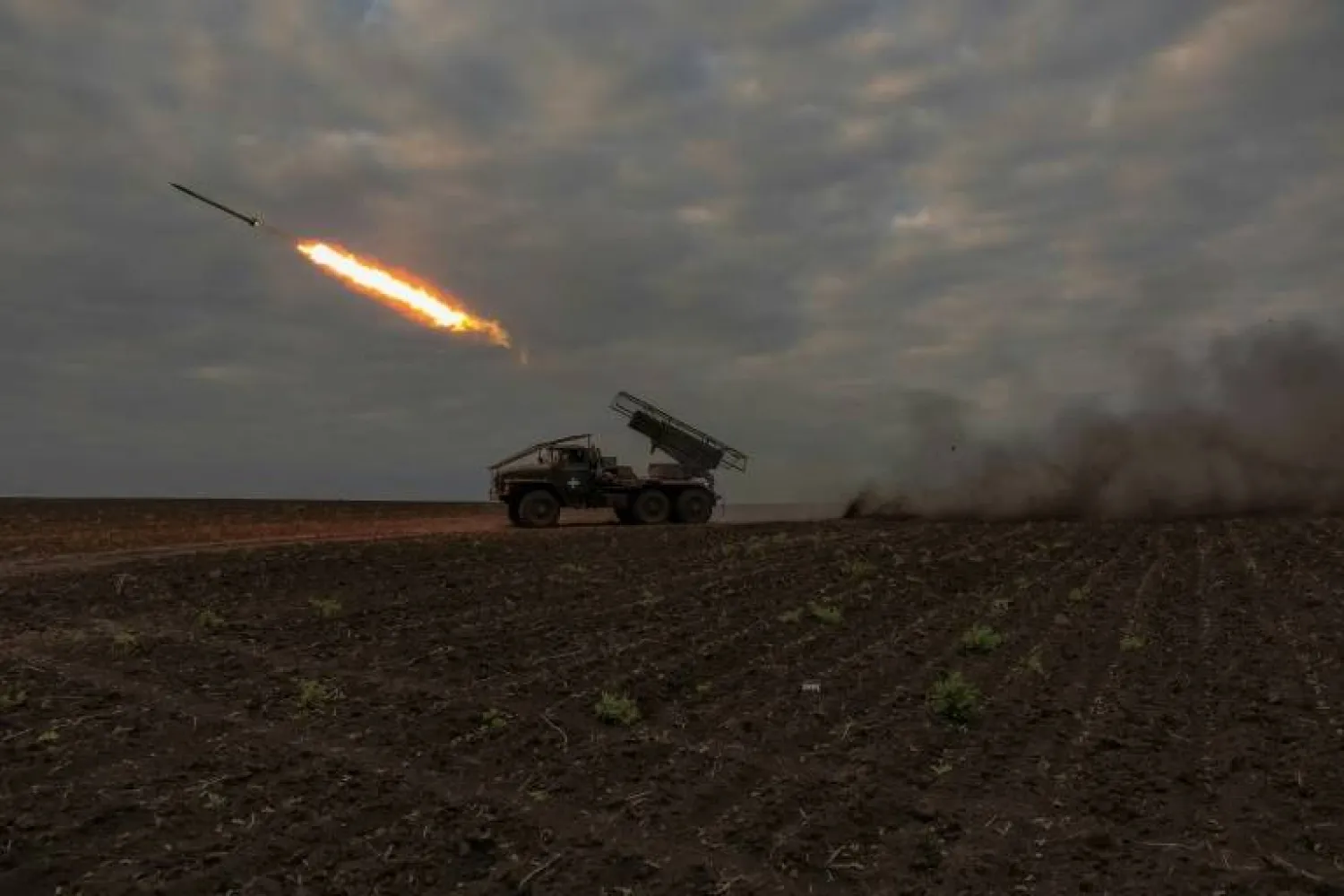
Ukrainian soldiers fire a rocket toward Russian positions in the Kharkiv region - AFP
TT

Kremlin Warns US of ‘Consequences’ after Alleged Ukrainian Strike on Crimea

Ukrainian soldiers fire a rocket toward Russian positions in the Kharkiv region - AFP

The Kremlin on Monday warned the United States of "consequences" and summoned its ambassador after Moscow said a Ukrainian strike with a US missile on Crimea killed four people.

Moscow has increasingly blasted Washington and Kyiv's Western backers for supplying weapons to be fired on Russian targets, calling them direct participants in the two-year conflict.

Kremlin spokesman Dmitry Peskov called Sunday's strike on Sevastopol "barbaric" and accused Washington of "killing Russian children".

Two of the victims were minors, Sevastopol governor Mikhail Razvozhayev wrote on Telegram, AFP reported.

Peskov also pointed to comments by President Vladimir Putin earlier this month about arming countries to potentially strike Western targets.

"The involvement of the United States, the direct involvement, as a result of which Russian civilians are killed, cannot be without consequences," Peskov told reporters on Monday.

"Time will tell what these will be," he said.

"Just ask my colleagues in Europe and above all in Washington, ask the press secretaries there why their government is killing Russian children," he said.

The foreign ministry said it had summoned US envoy Lynne Tracy.

It later issued a statement saying that Washington "bears equal responsibility with the Kyiv regime for this atrocity" and the strike would "not go unpunished".

In Washington, Pentagon spokesman Major General Pat Ryder said that the Ukrainians "make their own decisions".

State Department spokesman Matthew Miller said Russia was to blame for the fighting and reiterated the stance of most of the world that Crimea -- unilaterally annexed by Moscow in 2014 -- remains part of Ukraine.

"We regret any civilian loss of life in this war. We provide weapons to Ukraine so it can defend its sovereign territory against armed aggression -- that includes in Crimea which, of course, is part of Ukraine," Miller told reporters.

"Russia could stop this war today," he said.

Miller said the United States had no assessment on the incident in question but pointed to Russia blaming Washington initially for a deadly raid on a Moscow concert hall in March that was later claimed by the ISIS group.

"It's not unusual for the government in Moscow to make ridiculous, hyperbolic claims about responsibility that aren't borne out by fact," he said.

Russia said the strike on Sunday was carried out with a US-supplied ATACMS missile loaded with a cluster warhead.

Local Moscow-installed officials said the missile hit an area of the port city with sandy beaches and hotels.

Russia said 82 people including 27 children were hospitalized with injuries from the strike.

Health Minister Mikhail Murashko was quoted by TASS news agency as saying on Monday that 14 of the injured were in a serious condition.

At a meeting with international news agencies including AFP this month, Putin criticized the West's delivery of long-range weapons to Ukraine.

"Why don't we have the right to supply weapons of the same class to regions of the world where there will be strikes on sensitive facilities of those (Western) countries?" Putin said.

"That is, the response can be asymmetric. We will think about it," he told reporters.

Peskov also referred back to comments by Putin that target data for Ukrainian strikes was being provided by Western countries.


Netanyahu Vows to Eliminate Iran Threat ‘Once and for All’

10 November 2026, Israel, Jerusalem: Caretaker Israeli Prime Minister Benjamin Netanyahu delivers a speech on the sidelines of the opening session of the new Knesset. (dpa)
TT

Netanyahu Vows to Eliminate Iran Threat ‘Once and for All’

10 November 2026, Israel, Jerusalem: Caretaker Israeli Prime Minister Benjamin Netanyahu delivers a speech on the sidelines of the opening session of the new Knesset. (dpa)

Israel's caretaker prime minister Benjamin Netanyahu on Saturday reiterated his calls for a national unity government with his opponent Gadi Eisenkot, as well as his vow to eliminate the threat from Iran.

A meeting with Eisenkot on Thursday "only strengthened the conviction that it is essential to form a national unity government" to guarantee Israel's security, Netanyahu said in a video statement, adding that such a government could "eliminate the Iranian threat once and for all".


Ukraine’s Zelenskiy Escalates Criticism of SpaceX Over Speed Caps

Ukraine's President Volodymyr Zelenskiy holds a press briefing in Copenhagen November 10, 2026. (AFP)
TT

Ukraine’s Zelenskiy Escalates Criticism of SpaceX Over Speed Caps

Ukraine's President Volodymyr Zelenskiy holds a press briefing in Copenhagen November 10, 2026. (AFP)

Ukraine's President Volodymyr Zelenskiy ‌escalated his criticism of SpaceX on Saturday, saying speed restrictions on its military-grade Starshield satellite terminals had dangerous political implications and undermined critical air defenses.

Zelenskiy said Starshield terminals operating in temporarily Russian-occupied territories of Ukraine had been limited to a maximum speed of 161 kph for the past five days, hampering Ukraine's military capabilities.

The Ukrainian Defense Ministry has raised the issue with SpaceX at the ‌institutional level, ‌Zelenskiy said.

"The restrictions have now ‌been ⁠in place for ⁠five days. They say it is some kind of technical issue. We do not believe that is the case," Zelenskiy told reporters in remarks released by his office on Saturday.

"If you impose restrictions there, you are already partially recognizing the temporarily ⁠occupied territories as not ours. And ‌that is why I ‌believe we have the right to raise this ‌issue and restore the speed – so that there ‌are no restrictions at all."

Zelenskiy said the speed restrictions made it more difficult for Ukrainian air defense units to intercept Russian jet-powered drones and made Ukrainian cities ‌more vulnerable. He said he had ordered his top military and foreign ministry ⁠officials ⁠to address the issue and seek clarification.

SpaceX has pushed back against the allegations, denying that it introduced new restrictions or made any changes to its satellite operations.

It is the second such outage in recent weeks. In mid-October, Ukrainian officials said that SpaceX limited the speed of Starlink and its Starshield communication systems to about 160 kph (100 mph) amid tensions with US President Donald Trump's administration over Ukrainian attacks on Russian oil refineries. Service was then restored on October 24.


UN Official Urges Iran, US to Let Fertilizers Through Hormuz Strait

Jorge Moreira da Silva, Executive Director of UNOPS (United Nations Office for Project Services), and coordinator of the UN Strait of Hormuz Task Force established by the UN Secretary-General, speaks during an interview with AFP on the sidelines of the 31st United Climate Change Conference (COP31), at the media center located on the Antalya Expo Center in Antalya on November 14, 2026. (AFP)
TT

UN Official Urges Iran, US to Let Fertilizers Through Hormuz Strait

Jorge Moreira da Silva, Executive Director of UNOPS (United Nations Office for Project Services), and coordinator of the UN Strait of Hormuz Task Force established by the UN Secretary-General, speaks during an interview with AFP on the sidelines of the 31st United Climate Change Conference (COP31), at the media center located on the Antalya Expo Center in Antalya on November 14, 2026. (AFP)

Iran and the United States should "immediately" allow fertilizer shipments through the Strait of Hormuz to ease the crisis in some of the most vulnerable countries, a senior UN official said Saturday.

Jorge Moreira da Silva, head of the UN Office for Project Services, told the COP31 climate talks in the Turkish resort city of Antalya that the lack of fertilizers could push millions into poverty.

The Iranian blockade of the vital waterway, which started after the joint US-Israeli attack against Iran in late February, has choked shipping in the region and beyond. The US blockade of Iranian ports has further complicated matters.

While Iran and the United States are still trying to negotiate an end to the conflict, Moreira da Silva said he had the same message for both countries.

"They should continue their negotiations about the comprehensive deal -- but that deal should not avoid an immediate, exceptional, limited, and time-bound solution for the fertilizers," he said.

"Basically, what we need is five vessels a day with fertilizers," he added.

- Millions at risk -

Moreira da Silva heads up the UN task force dedicated to facilitating the safe passage of fertilizers during the crisis.

Before the conflict, a third of the world's fertilizers passed through the Strait of Hormuz, and since the blockades, their prices had risen by 30 percent, he said.

"But what I think is not sufficiently recognized is the disproportionate impact on the most vulnerable countries," he added.

Sudan's finance minister recently told him that the price of food there had doubled in six months, he added. In Nepal, they had told him that farmers could no longer afford to buy fertilizers.

"So, it's very important that we are aware that countries such as Mozambique, Kenya, Sudan, Somalia, Nepal, Bangladesh, Sri Lanka are facing very significant impact."

The effects of this shortage could be catastrophic, he warned.

"If we continue missing the planting seasons in different parts of the world we may have 45 million people facing severe and acute food insecurity," he said.

"We may have 30 million people being forced into poverty."

The UN had a system ready to get fertilizer shipments moving within seven to 10 days, he said.