Tunisian Court Jails Prominent Opposition Lawyer

 Tunisian lawyer Sonia Dahmani (social media)
 Tunisian lawyer Sonia Dahmani (social media)
TT

Tunisian Court Jails Prominent Opposition Lawyer

 Tunisian lawyer Sonia Dahmani (social media)
 Tunisian lawyer Sonia Dahmani (social media)

A Tunisian court on Saturday sentenced Sonia Dahmani, a prominent Tunisian lawyer known for her criticism of President Kais Saied, to one year in prison.
The court ruling reinforces opposition concerns that critical voices will continue to be targeted ahead of a presidential election on Oct. 6.
“The one-year prison sentence is unjust and confirms the targeting of free speech,” Dahmani's lawyer Sami Ben Ghazi told Reuters.
Dahmani was arrested in May after appearing on a television program in which she said Tunisia is a country where life is not pleasant.
Lotfi Mraihi, leader of the opposition Republican Union Party, who has announced his intention to run in the presidential election, was arrested on Wednesday on suspicion of money laundering.
Opposition parties, many of whose leaders are in prison, have accused Saied's government of exerting pressure on the judiciary to target his election rivals.
They say fair and credible elections cannot be held unless imprisoned politicians are released and the media is allowed to operate without pressure from the government.
On Friday, the Journalists Syndicate branch of the official news agency complained that a report about Mondher Znaidi announcing his candidature for Tunisia’s presidential election, was removed from the news bulletin. The Syndicate also complained about a decision not to cover a press conference held by the Free Constitutional Party.
Abir Moussi, the leader of the Free Constitutional Party and a prominent candidate, has been in prison since October 2023 on charges of harming public security.
Some potential candidates, including Safi Saeed, Mondher Znaidi, Nizar Chaari and Abd Ellatif Mekki, are facing prosecution for alleged crimes such as fraud and money laundering.
Saied, a retired law professor who was elected president in 2019, has not officially announced his candidacy to stand for a second term. Last year he said he will not hand power to what he called non-patriots.
In 2021, Saied dissolved parliament and began ruling by decree in a move that the opposition described as a coup. Saied said his steps were legal and necessary to end years of rampant corruption among the political elite.



Al-Zaidi Warns Coordination Framework Over Failure to Bring Arms Under State Control

A meeting of the Coordination Framework attended by Prime Minister Ali al-Zaidi (Iraqi News Agency) 
TT

Al-Zaidi Warns Coordination Framework Over Failure to Bring Arms Under State Control

A meeting of the Coordination Framework attended by Prime Minister Ali al-Zaidi (Iraqi News Agency) 

Iraqi Prime Minister Ali al-Zaidi has warned the Shiite Coordination Framework of the consequences of failing to meet agreed deadlines for bringing weapons under state control, as Washington reaffirmed that its economic partnership with Baghdad was moving forward.

Al-Zaidi hosted a meeting of Coordination Framework leaders late Saturday, stressing the need to resolve outstanding issues, including completing the formation of his Cabinet and regulating weapons in a way that strengthens state sovereignty and security in Iraq and the wider region.

An informed source told Asharq Al-Awsat that al-Zaidi also stressed the need to support the work of a four-party committee negotiating with armed factions to reach a final agreement on handing over weapons to the Popular Mobilization Forces within agreed timelines.

The prime minister also briefed the meeting on key issues discussed with the US administration during his recent visit to Washington and the potential economic, political and security consequences for Iraq if the weapons issue remains unresolved, the source added.

The warning coincided with a message from US Secretary of State Marco Rubio marking Iraq’s National Day on Oct. 3.

Rubio pointed to al-Zaidi’s July visit to Washington and his meeting with President Donald Trump at the White House, noting that it reaffirmed the friendship between the two countries and their shared commitment to a strong and prosperous future.

He added that economic partnerships announced during the visit demonstrated the potential for trade and investment cooperation between US and Iraqi companies, while welcoming Iraq’s efforts to strengthen its sovereignty and contribute to regional security and stability.

Another informed source told Asharq Al-Awsat that Washington understood the difficulties al-Zaidi faced in dealing with armed groups and political forces, including some within the Coordination Framework, that appeared reluctant to embrace his plan.

According to the source, the Framework’s shift toward relatively longer deadlines for surrendering weapons followed a private meeting between al-Zaidi and Trump without other members of the Iraqi delegation. The source also cited Trump’s response to al-Zaidi’s request for an exemption allowing Iranian flights to land at Najaf airport.

In a National Day address, al-Zaidi described Iraq as a state that “makes its own decisions and protects its land and airspace,” with weapons subject to the commander-in-chief of the armed forces.

He declared that Iraq had completed its sovereignty on Sept. 30, 2026, with the end of the international coalition’s military mission, adding that political instability had cost the country significant development opportunities and repeatedly forced it “back to square one.”

Al-Zaidi also highlighted his government’s efforts to protect Iraq’s interests, security, sovereignty and national decision-making from the repercussions of regional conflict while pursuing a balanced foreign policy based on national interests and mutual respect.

He outlined government efforts to diversify the economy, empower the private sector and link public spending to results. He also cited plans to provide one million residential land plots, establish a fund for future generations and economic cities, and implement the Development Road project to turn Iraq into a trade and energy corridor and investment hub linking East and West.

Political and strategic affairs researcher Hani Ashour told Asharq Al-Awsat that the departure of US and international coalition forces made restructuring Iraq’s security strategy increasingly necessary, particularly by bringing factional weapons under state control and strengthening the armed forces.

Ashour, however, pointed to major obstacles, including Iraq’s economic difficulties following the closure of the Strait of Hormuz and political forces’ preference for dialogue with armed factions.

Such negotiations, he cautioned, could drag on and remain tied to the US-Iran conflict and its repercussions, potentially giving armed factions renewed justification to retain their weapons and reaffirm their allegiance to Iran.

A meeting of the Coordination Framework attended by Prime Minister Ali al-Zaidi (Iraqi News Agency)


Strike on WFP Aid Trucks in Sudan Kills One

A collapsed mosque wall following a drone strike in Khartoum North, in Bahri city, Sudan on August 12, 2026. (Reuters) 
TT

Strike on WFP Aid Trucks in Sudan Kills One

A collapsed mosque wall following a drone strike in Khartoum North, in Bahri city, Sudan on August 12, 2026. (Reuters) 

One person was killed in an airstrike targeting a convoy carrying aid supplies in Sudan’s South Kordofan region on Saturday, the World Food Program (WFP) said.

Meanwhile, tensions gripped Port Sudan following a horrible murder that shocked the city.

In a statement issued on Sunday, the UN agency strongly condemned the aerial attack that hit two contracted trucks carrying WFP food commodities in South Kordofan.

The WFP trucks were travelling on Saturday between the two cities of Dilling and Kadugli when they came under attack, despite being “clearly marked as humanitarian vehicles,” WFP said, according to AFP.

“One driver was killed in the air strike,” it added, without specifying who was behind the attack.

Famine was confirmed last year in South Kordofan's Kadugli, and in El-Fasher in the western Darfur region, as fighting and access restrictions continue to hamper aid deliveries.

On Friday, a WFP truck had struck an explosive device in Dilling after delivering lifesaving food assistance.

The agency said it was assessing the damage and called for a prompt investigation into the incident.

Movement is difficult across much of western and southern Sudan due to damaged infrastructure, blocked roads and disrupted communications, as violence continues to escalate.

Both the army and the RSF have increasingly deployed drones in recent months, with the high-tech weapons killing more than 1,100 people in the first half of the year alone, according to UN figures.

Since the war began in April 2023, more than 200,000 people were killed, aid workers estimate, while more than 11 million are displaced, creating the world’s largest hunger and displacement crises.

Meanwhile, tension rose in Port Sudan on Sunday after the body of a resident was discovered near a hospital.

Sudanese newspaper Sout al-Umma (Voice of the Nation) quoted a local source as saying that the killing triggered anger among the victim’s relatives, who took to the streets, blocking some roads with stones and setting tyres on fire to prevent vehicles from passing.

The protestors asked authorities in the Red Sea city to make progress in identifying those responsible, according to dpa.

Several Sudanese states, including Khartoum, are facing growing security challenges, including widespread lawlessness, the proliferation of weapons, gang activity and rising crime rates, amid efforts to restore normal civilian life and basic services.

Observers say the war has severely degraded state institutions and triggered a surge in criminal activity across Sudan.


Israeli Army Says It Killed ‘Assailant’ in Southern Syria

Israeli soldiers during a reconnaissance operation in the occupied Syrian Golan Heights (Archive - Reuters)
TT

Israeli Army Says It Killed ‘Assailant’ in Southern Syria

Israeli soldiers during a reconnaissance operation in the occupied Syrian Golan Heights (Archive - Reuters)

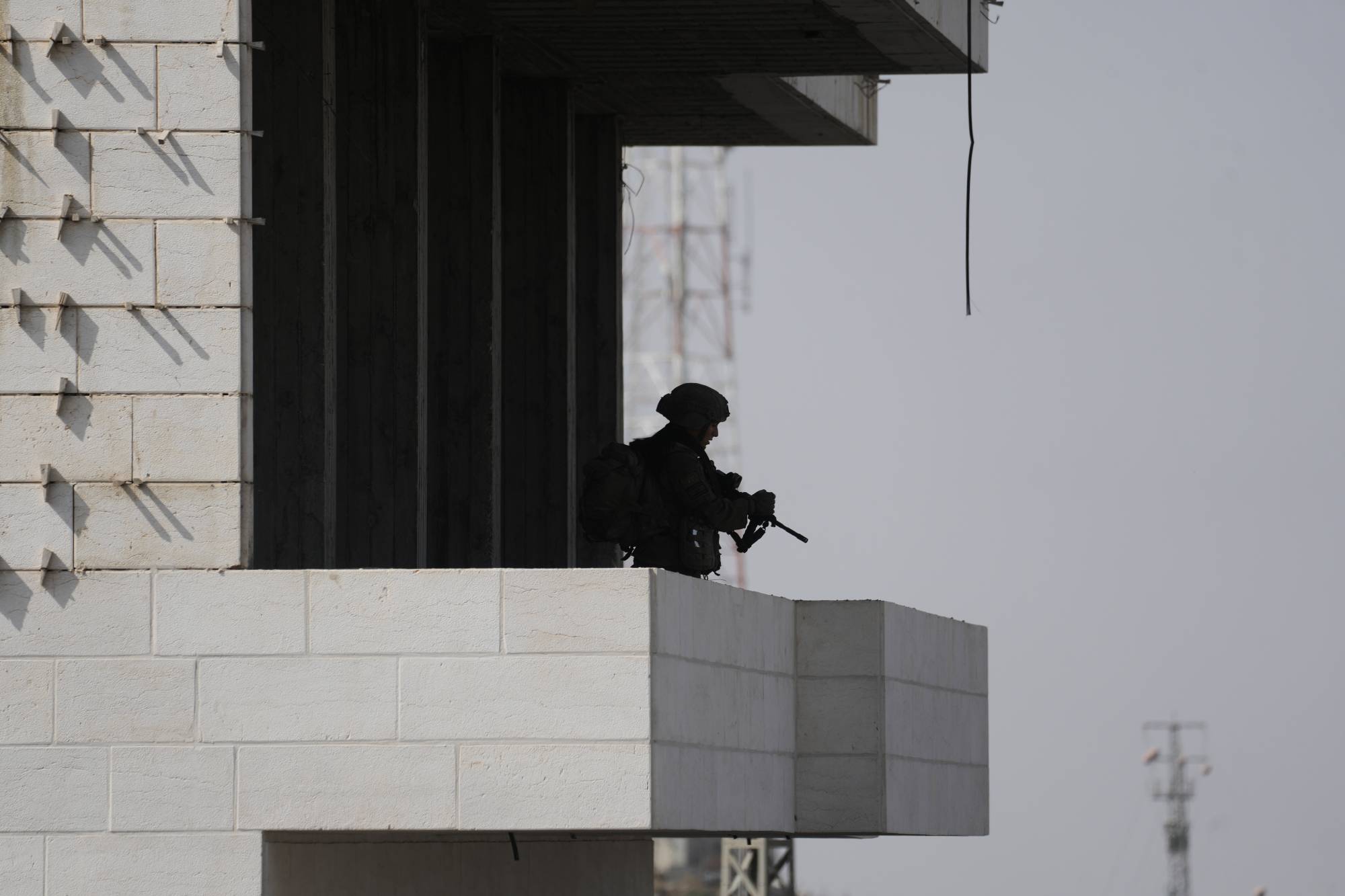
The Israeli military said early Monday it had killed an “assailant” at an army outpost in the area it occupies in southern Syria.

The Israeli army said in a statement that its soldiers identified a suspect attempting to infiltrate an Israeli army post in the Security Zone in southern Syria.

"Following a quick identification, the soldiers fired toward the suspect and eliminated him," the Israeli army stated, adding that none of its personnel was injured.

Following the late-2024 overthrow of Bashar al-Assad by the opposition coalition, Israel carried out hundreds of strikes in Syria.

The Israeli army also carried out incursions into the south of the country and deployed troops in the UN-monitored buffer zone separating Israeli and Syrian forces in the Golan Heights.

Israeli officials have repeatedly stated their intention to maintain troops in the security area, where Israel seeks to establish a larger demilitarized zone.