Saudi Geological Parks Nearing UNESCO Recognition

A Glimpse of Saudi Arabia’s geological heritage (Asharq Al-Awsat)
TT

Saudi Geological Parks Nearing UNESCO Recognition

A Glimpse of Saudi Arabia’s geological heritage (Asharq Al-Awsat)

The National Center for Vegetation Cover Development and Combating Desertification in Saudi Arabia is working to establish and enhance several sites with unique geological and cultural significance.

The goal is to have more than ten of these sites recognized as UNESCO Global Geoparks, joining a list of 213 sites worldwide.

The Center informed Asharq Al-Awsat that registering these sites with UNESCO brings many advantages.

The primary benefit is international recognition, which attracts global attention to the geological and cultural importance of these sites. This increased visibility draws tourists, especially those interested in geological tourism, and boosts scientific and educational activities.

The sites provide an excellent environment for teaching Earth’s history and encouraging scientific studies.

Moreover, the Center noted that this recognition promotes the region’s cultural heritage.

The combination of geological and cultural features offers visitors unique experiences, showcasing how humans adapted to natural changes.

It also supports environmental protection and sustainable development by raising awareness and encouraging local communities and authorities to preserve these areas.

A delegation from UNESCO’s Global Geoparks Committee has recently inspected the Geological Park in Northern Riyadh, 120 kilometers from the capital, and the Salma Geological Park in Hail, northern Saudi Arabia.

The assessment tour is set to continue with visits to eight more parks before final approval under UNESCO's Global Geoparks Program.

Saudi Arabia’s Geological Riches

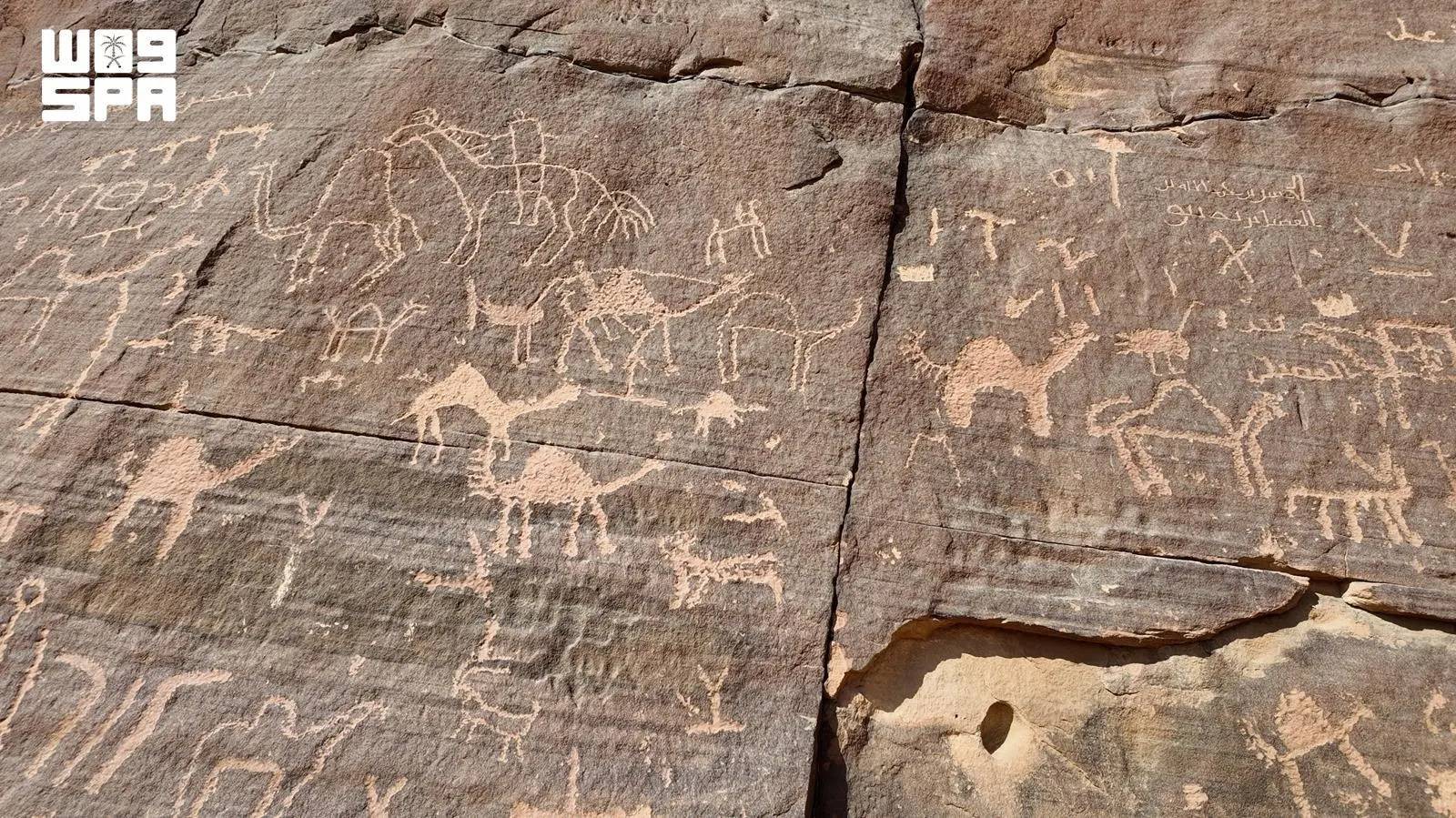
According to geological experts, geological parks represent unique areas that delve into the depths of ancient history, revealing numerous events and stories linked to geographical and historical realities, past, present, and future.

These unique geological formations, with their diverse landmarks and structures shaped over millions of years, explore the connections between geology, local communities, culture, and the natural world of all living organisms that have thrived and vanished on this defined geographical patch.

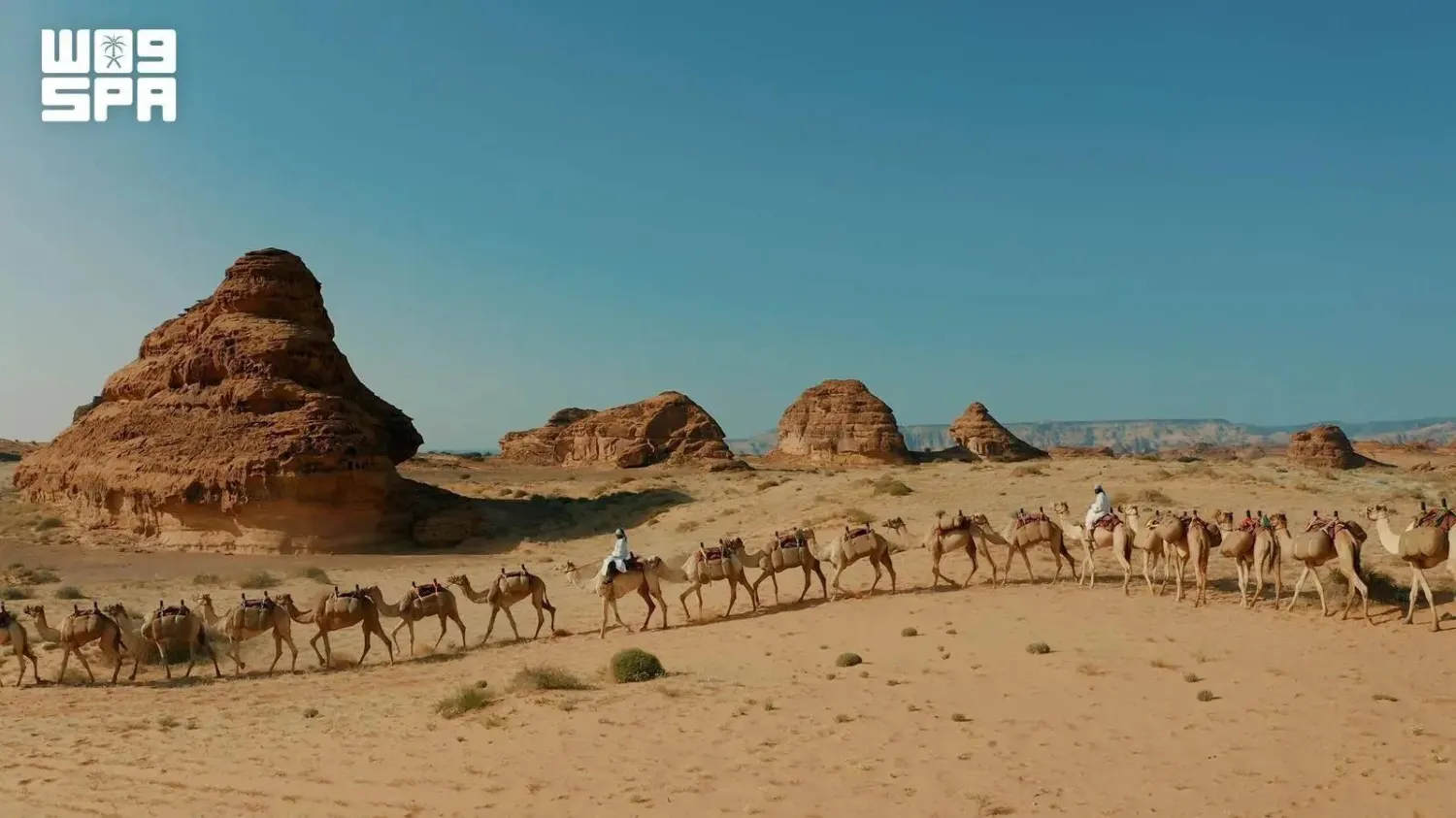
Saudi Arabia boasts what can be described as “multi-faceted geological museums,” uncovering most geological eras that have left their marks on planet Earth, with a heritage dating back around 550 million years.

This includes formations in the Makkah region, where geologists suggest successive volcanic eruptions shaped its volcanic belt in a straight line, and in AlUla province, adorned over millions of years by weathering agents revealing intricate details.

Also noteworthy are other formations in the Riyadh and Tabuk regions.


Cultural Fund Hosts 'Film Future Reception' during Red Sea International Film Festival

CDF signed credit facility agreements under the Cultural Financing Program, totaling more than SAR60 million - SPA
TT

Cultural Fund Hosts 'Film Future Reception' during Red Sea International Film Festival

CDF signed credit facility agreements under the Cultural Financing Program, totaling more than SAR60 million - SPA

The Cultural Development Fund (CDF) hosted the “Film Future Reception” during the fifth edition of the Red Sea International Film Festival.

The event brought together entrepreneurs, investors, and leading filmmakers from the Kingdom and around the world to highlight financial solutions and investment opportunities that support the growth of the sector and its cinematic productions.

During the gathering, CDF signed credit facility agreements under the Cultural Financing Program, totaling more than SAR60 million, to finance six major projects in the film sector. These projects target several areas, including feature film production and infrastructure development supporting the industry, SPA reported.

The gathering was organized in collaboration with the Red Sea International Film Festival and BSF Capital. During the event, the fund reviewed future investment trends in the film sector and the funds in which it serves as a principal investor, including the Riviera Content Fund— the first of its kind in the Kingdom— in addition to a second investment fund in the film sector, whose establishment agreement was signed last September and is managed by BSF Capital. Each of these funds has a capital size of SAR375 million.


Visual Arts Commission Announces Art and Ideas Riyadh Initiative

Visual Arts Commission Announces Art and Ideas Riyadh Initiative
TT

Visual Arts Commission Announces Art and Ideas Riyadh Initiative

Visual Arts Commission Announces Art and Ideas Riyadh Initiative

The Visual Arts Commission announced the upcoming edition of its Art and Ideas initiative, taking place 14–15 December 2025 at Prince Mohammad bin Salman City “Misk City”.

After the success of its Paris and Seoul iterations, Art and Ideas initiative launches a new edition in Riyadh to bookend the year with an exciting new program. This annual initiative takes its new mission line as a launchpad to present ideas that will shape the visual arts' future, SPA reported.

According to a press release issued by the commission today, the title, "Art and Ideas: in Action," emphasizes the relationship between theory and practice, intention and execution. Each session gathers distinguished practitioners from various creative fields such as curation, media and technology to present perspectives that broaden audience’s understanding of the arts landscape and highlight the ideas that are shaping our present moment. Framing the visual arts as a record of the times in which they are conceived and presented, "Art and Ideas: in Action" stresses the Visual Arts Commission's commitment to supporting an ever-evolving art landscape.

CEO of the Visual Arts Commission Dina Amin said that “the initiative launched this year as a cross-city dialogue, traveling between Seoul and Paris. Today, it returns to its home—Riyadh under the theme ‘Art and Ideas: In Action.’ Riyadh now stands as a global platform for cultural exchange, collective exploration, and the building of lasting bridges between artistic communities, aligned with the commission’s vision to foster dialogue and to establish a thriving and sustainable artistic ecosystem.”

The release added that the two-day program features four panel discussions and two keynote presentations, hosting distinguished speakers from Saudi Arabia and around the world. These sessions explore the intersections of visual arts with technology, learning, gaming, and contemporary thought, in addition to discussions on building a future-ready art ecosystem and fostering community-driven initiatives.

Driven by the Kingdom’s ambition to create a profound and lasting movement in the fields of arts and culture, the initiative dedicates its efforts to supporting diversity, encouraging experimentation, and strengthening global connectivity. It continues to expand its role by creating spaces that bring together artists, curators, innovators, and cultural thinkers, enabling the exchange of knowledge and perspectives and fostering creative dialogue. Through this convergence of practitioners and experts, the initiative sheds light on current issues and lived experiences that shape the contemporary art landscape and contribute to defining the legacy of Saudi visual art in an ever-changing world.

This edition of Art and Ideas is held in Misk City, which is a destination that fosters arts and innovation within a broader cultural and knowledge-driven ecosystem. Its innovative spaces attract artists and creators, offering platforms for dialogue and artistic exploration. Its presence in this context reflects a vision that places people and creativity at the heart of urban development, aligning with national efforts to support distinctive initiatives such as Zawaya and Afkar.


Italian Cooking and Its Rituals Get UN Designation as World Heritage 

A waiter carries pizzas at L'antica Pizzeria da Michele as Italian cuisine awaits a crucial UNESCO decision that could recognize it as an Intangible Cultural Heritage of Humanity in Naples, Italy, December 5, 2025. (Reuters)
TT

Italian Cooking and Its Rituals Get UN Designation as World Heritage 

A waiter carries pizzas at L'antica Pizzeria da Michele as Italian cuisine awaits a crucial UNESCO decision that could recognize it as an Intangible Cultural Heritage of Humanity in Naples, Italy, December 5, 2025. (Reuters)

Italian food is known and loved around the world for its fresh ingredients and palate-pleasing tastes. On Wednesday, the UN's cultural agency gave foodies another reason to celebrate their pizza, pasta and tiramisu by listing Italian cooking as part of the world’s “intangible” cultural heritage.

UNESCO added the rituals surrounding Italian food preparation and consumption to its list of the world’s traditional practices and expressions. It's a designation celebrated alongside the more well-known UNESCO list of world heritage sites, on which Italy is well represented with locations like the Rome's Colosseum and the ancient city of Pompeii.

The citation didn’t mention specific dishes, recipes or regional specialties, but highlighted the cultural importance Italians place on the rituals of cooking and eating: the Sunday family lunch, the tradition of grandmothers teaching grandchildren how to fold tortellini dough just so, even the act of coming together to share a meal.

“Cooking is a gesture of love, a way in which we tell something about ourselves to others and how we take care of others,” said Pier Luigi Petrillo, a member of the Italian UNESCO campaign and professor of comparative law at Rome’s La Sapienza University.

“This tradition of being at the table, of stopping for a while at lunch, a bit longer at dinner, and even longer for big occasions, it’s not very common around the world,” he said.

Premier Giorgia Meloni celebrated the designation, which she said honored Italians and their national identity.

“Because for us Italians, cuisine is not just food or a collection of recipes. It is much more: it is culture, tradition, work, wealth,” she said in a statement.

Many gastronomic cultures get recognition It’s by no means the first time a country’s cuisine has been recognized as a cultural expression: In 2010, UNESCO listed the “gastronomic meal of the French” as part of the world’s intangible heritage, highlighting the French custom of celebrating important moments with food.

Other national cuisines and cultural practices surrounding them have also been added in recent years: the “cider culture” of Spain’s Asturian region, the Ceebu Jen culinary tradition of Senegal, the traditional way of making cheese in Minas Gerais, Brazil.

UNESCO meets every year to consider adding new cultural practices or expressions onto its lists of so-called “intangible heritage.” There are three types: One is a representative list, another is a list of practices that are in “urgent” need of safeguarding and the third is a list of good safeguarding practices.

This year, the committee meeting in New Delhi considered 53 nominations for the representative list, which already had 788 items. Other nominees included the Swiss yodelling, the handloom weaving technique used to make Bangladesh’s Tangail sarees, and Chile’s family circuses.

In its submission, Italy emphasized the “sustainability and biocultural diversity” of its food. Its campaign noted how Italy’s simple cuisine valued seasonality, fresh produce and limiting waste, while its variety highlighted its regional culinary differences and influences from migrants and others.

“For me, Italian cuisine is the best, top of the range. Number one. Nothing comes close,” said Francesco Lenzi, a pasta maker at Rome’s Osteria da Fortunata restaurant, near the Piazza Navona. “There are people who say ‘No, spaghetti comes from China.’ Okay, fine, but here we have turned noodles into a global phenomenon. Today, wherever you go in the world, everyone knows the word spaghetti. Everyone knows pizza.”

Lenzi credited his passion to his grandmother, the “queen of this big house by the sea” in Camogli, a small village on the Ligurian coast where he grew up. “I remember that on Sundays she would make ravioli with a rolling pin.”

“This stayed with me for many years,” he said in the restaurant's kitchen.

Mirella Pozzoli, a tourist visiting Rome’s Pantheon from the Lombardy region in northern Italy, said the mere act of dining together was special to Italians:

“Sitting at the table with family or friends is something that we Italians cherish and care about deeply. It’s a tradition of conviviality that you won’t find anywhere else in the world.”

Italy already well-represented on list Italy already has 13 other cultural items on the UNESCO intangible list, including Sicilian puppet theater, Cremona’s violin craftsmanship and the practice moving of livestock along seasonal migratory routes known as transhumance.

Italy appeared in two previous food-related listings: a 2013 citation for the “Mediterranean diet” that included Italy and half a dozen other countries, and the 2017 recognition of Naples’ pizza makers.

Petrillo, the Italian campaign member, said after 2017, the number of accredited schools to train Neapolitan pizza makers increased by more than 400%.

“After the UNESCO recognition, there were significant economic effects, both on tourism and the sales of products and on education and training,” he said.