


Fake Luxuries Supplant Tradition in Istanbul's Grand Bazaar

This photograph taken on July 9, 2024 shows a shop displaying items said to be from 'luxury' brands at historical Grand Bazaar in Istanbul. (Photo by Yasin AKGUL / AFP)
TT

Fake Luxuries Supplant Tradition in Istanbul's Grand Bazaar

This photograph taken on July 9, 2024 shows a shop displaying items said to be from 'luxury' brands at historical Grand Bazaar in Istanbul. (Photo by Yasin AKGUL / AFP)

Cut-price branded perfumes and fake high-end handbags line the ornate alleys of Istanbul's Grand Bazaar, with traditional merchants saying the luxury counterfeits are stripping the marketplace of its character.

Where heritage Turkish crafts once flourished under the Ottoman-era marketplace's painted ceilings, the elegant carpet store run by Hasim Gureli is now surrounded by shops selling designer dupes, Agence France Presse reported.

"Back in the day, imitations were rare," said Gureli, who is vice-president of the bazaar's traders' association and a member of its board of directors.

"When some people started selling fake bags, they kept themselves hidden. They were afraid of the state," the carpet-seller added.

Many others among the bazaar's old-timers, who have fond memories of the small workshops that used to fill its labyrinthine alleyways, despair at seeing it overrun by fraudulent facsimiles.

Two aisles down, tea set-seller Gazi Uludag lamented that the Grand Bazaar has "lost its unique character".

"There is nothing but imported or counterfeit goods left and it's getting worse every year," he said.

In her handmade carpet store, Florence Heilbronn-Ogutgen bemoaned the fact that an artisan friend "who used to make real, beautiful bags in very good leather" had to shutter his shop, unable to make a living.

For the shopkeeper, who has been at the bazaar since 1998, artisans "can no longer survive" in the face of competition from the dubious dupes.

"These days, the finest boutiques are the counterfeit ones!" she said.

"They're the only ones left who can afford the $10,000 to $15,000 a month rent on the main alley. The bazaar has lost its soul."

Cheap luxury

One of the world's largest covered markets, the almost six-centuries-old Grand Bazaar attracts millions of tourists every year -- many of them lured by the promise of cheap luxury.

"All of Europe comes here! I've even had footballer's wives," beamed 36-year-old Kemal, reluctant to give his surname for fear of checks on his merchandise.

Kemal made his living selling "made in Türkiye" counterfeits for 15 years, before luxury fakes began taking over each of the bazaar's hallowed shop windows one by one.

His imitation Celine calfskin and Saint Laurent quilted leather handbags "are of the same quality as the originals, but five to 10 times cheaper", the vendor promised.

Whatever the bag, a knock-off can be found at the Grand Bazaar.

"If you can find it on the Champs-Elysees, then you can find it here," he said.

'Very high profits'

As one of the main countries for the production and transit of counterfeit goods, along with China and Hong Kong, knock-offs are ubiquitous in Türkiye.

The trade supports a whole economy of its own, from the small retailers to the manufacturers who also export their counterfeits to the European Union.

"They make very high profits. You can see handbags being sold for thousands of dollars in the Grand Bazaar," said Dilara Bural, a criminologist at the UK's University of Bath.

Organized crime may be at work, "but we can't generalize and say that every single counterfeiting scheme in Türkiye is linked to organized crime. That's not true," she underlined.


UNESCO Honors Al-Bisht Al-Hasawi as Thousands Flock to Al-Ahsa Festival

Visitors can explore interactive displays, participate in live workshops, and witness the meticulous process of tailoring this iconic symbol of prestige - SPA
TT

UNESCO Honors Al-Bisht Al-Hasawi as Thousands Flock to Al-Ahsa Festival

Visitors can explore interactive displays, participate in live workshops, and witness the meticulous process of tailoring this iconic symbol of prestige - SPA

The third edition of Al-Bisht Al-Hasawi Festival is drawing thousands of regional and international visitors to Ibrahim Palace in historic Al-Hofuf.

Organized by the Heritage Commission, this year’s festival celebrates the inscription of the Bisht on UNESCO’s Representative List of the Intangible Cultural Heritage of Humanity.

The event showcases Al-Ahsa’s centuries-old tradition of hand-weaving and gold embroidery, a craft passed down through generations of local families, SPA reported.

Visitors can explore interactive displays, participate in live workshops, and witness the meticulous process of tailoring this iconic symbol of prestige.

With UNESCO's participation and representatives from six countries, the festival has evolved into a global platform for cultural dialogue, cementing the Bisht’s status as a world-class cultural treasure.


Saudi, Syrian Culture Ministers Tour National Museum of Damascus

The ministers observed the museum’s extensive collections spanning prehistoric eras to modern art. SPA
TT

Saudi, Syrian Culture Ministers Tour National Museum of Damascus

The ministers observed the museum’s extensive collections spanning prehistoric eras to modern art. SPA

Saudi Minister of Culture Prince Badr bin Abdullah bin Farhan and his Syrian counterpart, Mohammed Yassin Saleh, have toured the National Museum of Damascus during the Kingdom’s participation as guest of honor at the 2026 Damascus International Book Fair.

The ministers observed on Thursday the museum’s extensive collections spanning prehistoric eras to modern art.

A particular focus was placed on the Arab-Islamic wing, featuring significant artifacts from the Umayyad period.

The Kingdom's participation as guest of honor at the 2026 Damascus International Book Fair, which runs until February 16, stems from the role culture plays within Saudi Vision 2030.


Saudi Culture Minister Inaugurates Kingdom's Pavilion as Guest of Honor at Damascus Book Fair

Saudi Culture Minister Inaugurates Kingdom's Pavilion as Guest of Honor at Damascus Book Fair
TT

Saudi Culture Minister Inaugurates Kingdom's Pavilion as Guest of Honor at Damascus Book Fair

Saudi Culture Minister Inaugurates Kingdom's Pavilion as Guest of Honor at Damascus Book Fair

Saudi Minister of Culture Prince Badr bin Abdullah bin Farhan, who is the Literature, Publishing and Translation Commission Board Chairman, has inaugurated the Kingdom’s pavilion as guest of honor at the 2026 Damascus International Book Fair.

The inauguration took place on Thursday in the Syrian capital in the presence of Syrian Minister of Culture Mohammed Yassin Saleh and his Qatari counterpart, Sheikh Abdulrahman bin Hamad bin Jassim bin Hamad Al Thani.

The Kingdom's participation as guest of honor at the fair, which runs until February 16, stems from the role culture plays within Saudi Vision 2030.

Literature, Publishing, and Translation Commission Chief Executive Dr. Abdul Latif Al-Wasil affirmed that the Kingdom's presence as guest of honor at the fair reflects its leading role in the Arab cultural landscape and embodies its belief in the role of culture as a bridge for communication, a space for dialogue, and a tool for supporting joint cultural initiatives.

He explained that the Kingdom's presence in Damascus affirms the depth of Saudi-Syrian relations, based on partnership and mutual respect, and stems from the Kingdom's commitment to strengthening cultural exchange.

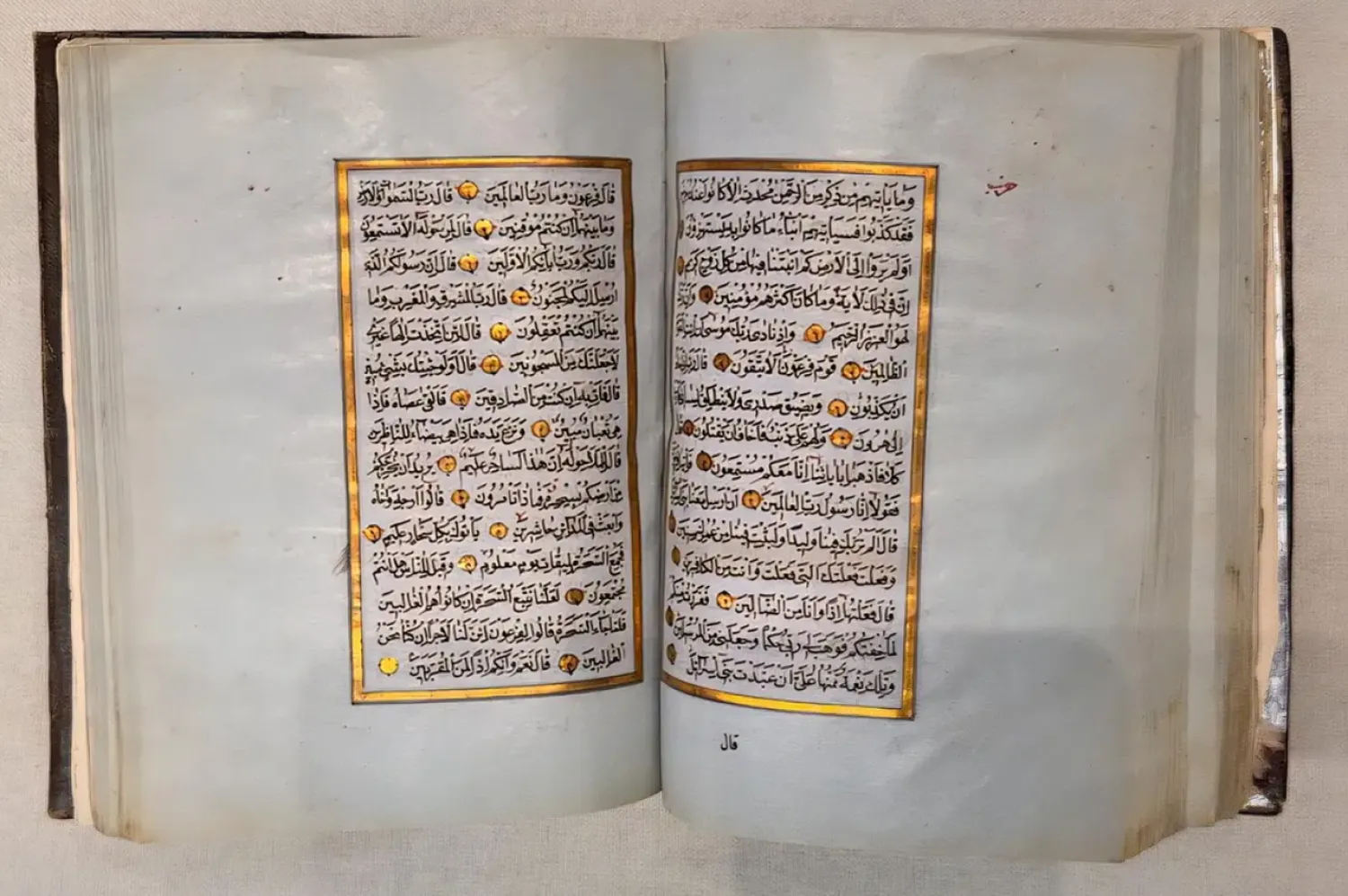
The Kingdom's pavilion showcases the cultural and creative diversity of the Saudi cultural and literary scene through a comprehensive cultural program that includes intellectual seminars, poetry evenings, a manuscripts exhibition, a Saudi fashion corner, a hospitality corner, and a corner displaying archaeological replicas, in addition to Saudi performing arts performances that express the depth of the Kingdom's cultural heritage.

The pavilion offers visitors to the exhibition the opportunity to explore aspects of Saudi culture in its literary, heritage, and human dimensions within a cultural experience presented in a unifying Arab spirit, affirming that culture remains one of the most effective means of fostering understanding and building shared meaning.

Syrian President Ahmed al-Sharaa met on Thursday with Prince Badr at the Conference Palace in Damascus.

The meeting was attended on the Saudi side by Advisor at the Royal Court Mohammed Al-Tuwaijri, along with other officials.