


Riyadh, Brasilia Seek to Boost Economic Integration and Joint Work

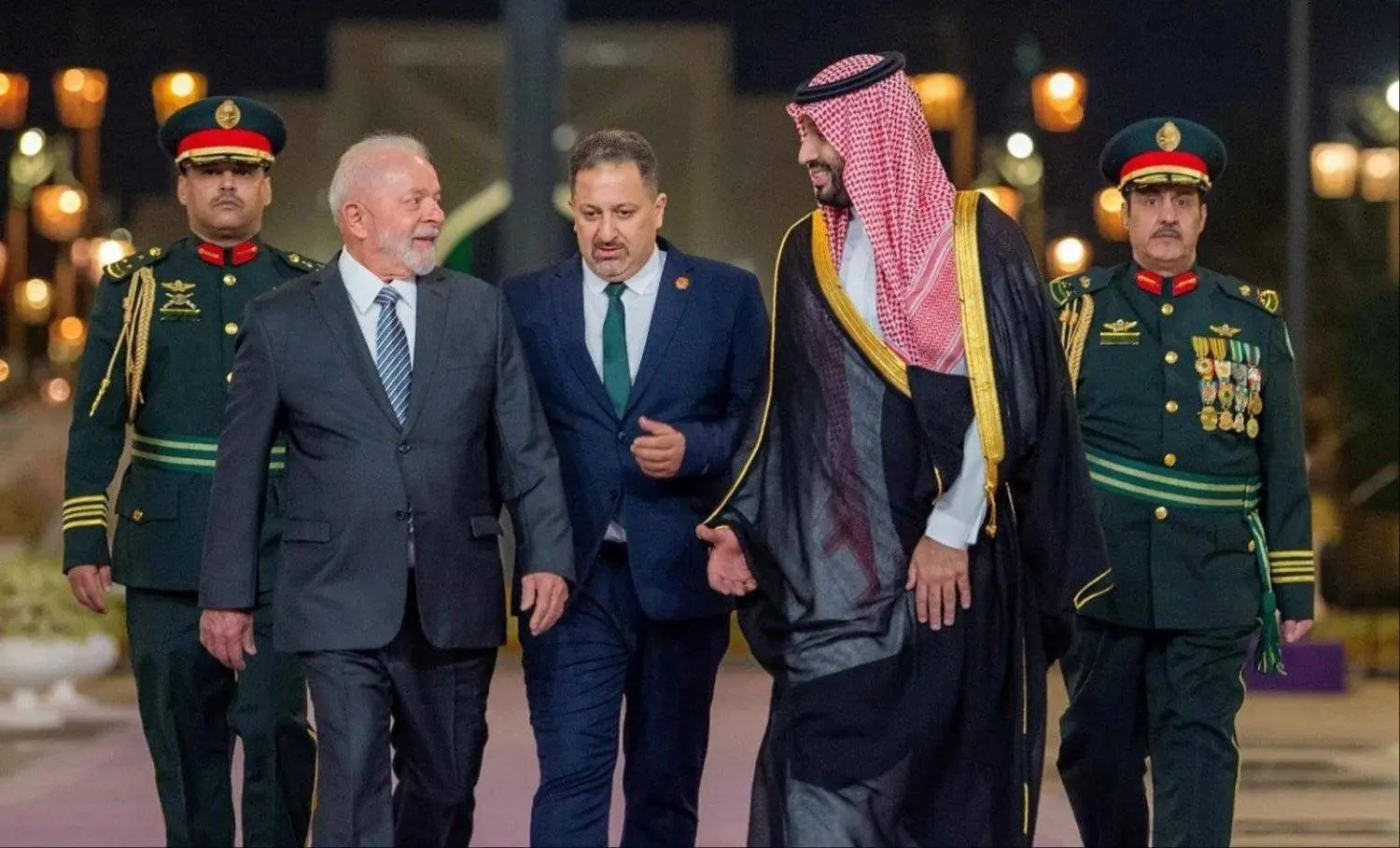
Saudi Crown Prince Mohammed bin Salman receives Brazilian President Lula da Silva in Riyadh on November 28, 2023 (SPA)
TT

Riyadh, Brasilia Seek to Boost Economic Integration and Joint Work

Saudi Crown Prince Mohammed bin Salman receives Brazilian President Lula da Silva in Riyadh on November 28, 2023 (SPA)

Brazilian Ambassador to Saudi Arabia Sergio E. Bath said that the exchange of high-level visits between the two countries highlight their common vision and their desire to deepen bilateral relations and cooperation at the regional and multilateral levels.

During an interview with Asharq Al-Awsat, Bath said that in 2018, Brazil and Saudi Arabia, two members of the G20, celebrated the 50th anniversary of the establishment of their diplomatic ties.

He explained that Saudi-Brazilian relations have witnessed tremendous growth since 1968, especially under the current leadership of the Custodian of the Two Mosques, King Salman bin Abdulaziz, and Crown Prince Mohammed bin Salman.

Brazil officially assumed the presidency of the G20 in December 2023. The group’s summit will be held this year in Rio de Janeiro on Nov. 18-19.

According to the ambassador, Saudi Arabia and Brazil are considered economic powers in their regions, and maintain ideal relations with neighboring states, which include respect for each other’s sovereignty, dissociation from regional disputes and cooperation in various fields to achieve mutual benefit, in addition to facilitating the free flow of intra- and internal trade and investments within economic blocs and regions.

The interview coincided with the visit of Saudi Minister of Industry and Mineral Resources Bandar Al-Khorayef to Brazil as part of a tour that will also take him to Chile.

Bath said that the Saudi minister’s trip confirms the Kingdom’s growing interest in strengthening bilateral relations with Brazil.

The delegation, according to the Brazilian diplomat, is exploring opportunities for cooperation in the industrial and mining sectors, exchange of expertise, and the latest developments in industrial technologies and joint investments.

He pointed out that the delegation is focusing primarily on developing supply chains, enhancing technological exchange, and driving innovation to achieve sustainable development and economic flexibility, as well as discussing opportunities for cooperation in the fields of food manufacturing, medicine and aviation.

Agreements

During the Brazilian-Saudi Investment Forums held in Brazil in 2023, $9 billion were made available for new bilateral investment projects until 2030, according to Bath, who noted that during one of these events in Sao Paulo, the two countries signed agreements worth around $3.5 billion.

Economic cooperation

Bath told Asharq Al-Awsat that Saudi Arabia and Brazil are the two largest economies within their regions, adding that commong stances have created enormous potential for cooperation in various sectors to achieve mutual benefits.

“In 2019, the Saudi Crown Prince announced the allocation of $10 billion to invest in Brazil, and since then significant progress has been made. For example, but not limited to, approximately $765 million was invested in Minerva Foods and BRF through SALIC, a subsidiary of the Public Investment Fund (PIF),” he stated.

The Brazilian diplomat added that Al-Manara Metals Company, supported by PIF, concluded a deal worth $2.6 billion to acquire a 10 percent stake in the basic metals division of Vale SA, while PIF has $400 million worth of investments in the Brazilian financial sector.

He further stressed that the Kingdom has shown interest in many sectors in which Brazilian companies are competitive, including defense and space, agriculture and fresh food, medicines and medical devices, clean energy and green hydrogen, communications, science and technology, and digital economy and innovation.

Regarding investments in Saudi Arabia, Bath said that the joint venture agreement between BRF and the Halal Products Development Company, a subsidiary of PIF, is another example of the work of Brazilian companies and their long-term engagement and commitment to this country.

Areas of cooperation

“During President Luiz Inacio Lula da Silva’s visit to the Kingdom, in November 2023, Embraer signed three cooperation agreements with the Saudi government and companies in the fields of civil aviation, defense and security, and air mobility in urban areas,” the ambassador told Asharq Al-Awsat.

He went on to say that the Brazilian Ministry of Mines and Energy signed a memorandum of understanding to promote cooperation in the field of energy, including oil and gas, electricity, renewable energy, energy efficiency, petrochemicals, hydrogen, and the circular carbon economy.

Bath explained that the MoU covers digital transformation and innovation, strategic partnership development, supply chain, technology enhancement, and localization of industry-specific materials, products and services.

On trade exchange, the ambassador said: “Brazil’s exports to Saudi Arabia are still traditionally dominated by poultry, beef, soybeans, corn and sugar, representing about 80 percent (of exports), while the share of other food and non-food products stands at only 20 percent.”

“However, when looking at Brazil’s total exports to the world, about 60 percent of those consist of manufactured consumer and industrial products, which indicates that Saudi Arabia has not yet explored the comparative advantages and competitiveness of food and non-food products manufactured in Brazil.”

Bath emphasized that Saudi Arabia has recognized his country as a strategic partner for its food security, and has undertaken some important initiatives and investments.

“However, the great potential for further cooperation remains untapped, which I hope will be embodied through all the visits made by high-level delegations,” he remarked.

Apart from the food, non-food consumer goods and industrial sectors, Bath pointed to great potential for cooperation in various sectors, such as healthcare, defense, clothing and footwear, chocolate and confectionery, other processed foods, household, electrical and mechanical appliances, heavy products and equipment.

Volume of bilateral trade

According to the diplomat, Saudi Arabia is Brazil’s first trading partner in the region, and Brazil is the Kingdom’s largest trading partner in South America, with total bilateral trade in 2023 amounting to about $6.7 billion.

“Although Brazil’s exports to the Kingdom mainly consist of animal proteins and agricultural products, a gradual change in patterns has been observed in exports of manufactured industrial and consumer goods. The most important food exports from Brazil to Saudi Arabia are chicken, sugar, corn, soybean products and beef,” he underlined.

Non-food exports, according to Bath, include iron and other ores, wood and its products, weapons and ammunition, machinery and equipment, and transportation equipment. The main exports from the Kingdom to Brazil are crude oil, fertilizers, plastic products, aluminum products, and other petrochemicals.

Saudi Arabia, Syria Sign Joint Airline and Telecoms Deals

Officials pose after signing a framework agreement for developmental cooperation and the launch of 45 development initiatives between the Syrian Development Fund and Saudi Arabia's Development Committee at the People's Palace in Damascus, Syria, Saturday, Feb. 7, 2026. (AP)
TT

Saudi Arabia, Syria Sign Joint Airline and Telecoms Deals

Officials pose after signing a framework agreement for developmental cooperation and the launch of 45 development initiatives between the Syrian Development Fund and Saudi Arabia's Development Committee at the People's Palace in Damascus, Syria, Saturday, Feb. 7, 2026. (AP)

Syria and Saudi Arabia signed deals Saturday that include a joint airline and a $1-billion project to develop telecommunications, officials said, as Syria seeks to rebuild after years of war.

The new authorities in Damascus have worked to attract investment and have signed major agreements with several companies and governments.

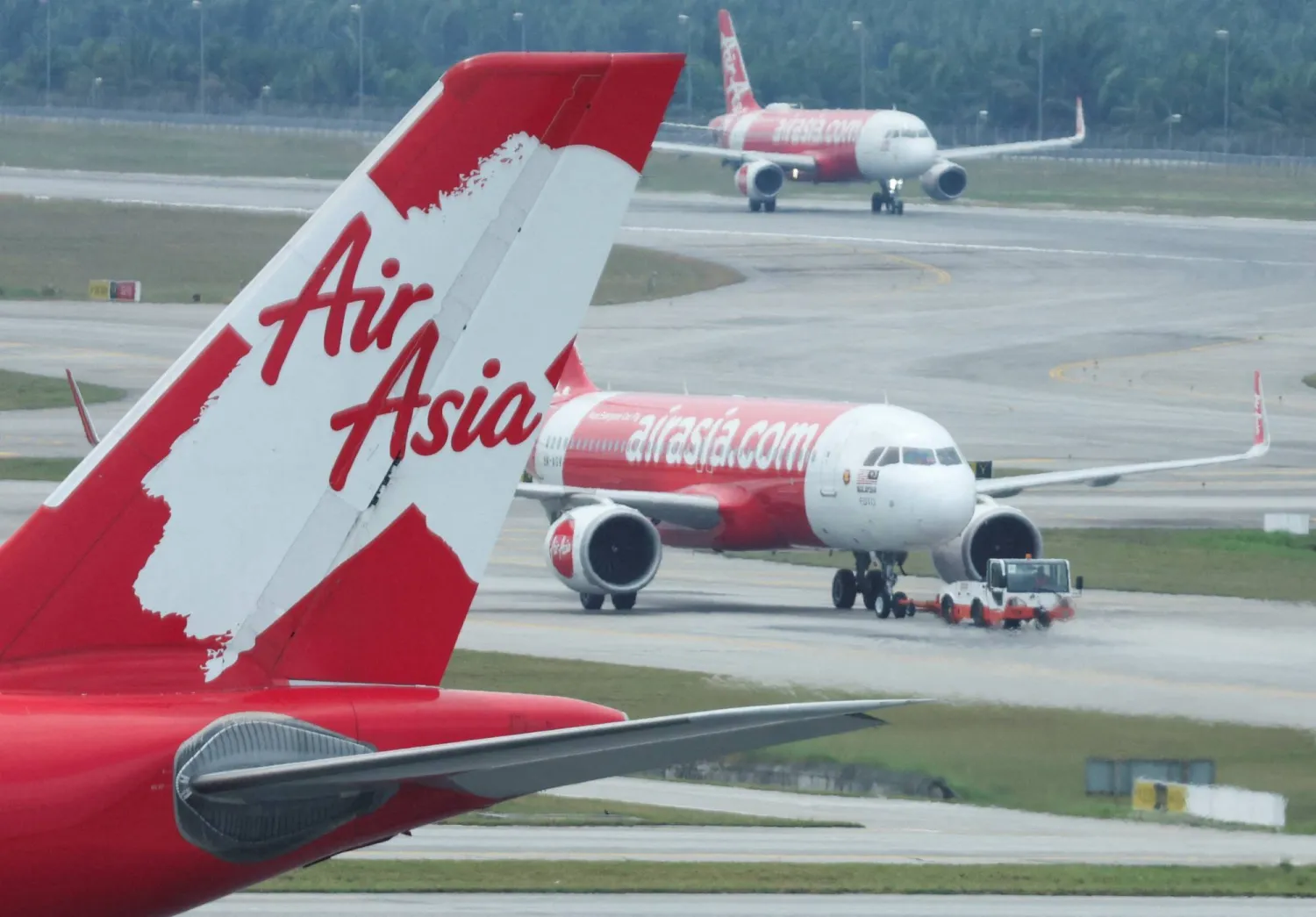
Syrian Investment Authority chief Talal al-Hilali announced a series of deals including "a low-cost Syrian-Saudi airline aimed at strengthening regional and international air links".

The agreement also includes the development of a new international airport in the northern city of Aleppo, and redeveloping the existing facility.

Hilali also announced an agreement for a project called SilkLink to develop Syria's "telecommunications infrastructure and digital connectivity".

Syrian Telecommunications Minister Abdulsalam Haykal told the signing ceremony that the project would be implemented "with an investment of around $1 billion".

For decades, Syria was unable to secure significant investments because of Assad-era sanctions.

But the United States fully removed its remaining sanctions on Damascus late last year, paving the way for the full return of investments.

Syria and Saudi Arabia also inked an agreement on water desalination and development cooperation on Saturday.

At the ceremony, Saudi Investment Minister Khalid Al-Falih announced the launch of an investment fund for "major projects in Syria with the participation of the (Saudi) private sector".

The deals are part of "building a strategic partnership" between the two countries, he said.

Syria's Hilali said the agreements targeted "vital sectors that impact people's lives and form essential pillars for rebuilding the Syrian economy".

Syria has begun the mammoth task of trying to rebuild its shattered infrastructure and economy.

In July last year, Riyadh signed investment and partnership deals with Damascus valued at $6.4 billion to help rebuild the country's infrastructure, telecommunications and other major sectors.

A month later, Syria signed agreements worth more than $14 billion, including investments in Damascus airport and other transport and real estate projects.

This week, Syria signed a preliminary deal with US energy giant Chevron and Qatari firm Power International to explore for oil and gas offshore.


India’s Modi Lauds Interim Trade Pact After US Tariff Rollback

Indian Prime Minister Narendra Modi addresses the media before the budget session of Parliament at Parliament House in New Delhi, India, 29 January 2026. (EPA)
TT

India’s Modi Lauds Interim Trade Pact After US Tariff Rollback

Indian Prime Minister Narendra Modi addresses the media before the budget session of Parliament at Parliament House in New Delhi, India, 29 January 2026. (EPA)

Indian Prime Minister Narendra Modi on Saturday hailed an interim trade agreement with the United States, saying it would bolster global growth and deepen economic ties between the two countries.

The pact cuts US "reciprocal" duties on Indian products to 18 percent from 25 percent, and commits India to large purchases of US energy and industrial goods.

US President Donald Trump, while announcing the deal Tuesday, had said Modi promised to stop buying Russian oil over the war in Ukraine.

The deal eases months of tensions over India's oil purchases -- which Washington says fund a conflict it is trying to end -- and restores the close ties between Trump and the man he describes as "one of my greatest friends."

"Great news for India and USA!" Modi said on X on Saturday, praising US President Donald Trump's "personal commitment" to strengthening bilateral ties.

The agreement, he said, reflected "the growing depth, trust and dynamism" of their partnership.

Modi's remarks came hours after Trump issued an executive order scrapping an additional 25 percent levy imposed over New Delhi's purchases of Russian oil, in a step to implement the trade deal announced this week.

Modi, who has faced criticism at home about opening access of Indian agricultural markets to the United States and terms on oil imports, did not mention Russian oil in his statement.

"This framework will also strengthen resilient and trusted supply chains and contribute to global growth," he said.

It would also create fresh opportunities for Indian farmers, entrepreneurs and fishermen under the "Make in India" initiative.

In a separate statement, Commerce Minister Piyush Goyal said the pact would "open a $30 trillion market for Indian exporters".

Goyal also said the deal protects India's sensitive agricultural and dairy products, including maize, wheat, rice, soya, poultry and milk.

Other terms of the agreement include the removal of tariffs on certain aircraft and parts, according to a separate joint statement released Friday by the White House.

The statement added that India intends to purchase $500 billion of US energy products, aircraft and parts, precious metals, tech products and coking coal over the next five years.

The shift marks a significant reduction in US tariffs on Indian products, down from a rate of 50 percent late last year.

Washington and New Delhi are expected to sign a formal trade deal in March.


Gold Bounces Back on Softer Dollar, US-Iran Concerns; Silver Rebounds

Gold and silver bars are stacked in the safe deposit boxes room of the Pro Aurum gold house in Munich, Germany, January 10, 2025. REUTERS/Angelika Warmuth
TT

Gold Bounces Back on Softer Dollar, US-Iran Concerns; Silver Rebounds

Gold and silver bars are stacked in the safe deposit boxes room of the Pro Aurum gold house in Munich, Germany, January 10, 2025. REUTERS/Angelika Warmuth

Gold rebounded on Friday and was set for a weekly gain, helped by bargain hunting, a slightly weaker dollar and lingering concerns over US-Iran talks in Oman, while silver recovered from a 1-1/2-month low.

Spot gold rose 3.1% to $4,916.98 per ounce by 09:31 a.m. ET (1431 GMT), recouping losses posted during a volatile Asia session that followed a fall of 3.9% on Thursday. Bullion was headed for a weekly gain of about 1.3%.

US gold futures for April delivery gained 1% to $4,939.70 per ounce.

The US dollar index fell 0.3%, making greenback-priced bullion cheaper for the overseas buyers.

"The gold market is seeing perceived bargain hunting from bullish traders," said Jim Wyckoff, senior analyst at Kitco Metals.

Iran and the US started high-stakes negotiations via Omani mediation on Friday to try to overcome sharp differences over Tehran's nuclear program.

Wyckoff said gold's rebound lacks momentum and the metal is unlikely to break records without a major geopolitical trigger.

Gold, a traditional safe haven, does well in times of geopolitical and economic uncertainty.

Spot silver rose 5.3% to $74.98 an ounce after dipping below $65 earlier, but was still headed for its biggest weekly drop since 2011, down over 10.6%, following steep losses last week as well.

"What we're seeing in silver is huge speculation on the long side," said Wyckoff, adding that after years in a boom cycle, gold and silver now appear to be entering a typical commodity bust phase.

CME Group raised margin requirements for gold and silver futures for a third time in two weeks on Thursday to curb risks from heightened market volatility.

Spot platinum added 3.2% to $2,052 per ounce, while palladium gained 4.9% to $1,695.18. Both were down for the week.