Police Clash Footage Shocks Bangladesh as Internet Returns

Bangladesh army stand guard near the country's Secretariat as the curfew is relaxed after the anti-quota protests, in Dhaka on July 27, 2024. (Photo by Munir UZ ZAMAN / AFP)
TT

Police Clash Footage Shocks Bangladesh as Internet Returns

Bangladesh army stand guard near the country's Secretariat as the curfew is relaxed after the anti-quota protests, in Dhaka on July 27, 2024. (Photo by Munir UZ ZAMAN / AFP)

When millions of Bangladeshis came back online this week after a nationwide internet shutdown, many were shocked to watch a ferocious police clampdown they had earlier only heard while bunkered in their homes.
At least 206 people were killed last month during some of the worst unrest of Prime Minister Sheikh Hasina's tenure, sparked by student demonstrations against civil service hiring rules.
Bystanders and several police officers were among the dead but most were protesters killed by police fire, hospitals told AFP, with rights groups and the European Union condemning what they said was an excessive use of force.
Footage of clashes between security forces and crowds was largely absent from news broadcasts and few had a grasp of their extent until the national mobile internet network was switched back on after an 11-day shutdown.
Though the unrest has since calmed, several graphic amateur videos published to social media that show police firing on protesters have inflamed public anger against Hasina's government.
“How come the police are killing our brothers and sisters like this?" one user wrote, in response to a short clip of a police officer firing at a wounded young man while another tried to drag him safely from the scene.
AFP was able to pinpoint the footage to Jatrabari, a bustling neighborhood in the capital Dhaka, and from there identify three eyewitnesses who corroborated the video.
All spoke on condition of anonymity, fearing retribution if they identified themselves.
The incident occurred on July 20, hours after Hasina's government announced a nationwide curfew and deployed troops to restore order at the height of the unrest.
One witness said the wounded man in the video, 18-year-old Imam Hossain Taim, had been accosted by police but denied participating in protests before he was shot.
"He fell on the ground and was trying to crawl away. Two other men fled the scene but one guy came back to take his friend away," the witness added.
Taim was brought to Dhaka Medical College Hospital but died of his injuries later that day, his father Moynal Hossain told AFP.
"He was not even a protester," Taim's elder brother Tuhin told AFP. "He was roaming around with friends during a break in the curfew."
The footage of the attack on Taim was viewed more than half a million times after it was posted to Facebook, and the 60-second clip was widely shared on WhatsApp and other messaging platforms.
AFP also verified another video taken a day earlier in the nearby neighborhood of Rampura that showed police firing at a man at point-blank range as he clung to an under-construction building. The man had fled into the site, according to eyewitnesses. The clip has been viewed more than two million times on Facebook.
"I cried countless times watching this. I am crying now," one user wrote in response. "This would not happen in a free country."
'Forced to open fire'
Rights groups have accused Hasina's government of sidelining opposition parties and ruthlessly stamping out dissent during its 15-year tenure.
Many in Dhaka could hear gunfire and explosions from around the megacity of 20 million people from inside their homes during last month's unrest.
But television coverage was heavily censored and showed little of the police response to the disorder, instead focusing on arson attacks and vandalism by protesters.
Amnesty International said its review of photographic, video and eyewitness testimony found the "unlawful" use of force by police against protesters on several occasions.
European Union foreign policy chief Josep Borrell also condemned the police response to the disorder and called for perpetrators to be brought to justice.
"There must be full accountability for the numerous instances of use of excessive and lethal force by the law enforcement authorities against protesters and others," he said in a statement.
Home Minister Asaduzzaman Khan last weekend denied that the police response to the unrest was excessive, saying security forces had shown "extreme levels of patience" and only fired when necessary to stop attacks on government buildings.
"When they saw that the properties could not be protected, then police were forced to open fire," he said.



Iran Can Go up to Two Months without Oil Exports Before Cutting Output, Analysts Say

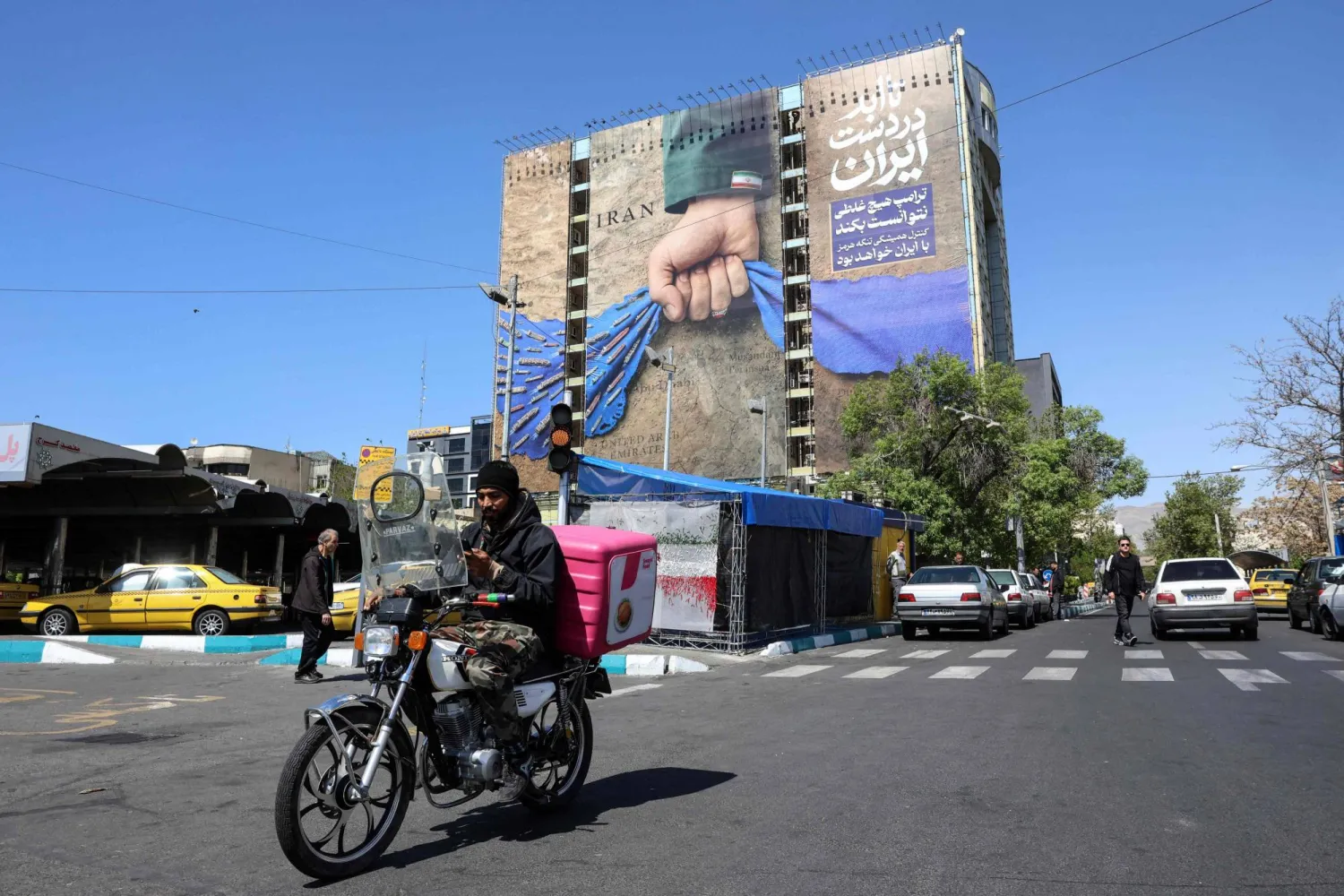
A man rides past a large billboard referring to the Strait of Hormuz in Tehran's Vanak Square on April 15, 2026. (AFP)
TT

Iran Can Go up to Two Months without Oil Exports Before Cutting Output, Analysts Say

A man rides past a large billboard referring to the Strait of Hormuz in Tehran's Vanak Square on April 15, 2026. (AFP)

Iran can withstand a complete halt in oil exports of up to two months before being forced to curb production, analysts said, after the US began blocking shipping in and out of the country's ports on April 13.

The blockade could prevent roughly 2 million barrels per day (bpd) of Iranian crude from reaching its main buyer China.

Any Iranian production shutdowns would add to more than 12 million bpd of supply already disrupted by the regional war, tightening markets further and ‌lifting oil ‌prices.

With its exports blocked, Iran faces having to ‌divert ⁠crude into onshore storage ⁠tanks. Once those tanks are filled, the OPEC member would be required to curb upstream output.

Consultancy FGE NextantECA estimates Iran has about 90 million barrels of available onshore crude storage capacity, out of total capacity of roughly 122 million barrels.

"Iran can sustain current production of around 3.5 million bpd for roughly two months without exports, extendable to around three months with a modest ⁠500,000 bpd production cut," FGE NextantECA said in a ‌note.

Iranian domestic refineries process about 2 million ‌bpd of oil, they added.

The relevant Iranian authorities were not immediately available for comment.

Energy ‌Aspects assumes significantly lower available onshore storage of about 30 million barrels, ‌based on data from Kayrros.

Under that scenario, Iran could maintain current export levels for about 16 days before storage capacity runs out, based on export levels of 1.8 million bpd.

"The blockade may not have a significant impact on Iranian production in ‌April, but if it continues into May then output would need to be reduced substantially," said Richard ⁠Bronze, co-founder of Energy ⁠Aspects.

He said the consultancy assumes Iran cannot utilize its full nameplate storage capacity, adding that historic data show stocks peaked at 92 million barrels in May 2020, which likely marks a realistic ceiling.

Bronze also said Iran will likely deploy available oil tankers in ports as floating storage, delaying production cuts.

The US military said more vessels were being turned back under the blockade, including the Chinese-owned tanker Rich Starry, which is under US sanctions and which was seen heading back through the Strait of Hormuz on Wednesday.

Eight Iran-linked oil tankers have been intercepted since the blockade began on Monday, the Wall Street Journal reported. A US destroyer stopped two tankers attempting to leave Iran's Chabahar port on the Gulf of Oman on Tuesday, a US official said.


World Bank Announces Water Security Plan for One Billion People

 A girl carries jerrycans on a wheelbarrow after collecting water from a well at a mosque in Deh Mazang, Kabul, Afghanistan, Thursday, April 2, 2026. (AP)
A girl carries jerrycans on a wheelbarrow after collecting water from a well at a mosque in Deh Mazang, Kabul, Afghanistan, Thursday, April 2, 2026. (AP)
TT

World Bank Announces Water Security Plan for One Billion People

 A girl carries jerrycans on a wheelbarrow after collecting water from a well at a mosque in Deh Mazang, Kabul, Afghanistan, Thursday, April 2, 2026. (AP)
A girl carries jerrycans on a wheelbarrow after collecting water from a well at a mosque in Deh Mazang, Kabul, Afghanistan, Thursday, April 2, 2026. (AP)

The World Bank announced a plan Wednesday that aims to improve secure water access for a billion people within the next four years.

The new "Water Forward" program aims to "expand reliable water services and strengthen systems against droughts and floods."

The Bank said its own funds and technical advice would help improve water supplies to some 400 million people by 2030, with the balance coming from partners.

Regional development banks, OPEC's development fund, and the BRICS-aligned New Development Bank are among institutions that will participate, the World Bank said.

The global lender did not specify how much capital it would commit to the initiative.

Some four billion people -- half the world's population -- face water scarcity, due in part to "unclear policies, weak regulations, and financially unsustainable utilities that have slowed progress and deterred investment," the Bank said.

The global lender said that 14 countries had already voluntarily committed to reform and strengthen their water sectors under the new program.

The focus on governance issues -- not simply physical water infrastructure -- is promising, David Michel, senior associate at the Center for Strategic and International Studies, said.

"In many countries, the water sector fails to fully deploy the funds already allocated to it."

However, the Bank's initiative "faces a long and difficult road ahead," he warned.

The issue of access to safe drinking water, in particular, has been highlighted during the war in the Middle East, with desalination plants in Iran and across the region damaged in bombardments.

Beyond conflicts and immediate drinking water needs, the World Bank said that better water security was needed to grow the global economy.

"Strong water systems are foundational to healthy economies that can attract private investment and create jobs," the Bank said.


China FM Tells Iran Beijing Supports ‘Momentum of Peace Talks’

Members of the media raise hands to ask questions as Chinese Foreign Minister Wang Yi holds a press conference on the sidelines of the National People's Congress (NPC), in Beijing, China, March 8, 2026. (Reuters)
TT

China FM Tells Iran Beijing Supports ‘Momentum of Peace Talks’

Members of the media raise hands to ask questions as Chinese Foreign Minister Wang Yi holds a press conference on the sidelines of the National People's Congress (NPC), in Beijing, China, March 8, 2026. (Reuters)

China's top diplomat told his Iranian counterpart that Beijing "supports maintaining the momentum of the ceasefire and peace talks" in a phone call on Wednesday, as negotiators from Pakistan landed in Tehran to discuss a second round of US-Iran talks.

Peace talks are "in the fundamental interests of the Iranian people and are also the shared hope of regional countries and the international community," Wang Yi said, according to a Chinese foreign ministry statement.

He said China was willing to continue to play a "constructive role" towards peace in the Middle East after a first round of Iran-US talks in Islamabad at the weekend failed to reach an agreement.