


Heavy Rains Kill Nine in War-torn Sudan

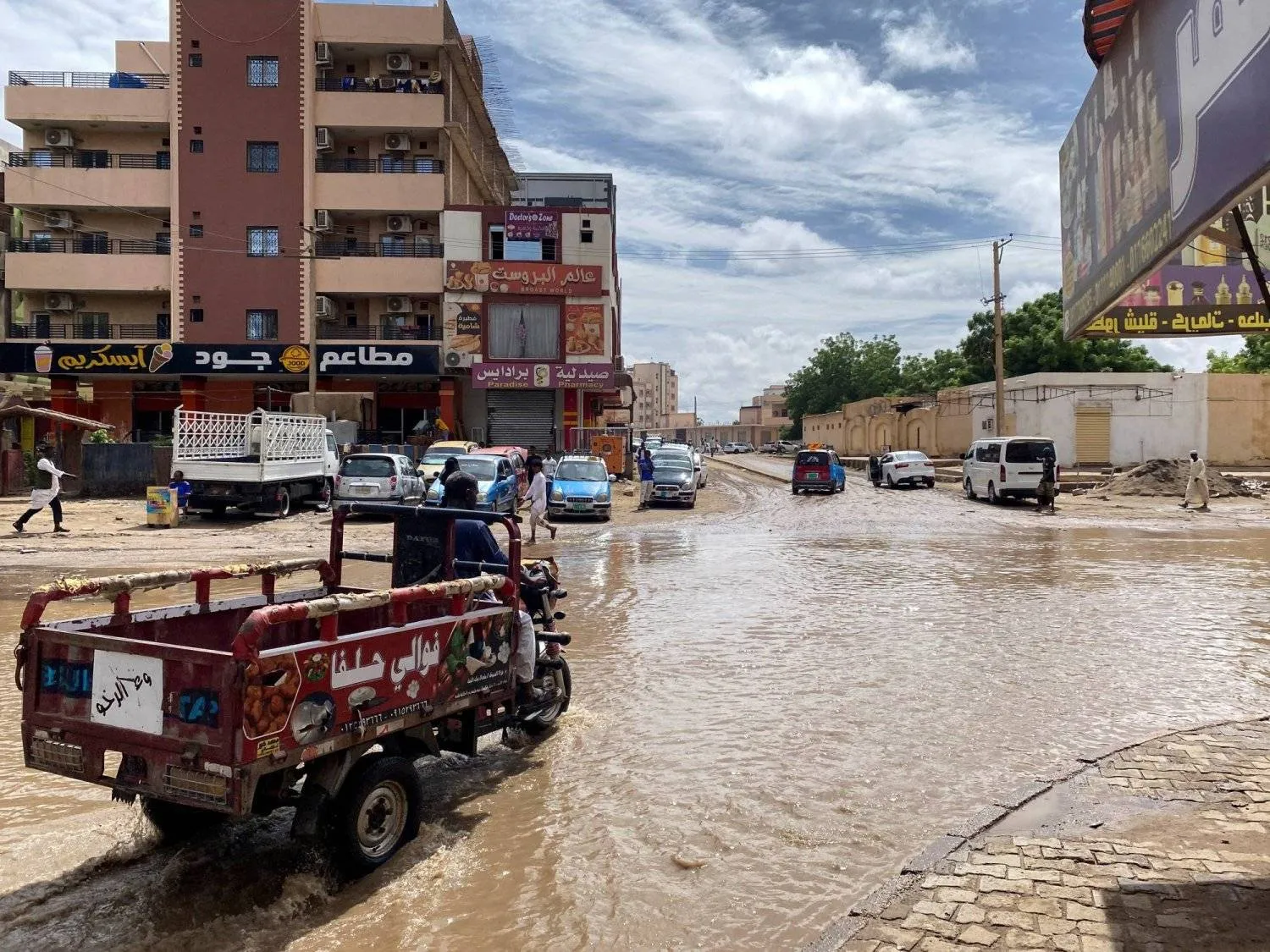
FILE PHOTO: A person drives a vehicle through a flooded street, following a heavy rainfall in Kassala, eastern Sudan, July 26, 2024. REUTERS/Mohammed Abdel Majid/File Photo
TT

Heavy Rains Kill Nine in War-torn Sudan

FILE PHOTO: A person drives a vehicle through a flooded street, following a heavy rainfall in Kassala, eastern Sudan, July 26, 2024. REUTERS/Mohammed Abdel Majid/File Photo

Heavy rains have triggered building collapses that have killed nine people in northern Sudan, as the country reels from almost 16 months of fighting between rival security forces, a medic told AFP Tuesday.

"Nine people have died as a result of their houses collapsing," said an employee at a hospital in Abu Hamad, a small town in Sudan's Nile state, some 400 kilometres (nearly 250 miles) north of Khartoum.

"Many injured people continue to arrive at the hospital", the source added.

Each year in August, peak flow on the Nile is accompanied by heavy rains, destroying homes, wrecking infrastructure and claiming lives, both directly and indirectly through water-borne diseases.

The impact is expected to be worse this year after more than a year of fighting that has pushed millions of displaced people into flood zones.

"Heavy rains caused most of the houses to collapse and all the shops in the market collapsed," a witness in Abu Hamad told AFP by telephone.

Last week, a flash flood caused the deaths of five people in Port Sudan, on the Red Sea coast.

Aid groups have repeatedly warned that humanitarian access, already hampered by the war, will be made near-impossible in some areas as the rainy season hits.

Sudan faces what the United Nations has called the world's worst humanitarian crisis in recent memory, as fighting between the army and the Rapid Support Forces shows no sign of abating.

Some 10.5 million people have been forced from their homes, while the main battlegrounds teeter on the brink of all-out famine.

The war has already pushed the nearly half a million residents of the Zamzam camp outside the besieged Darfur city of El-Fasher into famine, a UN-backed assessment said last week.



EU Condemns Israel's West Bank Control Measures

The Israeli settlement of Har Homa, seen from the West Bank city of Bethlehem, Tuesday, Dec. 17, 2024. (AP)
TT

EU Condemns Israel's West Bank Control Measures

The Israeli settlement of Har Homa, seen from the West Bank city of Bethlehem, Tuesday, Dec. 17, 2024. (AP)

The European Union on Monday condemned new Israeli measures to tighten control of the West Bank and pave the way for more settlements in the occupied Palestinian territory, AFP reported.

"The European Union condemns recent decisions by Israel's security cabinet to expand Israeli control in the West Bank. This move is another step in the wrong direction," EU spokesman Anouar El Anouni told journalists.


Atrocities in Sudan's El-Fasher Were 'Preventable Human Rights Catastrophe'

Sudanese displaced people who left El Fasher after its fall, sit in the shade in Tawila at the Rwanda camp reception point on December 17, 2025. (Photo by AFP)
TT

Atrocities in Sudan's El-Fasher Were 'Preventable Human Rights Catastrophe'

Sudanese displaced people who left El Fasher after its fall, sit in the shade in Tawila at the Rwanda camp reception point on December 17, 2025. (Photo by AFP)

The atrocities unleashed on El-Fasher in Sudan's Darfur region last October were a "preventable human rights catastrophe", the United Nations said Monday, warning they now risked being repeated in the neighbouring Kordofan region.


"My office sounded the alarm about the risk of mass atrocities in the besieged city of El-Fasher for more than a year ... but our warnings were ignored," UN rights chief Volker Turk told the Human Rights Council in Geneva.


He added that he was now "extremely concerned that these violations and abuses may be repeated in the Kordofan region".


Arab League Condemns Israel's Decisions to Alter Legal, Administrative Status of West Bank

A general view shows the opening session of the meeting of Arab foreign ministers at the Arab League Headquarters (Reuters)
TT

Arab League Condemns Israel's Decisions to Alter Legal, Administrative Status of West Bank

A general view shows the opening session of the meeting of Arab foreign ministers at the Arab League Headquarters (Reuters)

The General Secretariat of the Arab League strongly condemned decisions by Israeli occupation authorities to impose fundamental changes on the legal and administrative status of the occupied Palestinian territories, particularly in the West Bank, describing them as a dangerous escalation and a flagrant violation of international law, international legitimacy resolutions, and signed agreements, SPA reported.

In a statement, the Arab League said the measures include facilitating the confiscation of private Palestinian property and transferring planning and licensing authorities in the city of Hebron and the area surrounding the Ibrahimi Mosque to occupation authorities.

It warned of the serious repercussions of these actions on the rights of the Palestinian people and on Islamic and Christian holy sites.

The statement reaffirmed the Arab League’s firm support for the legitimate rights of the Palestinian people, foremost among them the establishment of their independent state on the June 4, 1967 borders, with East Jerusalem as its capital.