


Algerian Boxer Imane Khelif Wins Gold to Cap an Olympics Marked by Scrutiny

Gold medalist Algeria's Imane Khelif poses on the podium during the medal ceremony for the women's 66kg final boxing category during the Paris 2024 Olympic Games at the Roland-Garros Stadium, in Paris on August 9, 2024. (AFP)
TT

Algerian Boxer Imane Khelif Wins Gold to Cap an Olympics Marked by Scrutiny

Gold medalist Algeria's Imane Khelif poses on the podium during the medal ceremony for the women's 66kg final boxing category during the Paris 2024 Olympic Games at the Roland-Garros Stadium, in Paris on August 9, 2024. (AFP)

Algerian boxer Imane Khelif has won a gold medal Friday at the Paris Olympics, emerging a champion from a tumultuous run at the Games where she endured intense scrutiny in the ring and online abuse from around the world over misconceptions about her womanhood.

Khelif beat Yang Liu of China 5:0 in the final of the women’s welterweight division, wrapping up the best series of fights of her boxing career with a victory at Roland Garros, where crowds chanted her name, waved Algerian flags and roared every time she landed a punch.

After her unanimous win, Khelif jumped into her coaches' arms, one of them putting her on his shoulders and carrying her in a victory lap as she pumped her fists and grabbed an Algerian flag from the crowd.

“For eight years, this has been my dream, and I’m now the Olympic champion and gold medalist,” Khelif said through an interpreter. Asked about the scrutiny, she told reporters: “That also gives my success a special taste because of those attacks.”

“We are in the Olympics to perform as athletes, and I hope that we will not see any similar attacks in future Olympics,” she said.

Fans have embraced Khelif in Paris even as she faced an extraordinary amount of scrutiny from world leaders, major celebrities and others who have questioned her eligibility or falsely claimed she was a man. It has thrust her into a larger divide over changing attitudes toward gender identity and regulations in sports.

It stems from the Russian-dominated International Boxing Association’s decision to disqualify Khelif and fellow two-time Olympian Li Yu-ting of Taiwan from last year’s world championships, claiming both failed an eligibility test for women’s competition that IBA officials have declined to answer basic questions about.

“I’m fully qualified to take part in this competition,” Khelif said Friday. “I’m a woman like any other woman. I was born as a woman, I live as a woman, and I am qualified."

The International Olympic Committee took the unprecedented step last year of permanently banning the IBA from the Olympics following years of concerns about its governance, competitive fairness and financial transparency. The IOC has called the arbitrary sex tests that the sport’s governing body imposed on the two boxers irretrievably flawed.

The IOC has repeatedly reaffirmed the two boxers’ right to compete in Paris, with President Thomas Bach personally defending Khelif and Lin while calling the criticism “hate speech.”

Khelif noted that she has boxed in IBA competitions since 2018 but now “they hate me, and I don’t know why."

"I sent them a single message with this gold medal, and that is that my dignity and honor are above all else,” she said.

The IBA's reputation hasn’t stopped the international outcry tied to misconceptions around the fighters, which has been amplified by Russian disinformation networks. It also hasn’t slowed two boxers who have performed at the highest levels of their careers while under the spotlight’s glare.

Khelif was dominant in Paris at a level she had never reached before: She won every round on every judge's scorecard in each of her three fights that went the distance.

Khelif’s gold medal is Algeria’s first in women’s boxing. She is only the nation’s second boxing gold medalist, joining Hocine Soltani (1996) while claiming the seventh gold medal in Algeria's Olympic history.

While Khelif drew enthusiastic, flag-draped fans in Paris, she also has become a hero in her North African country, where many have seen the world’s dissection of Khelif as criticism of their nation.

Dubbed “The Night of Destiny” in local newspapers, Khelif’s fight was projected on screens set up in public squares throughout Algiers and other cities. In the city of Tiaret in the region where Khelif is from, workers braved scorching summer heat to paint a mural of Khelif on the gym where she learned to box.

“Imane has managed to turn the criticism and attacks on her femininity into fuel,” said Mustapha Bensaou of the Tiaret gym. “The slander has given her a boost. ... It’s a bit of a blessing in disguise.”

Khelif won the first round over Yang on all five judges’ cards despite showing a bit less aggression than earlier in the tournament. Khelif then knocked Yang back against the ropes with a combination early in the second, although Yang responded with a flurry of shots and fought gamely.

Khelif won the second round and cruised through the third, doing a triumphant boxer’s shuffle in the final seconds of the bout before the boxers hugged. When the verdict was announced, Khelif saluted and pumped her arm with glee.

During the medal ceremony, she grinned and waved to the crowd before kissing her gold medal. The four medalists — boxing gives out two bronze — then posed for a podium selfie, clasped hands and raised them together.

Khelif has never done as well in another international tournament as she did in these Olympics. When she was cast as some sort of unstoppable punching machine last week by pundits and provocateurs who had never seen her fight before, opponents and teammates who knew her were shocked by the characterization.

Then she lived up to the notion of being one of the best Olympic boxers in the world.

Lin fights for a gold medal Saturday on the final card of the Olympics. She takes on Julia Szeremeta of Poland with a chance to win Taiwan’s first boxing gold.

The Biggest Takeaways from the 2026 World Cup

France's Kylian Mbappé (10) reacts after scoring his side's third goal during the World Cup third-place playoff match between France and England in Miami Gardens, Fla., Saturday, July 18, 2026. (AP)
TT

The Biggest Takeaways from the 2026 World Cup

France's Kylian Mbappé (10) reacts after scoring his side's third goal during the World Cup third-place playoff match between France and England in Miami Gardens, Fla., Saturday, July 18, 2026. (AP)

The World Cup final between Spain and defending champion Argentina marks the end of the biggest tournament in the competition’s history. At the final whistle in New Jersey on Sunday, a record 104 games will have been played across almost six weeks and three countries.

The supersized tournament delivered thrilling action on the field, with upsets, dramatic comebacks, spectacular goals and standout performances by the biggest stars of the game.

It also generated controversy, from political tensions surrounding Iran’s participation to criticism against innovations such as hydration breaks, which were unpopular among many fans.

Here are some key takeaways from the 2026 World Cup in the United States, Mexico and Canada.

More teams, more drama

A newly expanded 48-team format raised concerns about lopsided matches and a lack of jeopardy in the group stage.

Tell that to Cape Verde, Congo and even Curaçao, which all made history and won new fans.

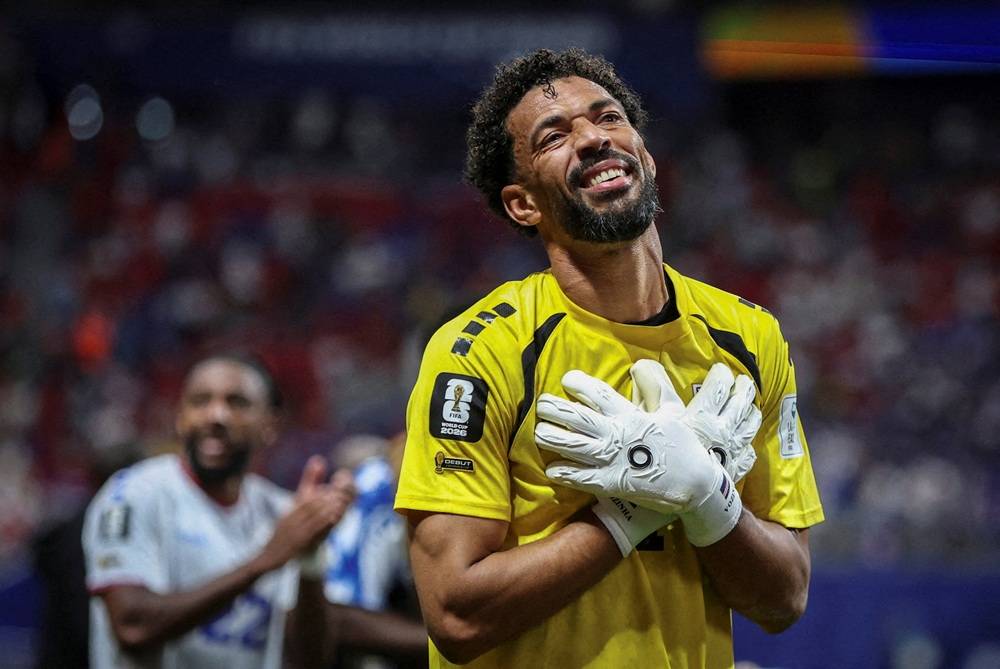
Cape Verde held Spain to a draw in its opening game, advanced to the round of 32 and gave Argentina a scare before eventually losing 3-2 in extra time in a World Cup classic. Cape Verde's goalkeeper Vozinha became a breakout star at the age of 40, gaining millions of followers on social media.

Congo also advanced beyond the group stage and pushed England before eventually losing, while Curaçao was still in with a chance of making the knockouts going into its final group match.

FIFA opened its door to more teams and they proved they could compete on football's biggest stage. Nonetheless, it was top-ranked nations Argentina, Spain, France and England — all former champions — that made it to the final four.

Cape Verde's Vozinha celebrates after the match in Atlanta Stadium, Atlanta, Georgia, US, June 15, 2026. (Reuters)

The big stars delivered

The race for the golden boot became a who's who of the world's top players with Lionel Messi, Kylian Mbappé, Erling Haaland, Harry Kane and Jude Bellingham firing on all cylinders.

Mbappé led the way ahead of Sunday's final with 10 goals in the tournament and a record 22 career World Cup goals. Messi had eight at this World Cup and 21 in total with one game to go.

Cristiano Ronaldo couldn't lead Portugal to success in what he said was his last World Cup, while Spain's teenage sensation Lamine Yamal — the star of the Euros two years ago — had to work his way into the tournament after overcoming injury.

Big tech, big complaints

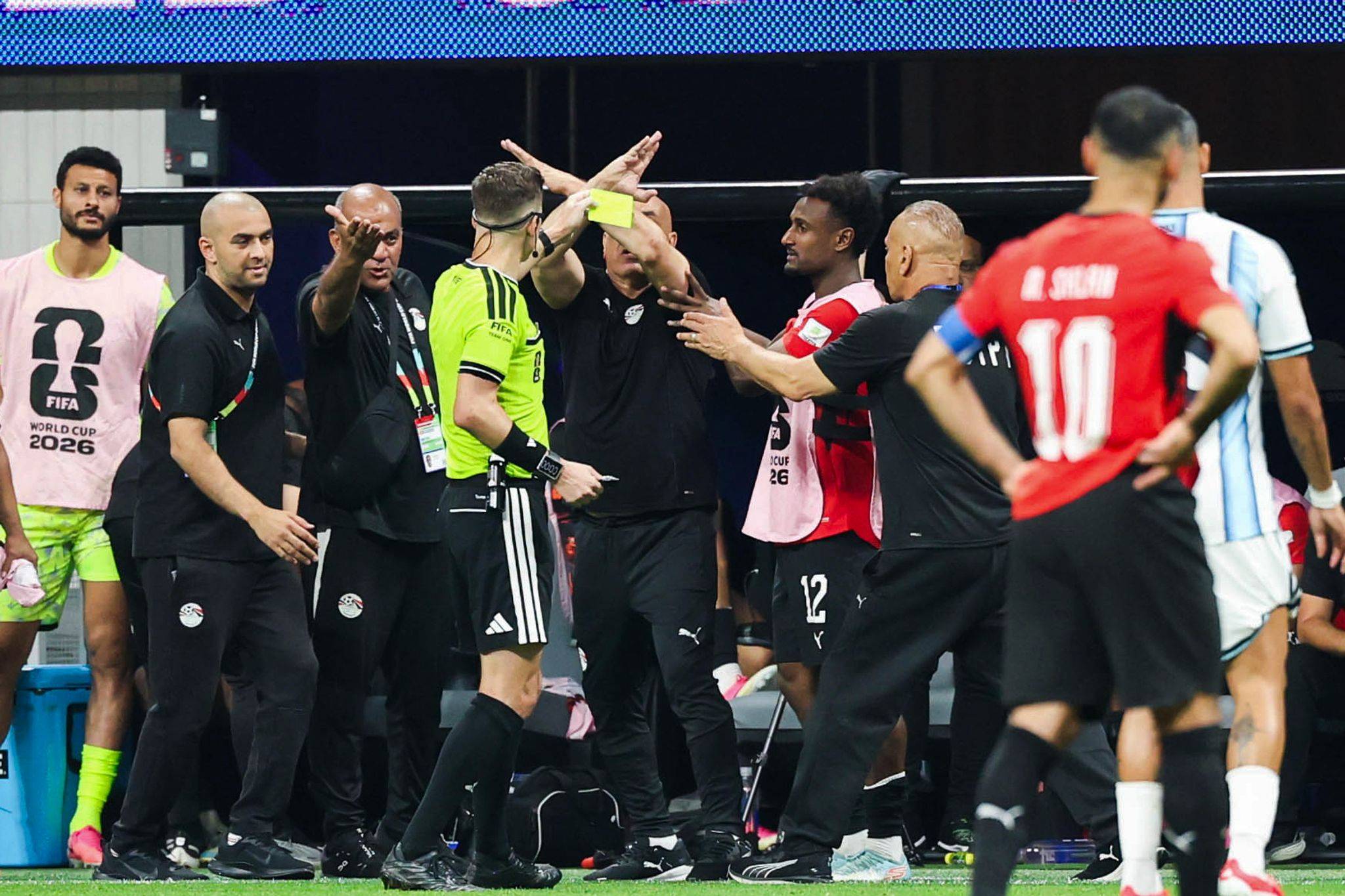
Video reviews known as VAR were at the center of a number of contentious decisions, ruling out huge goals for Germany, Croatia and Egypt.

Egypt coach Hossam Hassan launched a furious tirade after Argentina staged a spectacular comeback from 2-0 down to win 3-2 in the round of 16.

“We have suffered injustice,” he said after Egypt had a goal overturned when the score was still 1-0.

Fitted with sensors, the high-tech ball in use at the tournament cost Croatia a dramatic late equalizer against Portugal in the round of 32 when it detected the slightest of touches from Igor Mantanovic and ruled Josko Gvardiol's goal offside.

“All these decisions take the joy out of football,” said Croatia coach Zlatko Dalić, who has since stepped down.

07 July 2026, US, Atlanta: Egypt coach Hossam Hassan gestures as he receives a yellow card during the 2026 FIFA World Cup Round of 16 match between Argentina and Egypt at Atlanta Stadium. (dpa)

Exorbitant ticket prices, but fans still turned up

There were concerns going into the tournament that FIFA's introduction of dynamic pricing would make game tickets unaffordable for average fans. Some critics accused FIFA of a “monumental betrayal."

Official ticket prices on general sale ranged from $140 to $2,735 for group stage matches and up to $8,680 for the final, far beyond the prices at the previous World Cup in Qatar in 2022.

After criticism FIFA said it would offer a selection of $60 tickets for every game to the 48 national federations participating.

FIFA's resale market place allowed sellers to list tickets for massively more than face value, including ones for the final for just under $2.3 million. FIFA didn't control resale pricing, but took a cut from sales.

For all the criticism, fans still turned up in big numbers, even for games that didn’t feature marquee teams or players.

After a shaky start when there were empty seats for the game between South Korea and the Czech Republic in Guadalajara, stadium after stadium reported full houses.

Many foreign visitors were impressed by the hospitality they experienced in the US.

Hydration breaks a turnoff

FIFA’s new hydration breaks midway through each half — a novelty for this World Cup — prompted loud jeers from fans inside the stadium, while former players were also critical.

"We’re in America, right? So, it’s like it is a timeout,” former Ireland international Roy Keane said on The Overlap podcast.

The breaks were introduced to help players deal with the summer heat, but FIFA stipulated they would occur regardless of the weather, venue or location.

Coaches used them like timeouts to pass on in-game tactical instructions. Broadcasters, meanwhile, used them as an opportunity to take commercial breaks.

It is unclear whether FIFA will implement hydration breaks at future World Cups, but the English Football Association said they were unlikely to be in place for the 2028 European Championship, co-hosted by England, Scotland, Wales and Ireland.

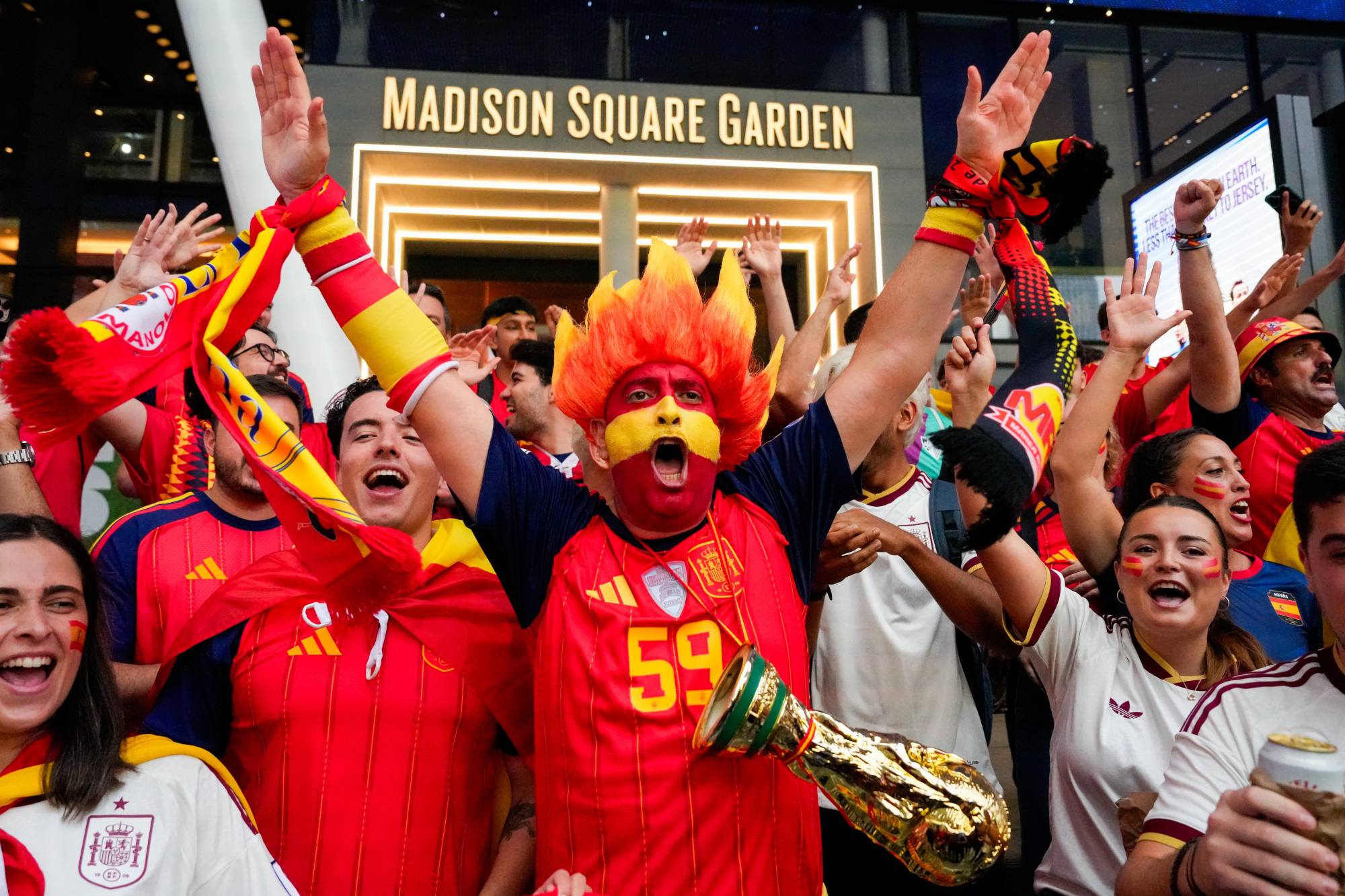
Spain fans gather for a rally on the eve of the World Cup final match in New York's Times Square, Saturday, July 18, 2026 (AP)

Iran participated despite the war

It’s not unusual for politics and sport to intertwine at the World Cup. This time the biggest political tensions surrounded the national team of Iran.

The war in the Middle East raised doubts about whether the Iranian team would show up at all. It did, but only after moving its base camp from Arizona to Mexico.

Its participation was overshadowed by visa issues, with the US refusing visas to several members of Iran's delegation. The Iranians also complained about travel restrictions, including having to leave the US immediately after each match.

When Iran was eliminated at the group stage, Homeland Security Secretary Markwayne Mullin made his feelings clear. “I’m just glad they’re done and they’re not coming back,” he said.

Trump's role in focus

While the Trump administration’s travel restrictions on a series of countries prevented some fans from traveling to the US, there were no reports of the aggressive immigration enforcement that some human rights groups had feared could take place around World Cup stadiums.

Besides the final, Trump didn't attend any World Cup games. However, his relationship with FIFA president Gianni Infantino came into sharp focus when US striker Folarin Balogun's one game ban for a red card was suspended ahead of the team's round of 16 game against Belgium.

Trump said he had called Infantino to ask for the decision to be reviewed before FIFA made Balogun eligible to play. FIFA insisted its disciplinary bodies acted independently, but the incident raised question about political interference.

Ultimately, the decision didn't help the US as it lost 4-1 to Belgium.


Deschamps’ Golden France Era Ends in Defeat, but Legacy Intact

Didier Deschamps, Head Coach of France, walks out for the pitch inspection before the FIFA World Cup 2026 Bronze Final between France and England at Miami Stadium on July 18, 2026 in Miami Gardens, Florida. (Getty Images/AFP)
TT

Deschamps’ Golden France Era Ends in Defeat, but Legacy Intact

Didier Deschamps, Head Coach of France, walks out for the pitch inspection before the FIFA World Cup 2026 Bronze Final between France and England at Miami Stadium on July 18, 2026 in Miami Gardens, Florida. (Getty Images/AFP)

The end of coach Didier Deschamps' Midas-like reign turned into a Tantalus torment as France suffered a comprehensive World Cup semi-final defeat by Spain before losing 6-4 to England in a wild third-place playoff, but those disappointments will not tarnish his legacy.

France lost the 2022 World Cup final to Argentina and have now been beaten by Spain in three straight semi-finals, at Euro 2024, the Nations League and Tuesday's 2-0 World Cup loss.

Yet Deschamps, who took charge in 2012 with French football still scarred by their mutiny and humiliation at the World Cup in South Africa two years earlier, will be remembered above all as the coach who led France to their second world title in 2018, two decades after captaining them to their first on home soil.

With a record 20 World Cup victories as a coach, he took France to the global semi-finals at three straight tournaments, reaching the final twice, and established them as international football’s most consistent major-tournament force.

Saturday’s spectacular defeat by England in the third-place playoff did not really spoil the farewell of the 57-year-old, who announced last year that he would leave when his contract expired after the tournament.

"This match will not tarnish the legend of Didier Deschamps," captain ‌Kylian Mbappe said.

Deschamps' ‌successor -- former France teammate Zinedine Zidane has long been the favorite -- will inherit a gifted squad, but the familiar ‌challenge of ⁠turning perhaps the ⁠deepest talent pool in the country's history into a consistent winning machine.

FRANCE RARELY FLAMBOYANT

Deschamps' teams were rarely associated with flamboyance. He was sometimes criticized for favoring balance, discipline and efficiency over spectacle, even when blessed with some of the most gifted attacking players in world football.

But results repeatedly justified his methods.

He took France to the 2014 World Cup quarter-finals, where they lost narrowly to eventual champions Germany, before guiding the hosts to the Euro 2016 final. Defeat by Portugal in extra time was painful but laid the foundations for becoming world champions in Russia two years later.

France beat Croatia 4-2 in the 2018 final, making Deschamps the third man after Brazil’s Mario Zagallo and Germany’s Franz Beckenbauer to win the World Cup as a player and coach.

They added the Nations League title in 2021 and came within a penalty shootout of retaining the World Cup in Qatar, recovering from ⁠a dreadful opening 80 minutes to draw 3-3 with Argentina in one of the tournament's greatest games.

RESERVOIR OF CREDIT

Those ‌achievements gave Deschamps a reservoir of credit few coaches could match.

He survived the fallout from France’s disappointing Euro ‌2020 campaign, recurring debates over his cautious football and the long, divisive exile of striker Karim Benzema.

His authority remained intact because he kept building teams capable of going deep into ‌tournaments.

The former defensive midfielder had made a career out of winning long before taking charge of France.

Born in Bayonne in 1968, he made his top-flight debut for ‌Nantes as a teenager before joining Olympique de Marseille, with whom he won two league titles and captained the first French club to lift the Champions League in 1993.

A move to Juventus followed in 1994. In Turin, Deschamps won three Serie A titles and another Champions League, establishing himself as the understated organizer at the heart of one of Europe’s dominant teams.

Eric Cantona once dismissively described him as a “water carrier”, but the label came to capture the qualities that defined Deschamps: discipline, intelligence, selflessness and an instinctive understanding of what winning teams required.

He ‌won 103 caps and captained the side that lifted the World Cup at the Stade de France in 1998 before completing an historic double at Euro 2000.

Success followed him into management.

Deschamps took AS Monaco to the 2004 Champions ⁠League final, guided Juventus back into Serie A ⁠immediately after their demotion in the Calciopoli scandal and ended Marseille’s 18-year wait for a French league title in 2010.

When he succeeded former France teammate Laurent Blanc in July 2012, the national side were still attempting to rebuild their reputation after the players’ strike at the 2010 World Cup in South Africa.

ORDER, BELIEF, SUCCESS

Deschamps restored order first, belief second and success soon afterwards.

His critics argued that France's talent pool demanded more expansive football. His response was generally the same: tournaments were won through adaptability, defensive resilience and an acceptance that style mattered less than survival.

For more than a decade, the argument was difficult to counter.

The manner of Tuesday’s defeat will nevertheless sting. France arrived as favorites after their attacking firepower had carried them through the tournament, only to be outclassed technically, tactically and physically by Spain in Dallas.

Deschamps admitted his team had needed to be at their maximum to compete and had fallen well short.

France were unable to impose their strength, their celebrated attack was neutralized and their midfield was overwhelmed — a grim final chapter for a coach whose sides had usually found a way, even when playing poorly.

“I do not want to throw away everything we have done,” Deschamps said after the defeat. “But in this match Spain showed they had something more.”

It was a fittingly measured assessment from a man who rarely allowed triumph or disaster to alter his public demeanor.

Deschamps will leave without the glorious farewell he had craved, but with a record that places him alongside the most influential figures in French sporting history.

He lifted the World Cup as captain, hoisted it aloft again as coach and spent 14 years ensuring France were almost always present when the sport’s biggest prizes were decided.

Painful evenings in Dallas and Miami cannot undo that.


Mexico’s Sheinbaum to Attend World Cup Final at Trump’s Invitation

Mexican President Claudia Sheinbaum speaks during a press conference at the National Palace in Mexico City, Mexico, 16 July 2026. (EPA)
TT

Mexico’s Sheinbaum to Attend World Cup Final at Trump’s Invitation

Mexican President Claudia Sheinbaum speaks during a press conference at the National Palace in Mexico City, Mexico, 16 July 2026. (EPA)

Mexican President Claudia Sheinbaum said in a message on X that she would attend the World Cup final in New Jersey on Sunday at the invitation of US President Donald Trump along with Canadian Prime Minister Mark Carney.

"I considered it politically important that the three countries hosting the World Cup are involved, and it is also a sign of the strong coordination and ‌collaboration we ‌have with the US government," Sheinbaum ‌said.

The ⁠final World Cup ⁠match between Argentina and Spain caps a whirlwind five weeks of football games involving 48 teams that kicked off in Mexico City on June 11.

Sheinbaum previously said she would not attend any World Cup game in a show ⁠of solidarity with regular Mexicans who ‌could not afford tickets, ‌which ran into the thousands of dollars. Tickets to the ‌World Cup final are topping $10,000, driven ‌by FIFA’s transition to a dynamic pricing model.

The presence of Sheinbaum and Carney at the sporting event also comes amidst tense trade negotiations, as Mexico and ‌Canada seek to convince Trump to extend the trilateral North American trade agreement.

Sheinbaum has ⁠a ⁠cordial, if tense, relationship with Trump and has gone out of her way to avoid making comments or pushing policies that could anger him. The US-Canada relationship is more volatile, with Carney and Trump regularly trading barbs and tariff threats.

Trade negotiators from the United States and Mexico will convene in Mexico City on Tuesday for a third round of talks aimed at revamping the agreement, with key topics including steel, automotive, agriculture, and electronic payment systems.
