
Israel Keeps up Strikes in Gaza as Fears of Wider War Grow 

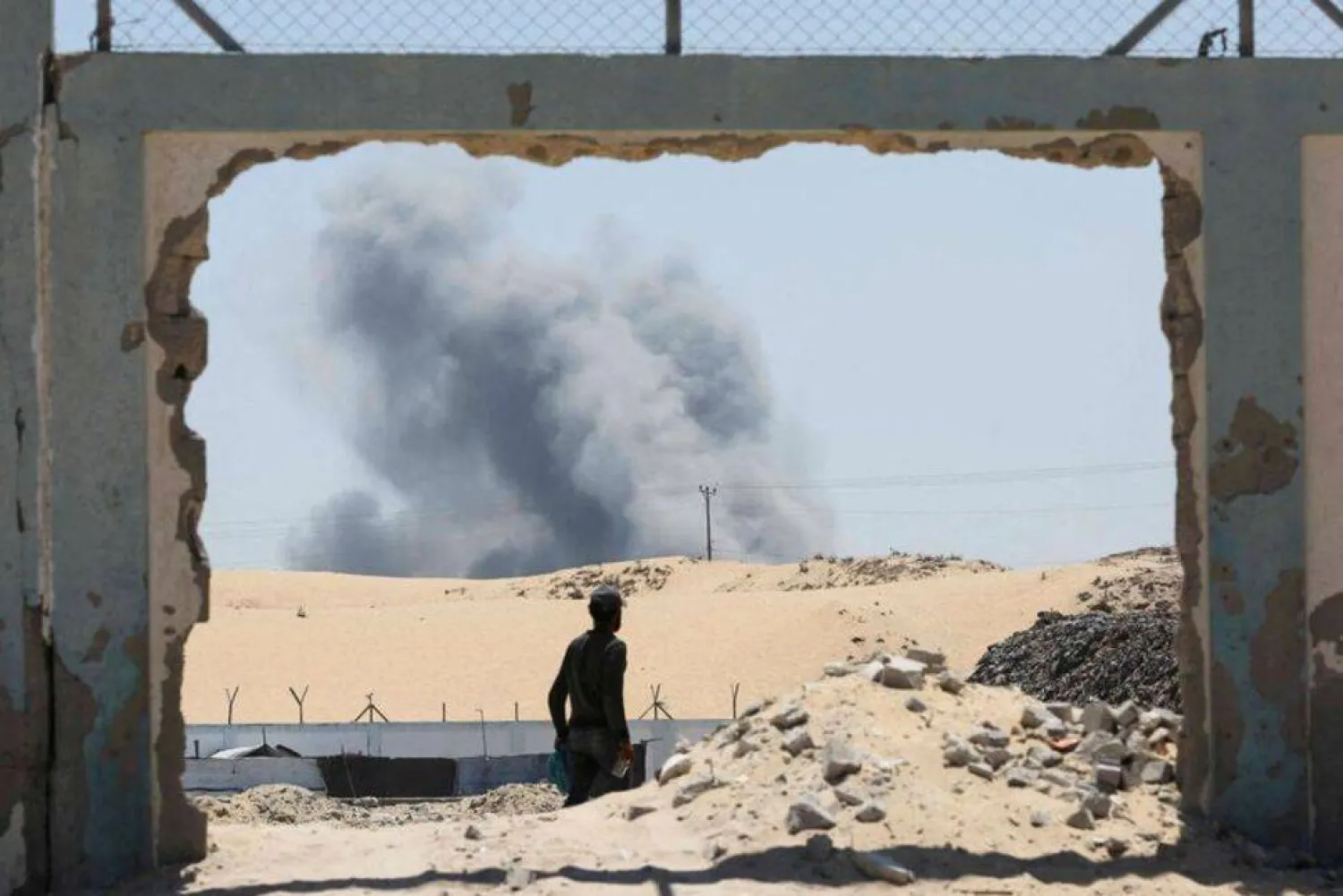
FILE PHOTO: Smoke rises following Israeli strikes, in Khan Younis in the southern Gaza Strip August 8, 2024. REUTERS/Hatem Khaled/File Photo
TT

Israel Keeps up Strikes in Gaza as Fears of Wider War Grow 

FILE PHOTO: Smoke rises following Israeli strikes, in Khan Younis in the southern Gaza Strip August 8, 2024. REUTERS/Hatem Khaled/File Photo

Israeli forces pressed on with their operations near the southern Gaza city of Khan Younis on Monday amid an international push for a deal to halt the fighting in Gaza and block a slide into a wider regional conflict with Iran and its proxies. 

Palestinian medics said Israeli military strikes on several areas of Khan Younis on Monday killed at least 16 people and wounded several. Meanwhile more families and displaced persons streamed out of areas threatened by new evacuation orders telling people to clear the area. 

As fighting continued in several areas of the Gaza Strip, Hamas reacted skeptically to the latest round of Egyptian and Qatari-brokered talks due on Thursday, saying it has seen no sign of movement from the Israeli side. 

The group said in a statement on Sunday mediators must force Israel to accept a ceasefire proposal based on ideas by US President Joe Biden, which Hamas had accepted, "instead of pursuing further rounds of negotiations or new proposals that would provide cover for the occupation's aggression." 

Two sources close to Hamas told Reuters the group was convinced the new call for talks was coordinated beforehand with Israel to deter responses from Iran and Hezbollah to the assassination of the group's chief Ismail Haniyeh in Tehran and a top Hezbollah leader in Lebanon. 

"It is a mild rejection you can say. Should Hamas receive a workable plan, an Israeli positive response to the proposal it had accepted, things may change, but so far Hamas believes Netanyahu isn't serious about reaching a deal," said one Palestinian official close to the mediation effort. 

Hamas' reaction to the talks came as preparations for a larger scale confrontation grew, with Washington ordering a guided missile submarine to the Middle East and the Abraham Lincoln strike group accelerating its deployment to the region. 

Israeli Defense Minister Yoav Gallant told US Defense Secretary Lloyd Austin that Iran was making preparations for a large-scale military attack on Israel, Barack Ravid, a normally well-sourced reporter for Axios News reported on Twitter. 

Israel has been braced for a major attack since last month when a missile strike killed 12 youngsters in the Israeli-occupied West Bank and Israel responded by killing a senior Hezbollah commander in Beirut. 

A day after that operation, Haniyeh, the political leader of Hamas, was assassinated in Tehran, drawing Iranian vows of retaliation against Israel. 

The potential escalation underlined how far the Middle East has been thrown into turmoil by the war in Gaza, now into its 11th month. 

The Hamas-led attack on Israeli communities around the Gaza Strip killed some 1,200 people, with more than 250 taken into captivity in Gaza, according to Israeli tallies, in one of the most devastating blows against Israel in its history. 

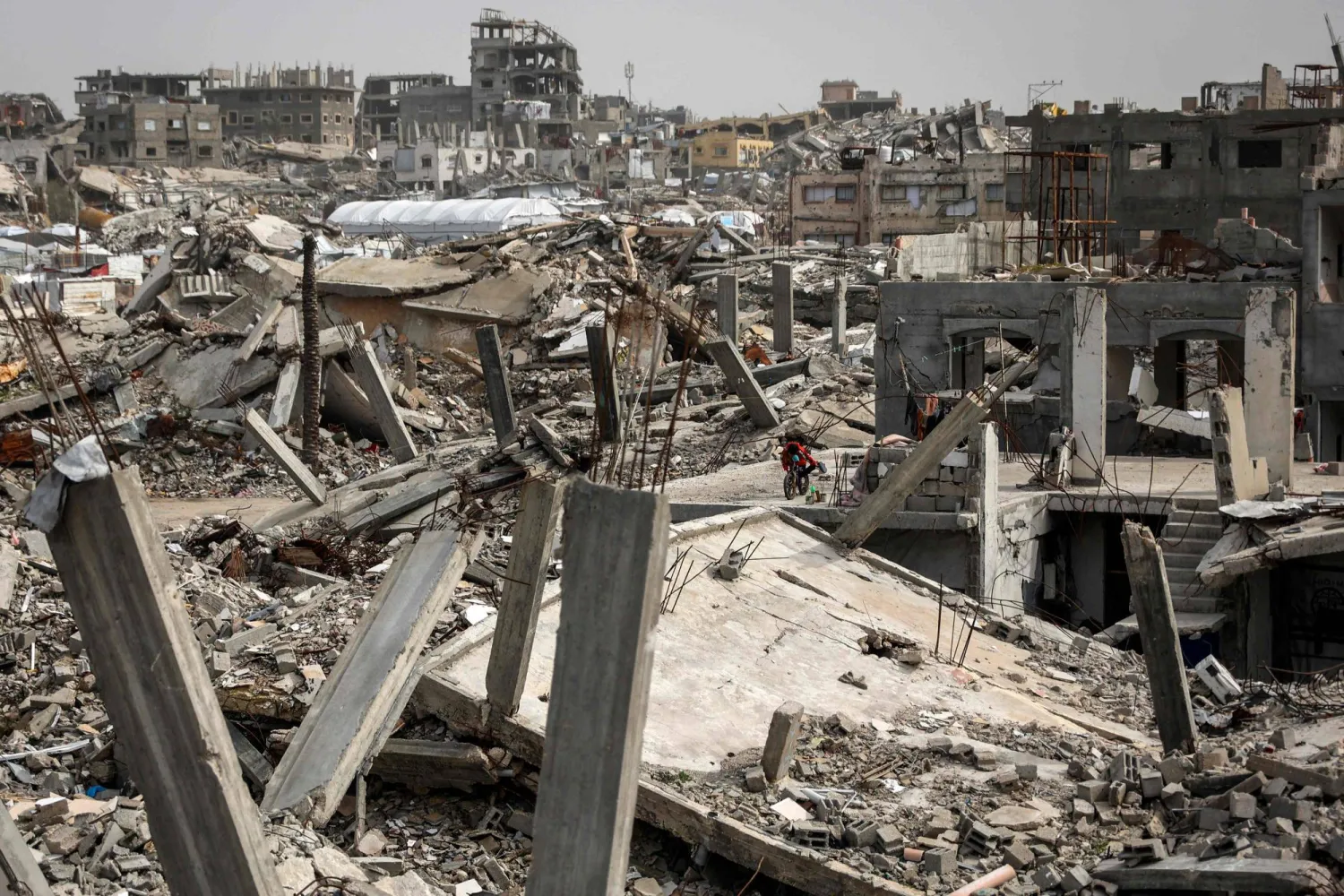
In response, Israeli forces have flattened Gaza, displaced most of the population and killed around 40,000 people, according to the Palestinian health ministry, in a war that has caused horror around the world. 

On Saturday, scores of people were killed in Israeli strikes on a school building in Gaza City that the military said targeted fighters from the armed wings of Hamas and Islamic Jihad. 

Gaza health officials say most of the fatalities have been civilians but Israel says at least a third are fighters. Israel says it has lost 329 soldiers in Gaza.  


Over 4,500 ISIS Detainees Brought to Iraq from Syria, Says Official

Vehicles transporting ISIS detainees by the US military, according to a security source from the Syrian Democratic Forces, head from Syria towards Iraq, in Qamishli, Syria, February 8, 2026. (Reuters)
TT

Over 4,500 ISIS Detainees Brought to Iraq from Syria, Says Official

Vehicles transporting ISIS detainees by the US military, according to a security source from the Syrian Democratic Forces, head from Syria towards Iraq, in Qamishli, Syria, February 8, 2026. (Reuters)

More than 4,500 suspected extremists have been transferred from Syria to Iraq as part of a US operation to relocate ISIS group detainees, an Iraqi official told AFP on Tuesday.

The detainees are among around 7,000 suspects the US military began transferring last month after Syrian government forces captured Kurdish-held territory where they had been held by Kurdish fighters.

They include Syrians, Iraqis and Europeans, among other nationalities.

Saad Maan, a spokesperson for the Iraqi government's security information unit, told AFP that 4,583 detainees had been brought to Iraq so far.

ISIS swept across swathes of Syria and Iraq in 2014 where it committed massacres. Backed by US-led forces, Iraq proclaimed the defeat of ISIS in 2017, while in neighboring Syria the Kurdish-led Syrian Democratic Forces ultimately beat back the group two years later.

The SDF went on to jail thousands of suspected extremists and detain tens of thousands of their relatives in camps.

In Iraq, where many prisons are packed with ISIS suspects, courts have handed down hundreds of death sentences and life terms to those convicted of terrorism offences, including many foreign fighters.

This month Iraq's judiciary said it had begun investigations into detainees transferred from Syria.


UN Force to Withdraw Most Troops from Lebanon by Mid-2027

An Italian UN peacekeeper soldier stands guard at a road that links to a United Nations Interim Force In Lebanon (UNIFIL) base, in Naqoura town, Lebanon, on May 4, 2021. (AP)
TT

UN Force to Withdraw Most Troops from Lebanon by Mid-2027

An Italian UN peacekeeper soldier stands guard at a road that links to a United Nations Interim Force In Lebanon (UNIFIL) base, in Naqoura town, Lebanon, on May 4, 2021. (AP)

The United Nations Interim Force in Lebanon plans to withdraw most of its troops by mid 2027, its spokesperson told AFP on Tuesday, after the peacekeepers' mandate expires this year.

UNIFIL has acted as a buffer between Israel and Lebanon for decades and has been assisting the Lebanese army as it dismantles Hezbollah infrastructure near the Israeli border after a recent war between Israel and the Iran-backed group.

Under pressure from the United States and Israel, the UN Security Council voted last year to end the force's mandate on December 31, 2026, with an "orderly and safe drawdown and withdrawal" within one year.

Spokesperson Kandice Ardiel, said that "UNIFIL is planning to draw down and withdraw all, or substantially all, uniformed personnel by mid-year 2027", completing the pullout by year end.

After UNIFIL operations cease on December 31 this year, she said that "we begin the process of sending UNIFIL personnel and equipment home and transferring our UN positions to the Lebanese authorities".

During the withdrawal, the force will only be authorized to perform limited tasks such as protecting UN personnel and bases and overseeing a safe departure.

Despite a November 2024 ceasefire that sought to end more than a year of hostilities with Hezbollah, Israel has kept up regular strikes on Lebanon, mainly saying it is targeting Hezbollah, and has maintained troops in five border areas.

UNIFIL patrols near the border and monitors violations of a UN resolution that ended a 2006 war between Israel and Hezbollah and which forms the basis of the current ceasefire.

It has repeatedly reported Israeli fire at or near its personnel since the truce.

Ardiel said UNIFIL had reduced the number of peacekeepers in south Lebanon by almost 2,000 in recent months, "with a couple hundred more set to leave by May".

The force now counts some 7,500 peacekeepers from 48 countries.

She said the reduction was "a direct result" of a UN-wide financial crisis "and the cost-saving measures all missions have been forced to implement", and unrelated to the end of the force's mandate.

Lebanese authorities want a continued international troop presence in the south after UNIFIL's exit, even if its numbers are limited, and have been urging European countries to stay.

French Foreign Minister Jean-Noel Barrot said in Beirut this month that Lebanon's army should replace the force when the peacekeepers withdraw.

Italy has said it intends to keep a military presence in Lebanon after UNIFIL leaves.


Israeli Strikes Kill 3 People in Gaza, Hospital Says

Makeshift tents of displaced Palestinian families next to the beach in Gaza City, Gaza Strip, 09 February 2026. (EPA)
TT

Israeli Strikes Kill 3 People in Gaza, Hospital Says

Makeshift tents of displaced Palestinian families next to the beach in Gaza City, Gaza Strip, 09 February 2026. (EPA)

Israeli military strikes on Monday killed three people west of Gaza City, according to the hospital where the casualties arrived.

Shifa Hospital reported the deaths amid the months-old ceasefire that has seen continued fighting. The Israeli army said Monday it is striking targets in response to Israeli troops coming under fire in the southern city of Rafah, which it says was a violation of the ceasefire. The army said it is striking targets “in a precise manner."

The four-month-old US-backed ceasefire followed stalled negotiations and included Israel and Hamas accepting a 20-point plan proposed by US President Donald Trump aimed at ending the war unleashed by Hamas’ Oct. 7, 2023, attack into Israel. At the time, Trump said it would lead to a “strong, durable, and everlasting peace.”

Hamas freed all the living hostages it still held at the outset of the deal in exchange for thousands of Palestinian prisoners held by Israel and the remains of others.

But the larger issues the agreement sought to address, including the future governance of the strip, were met with reservations, and the US offered no firm timeline.

Rafah crossing improving, official says

The Palestinian official set to oversee day-to-day affairs in Gaza said on Monday that passage through the Rafah crossing with Egypt is starting to improve after a chaotic first week of reopening marked by confusion, delays and a limited number of crossings.

Ali Shaath, head of the National Committee for the Administration of Gaza, told Egypt’s Al-Qahera News that operations at the crossing were improving on Sunday.

He said 88 Palestinians were scheduled to travel through Rafah on Monday, more than have crossed in the initial days since reopening. Israel did not immediately confirm the figures.

The European Union border mission at the crossing said in a statement Sunday that 284 Palestinians had crossed since reopening. Travelers included people returning after having fled the war and medical evacuees and their escorts. In total, 53 medical evacuees departed during the first five days of operations.

That remains well below the agreed target of 50 medical evacuees exiting and 50 returnees entering daily, negotiated by Israeli, Egyptian, Palestinian and international officials.

Shaath and other members of the committee remain in Egypt, without Israeli authorization to enter the war-battered enclave.

The Rafah crossing opened last week for the first time since mid-2024, one of the main requirements for the ceasefire between Israel and Hamas. It was closed Friday and Saturday because of confusion around operations.

Palestinian officials say nearly 20,000 people are seeking to leave Gaza for medical care unavailable in its largely destroyed health system.

Palestinians who returned to Gaza in the first days after the crossing reopened described hourslong delays and invasive searches by Israeli authorities and an Israeli-backed Palestinian armed group, Abu Shabab. Israel denied mistreatment.

Gaza's Health Ministry said on Monday that five people were killed over the previous 24 hours, bringing the death toll to 581 since the October ceasefire. The truce led to the return of the remaining hostages — both living captives and bodies — from the 251 abducted during the Oct. 7, 2023, attack that triggered the war.

Hamas-led fighters killed around 1,200 people, mostly civilians, in the attack. Israel’s military offensive has since killed over 72,000 Palestinians, according to the ministry, which operates under the Hamas-run government and is staffed by medical professionals. The UN and independent experts consider it the most reliable source on war casualties.