


Putin Says Ukraine's Incursion into Kursk is an Attempt to Stop Moscow’s Eastern Offensive

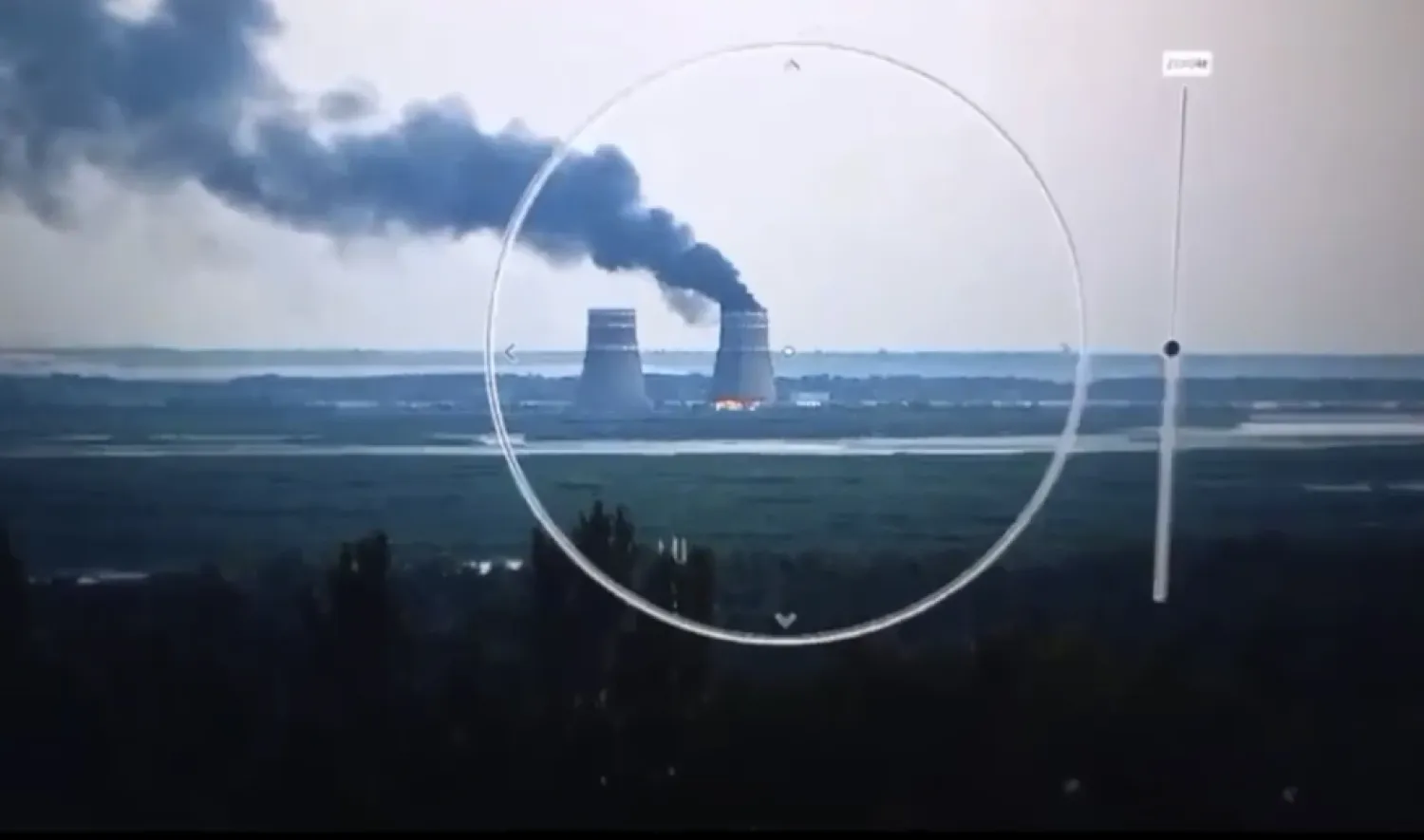
In this image from a surveillance camera provided by the Ukrainian Presidential Press Office, smoke rises from a cooling tower of the Zaporizhzhia Nuclear Power Station in a Russia-controlled area in the Energodar, Zaporizhzhia region of Ukraine, Sunday, Aug. 11, 2024. (Ukrainian Presidential Press Office via AP)

Share
In this image from a surveillance camera provided by the Ukrainian Presidential Press Office, smoke rises from a cooling tower of the Zaporizhzhia Nuclear Power Station in a Russia-controlled area in the Energodar, Zaporizhzhia region of Ukraine, Sunday, Aug. 11, 2024. (Ukrainian Presidential Press Office via AP) Share
TT

Putin Says Ukraine's Incursion into Kursk is an Attempt to Stop Moscow’s Eastern Offensive

In this image from a surveillance camera provided by the Ukrainian Presidential Press Office, smoke rises from a cooling tower of the Zaporizhzhia Nuclear Power Station in a Russia-controlled area in the Energodar, Zaporizhzhia region of Ukraine, Sunday, Aug. 11, 2024. (Ukrainian Presidential Press Office via AP)

Share
In this image from a surveillance camera provided by the Ukrainian Presidential Press Office, smoke rises from a cooling tower of the Zaporizhzhia Nuclear Power Station in a Russia-controlled area in the Energodar, Zaporizhzhia region of Ukraine, Sunday, Aug. 11, 2024. (Ukrainian Presidential Press Office via AP) Share

Russian President Vladimir Putin said Monday that the Ukrainian army’s incursion into the Kursk region, which has caused more than 100,000 civilians to flee and embarrassed the Kremlin, is an attempt by Kyiv to stop Moscow’s offensive in eastern Ukraine's Donbas region and gain leverage in possible future peace talks.

Russian forces are still scrambling to respond to the surprise Ukrainian attack after almost a week of fierce fighting, but Putin insisted Moscow's army will prevail, The AP reported.

Speaking at a meeting with top security and defense officials, Putin said the attack that began Aug. 6 appeared to reflect Kyiv’s attempt to gain a better negotiating position in possible future talks to end the war.

He argued that Ukraine may have hoped to cause public unrest in Russia with the attack, adding that it has failed to achieve that goal, and claimed that the number of volunteers to join the Russian military has increased because of the assault. He said the Russian military is driving on with its eastern Ukraine offensive regardless.

“It’s obvious that the enemy will keep trying to destabilize the situation in the border zone to try to destabilize the domestic political situation in our country,” Putin said.

Acting Kursk Gov. Alexei Smirnov reported to Putin that Ukrainian forces had pushed 12 kilometers (7.5 miles) into the Kursk region across a 40-kilometer (25-mile) front and currently control 28 Russian settlements.

Smirnov said 12 civilians have been killed and 121 others, including 10 children, have been wounded in the operation. About 121,000 people have been evacuated or left the areas affected by fighting on their own, he said.

Tracking down all the Ukrainian diversionary units roaming the region is difficult, Smirnov said, noting that some are using fake Russian IDs.

The governor of the Belgorod region adjacent to Kursk also announced the evacuation of people from a district near the Ukrainian border, describing Monday morning as “alarming” but giving no detail.

Ukrainian forces swiftly rolled into the town of Sudzha about 10 kilometers (6 miles) over the border after launching the attack. They reportedly still hold the western part of the town, which is the site of an important natural gas transit station.

The Ukrainian operation is taking place under tight secrecy, and its goals — especially whether Kyiv’s forces aim to hold territory or are staging hit-and-run raids — remain unclear. The stunning maneuver that caught the Kremlin’s forces unawares counters Russia’s unrelenting effort in recent months to punch through Ukrainian defenses at selected points along the front line in eastern Ukraine.

Russia has seen previous incursions into its territory during the nearly 2 1/2-year war, but the foray into the Kursk region marked the largest attack on its soil since World War II, constituting a milestone in the hostilities. It is also the first time the Ukrainian army has spearheaded an incursion rather than pro-Ukraine Russian fighters.

The advance has delivered a blow to Putin’s efforts to pretend that life in Russia has largely remained unaffected by the war. State propaganda has tried to play down the attack, emphasizing the authorities’ efforts to help residents of the region and seeking to distract attention from the military’s failure to prepare for the attack and quickly repel it.

Kursk residents recorded videos lamenting they had to flee the border area, leaving behind their belongings, and pleading with Putin for help. But Russia’s state-controlled media kept a tight lid on any expression of discontent.

Retired Gen. Andrei Gurulev, a member of the lower house of the Russian parliament, criticized the military for failing to properly protect the border.

“Regrettably, the group of forces protecting the border didn’t have its own intelligence assets,” he said on his messaging app channel. “No one likes to see the truth in reports, everybody just wants to hear that all is good.”

The combat inside Russia rekindled questions about whether Ukraine was using weaponry supplied by NATO members. Some Western countries have balked at allowing Ukraine to use their military aid to hit Russian soil, fearing it would fuel an escalation that might drag Russia and NATO into war.

Though it’s not clear what weapons Ukraine is using across the border, Russian media widely reported that US Bradley and German Marder armored infantry vehicles were there. It was not possible to independently verify that claim.

Ukraine has already used US weapons to strike inside Russia.

But Italian Foreign Minister Antonio Tajani said in an interview published Monday that the weapons provided by his country “cannot be used to attack Russia on its territory.”

Meanwhile, German Defense Ministry spokesperson Arne Collatz said Monday that legal experts agree that “international law provides for a state that is defending itself also to defend itself on the territory of the attacker. That is clear from our point of view, too.”

Russia’s Defense Ministry said Monday that reinforcements sent to the area backed by air force and artillery had fended off seven attacks by Ukrainian units near Martynovka, Borki and Korenevo during the previous 24 hours.

The ministry said Russian forces also blocked an attempt by Ukrainian mobile groups to forge deep into the Russian territory near Kauchuk.

Russian air force and artillery also struck concentrations of Ukrainian troops and equipment near Sudzha, Kurilovka, Pekhovo, Lyubimovo and several other settlements, it said. Warplanes and artillery hit Kyiv’s reserves in Ukraine’s Sumy region across the border, it added.

Pasi Paroinen, an analyst with the Finland-based Black Bird Group open-source intelligence agency, which monitors the war, said the toughest phase of Ukraine’s incursion is likely to begin now as Russian reserves enter the fray.

Ukraine’s progress on Russian territory “is challenging the operational and strategic assumptions” of the Kremlin’s forces, according to the Institute for the Study of War.

It could compel Russia to deploy more military assets to the long border between the two countries, the Washington-based think tank said in an assessment late Sunday.

It described the Russian forces responding to the incursion as “hastily assembled and disparate.”



Nigeria's President to Make a Sate Visit to the UK in March

Nigeria’s President Bola Tinubu gives a joint statement with Brazil’s President Luiz Inacio Lula da Silva, at the Planalto presidential palace, in Brasilia, Brazil, Aug. 25, 2025. (AP Photo/Eraldo Peres, File)
TT

Nigeria's President to Make a Sate Visit to the UK in March

Nigeria’s President Bola Tinubu gives a joint statement with Brazil’s President Luiz Inacio Lula da Silva, at the Planalto presidential palace, in Brasilia, Brazil, Aug. 25, 2025. (AP Photo/Eraldo Peres, File)

Nigeria’s president is set to make a state visit to the UK in March, the first such trip by a Nigerian leader in almost four decades, Britain’s Buckingham Palace said Sunday.

Officials said President Bola Tinubu and first lady Oluremi Tinubu will travel to the UK on March 18 and 19, The AP news reported.

King Charles III and Queen Camilla will host them at Windsor Castle. Full details of the visit are expected at a later date.

Charles visited Nigeria, a Commonwealth country, four times from 1990 to 2018 before he became king. He previously received Tinubu at Buckingham Palace in September 2024.m

Previous state visits by a Nigerian leader took place in 1973, 1981 and 1989.

A state visit usually starts with an official reception hosted by the king and includes a carriage procession and a state banquet.

Last year Charles hosted state visits for world leaders including US President Donald Trump, French President Emmanuel Macron and German President Frank-Walter Steinmeier.


Iran Strikes Hard Line on US Talks, Saying Tehran's Power Comes From Saying 'No'

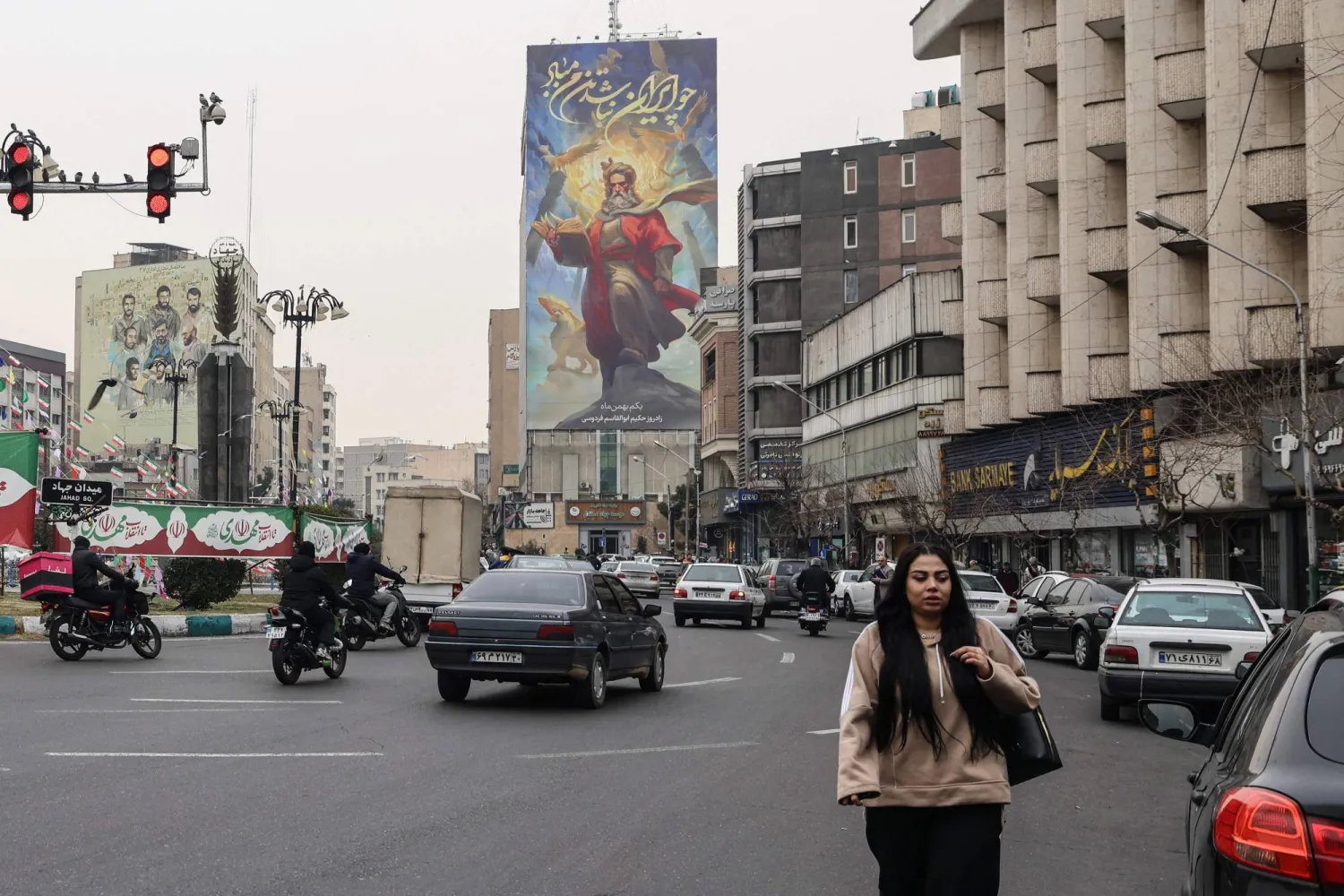
Traffic moves through a street in Tehran on February 7, 2026. (Photo by ATTA KENARE / AFP)
TT

Iran Strikes Hard Line on US Talks, Saying Tehran's Power Comes From Saying 'No'

Traffic moves through a street in Tehran on February 7, 2026. (Photo by ATTA KENARE / AFP)

Iran's top diplomat insisted Sunday that Tehran's strength came from its ability to “say no to the great powers," striking a maximalist position just after negotiations with the United States over its nuclear program and in the wake of nationwide protests.

Foreign Minister Abbas Araghchi, speaking to diplomats at a summit in Tehran, signaled that Iran would stick to its position that it must be able to enrich uranium — a major point of contention with President Donald Trump, who bombed Iranian atomic sites in June during the 12-day Iran-Israel war.

Iran will never surrender the right to enrich uranium, even if war "is imposed on us,” he noted.

"Iran has paid a very heavy price for its peaceful nuclear program and for uranium enrichment." 

Israeli Prime Minister Benjamin Netanyahu is expected to travel to Washington this week, with Iran expected to be the major subject of discussion, his office said.

While Iranian President Masoud Pezeshkian praised the talks Friday in Oman with the Americans as “a step forward,” Araghchi's remarks show the challenge ahead. Already, the US moved the aircraft carrier USS Abraham Lincoln, ships and warplanes to the Middle East to pressure Iran into an agreement and have the firepower necessary to strike the Islamic Republic should Trump choose to do so, according to The AP news.

“I believe the secret of the Islamic Republic of Iran’s power lies in its ability to stand against bullying, domination and pressures from others," Araghchi said.

"They fear our atomic bomb, while we are not pursuing an atomic bomb. Our atomic bomb is the power to say no to the great powers. The secret of the Islamic Republic’s power is in the power to say no to the powers.”

‘Atomic bomb’ as rhetorical device Araghchi's choice to explicitly use an “atomic bomb” as a rhetorical device likely wasn't accidental. While Iran has long maintained its nuclear program is peaceful, the West and the International Atomic Energy Agency say Tehran had an organized military program to seek the bomb up until 2003.

Iran had been enriching uranium up to 60% purity, a short, technical step to weapons-grade levels of 90%, the only non-weapons state to do so. Iranian officials in recent years had also been increasingly threatening that Tehran could seek the bomb, even while its diplomats have pointed to Iranian Supreme Leader Ali Khamenei’s preachings as a binding fatwa, or religious edict, that Iran wouldn’t build one.

Pezeshkian, who ordered Araghchi to pursue talks with the Americans after likely getting Khamenei's blessing, also wrote on X on Sunday about the talks.

“The Iran-US talks, held through the follow-up efforts of friendly governments in the region, were a step forward,” the president wrote. “Dialogue has always been our strategy for peaceful resolution. ... The Iranian nation has always responded to respect with respect, but it does not tolerate the language of force.”

It remains unclear when and where, or if, there will be a second round of talks. Trump, after the talks Friday, offered few details but said: “Iran looks like they want to make a deal very badly — as they should.”

Aircraft carrier in the Arabian Sea During Friday's talks, US Navy Adm. Brad Cooper, the head of the American military's Central Command, was in Oman. Cooper's presence was apparently an intentional reminder to Iran about US military power in the region. Cooper later accompanied US special envoy Steve Witkoff and Jared Kushner, Trump's son-in-law, to the Lincoln out in the Arabian Sea after the indirect negotiations.

Araghchi appeared to be taking the threat of an American military strike seriously, as many worried Iranians have in recent weeks. He noted that after multiple rounds of talks last year, the US “attacked us in the midst of negotiations."

“If you take a step back (in negotiations), it is not clear up to where it will go,” Araghchi said.


Russia: Man Suspected of Shooting Top General Detained in Dubai

An investigator works outside a residential building where the assassination attempt on Russian Lieutenant General Vladimir Alexeyev took place in Moscow, Russia February 6, 2026. REUTERS/Anastasia Barashkova
TT

Russia: Man Suspected of Shooting Top General Detained in Dubai

An investigator works outside a residential building where the assassination attempt on Russian Lieutenant General Vladimir Alexeyev took place in Moscow, Russia February 6, 2026. REUTERS/Anastasia Barashkova

Russia's Federal Security Service (FSB) said on Sunday that the man suspected of shooting top Russian military intelligence officer Vladimir Alexeyev in Moscow has been detained in Dubai and handed over to Russia.

Lieutenant General Vladimir Alexeyev, deputy head of the GRU, ⁠Russia's military intelligence arm, was shot several times in an apartment block in Moscow on Friday, investigators said. He underwent surgery after the shooting, Russian media ⁠said.

The FSB said a Russian citizen named Lyubomir Korba was detained in Dubai on suspicion of carrying out the shooting.

Russian Foreign Minister Sergei Lavrov accused Ukraine of being behind the assassination attempt, which he said was designed to sabotage peace talks. ⁠Ukraine said it had nothing to do with the shooting.

Alexeyev's boss, Admiral Igor Kostyukov, the head of the GRU, has been leading Russia's delegation in negotiations with Ukraine in Abu Dhabi on security-related aspects of a potential peace deal.