This Fall, Hollywood Tries to Balance Box Office With the Ballot Box

A guest purchases a ticket in front of a box office at AMC movie theater in Lincoln Square, New York, US, March 6, 2021. REUTERS/Jeenah Moon/File Photo
TT

This Fall, Hollywood Tries to Balance Box Office With the Ballot Box

A guest purchases a ticket in front of a box office at AMC movie theater in Lincoln Square, New York, US, March 6, 2021. REUTERS/Jeenah Moon/File Photo

Three weeks after the US presidential election in November, Ridley Scott will present his latest big-screen opus. “Gladiator II” returns the prodigious filmmaker to ancient Rome for a story about a power, the survival of Rome and the fate of democracy.
“Hopefully,” Scott says, “it will be a good omen.”
This fall, Hollywood will be trying — with everything from swaggering historical epics like “Gladiator II” to the high-seas adventure of “Moana 2” — to capture the nation’s attention at a time when much of it will be directed at the polls.
Already, Hollywood has played a co-starring role in the election. The Democratic Convention in August was packed with stars like Oprah Winfrey. Republican vice-presidential candidate, JD Vance, was first introduced to many by the 2020 big-screen adaptation of his “Hillbilly Elegy.” And it was George Clooney, who this month stars in the Apple Studios film “Wolfs” alongside Brad Pitt, who was one of the most prominent voices to urge President Joe Biden to step down from the race.
Hollywood, famously progressive, has always had to strike a balance between the liberal leanings of the majority of its creatives with the big-tent demands of pop culture. In recent years, that’s grown increasingly tricky.
At the same time, the movie industry, after several years hobbled by pandemic and strikes, is striving to recapture its all-audiences populism — and all the billions that can come with it. Disney chief Robert A. Iger last year signaled the need “to entertain first,” adding “it’s not about messages.”
This past summer, Disney led Hollywood out of a box-office slump with a pair of billion-earners in “Inside Out 2” and “Deadpool vs. Wolverine.” Ticket sales for the summer rose to $3.7 billion, according to Comscore — less than the traditional $4 billion benchmark but significantly better than initially feared after a painfully slow start.
One of the fall’s likeliest candidates to continue the trend is “Moana 2.” Dwayne Johnson, who returns as the voice of Maui, earlier this year said he wouldn’t endorse a candidate in the election out of concern for the division it would cause.
Like many of the films opening this fall, “Moana 2” (opening Nov. 27), as a story about a strong female protagonist and a celebration of Pacific Islander culture, could resonate very differently, depending on the outcome of the election.
“If it resonates for people in a different way, I can’t control that,” says Dana Ledoux Miller, who directed “Moana 2” with David Derrick Jr. and Jason Hand. “I’m so excited about what this story is and what it means to be a person in a community who wants something more for the world they live in and for the future. We’ll see what happens, but the movie is what it is.”
Movies this year have largely only approached political themes from a distance. “Civil War,” by Alex Garland, imagined the US in all-out warfare. “War Game,” directed by Tony Gerber and Jesse Moss, gathered real political figures for an insurrection simulation.
But “The Apprentice ” will offer the movie version of an October surprise. The film, the release of which was announced just last week, stars Sebastian Stan as a young Donald Trump under the tutelage of Roy Cohn (Jeremy Strong). The Trump campaign has called it “election interference by Hollywood elites.” Its director, Ali Abbasi, argues filmmakers have a responsibility to face current politics head-on.
“I’ve been hearing a lot: Let’s make a movie about the Second World War or the Civil War — just go back in time,” says Abbasi. “They say a Civil War movie is a good metaphor for the way our society is now. I’m like: Our society is extremely exciting, complex, complicated, has huge problems and opportunities. Why not address them? We have a (expletive) responsibility.”
As usual this fall, studios will trot out a new wave of awards contenders. Unlike last year, when Christopher Nolan’s “Oppenheimer” came into the season the clear favorite, no such frontrunner has yet emerged. At the Venice, Telluride, Toronto and New York film festivals, notable premieres include Todd Phillips’ anticipated sequel “Joker: Folie à Deux,” Edward Berger’s “Conclave,” Marielle Heller’s “Nightbitch,” Malcolm Washington’s “The Piano Lesson,” Steve McQueen’s “Blitz” and LaMell Ross’s “Nickel Boys.”
Standouts from earlier festivals will also mix in, like Sean Baker’s Palme d’Or-winning “Anora” and Jacques Audiard’s “Emilia Pérez.” But, at least for now, the Oscar race appears wide open.
“Emilia Pérez,” about a Mexican drug lord who transitions into a woman, is just one of the many musicals landing in theaters. Some studios have recently run from the label of “musical”; last December’s “Wonka” wasn’t advertised as such. But this fall, no matter what’s happening on the news, it won’t be hard to find song and dance on the big screen.
That includes “Joker: Folie à Deux,” “Moana 2” and the two-part adaptation of the Broadway show “Wicked!” — not to mention biopics on Robbie Williams (“Better Man") and Bob Dylan (“A Complete Unknown,” with Timothée Chalamet).
“Wicked” director Jon M. Chu and producer Marc Platt were confident enough in their film, starring Cynthia Erivo and Ariana Grande, that they opted to split it into two. (Part two will release in November 2025.) “Wicked,” opening Nov. 22, will open against “Gladiator II” in the fall’s most “Barbeheimer” -like weekend matchup.
“I love at this time, at this moment, we can root for all movies, all the time,” says Chu. “It’s getting to tell people: Come to the movies. Everyone come.”
In “Wicked,” which imagines the story behind the opposing witches of “The Wizard of Oz,” Platt sees a story with plenty of relevance to the current political climate.
“It’s a significant election for both of us," says Platt. “But our story aspires to be about the distance people travel to connect with each other, about seeing the other as not the other, about living in a world where sometimes the truth is not real.”
Some films are taking some novel approaches to storytelling. Morgan Neville’s “Piece by Piece” tells Pharrell Williams’ story with Lego bricks. Robert Zemeckis’ “Here,” starring Tom Hanks, has the appearance of a film shot in one take. In “Better Man,” Williams is portrayed by computer-generated monkey.
In festival screenings of Francis Ford Coppola’s “Megalopolis,” midway through the movie a man has walked on stage and addressed a question to the screen. Coppola, who financed the film himself, spent years steadily building “Megalopolis,” a future-set epic about a visionary (Adam Driver). In cynical times, it’s brashly optimistic, even utopian.
“You never turn on CNN or open the newspaper to: ‘Human Being Is an Unbelievable Genius.’ But it’s true. How can you deny it?” Coppola said after the film’s premiere at the Cannes Film Festival. “Think of what we can do. A hundred years ago they said man will never fly. Now we’re zooming around. So I ask myself: Why is it that no one dare say how great we are? There’s no problem that we’re facing that we’re not ingenious enough to solve.”
While Coppola was making his conception of a modern-day Roman epic, Scott was a making the genuine article. During the making of “Gladiator II,” Scott — a self-professed news junkie — continually felt that his film was far from ancient history. Russia's war in Ukraine unspooled during the film's making, the director noted.
“You are living during what I call democracy against tyrants, tyranny,” says Scott. “We’re looking in this film as about tyrannical leadership against people who try to rectify that. When is history not about that?”



How the Coveted Bronze BAFTA Mask Trophies Are Made

Completed British Academy Film Awards masks at the FSE Foundry in Braintree, England on Tuesday, Feb. 10, 2026. (AP)
TT

How the Coveted Bronze BAFTA Mask Trophies Are Made

Completed British Academy Film Awards masks at the FSE Foundry in Braintree, England on Tuesday, Feb. 10, 2026. (AP)

Those winning a prize at the upcoming British Academy Film Awards will bag a coveted bronze mask trophy — and get a bit of an arm workout taking it home.

Along with the honor of being named the best of the year in the industry, winners at the BAFTA ceremony on Feb. 22 will be awarded one of the dozens of the 3-kilogram (6.6-pound) prizes.

This year the cast and crew of “One Battle After Another,” “Sinners,” “Hamnet,” “Marty Supreme,” and “Sentimental Value” are in the running for the trophies at the EE BAFTA ceremony, to be held at London's Royal Festival Hall.

As with many things in show business, all that glitters is not gold. The BAFTA masks are made of phosphor bronze, polished to a mirror finish that will reflect the happy face of its new owner.

Craftsmen at the AATi Foundry in Braintree, about 50 miles (80 kilometers) northeast of London, use a sandcasting technique to make about 350 bronze trophies each year for all the BAFTA ceremonies — covering the film, television and gaming industries.

They are created in batches, and making one from start to finish takes around a week, the foundry's director Hugh Bisset said Tuesday.

The process starts with a pattern by the tooling team, often out of timber or 3D printing. That tool moves to the molding team which uses sand to make two recessed impressions of the mask, one each side. They are then closed together, ready for molten hot bronze — up to 1,200 degrees Celsius (2,192 Fahrenheit) — to be poured into it.

The metal takes about three or four hours to cool down, when it can then be removed from the sand. The masks' surfaces look dull and a bit rough around the edges at this stage, but after fettling, threading and polishing they are ready to be assembled before being checked over extremely carefully.

Bisset says it’s important that the masks are shiny and have no polish left on them.

“The thing I’m always conscious of is that these amazing actors and actresses, they pick up their awards and my big concern is that a smudge of polish will end up over their lovely, beautiful white dress,” he said. “There’s lots of things we need to think about.”

Bisset reckons the diligence and care that his skilled team puts into the making of the masks reflects the hard work of the winning filmmakers and movie stars.

While it’s still unknown if favorites Jessie Buckley, Timothée Chalamet and Teyana Taylor will get the glory on Sunday, whoever does win will take home something worth more than its heavy weight in bronze.

“There’s a lot of metal in it,” but each mask also has “a lot of time and love being put into it,” Bisset said.


Britney Spears Sells Rights to Music Catalogue

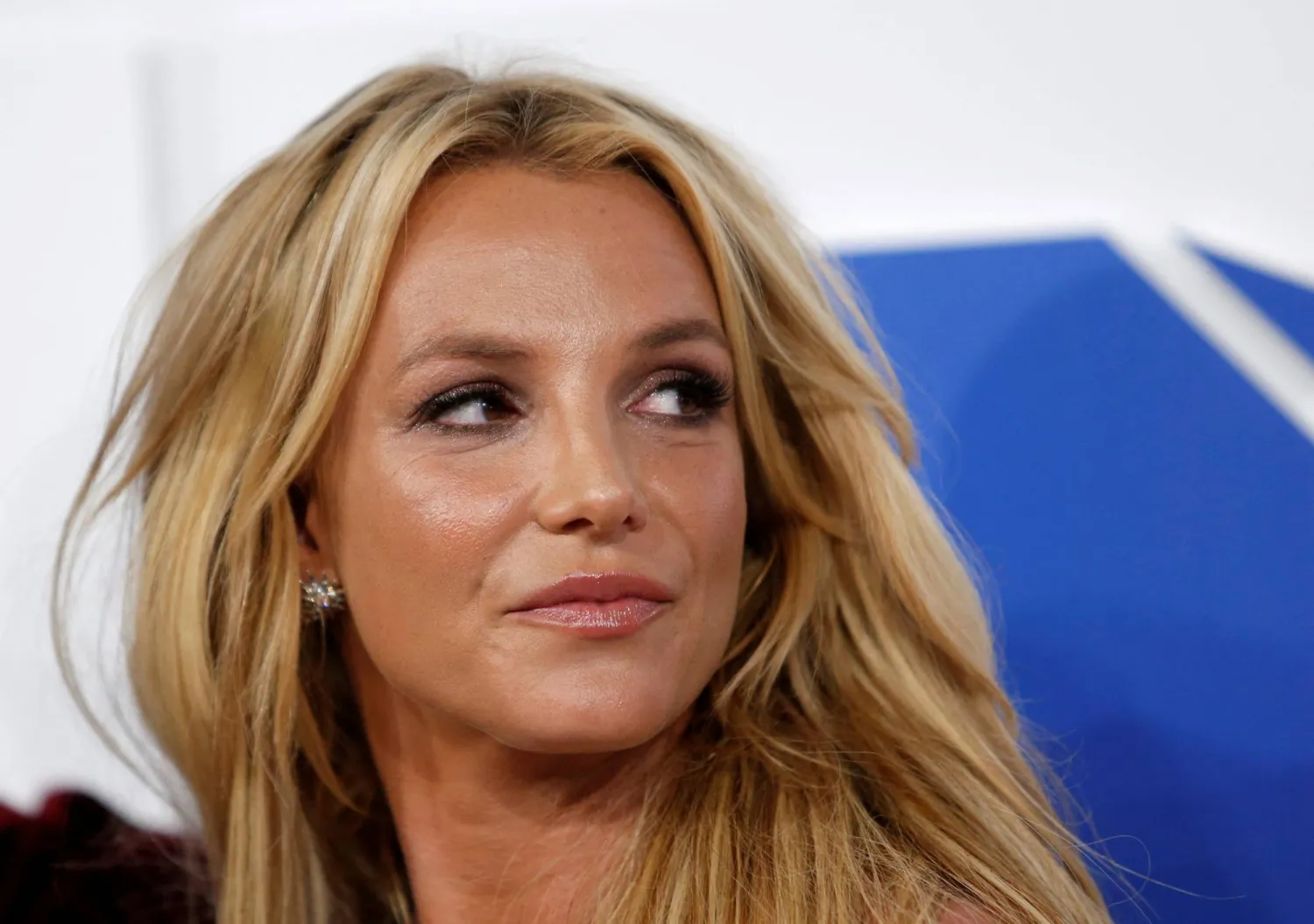
FILE PHOTO: Singer Britney Spears arrives at the 2016 MTV Video Music Awards in New York, US, August 28, 2016.  REUTERS/Eduardo Munoz/File Photo/File Photo
FILE PHOTO: Singer Britney Spears arrives at the 2016 MTV Video Music Awards in New York, US, August 28, 2016. REUTERS/Eduardo Munoz/File Photo/File Photo
TT

Britney Spears Sells Rights to Music Catalogue

FILE PHOTO: Singer Britney Spears arrives at the 2016 MTV Video Music Awards in New York, US, August 28, 2016.  REUTERS/Eduardo Munoz/File Photo/File Photo
FILE PHOTO: Singer Britney Spears arrives at the 2016 MTV Video Music Awards in New York, US, August 28, 2016. REUTERS/Eduardo Munoz/File Photo/File Photo

Pop star ‌Britney Spears has sold her rights to her music catalogue to independent music publisher Primary Wave, the ​latest artist to strike a deal for her work.

Entertainment site TMZ, citing legal documents it had obtained, first reported the news, saying the "Oops!... I Did It Again" and "Toxic" singer had signed the deal on December 30.

According to Reuters, it quoted sources as saying it ‌was "in the ‌ballpark" of Canadian singer Justin ​Bieber's ‌reported $200 ⁠million ​agreement to sell ⁠his music rights to Hipgnosis in 2023.

A person familiar with the situation said news of the Spears and Primary Wave deal was accurate. No further details were given.

Primary Wave, which is home to artists ⁠including Whitney Houston, Prince and Stevie ‌Nicks, did not ‌immediately respond to a request for ​comment. Spears has ‌not commented publicly.

The 44-year-old, one of ‌the most successful pop artists of all time, has topped charts around the world, starting off with "...Baby One More Time" in 1998. The ‌deal includes her songs such as "(You Drive Me) Crazy", "Circus", "Gimme More" and "I'm a Slave ⁠4 ⁠U", TMZ said.

Spears' ninth and last studio album, "Glory", came out in 2016.

In 2021, she was released from a 13-year court-ordered conservatorship set up and controlled by her father, Jamie Spears. The arrangement had governed Spears' personal life, career and $60 million estate from 2008 until it was terminated in November 2021.

Spears follows artists such as Sting, ​Bruce Springsteen and Justin ​Timberlake who have struck deals to cash in on their work.


Glitzy Oscar Nominees Luncheon Back One Year After LA Fires 

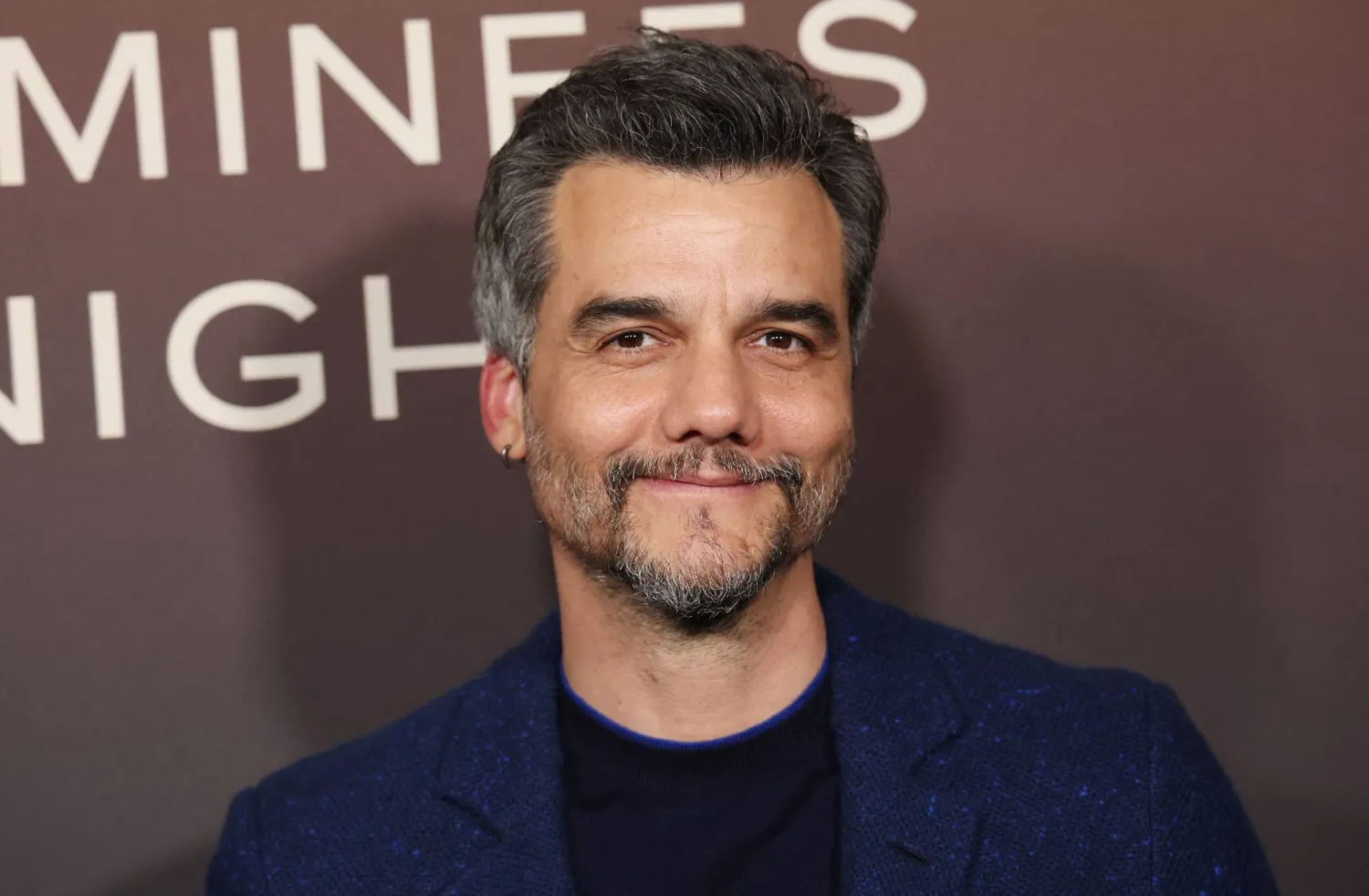
Brazilian actor Wagner Moura arrives to The Hollywood Reporter's Nominees Night held at the Chateau Marmont in Los Angeles, on February 10, 2026. (AFP)
TT

Glitzy Oscar Nominees Luncheon Back One Year After LA Fires 

Brazilian actor Wagner Moura arrives to The Hollywood Reporter's Nominees Night held at the Chateau Marmont in Los Angeles, on February 10, 2026. (AFP)

Hollywood stars embraced at this year's Oscars nominee lunch, the glamorous pre-show gathering that was canceled amid last year's devastating Los Angeles wildfires.

Timothee Chalamet, nominated for best actor in "Marty Supreme," flashed a smile while fellow Best Actor contenders Micahel B. Jordan and Ethan Hawke also flitted around the annual luncheon in Beverly Hills.

Mexican director Guillermo del Toro chatted with his tablemates as Wagner Moura, the Brazilian star of "The Secret Agent," enthusiastically embraced Stellan Skarsgard and Oliver Laxe -- the latter of whom has his film "Sirat" up for best international feature film.

Academy of Motion Picture Arts and Sciences President Lynette Howell Taylor praised the diversity of this year's nominees.

"Ballots were cast from 88 countries and regions," the British producer said, adding that "the mission of the Academy is to amplify your art, movies and your voices."

The more than 200 nominees enjoyed a buzzy afternoon, all the more energetic after last year's lunch was canceled as huge fires razed whole communities around Los Angeles. That year the lunch was replaced with a smaller dinner at the Academy's museum.

"This is a recognition of Brazilian cinema, and of the cinema of our region," Moura told AFP.

Nearby, "The Secret Agent" director Kleber Mendonca Filho joked he was feeling animated -- "like a generator."

Skarsgard said that the impact of international films is growing, as evidenced by his historic nomination for Best Supporting Actor for Norwegian film "Sentimental Value."

Foreign films and their stars typically notch nominations in the international categories, but Skarsgard is competing against nominees from US blockbusters, including Benicio del Toro in "One Battle After Another" and Delroy Lindo in "Sinners."

Benicio del Toro meanwhile told AFP he was doubly thrilled after watching fellow Puerto Rican Bad Bunny perform at the Super Bowl halftime show over the weekend.

"I got goosebumps," he told AFP, adding: "It was beautiful."

The luncheon's other legendary del Toro, the director Guillermo, meanwhile said he was "calm."

While his "Frankenstein" is nominated for Best Picture, del Toro himself is off the hook for Best Director, which he said took the pressure off him and meant he could focus on promoting his team.

"I'm happy because nine nominations don't happen every day," he said.

Lanky heartthrob Jacob Elordi, up for best supporting actor, offered a similarly toned down vibe at an impromptu photo shoot.

"I'm chilling," he said. "It's all good."